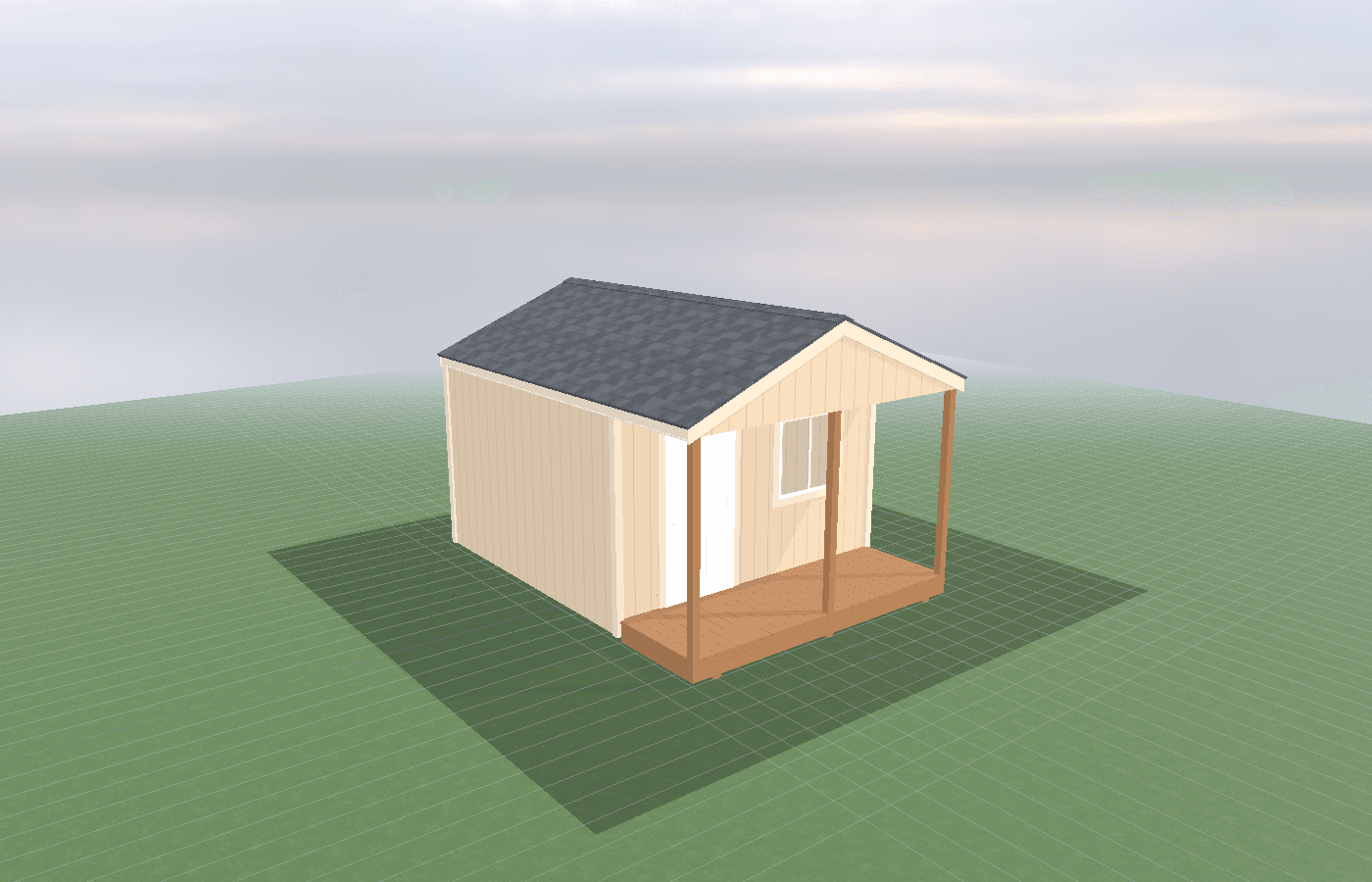
Privacy and placement: sightlines, setbacks, and neighbors
Privacy is one of the main reasons people build a she shed, but privacy only happens if the building is placed as carefully as it is designed. In North Idaho, that means looking beyond square footage and thinking about sightlines from the house, neighboring yards, snow drift, sun exposure, setbacks, and daily access. On-site construction helps because the shed can be shaped around those real conditions instead of dropped into the first open patch of yard.
Privacy Placement Sightlines in North Idaho
A private she shed is not always the one farthest from the house. Sometimes it is the one turned ten degrees, tucked behind a fence return, or placed where the windows look toward trees instead of toward the driveway.
Privacy on a real lot comes from layers. Distance helps, but so do orientation, landscaping, door location, path design, and what the user sees when sitting inside. A shed that looks hidden from the street can still feel exposed if the desk faces a neighbor's kitchen window or the main entry opens straight toward the back patio.
Snow and access matter too. In North Idaho, the most private corner of the yard is sometimes the worst winter location if it creates a long icy path, catches drifting snow, or turns the door into a shoveled tunnel. That is one reason on-site construction matters on she sheds: the building can be placed and oriented for the actual lot instead of whatever delivery angle is easiest.
For properties around Coeur d'Alene, privacy planning also often overlaps with neighborhood character. A backyard retreat has to feel tucked away without becoming awkward, dark, or hard to reach. The goal is not to hide the building completely. The goal is to make the space feel calm, separated, and intentional when you are inside it.
One practical way to think about sightlines is to sit in the future chair before the shed exists. Stand where the main window or desk will likely be and ask three questions: What will I look at every day? Who can look back at me? What will this feel like in winter when the leaves are gone? Those answers usually reveal more than a sketch on paper.
Privacy also improves when arrival feels thoughtful. A short curved path, a fence return, a gate that blocks the first sightline, or one small evergreen screen can do more than a larger building shoved into the back fence. In snow country, placement should also keep the entry out of the main drift line and make it easy to clear a path without piling snow against the nicest window wall.
What size she shed gives you enough usable room?
The right size is the smallest footprint that gives you privacy without forcing the building into a bad location.
10x10: easiest to tuck onto a lot
A 10x10 is often the easiest size to place behind a house, near a side yard, or in a corner where setbacks and landscaping leave only a modest buildable area. It can work very well for one chair, one desk, or a compact hobby setup. The tradeoff is that furniture and privacy features such as curtains, shelves, and plants take up a higher percentage of the floor.
10x12: the common balance point
A 10x12 is often the best placement size because it gives more usable interior room without changing the siting problem too dramatically. It is large enough for seating, a work surface, and a storage wall while still fitting on many residential lots without consuming the whole backyard.
10x14: better inside, harder outside
A 10x14 can feel much more relaxed once you are inside, but it needs more clear width, more path planning, and more attention to how the roof sheds snow and water. On some lots, the added comfort inside is worth it. On others, the bigger footprint pushes the shed into a worse location with weaker privacy.
That is why size should be chosen after you identify the true buildable zones on the property. A slightly smaller shed in the right spot will usually feel more private than a larger shed forced into a bad one every single day outdoors.
Permit, setback, and code issues to review
Placement is not just a design choice. It is also a code and zoning question.
Start with setbacks, easements, and HOA rules. County and city setbacks vary, and some neighborhoods add separate HOA review for accessory structures. The safest approach is to identify property lines, utility easements, drainage paths, septic areas if applicable, and any neighborhood design rules before finalizing the shed footprint.
In unincorporated Kootenai County, one-story detached accessory structures up to 200 square feet can be exempt from building permit under county code if they fit the exempt-use and placement rules, but that does not erase setback standards or zoning review. City rules can differ, and the moment the scope grows to include more utilities or more complicated use, the review path gets less casual.
Privacy planning also overlaps with electrical and window planning. If the quiet corner of the yard is also the farthest point from power, trenching and exterior lighting decisions affect both cost and placement. That is why the related guides on she shed ideas that work in cold climates: insulation, heat, and winter light and electrical planning for craft and hobby she sheds should be part of the same conversation.
Finally, do not forget neighbor experience. A shed that technically fits setbacks can still create friction if the window placement looks directly into a neighboring yard or if roof runoff dumps toward the fence line. Good placement solves privacy for both sides, not just yours.
Cost, timing, and build-planning factors
Privacy-oriented placement usually costs more than just finding a flat spot, but the money often goes into worthwhile improvements: better paths, better site grading, more useful landscaping, more deliberate window placement, and cleaner utility routing.
The biggest cost variables are site work, retaining or leveling, utility trenching, access improvements, and any screening elements such as fencing, trees, or privacy panels. A shed that sits farther from the house may be quieter and more private, but it may also need a longer path and more winter maintenance.
Timing matters because placement decisions often reveal extra work. You may find out the best private zone needs tree pruning, a pad adjustment, or an alternate route around a wet spring area. Those are easier to solve before the build is underway than after the shell is already located.
On-site construction is a real advantage here. If the best location has a narrow gate, awkward grade, or limited maneuvering room, building at the site makes privacy-friendly placement possible without designing the entire plan around truck delivery. If you want help balancing comfort, privacy, and code realities, request a free estimate before you commit to the wrong corner of the yard.
Popular sizes and layouts for she sheds
For privacy-focused she sheds, 10x10, 10x12, and 10x14 are the three sizes most people compare for good reason.
A 10x10 is easiest to place discreetly and works well when the use is simple. A 10x12 gives the best balance of fit and comfort on many suburban and semi-rural lots. A 10x14 is the best choice when interior separation matters more than compact siting and the lot can support it.
Layout should reinforce privacy. Face the primary window toward your best view, not necessarily the biggest opening in the yard. Put the door where arrival feels natural and hidden from the busiest sightline. Keep storage on the less important wall so the best light and best view stay reserved for the user.
The right layout feels private before the curtains are even installed. That usually means less glass facing neighbors, more attention to approach paths, and a calm view from the main seat inside the shed.
Layered screening is often more effective than one big barrier. A lower window with a higher sill, a trellis outside the weather side of the building, or a small cluster of evergreens can soften sightlines without making the room dark. The best privacy solutions usually protect the view from inside while still allowing snow removal, maintenance, and a path that feels safe in winter boots. If the shed needs evening use, add low-glare path lighting that guides your feet without broadcasting the whole space to the neighborhood. That kind of restrained lighting also helps the shed feel calmer from inside instead of making the windows feel like a bright display case after dark. It also preserves a little more night privacy for both you and your neighbors. That small detail can change how comfortable the shed feels after sunset, especially in winter when people arrive and leave in the dark.
Frequently asked questions about she sheds
What size she shed works best for privacy and placement: sightlines, setbacks, and neighbors?
For many North Idaho buyers, 10x10 and 10x12 are the best starting sizes because they balance usable floor space with realistic placement on the property. We then size up or down based on snow load, storage volume, and how much dedicated work or seating area you need. Compare 10x10 and see 10x12.
How do I choose the best placement for a she shed shed on my lot?
Consider setbacks, sun exposure, access paths, and neighbor sightlines. In North Idaho, also account for snow drift patterns and prevailing wind direction. Check county permits.
Frequently asked questions
What size she shed works best for privacy and placement: sightlines, setbacks, and neighbors?
For many North Idaho buyers, 10x10 and 10x12 are the best starting sizes because they balance usable floor space with realistic placement on the property. We then size up or down based on snow load, storage volume, and how much dedicated work or seating area you need. Compare 10x10 and see 10x12.
How do I choose the best placement for a she shed shed on my lot?
Consider setbacks, sun exposure, access paths, and neighbor sightlines. In North Idaho, also account for snow drift patterns and prevailing wind direction. Check county permits.
Ready to plan your build?
Tell us your site, your dimensions, and the use case. We'll come out and price it.