Shed Building Permits in North Idaho
How shed permits work across North Idaho
Whether a shed needs a permit in North Idaho depends on four things: which jurisdiction governs the parcel (an incorporated city or the unincorporated county), how big the shed is, whether it gets electrical, plumbing, or HVAC work, and where it sits relative to setbacks, easements, floodplains, and shorelines.
Idaho's residential code exempts a one-story detached storage shed of 200 square feet or less from a building permit, but that exemption only covers the building permit. It never waives zoning setbacks, and a wired or plumbed shed can still need a separate state trade permit. We treat permits as part of early project planning, not paperwork to handle after the design is locked.
- Kootenai CountyBuilding permit for a detached storage shed over 200 sq ft in the unincorporated county; a location/zoning verification and snow-load zone still apply below that. Cities (Coeur d'Alene, Post Falls, Hayden, Rathdrum, Athol) run their own permits.View county guide
- Bonner CountyNo structural building code since 1997 — the county issues a Building Location Permit for structures over 400 sq ft (or any habitable structure). Sheds 200 sq ft or less are exempt; 200-1,080 sq ft can qualify as a Small Structure.View county guide
- Boundary CountyThe county runs no building-inspection program for private accessory structures, but zoning setbacks apply at any size. The $400 placement permit is for dwellings/manufactured homes, not sheds. The City of Bonners Ferry does require building permits.View county guide
- Shoshone CountyBuilding permits are required for most construction; a site plan and elevation-based snow load apply. Trade permits go through the state. Kellogg and other cities run their own departments.View county guide
- Benewah CountyThe county has its own building department (St. Maries). The 200 sq ft IRC exemption applies; zoning setbacks and state trade permits still apply. Confirm specifics by phone.View county guide
North Idaho permit checkpoints at a glance
North Idaho permit checkpoints at a glance
- Building-permit exemption
- One-story detached storage shed 200 sq ft or less (2020 Idaho Residential Code, IRC R105.2). Building permit only — not a setback or trade-permit exemption.
- Adopted codes
- 2018 IBC / IRC / IECC statewide, 2023 NEC, 2017 Idaho State Plumbing Code. The 2024 codes were rejected by the legislature in Feb 2026, so 2018 stands.
- Trade permits
- Electrical, plumbing, and HVAC permits are usually issued by the state (DOPL), even when the shed is building-permit exempt.
- Setbacks & zoning
- Set by the local zoning ordinance, not the building code. They apply to a shed of any size — confirm side, rear, and placement rules with the local planning office.
- Snow & wind
- North Idaho is a high-snow-load region. Design snow load varies by city and elevation; confirm the current value with the building official.
- City vs. county
- City rules supersede county rules inside city limits. Always confirm whether the parcel is incorporated or unincorporated first.
| North Idaho permit checkpoints at a glance | |
|---|---|
| Building-permit exemption | One-story detached storage shed 200 sq ft or less (2020 Idaho Residential Code, IRC R105.2). Building permit only — not a setback or trade-permit exemption. |
| Adopted codes | 2018 IBC / IRC / IECC statewide, 2023 NEC, 2017 Idaho State Plumbing Code. The 2024 codes were rejected by the legislature in Feb 2026, so 2018 stands. |
| Trade permits | Electrical, plumbing, and HVAC permits are usually issued by the state (DOPL), even when the shed is building-permit exempt. |
| Setbacks & zoning | Set by the local zoning ordinance, not the building code. They apply to a shed of any size — confirm side, rear, and placement rules with the local planning office. |
| Snow & wind | North Idaho is a high-snow-load region. Design snow load varies by city and elevation; confirm the current value with the building official. |
| City vs. county | City rules supersede county rules inside city limits. Always confirm whether the parcel is incorporated or unincorporated first. |
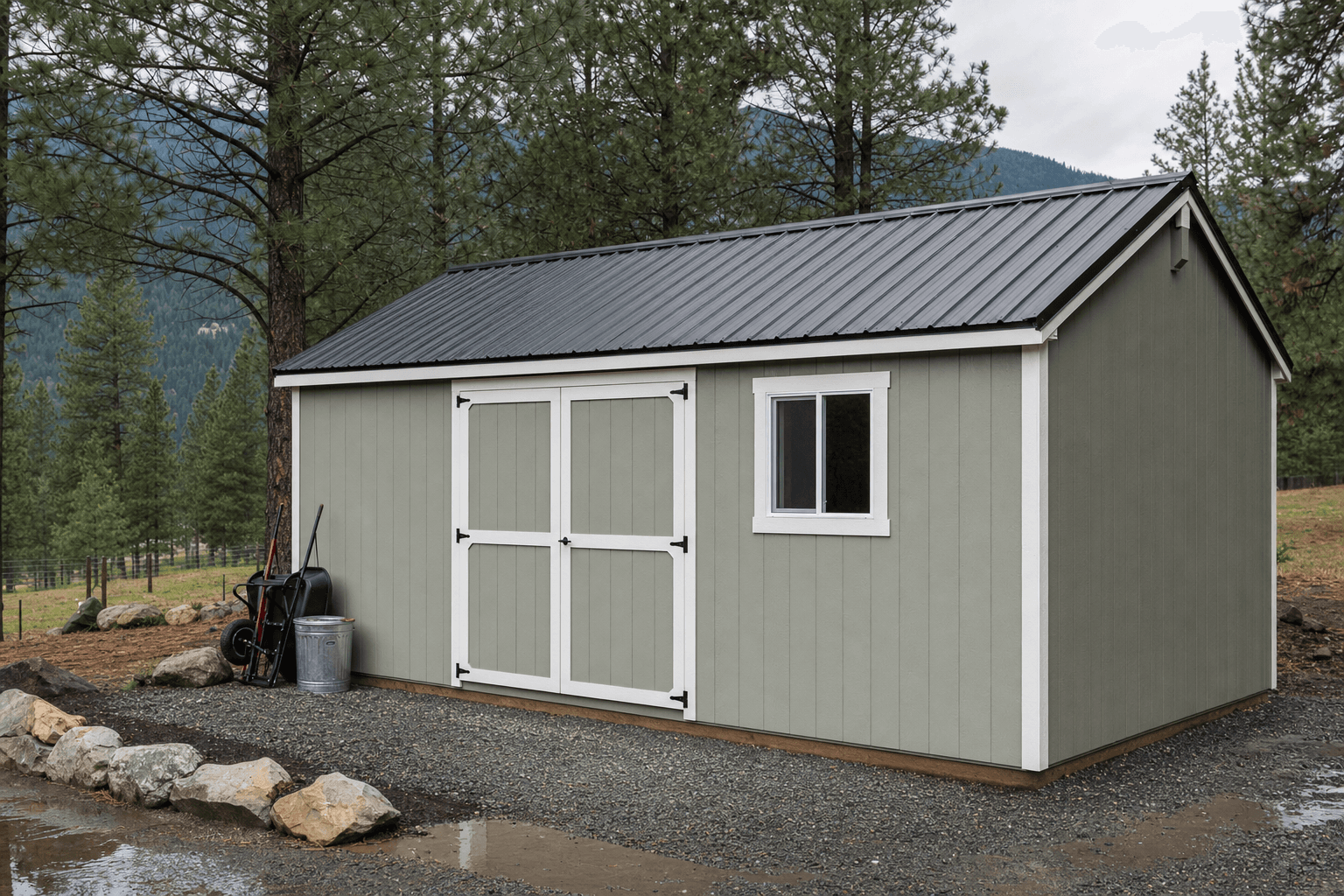
Start permit planning before the design is locked — the jurisdiction, size, utilities, and placement all shape what paperwork applies.
Why the 200-square-foot rule is only part of the story
The 200-square-foot figure is a building-permit exemption from the residential code — it is not a green light to skip everything else. A sub-200 shed still has to meet the zoning setbacks for its lot, stay out of easements and mapped floodplains, and follow shoreline rules near a lake or river.
Counties also diverge from the model. Bonner County frames the question around a 400-square-foot Building Location Permit instead of a structural building permit, and Boundary County runs no building-inspection program for private accessory structures at all. The number that matters is the one your specific jurisdiction publishes.
What can trigger review besides shed size
Utilities are the most common surprise: electrical, plumbing, and HVAC work usually pull separate state DOPL trade permits even when the shed itself is exempt. Placement is next — setbacks, easements, wells, septic drainfields, and floodplain or shoreline boundaries all control where the structure can legally sit.
Weather matters too. North Idaho snow loads are substantial and rise sharply with elevation, so the roof design and any required engineering depend on the parcel's snow-load zone. And inside an incorporated city, the city's rules replace the county's entirely.
How we help customers stay ahead of permit questions
We build in the real North Idaho permit environment every day, so we can help you identify the likely permit path early and design the shed around setbacks, access, and snow load from the start. We do not act as parcel-specific legal counsel or the permit office — but we can keep you from designing a shed that the site or the code won't allow.
Treat this as planning context, not a permit decision. Thresholds, setbacks, fees, and adopted code editions change, so confirm the current rule for your exact parcel with the authority that has jurisdiction before you order materials.
North Idaho shed permit FAQs
Do all North Idaho counties use the same 200-square-foot threshold?
No. 200 square feet is the residential building-permit exemption under Idaho's adopted code, and several jurisdictions publish it, but counties differ: Bonner County centers on a 400-square-foot Building Location Permit, and Boundary County does not inspect private accessory structures at all. Confirm the figure your jurisdiction actually uses.
If my shed is under 200 square feet, am I automatically in the clear?
No. The exemption is from the building permit only. Zoning setbacks, placement rules, floodplain and shoreline rules, and state electrical or plumbing permits can all still apply to a small shed.
Who issues electrical and plumbing permits for a shed in Idaho?
Usually the state — the Division of Occupational and Professional Licenses (DOPL), which now runs the former Division of Building Safety functions. A few cities (notably Post Falls) issue their own trade permits, so confirm locally.
Which page should I read before requesting a quote?
Start with the county or city that governs your parcel, then check the statewide overview and the IRC code notes for how size, foundation, and intended use change the documentation conversation.
Turn permit context into a shed plan
Once you know the jurisdiction, footprint, and site constraints, open the builder and shape the shed around those limits — or send the details and we'll help price an on-site build.
Planning paths
County Permit Pages
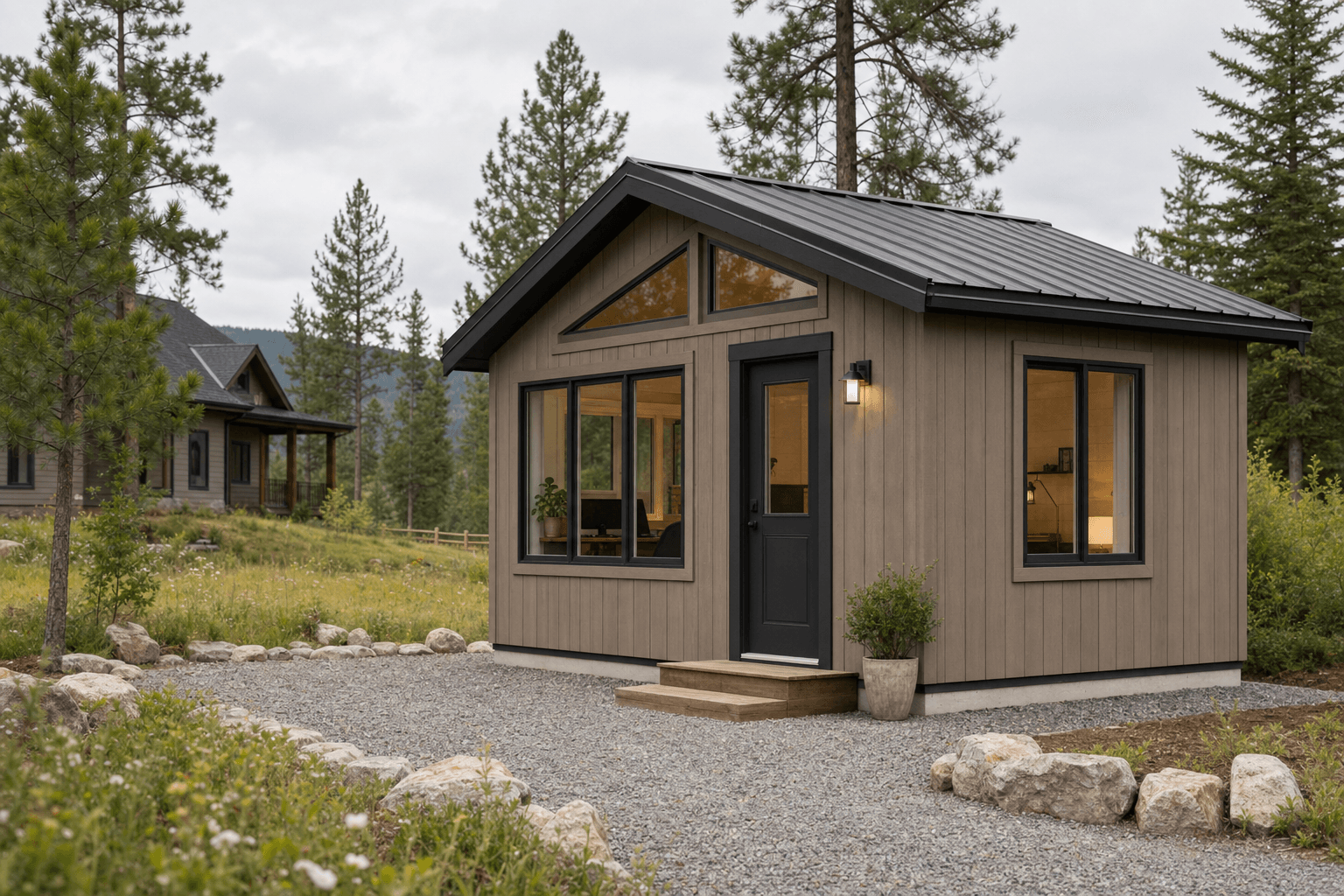
Shed Building Permits in Kootenai County
Kootenai County shed permits: the 200 sq ft building-permit threshold in the unincorporated county, location verification, snow-load zones, and setbacks.
Open guide
Shed Building Permits in Bonner County
Bonner County sheds: no structural building code, so a Building Location Permit applies over 400 sq ft. Sheds 200 sq ft or less are exempt; setbacks apply.
Open guideShed Building Permits in Boundary County
Boundary County sheds: no building-inspection program for accessory structures, but zoning setbacks apply — and the $400 placement permit is for dwellings.
Open guide
Shed Building Permits in Shoshone County
Shoshone County shed permits: building permits for most construction, elevation-based snow loads, a required site plan, and state-issued trade permits.
Open guide
Shed Building Permits in Benewah County
Benewah County shed permits: the county runs its own building department in St. Maries, applies the 200 sq ft exemption, and leaves trade permits to the state.
Open guidePlanning paths
City Permit Pages
Shed Building Permits in Coeur d'Alene
Coeur d'Alene shed permits: the city exempts detached storage sheds of 200 sq ft or less, requires a site plan, and issues building and plumbing permits.
Open guideShed Building Permits in Post Falls
Post Falls shed permits: the city issues its own electrical, plumbing, and mechanical permits and publishes detailed setback and snow-load design criteria.
Open guideShed Building Permits in Hayden
Hayden shed permits: the city exempts detached storage sheds of 200 sq ft or less, requires setbacks at any size, and routes electrical to the state.
Open guideShed Building Permits in Rathdrum
Rathdrum shed permits: accessory structures over 200 sq ft need a city permit, setbacks follow a 300 sq ft break, and the area carries a high snow load.
Open guideShed Building Permits in Athol
Athol shed permits: the city requires a building-location permit over 200 sq ft, enforces R-zone setbacks at any size, and defers trades to the state.
Open guideShed Building Permits in Sandpoint
Sandpoint shed permits: the city exempts detached storage sheds of 200 sq ft or less, applies 5 ft accessory setbacks, and publishes a 56 psf snow load.
Open guideShed Building Permits in Priest River
Priest River shed permits: the 200 sq ft exemption, published R-zone setbacks with a 5 ft accessory rule, and stormwater and floodplain checks near water.
Open guideShed Building Permits in Bonners Ferry
Bonners Ferry shed permits: the city follows the 200 sq ft state exemption, sets a 50 psf design snow load, and combines building and floodplain permitting.
Open guideShed Building Permits in St. Maries
St. Maries shed permits: the city applies the 200 sq ft exemption, publishes R-zone setbacks, and reviews floodplain placement near the rivers.
Open guideShed Building Permits in Plummer
Plummer shed permits: building permits per the I-Codes, Title 8 setbacks, and the Coeur d'Alene Reservation, where land status can change jurisdiction.
Open guidePlanning paths
Permit Resources & Code References
How Idaho Shed Permits Work
An Idaho statewide overview of shed permits: the 200 sq ft exemption, the 2018 I-Codes, state DOPL trade permits, and why setbacks apply regardless of size.
Open guideIRC Code Notes for Shed Planning
Plain-language IRC notes for North Idaho sheds: the R105.2 permit exemption, the 120 vs 200 sq ft edition difference, snow loads, foundations, and anchoring.
Open guide