
Shed Building Permits in Hayden
Permit area
Hayden
Decision point
Check early
Builder path
Plan the site
Content
Payload editable
Permit planning
Use this Hayden permit page before you build
Planning area
Route
FAQ support
- Confirm whether the property is inside city limits or county jurisdiction.
- Check size, foundation, utility, and intended-use rules before ordering materials.
- Use the builder after permit and site constraints are clear enough to shape the shed.
How Hayden handles shed permits
The City of Hayden Building Department issues building permits through its online portal. Citing IRC R105.2, the city does not require a building permit for a one-story detached accessory structure when the floor area does not exceed 200 square feet; a shed over 200 square feet needs a permit. The city is explicit that accessory structures of any size must meet all setbacks for the zone.
Electrical, plumbing, and sewer permits are handled by the state (DOPL); the city handles mechanical permits under the 2018 IMC. In Idaho, electrical, plumbing, and HVAC permits are usually issued by the state Division of Occupational and Professional Licenses (DOPL), separately from any local building permit — and a wired or plumbed shed can need a state trade permit even when the shed itself is small enough to skip a building permit.
Hayden shed permit snapshot
Hayden shed permit snapshot
- Building-permit exemption
- Residential one-story detached storage shed 200 sq ft or less. (A separate 120 sq ft figure on the city's list applies to commercial structures — don't conflate them.)
- Adopted codes
- 2018 IBC, IRC, IECC, IMC, IFGC, and IFC (effective Jan 1, 2021).
- Setbacks
- Governed by Title 11, Ch. 2. Accessory structures get smaller setbacks than the principal building (e.g., a 5 ft accessory side in R1) and must sit at least 5 ft from the principal structure. Confirm your zone.
- Trade permits
- Electrical, plumbing, and sewer permits are state (DOPL) permits; the city handles mechanical.
- Fees
- Valuation-based, using ICC building valuation data. Confirm the current schedule with the city.
- Overlays
- Parcels near Hayden Lake or in mapped floodplains can carry added placement rules.
| Hayden shed permit snapshot | |
|---|---|
| Building-permit exemption | Residential one-story detached storage shed 200 sq ft or less. (A separate 120 sq ft figure on the city's list applies to commercial structures — don't conflate them.) |
| Adopted codes | 2018 IBC, IRC, IECC, IMC, IFGC, and IFC (effective Jan 1, 2021). |
| Setbacks | Governed by Title 11, Ch. 2. Accessory structures get smaller setbacks than the principal building (e.g., a 5 ft accessory side in R1) and must sit at least 5 ft from the principal structure. Confirm your zone. |
| Trade permits | Electrical, plumbing, and sewer permits are state (DOPL) permits; the city handles mechanical. |
| Fees | Valuation-based, using ICC building valuation data. Confirm the current schedule with the city. |
| Overlays | Parcels near Hayden Lake or in mapped floodplains can carry added placement rules. |
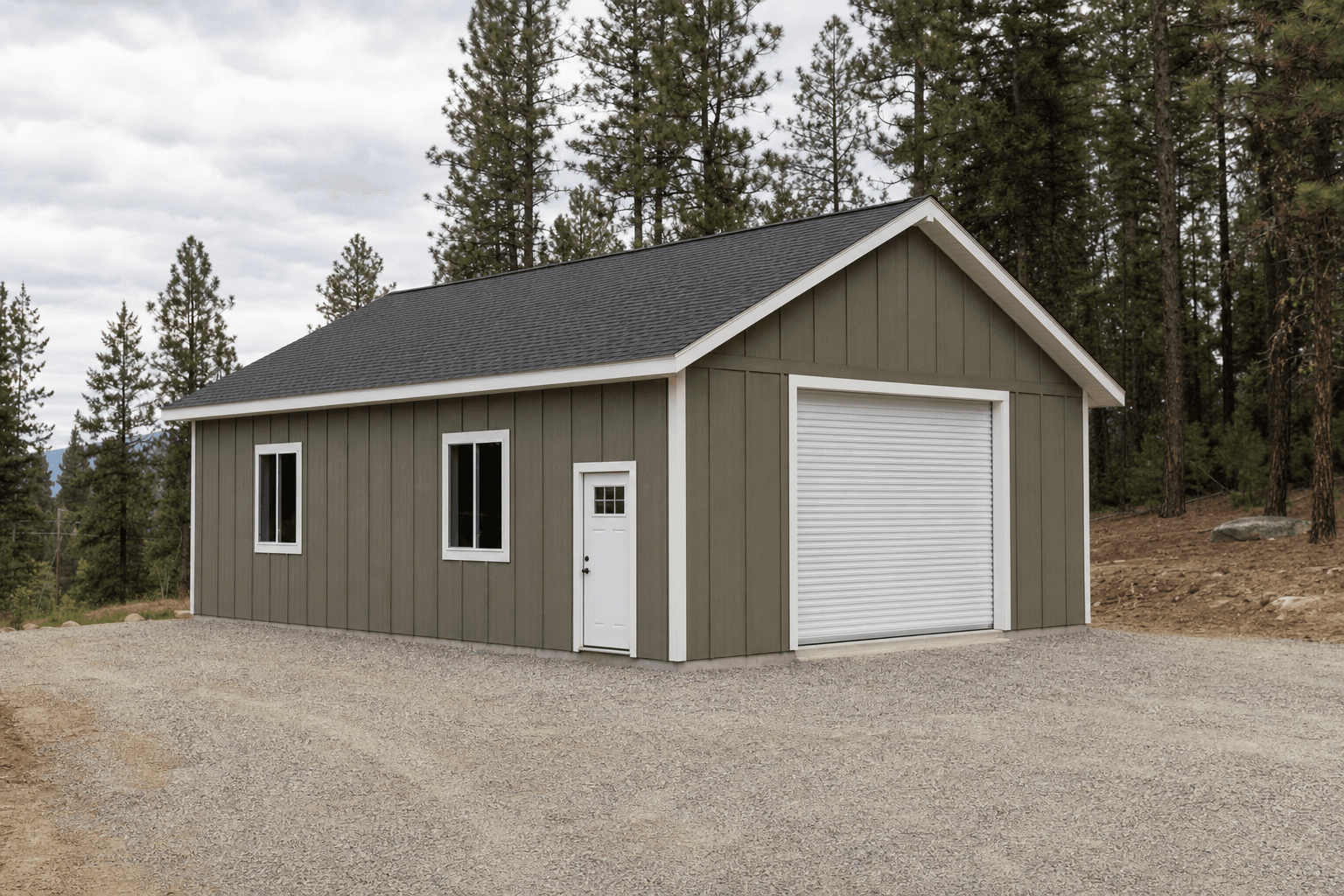
Hayden's residential exemption is a clean 200 sq ft — but the shed still has to clear the zone's setbacks and sit 5 ft from the house.
200 residential, not 120 — don't conflate the figures
Hayden publishes a clear residential exemption of 200 square feet, citing IRC R105.2. A 120-square-foot figure also appears in the city's materials, but it belongs to the commercial accessory-structure list — a common point of confusion that some third-party sites get wrong. For a backyard storage shed, 200 square feet is the residential number.
Above 200 square feet, the shed goes through a city building permit on the 2018 code editions.
Setbacks apply to a shed of any size
The city is explicit that being under the 200-square-foot building-permit threshold does not waive zoning. Accessory structures must meet all setbacks for the lot's zone under Title 11, Chapter 2, where accessory structures generally get smaller setbacks than the principal building, and a detached accessory structure must sit at least 5 feet from the principal structure.
Confirm the exact per-zone accessory setbacks with the Building Department, since the city publishes the table as part of its zoning code.
Trade permits and overlays
Electrical, plumbing, and sewer permits route through the state DOPL, while the city handles mechanical permits under the 2018 IMC. A simple unwired storage shed usually has no trade permits, but any wiring or plumbing triggers a state permit.
Near Hayden Lake or in a mapped floodplain, additional placement restrictions can apply. Treat this as planning context, not a permit decision. Thresholds, setbacks, fees, and adopted code editions change, so confirm the current rule for your exact parcel with the authority that has jurisdiction before you order materials.
Hayden shed permit FAQs
Is the Hayden shed exemption 120 or 200 square feet?
For a residential detached storage shed it's 200 square feet, which the city publishes citing IRC R105.2. The 120-square-foot figure on the city's list applies to commercial structures — don't conflate them.
Does a small shed still have to meet setbacks in Hayden?
Yes. The city explicitly states accessory structures of any size must meet all setbacks for the zone, and a detached accessory structure must sit at least 5 feet from the principal building.
Who issues electrical and plumbing permits?
The state (DOPL) handles electrical, plumbing, and sewer permits. The city handles mechanical permits under the 2018 IMC.
What codes does Hayden enforce?
The 2018 I-Codes — IBC, IRC, IECC, IMC, IFGC, and IFC — effective January 1, 2021. Confirm with the city whether a newer edition has since been adopted.
Plan a Hayden shed
Confirm your zone's accessory setbacks, then size and place the shed in the builder — or send the details for an estimate.
Next step