How to Prepare Your Site for an On-Site Shed Build
Because we build your shed right on your property, a little preparation before build day keeps everything fast, clean, and on schedule. Good site prep also helps your building sit level and last for decades in North Idaho weather. Here is exactly how to get your site ready — and what we can take care of for you.
The quick version
- Pick a level, well-draining spot that meets your setbacks.
- Clear the building footprint plus a few feet of working room around it.
- Get the ground reasonably level, with water draining away from the pad.
- Decide on your base and foundation (we can help).
- Keep a clear path so our crew and materials can reach the build location.
1. Choose the right spot
Start by picking where the shed will live. Keep it off property lines and out of easements, and check your local setback rules before you commit — our permit and code resources cover the common North Idaho requirements. Look for higher ground that drains naturally, leave room to walk around the building, and think about door placement, sun, and how close you want it to the house or driveway.
2. Make sure our crew and materials can reach it
We build on site, so we do not need to fit a finished building through your gate — but our crew and materials still need a clear path to the spot. Before build day, clear the route of vehicles, low branches, and obstacles, note any narrow gates or soft ground, and leave a place to park near the site when possible. If access is tight or the lot is steep, that is exactly the kind of project where building on site shines — just let us know what we are working with.
3. Clear and level the ground
Clear the footprint of brush, sod, rocks, stumps, and debris. The flatter the pad, the better the building sits and the better the doors and windows line up. A few inches of fall across the footprint is usually workable; once the difference between corners gets larger, the site should be leveled first. Cut down high spots or build up low spots with compactable material — never loose topsoil or sand, which settles and shifts.
4. Plan your base and drainage
For most sheds, a compacted base of 3/4-inch crushed gravel is the simplest, longest-lasting option. Extend the gravel about a foot past the building on every side, a few inches deep, and tamp it firm and level. Grade the surrounding ground so rain and snowmelt run away from the pad, not toward it. A well-drained base keeps the floor framing dry and is cheap insurance against frost heave and rot.
5. Choose the foundation that fits your site
You have three foundations to choose from in the builder. The standard Shed Floor is a raised wood floor on pressure-treated 4x4 skids — it sets right on the gravel pad you prepare and is the flexible, lower-cost choice for most sheds. A poured Concrete Slab gives you a clean, permanent floor that is great for shops, garages, and heavier use. And for the most permanent buildings — or sloped and freeze-prone sites — a Crawl Foundation on poured footings and stem walls. Preview all three and see live pricing in the 3D shed builder, or compare costs on our pricing page.
Built for North Idaho
Our area brings real snow load, frost, and freeze-thaw cycles, so drainage and a solid base matter more here than in milder climates. We plan framing and foundations around those conditions, and we are happy to point you to the right base and foundation for your specific lot. Not sure what your site needs? Send us a few photos with your estimate and we will help you sort it out.
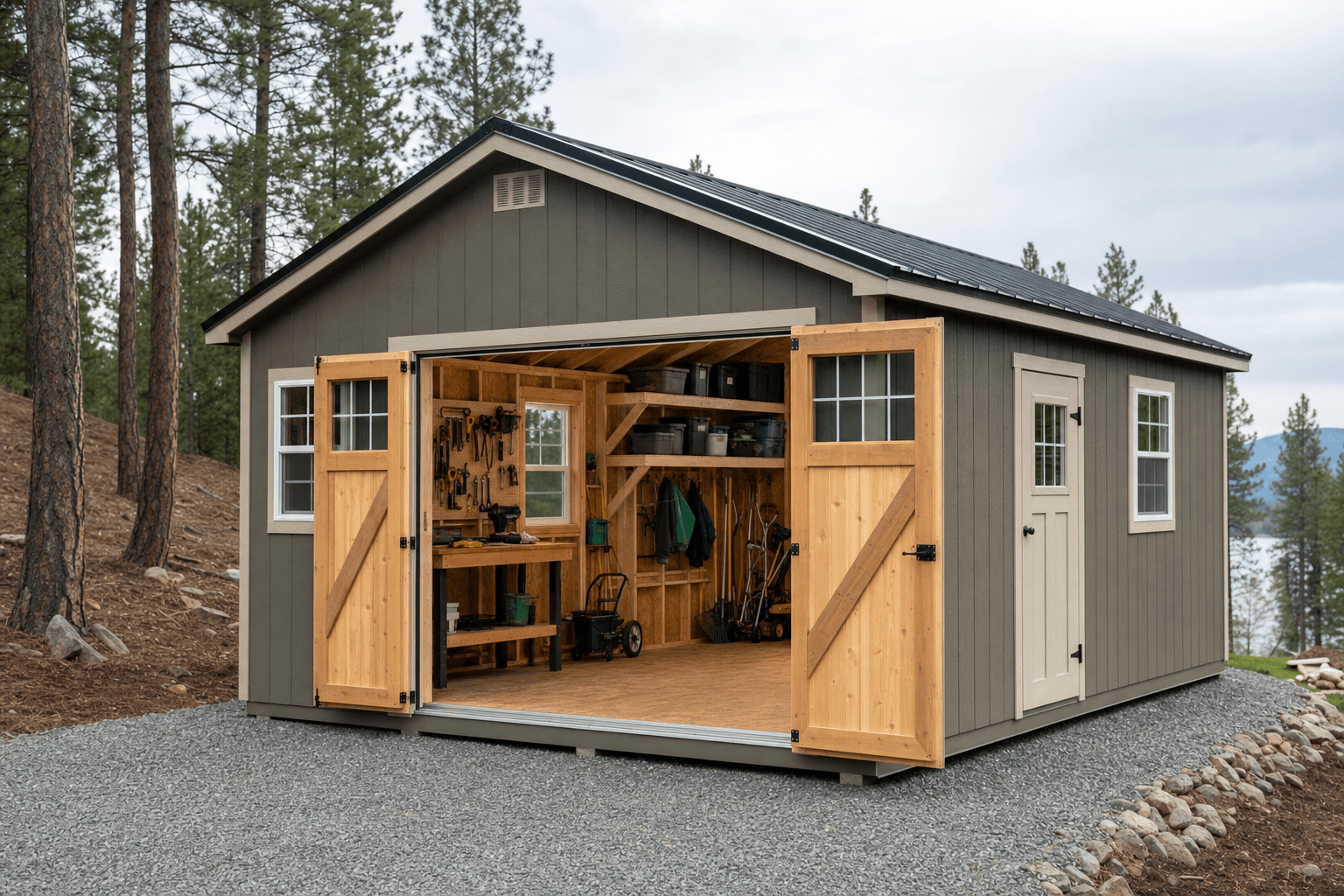
A level, well-drained base is the foundation of a shed that stays square and dry for decades.
Site preparation FAQ
How level does my site need to be?
Aim for as flat as you reasonably can. A few inches of fall across the footprint is usually workable, but once the difference between corners gets larger, the ground should be leveled before build day so the shed sits square and the doors work correctly.
What kind of base do you recommend?
For most sheds, a compacted 3/4-inch crushed gravel pad extended about a foot past the building on every side. It drains well, resists frost heave, and gives the building a firm, level surface to sit on.
Do you offer concrete slabs and crawlspace foundations?
Yes. Along with the standard Shed Floor — a raised wood floor on pressure-treated skids that sits on your gravel pad — we build poured concrete slabs and crawlspace (footing and stem wall) foundations. You can see all of the options and live pricing in the 3D shed builder.
Can you build on a sloped or tricky lot?
Often, yes — building on site is a real advantage on slopes and tight properties. Leveling or a footing/crawlspace foundation may be needed, so send us photos of the site with your estimate and we will tell you what it will take.
Do I have to prepare the site myself?
Most customers handle basic clearing and a gravel pad themselves, and we are glad to share resources to help. For grading, concrete, or complex sites, we can help you plan the work or point you to the right contractor.
What do you need from me before build day?
A chosen, cleared location with a prepared base, a clear path for the crew and materials, and your corners marked if you have a precise placement in mind. You do not need to be on site all day, but please stay reachable by phone in case we have a question.
Design your shed and we'll handle build day.
Configure your shed in 3D, choose your foundation, and send it over for a free on-site estimate.