A 10x12 shed gives you 120 square feet — the size most North Idaho buyers land on once an 8-foot-wide building starts to feel cramped. The extra two feet of width is the whole story: at 10 feet deep you can put gear along one wall and still walk a clear aisle past it, instead of shuffling things sideways to reach the back. That makes 10x12 the popular small-to-mid footprint for a garden shed, tool storage, a she-shed, or general overflow from a full garage.
It is big enough to be a real room and small enough to tuck into a side yard without dominating the lot. Most homeowners pick it because it does one job well with room to spare, or two lighter jobs side by side — a storage shed for seasonal bins on one end and a workbench on the other. If you are deciding between footprints, 10x12 is the one to measure against first.
At 120 square feet, a 10x12 reads as a small room rather than a closet. The 10-foot width lets you work along one wall while keeping a clear path to the door, and the 12-foot length gives you a long wall for a bench, shelving, or a riding mower without crowding the entry.
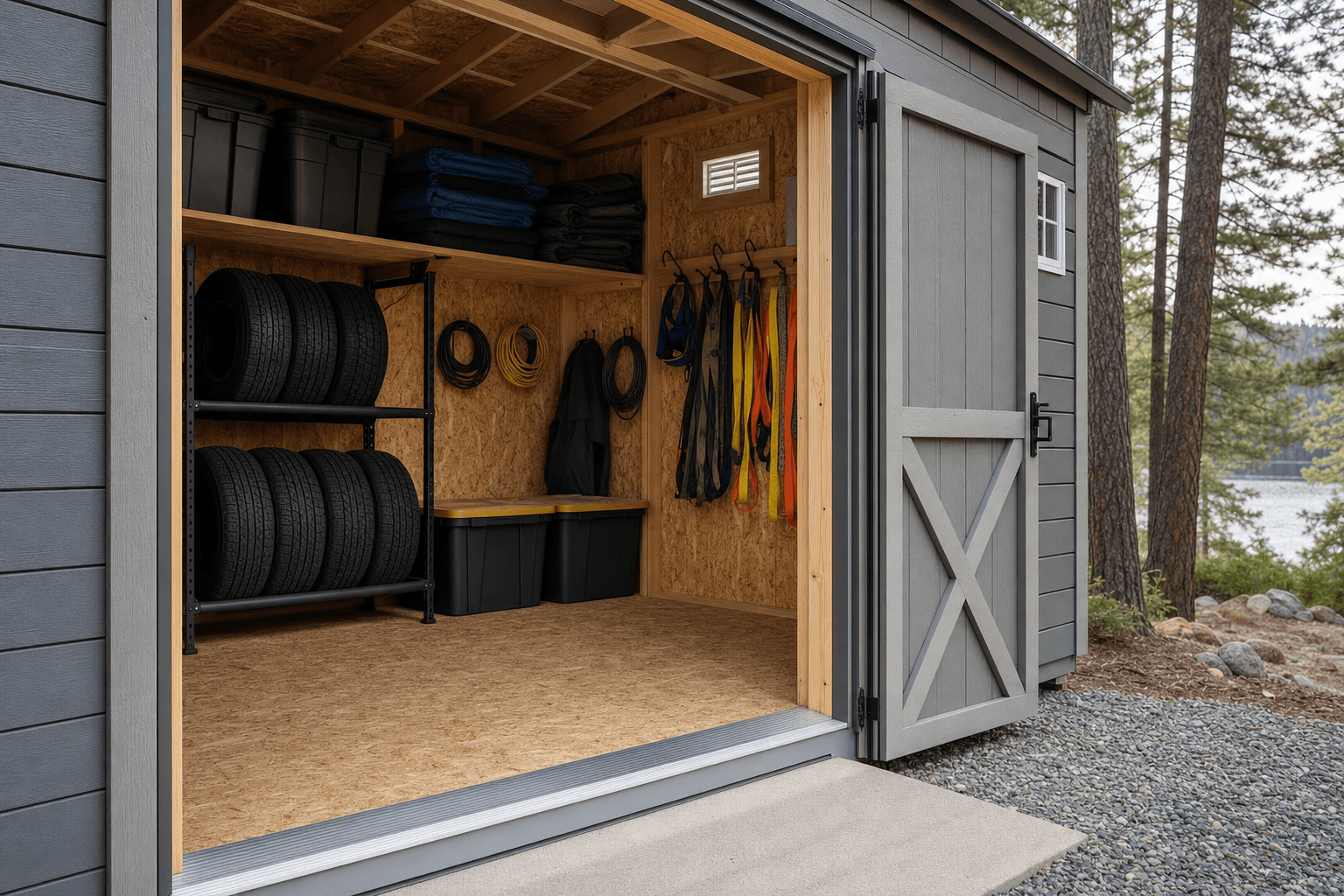
A 10x12 shed gives you 120 square feet — enough for gear along one wall and a clear aisle to the door.
The 10x12 footprint is a generalist that handles the four most common backyard jobs. As a garden shed, it fits a potting bench on the 12-foot wall plus a wheelbarrow, bagged soil, and long-handled tools without the bench eating the only walking space. As a tool shed, the same wall takes a full workbench with a pegboard above it and still leaves room to park a mower and roll out a project. For plain overflow, a storage shed at this size swallows the seasonal stuff — totes, lawn furniture, holiday decorations, and the bikes — that crowds a garage.
It is also the smallest size that feels comfortable as a she-shed or quiet hobby room: 120 square feet holds a chair, a small desk or craft table, and shelving with daylight from a window or two. The footprint is forgiving because the extra foot of depth over an 8-wide building is what turns a storage box into a space you actually stand and work in.
Decide what owns the 12-foot wall — a bench, shelving, or a parked machine — before anything else. That single choice sets the whole layout.
The 10-foot depth gives you a real walking lane. Park bulky gear along the walls so you never lose that path to the door.
If you already picture filling it on day one, size up. A 10x12 is comfortable with breathing room and tight once it is fully packed.
Coming up from an 8x12, you gain two feet of width — and that is the difference between a building you reach into and one you walk into. An 8x12 holds the same 12-foot wall of bench or shelving, but with only 8 feet of depth the aisle in front of it disappears once anything sits across from it. Step up to 10 feet wide and you can flank both long walls and still pass between them. Compared to a square 10x10, the 10x12 adds two feet of length on that working wall, which is exactly where a mower, a second cabinet, or a craft station needs to go.
Going the other direction, a 10x16 keeps the same comfortable 10-foot width and adds four feet of length — pick it when you want two clearly separate zones, like a workshop end and a storage end, or a riding mower plus a full bench plus shelving. A 12x16 is the jump for when 10 feet of depth stops being enough: a wide bench on one wall, parked equipment on the other, and a center aisle that fits a vehicle. Size up if you are combining jobs or storing anything you drive; stay at 10x12 if it is one main use with seasonal overflow.
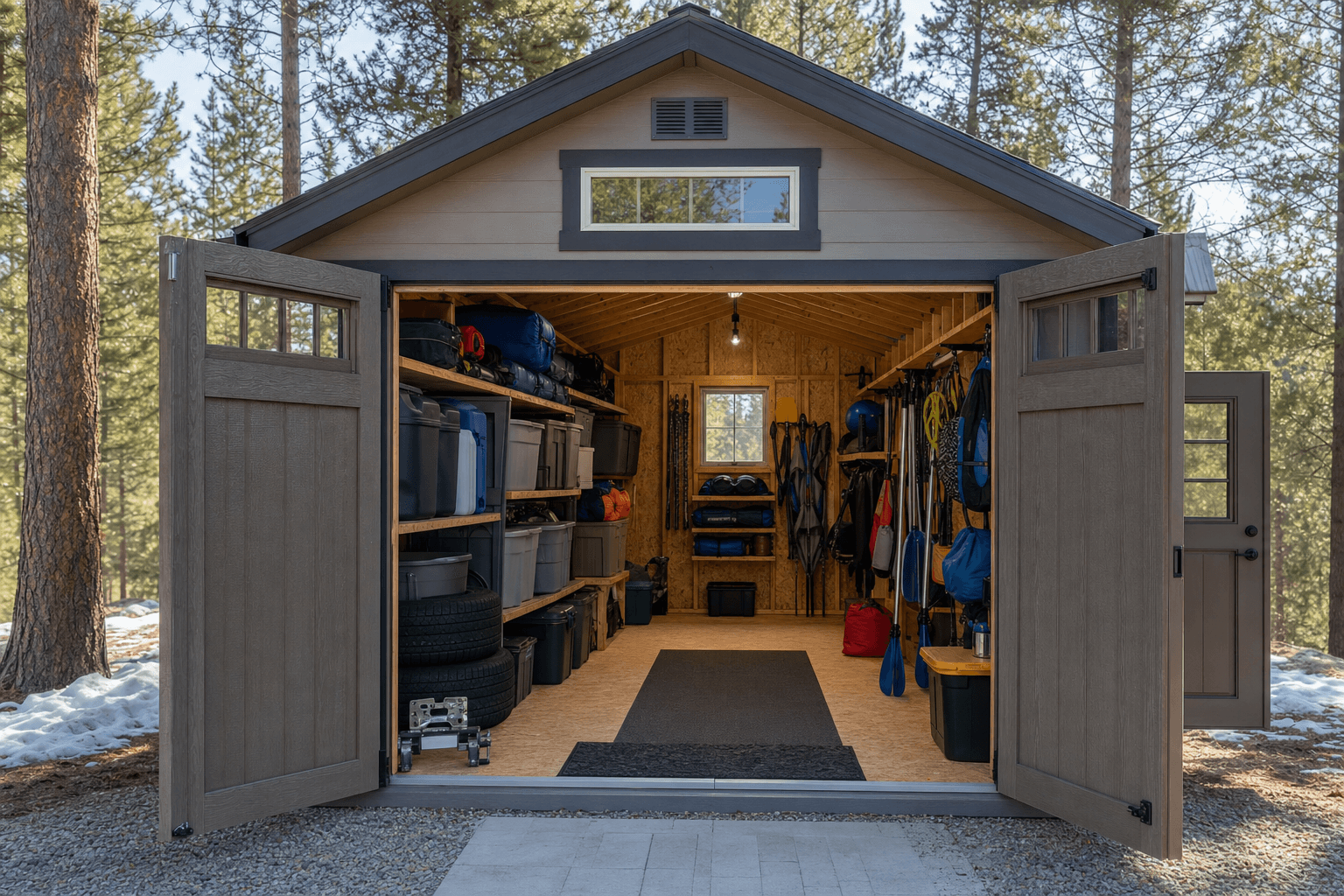
Two feet of width over an 8-wide building turns a 10x12 into a space you walk into and work in.
| 10x12 at a glance | |
|---|---|
| Square footage | 120 sq ft — small-to-mid footprint, comfortable for one main use with overflow |
| Typical door | A single 36-inch or a 4-foot door; double doors if you roll in a mower or ATV |
| Foundation | Level, well-drained gravel pad, built on-site to carry North Idaho snow load |
| Best uses | Garden shed, tool storage and workbench, seasonal storage, she-shed or hobby room |
| Sizes up to | 10x16 for two zones, or 12x16 when you need a center aisle for a vehicle |
| Sizes down to | 8x12 to save yard space, or 10x10 if you do not need the extra wall length |
Because we build every shed on your property, a 10x12 can be finished for whatever job you have in mind — the framing, door, and windows are chosen around the use, not pulled off a lot. For growing and yard work, a garden shed build puts windows over the bench wall and a wide door for the wheelbarrow; the garden shed planning guide walks through bench height, light, and venting. For equipment and projects, a tool shed build adds a workbench wall and pegboard, covered in the tool shed planning guide.
If the job is mostly overflow, a storage shed keeps it simple with shelving and a clear floor — the storage shed planning guide covers shelving and access. And when 120 square feet is going to be a personal retreat, a she-shed build leans into windows, a finished interior, and a porch; the she-shed planning guide covers insulation, power, and layout for that. Any of these can start in the configurator so you see the roofline, door, and windows before you commit.
Yes. A riding mower or zero-turn parks comfortably in a 10x12 with room left over, which is the main reason people step up to this size. Most lawn tractors are roughly 6 feet long and 4 feet wide, so the mower takes one corner and you still have the rest of the 120 square feet for a workbench, a push mower, gas cans, and wall storage for tools. Add a 4-foot or double door so you can roll it straight in without angling it through the opening.
Both are 12 feet long, so they hold the same wall of bench or shelving — the difference is the two feet of width. An 8x12 is 96 square feet and works as a reach-in: you stand at the door and grab what you need. A 10x12 is 120 square feet, and that extra depth gives you a real walking aisle, so you can put gear along both long walls and still pass between them. If you want to work inside the shed rather than just store in it, the 10-foot width is worth it.
Step up to a 10x16 when you need two separate zones rather than one. The extra four feet of length lets you split the building — a workshop end and a storage end, or a riding mower plus a full workbench plus shelving — without those uses fighting for the same wall. A 10x12 is the right call when there is one main job with some seasonal overflow; a 10x16 makes sense once you are clearly combining two purposes and want each to have its own space.
It depends on what goes in and out. For a garden shed or general storage, a single 36-inch door is fine, though a 4-foot door clears a wheelbarrow or wide totes without a fight. If you plan to park a riding mower, snow blower, or ATV, go with double doors or a wide single so you can roll the machine in straight. We size the door to the use, and on a 12-foot wall there is plenty of room to place it where your aisle lines up with the opening.
A level, well-drained gravel pad is the standard base for a 10x12 here. It keeps the floor framing off wet ground, drains snowmelt away from the building, and gives the structure a stable, even footing. Because we build on your property, the pad and placement are part of the plan, and the framing and roofline are built to carry local snow load. Site the shed off the lowest, soggiest spot in the yard and where snow sliding off the roof clears the door rather than burying it.
Yes — 120 square feet is the smallest footprint that feels like a room rather than a closet, which makes 10x12 a popular she-shed size. It holds a comfortable chair, a small desk or craft table, and shelving on one or two walls with daylight from a window. If you want it usable year-round in North Idaho, plan for insulation and a power run for light and a small heater. For a fuller layout with a porch or a finished interior, a 10x16 gives you more elbow room, but 10x12 is plenty for a focused retreat.
The 10x12 is the workhorse size — 120 square feet that hits the sweet spot between a basic storage shed and a real finished room. It holds a riding mower plus all the yard tools with space left over, and it's roomy enough to set up a workbench along one wall. Across Coeur d'Alene, Post Falls, and Hayden it's our most-requested footprint for good reason.
At this size the building genuinely flexes between uses. As storage it swallows what the garage can't; as a finished space it's a credible backyard office, she shed, or hobby studio once you add insulation, a window, and electrical — and it stays comfortable through a North Idaho winter.
Building on site means the 10x12 is framed where it will stand, set level on a sloped or wooded lot, and finished in place with a roof rated for real snow load. You're not limited to wherever a delivery truck can back in.
Browse the models we build, see how it compares to a 10x16 or 12x16, or design your 10x12 in the builder with live pricing and request a free estimate.
Pick your door, windows, and roofline, then get a free estimate or price a 10x12 in the configurator.
Compare nearby footprints to find the right fit for your site and storage needs.