A storage shed is the building you reach for when the garage is full, the closets are overflowing, and the holiday totes have nowhere to live. It is not a workshop and it is not a hobby room — it is honest, organized capacity for what a household accumulates: seasonal decor, lawn furniture, bikes, camping bins, sports gear, and the lawn equipment that does not belong in the house. The whole point is to get those things off the garage floor and out from under the deck, into a dry building where you can find them. The buyers who love their storage sheds planned around volume and access instead of guessing at a size.
North Idaho On Site Sheds builds every storage shed on your property, so the building can answer to your real driveway, slope, and how you carry things in and out. The plan that matters most is the one you make before delivery: an honest inventory of what goes inside, a footprint sized to hold it with room to grow, and a wall-and-loft system that keeps the floor clear. Start with what you own and how often you reach for each thing, and the right size and layout fall into place.
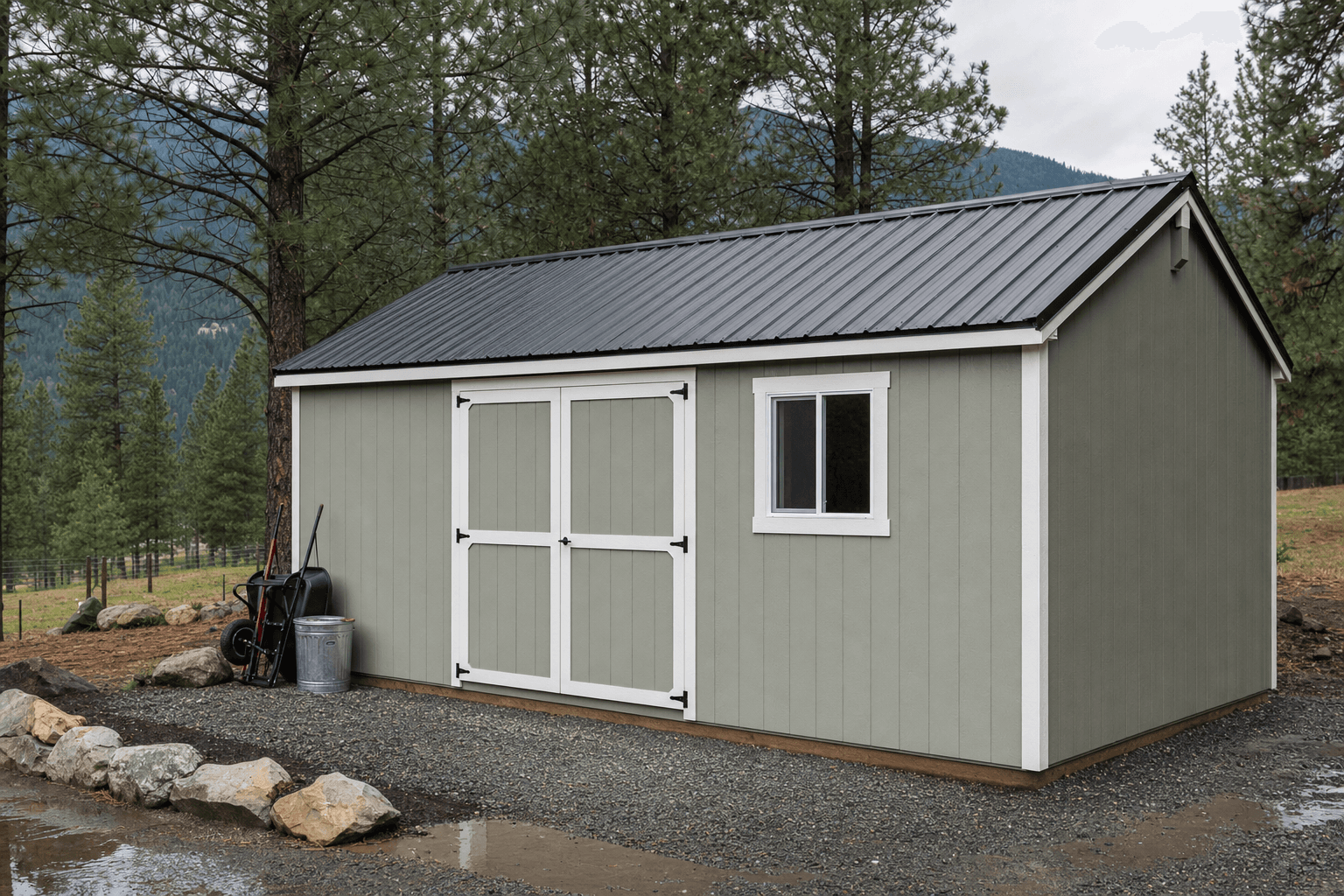
A weather-ready storage shed: wide doors for big items, a dry floor, and wall height for shelving.
Most storage sheds start from one of three shells, and the right one depends on what you carry in. A standard gable is the default: simple, affordable, and tall enough at the ridge for overhead racks above the door. A lofted barn (gambrel) is the capacity champion — the gambrel roof builds in a full-width loft that swallows light, bulky items like holiday totes, cushions, sleeping bags, and car-top carriers, so the floor stays open for the things you use weekly. A lean-to or single-slope shed tucks against a fence or treeline and sheds snow predictably to one side, which is handy on a tight lot.
If sheer volume is the goal, lean toward the lofted barn so you get two levels of storage in the same footprint. If you mostly need floor space for furniture and equipment that rolls, a tall gable is plenty. Pair this guide with the storage sheds service page to see rooflines and door options, and look at garden sheds if a chunk of what you are storing is soil, pots, and yard chemicals that want their own potting space.
An 8x12 or 10x12 holds a wall of shelving, a stack of holiday totes, a push mower, and a few folding chairs without feeling crammed.
Step up to a 10x16 or 12x16 when patio furniture, several bikes, kayaks, and camping bins all need to live inside through winter.
A 12x20 gives a true walk-down aisle, deep shelving on both walls, and room to park a riding mower or trailer alongside the totes.
Storage needs almost always lean bigger than people expect, so size for the pile you have plus the next two years of it. For overflow and seasonal items, start at 8x12 or 10x12 — enough for full shelving and a clear path. When furniture, bikes, and bulky gear enter the picture, 10x16 and 12x16 give each category its own zone instead of one teetering heap. If this shed is absorbing a whole two-car garage worth of clutter, jump to 12x20 for a real aisle and deep shelving on both long walls. The rule of thumb: the more you store, the more a few extra feet of length pays you back on every visit.
These three overlap, and naming the lead job keeps you from buying a building that does none of them well. A storage shed is about capacity and access — totes, furniture, seasonal decor, and gear you reach for a few times a month — so it favors open floor, deep shelving, and a generous loft over any kind of bench. A tool shed is about organizing tools you handle most weeks, so it favors wall tracks, a small bench, and power. A garden shed is built around potting, soil, and yard chemicals, so it favors a work surface, vents, and easy hose access.
Plenty of households want one building that flexes, and that is fine — just decide which job leads. If the priority is clearing the garage and the holiday closet, build a storage shed and add a short tool wall in one corner. If half of what you own is seasonal toys, sleds, and pool gear, look at dedicated seasonal and toy storage, which is laid out around bins and bulky kid gear. Picking the lead use up front drives the door width, the shelving depth, and how much of the volume goes up into a loft.
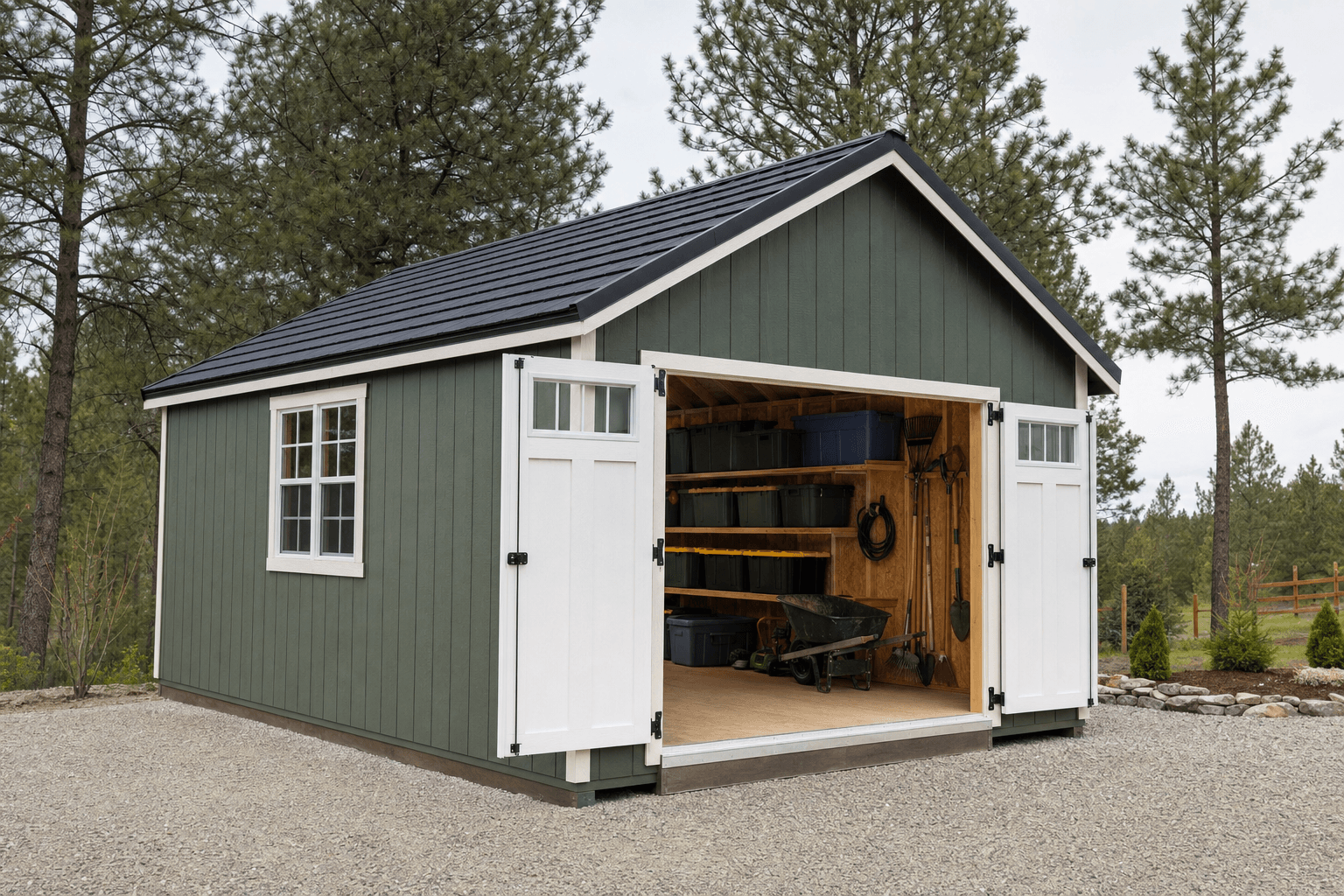
Shelving up the walls and a loft overhead keep the floor clear for furniture and equipment.
Think of a storage shed as three zones instead of one open box you fill at random. A grab-and-go zone near the door holds what you touch most — bikes, the mower, folding chairs, and the bin of pool toys in summer. A deep-storage zone along the back wall and up on shelves holds the rest of the season's gear, sorted by category so a holiday tote is never buried behind the camping stove. An overhead zone in the loft or on ceiling racks takes the light, bulky things you move twice a year.
Zoning is what keeps a storage shed from collapsing into the same pile you were trying to escape. Leave a clear center aisle wide enough to carry a tote with both hands, keep heavy items low and light items high, and group everything by when you use it, not by what it is. That single habit means you never unstack three bins to reach a fourth, and it keeps the floor sweepable when boots track in snowmelt.
Heavy-duty adjustable shelves along the long walls turn empty air into sorted, labeled capacity — far more usable than stacking totes on the floor.
A gambrel loft or ceiling-mounted racks swallow holiday totes, cushions, and car-top carriers, reclaiming the whole floor for what you use weekly.
Heavy hooks and a wall track lift bikes, ladders, chairs, and hoses off the floor so nothing leans in a corner waiting to fall.
Stackable clear bins on those shelves keep contents visible and dust-free, so seasonal swaps take minutes, not an afternoon.
This is the long list that decides your size and shelving, so be honest about all of it. Lawn equipment — push or riding mower, string trimmer, leaf blower, spreader, and wheelbarrow — wants floor space near the door and a wide enough opening to roll straight in. Seasonal decor lives in stackable totes on shelves: Christmas lights and ornaments, fall and Halloween decor, and the artificial tree in its box.
Outdoor living gear is the bulky middle: patio furniture and cushions, a folded canopy or umbrella, the off-season grill, coolers, and camping bins with the tent and sleeping bags. Recreation eats more room than people plan for — bikes on wall hooks, kayaks or paddleboards on a rack, golf clubs, fishing gear, sleds, and a bin of sports balls. Then household overflow: extra furniture, luggage, paint, and boxes you are not ready to part with. If sleds, pool floats, and kid gear dominate that list, dedicated seasonal toy storage is built for exactly that mix, while a tool shed is the better home for a growing collection of tools.
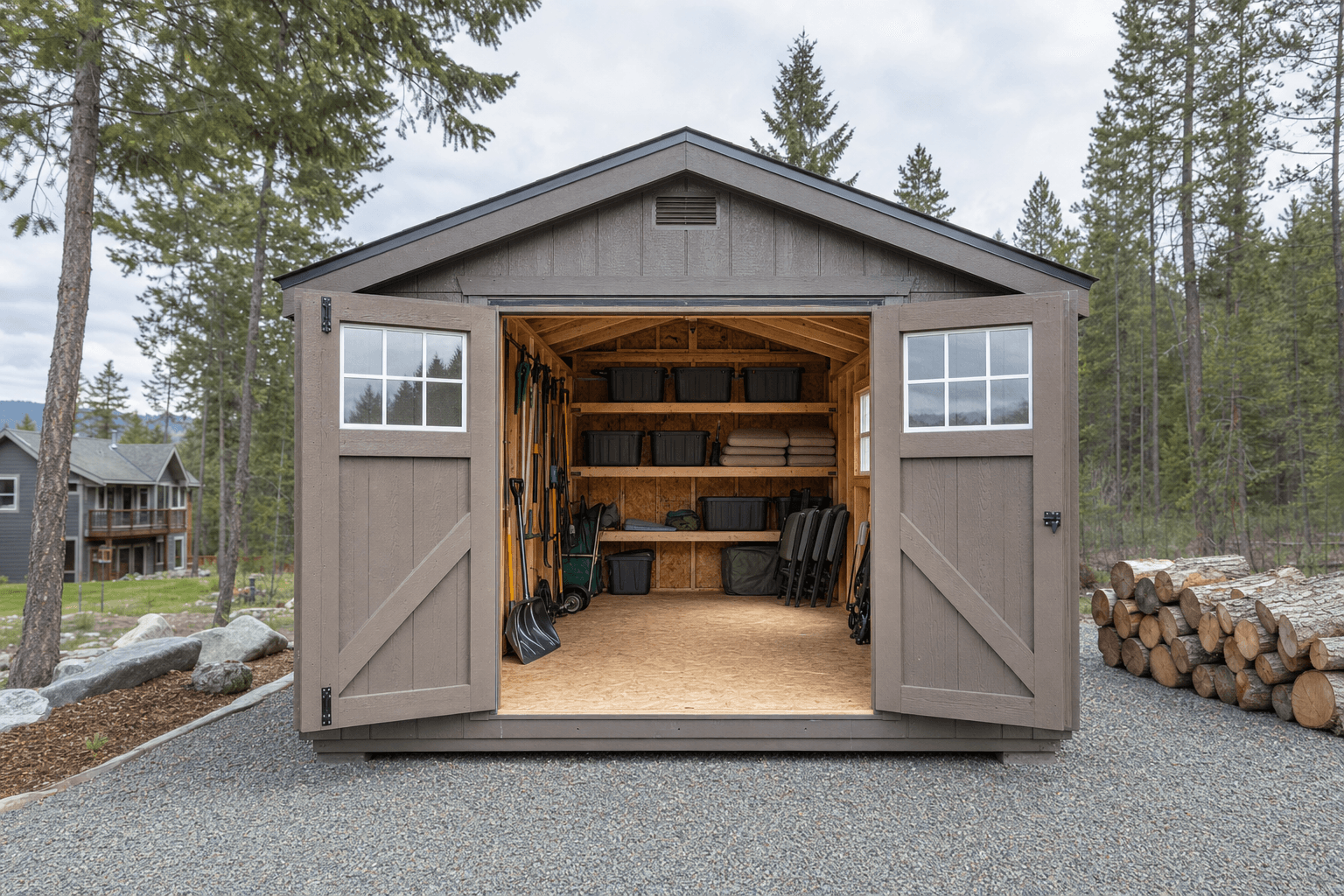
Clear labeled totes on adjustable shelves, with bikes and chairs hung off the wall.
| Storage shed planning checklist | |
|---|---|
| Doors | Wide double doors sited for a straight roll-in of the mower and furniture |
| Shelving | Deep adjustable shelves on the long walls, heavy items low, light items high |
| Loft | A gambrel loft or ceiling racks for light, bulky, twice-a-year items |
| Floor | Dry and level, rated for a riding mower or loaded shelving if needed |
| Ventilation | Eave or gable vents to stop condensation from damaging stored goods |
| Security | Quality hasp and lock, plus concealed hinges on out-swing doors |
A storage shed protects what you put in it only if you keep moisture and mice out, so plan for both before you fill it. Start with a dry, well-drained pad and good eave or gable ventilation so warm, moist air can escape instead of condensing on cardboard and metal. Lift anything moisture-sensitive off a cold slab onto a low shelf, store soft goods like cushions in sealed totes rather than open bags, and leave a little air behind wall-hung items so nothing traps damp against the wall.
Pests are the other quiet threat in North Idaho. Mice find gaps, so seal the build well, keep totes off the floor, and choose hard plastic bins over cardboard for anything they would nest in. A storage shed rarely needs heat, but if you keep paint, batteries, or anything that should not freeze, run a single circuit for a light and a small thermostatic heater — most stored items are happy unheated as long as they stay dry and sealed.
A storage shed is only as good as the pad under it. A compacted gravel pad keeps the floor dry and lets snowmelt drain, which is ideal for a building full of totes and furniture; a concrete pad makes sense if you will roll a riding mower or loaded carts in and out daily. Plan the approach so you are not hauling heavy bins uphill through mud, and place the doors where a straight path from the driveway makes carry-in easy.
North Idaho winters drive several choices: a roof and anchoring rated for local snow load, vents that keep condensation off your stored goods, and a door that still opens after a storm. Many small sheds do not need a permit, but setbacks, HOA covenants, and larger footprints often do — confirm the rules for your town on the service areas pages before you finalize size and placement, and read how to prep a shed site before delivery day.
Deep, heavy-duty adjustable shelving along the long walls is the backbone of a good storage shed. Adjustable brackets let you re-space shelves as your totes change size, and running them floor to near-ceiling turns empty air into sorted capacity. Keep heavy items low, light and seasonal items high, and add a wall track for bikes and bulky gear so nothing has to sit on the floor.
Start with a dry, well-drained pad and eave or gable ventilation so damp air escapes instead of condensing on your belongings. Store soft goods and anything mice would nest in inside sealed hard-plastic totes rather than cardboard, keep everything up off a cold slab on shelves, and seal the build so rodents cannot get in. For most stored items, dry and sealed matters far more than heated.
Group everything by when you use it, not by what it is, and give each season its own shelf or section. Use clear, labeled, stackable bins so you can see contents at a glance, keep the heaviest totes low and lightest ones high, and reserve the loft for things you move twice a year. A center aisle wide enough to carry a tote with both hands keeps the whole system usable.
A 10x12 comfortably holds a full wall of shelving, a stack of seasonal totes, a push mower, and a few folding chairs — ideal for overflow and holiday storage. A 12x20 is a different scale: a true walk-down aisle, deep shelving on both walls, and room for a riding mower, bikes, and patio furniture alongside the totes. If you are clearing a whole garage, the larger footprint pays for itself fast.
If you store light, bulky, seasonal items, yes — a loft is the highest-value upgrade you can make. A gambrel (lofted barn) roof builds in full-width overhead storage that swallows holiday totes, cushions, and car-top carriers, freeing the whole floor for what you use weekly. If you mostly store heavy equipment that rolls, a tall gable with ceiling racks above the door is usually enough.
Most stored items — furniture, totes, lawn gear, decor — are perfectly happy in an unheated shed as long as it stays dry and well ventilated. The exceptions are things that should not freeze, like latex paint and batteries; for those, run a single circuit for a light and a small thermostatic heater. Ventilation to prevent condensation does more to protect your belongings than insulation does.
A storage shed built on site is framed and finished on your property, which means it can be sized to your actual lot constraints — a tight back corner in Post Falls, a sloped yard in Hayden, or a narrow strip along a fence in Coeur d'Alene. The footprint doesn't have to match what fits on a delivery truck, and the door can face the direction that works for how you actually load it.
North Idaho freeze-thaw cycles are hard on storage buildings with inadequate floor systems. A shed sitting on concrete blocks that weren't set below frost depth can shift and rack over a few winters, making doors bind and gaps open at the corners. On-site construction lets the foundation be matched to the ground conditions on your specific lot — gravel pads, concrete piers, or a treated-sill system chosen for your site rather than a one-size default.
For four-season use — storing lawn equipment in summer and snowblowers in winter — wall framing matters. A well-built storage shed doesn't need to be heated, but it does need to be tight enough that condensation doesn't build up and soak wood shelves or corrode metal edges. Proper soffit ventilation and a good roof pitch handle that through even a wet North Idaho spring.
Kootenai County accessory structure rules set thresholds on square footage before a permit is required. If you're in city limits the threshold may differ. Sizing your shed with that in mind from the start avoids complications. Get a free estimate or design your storage shed now.
Tell us what you need to store and where the shed should sit. We will help size the building, door layout, and shelving around your property — then you can build and price it online.
Keep planning your build with related North Idaho shed guides.