A tiny home is a small building you actually live in — not a storage room with a chair, and not a guest space someone borrows for a weekend. It is a compact, self-contained place to sleep, cook, wash, and unwind, planned so that every foot of floor earns its keep. People choose a tiny home for simple full-time living, a low-overhead second place on the family land, a seasonal basecamp near the lake or the mountain, or a quiet downsize once the big house feels like too much to heat and clean. Because it is meant for real living rather than visiting, the plan turns on efficiency: a smart layout, sleeping that folds up or climbs out of the way, a kitchenette and a bath that fit a small footprint, and big windows that make a little space feel open and bright.
The art of a tiny home is fitting a whole life into a footprint most people would call a large shed, and doing it without feeling cramped. That means deciding early how you sleep — a sleeping loft overhead or a Murphy bed that folds flat by day — because that one choice frees up the floor for everything else. It means planning a kitchenette you can really cook in, a compact but comfortable bath, and storage built into walls, steps, and benches so the room stays clear. North Idaho On Site Sheds builds your tiny home on your property, framed tight and insulated for a Panhandle winter, so it lives warm and dry year after year. Plan the layout, the sleeping, and the heat first; the finishes come easy once the bones are right.
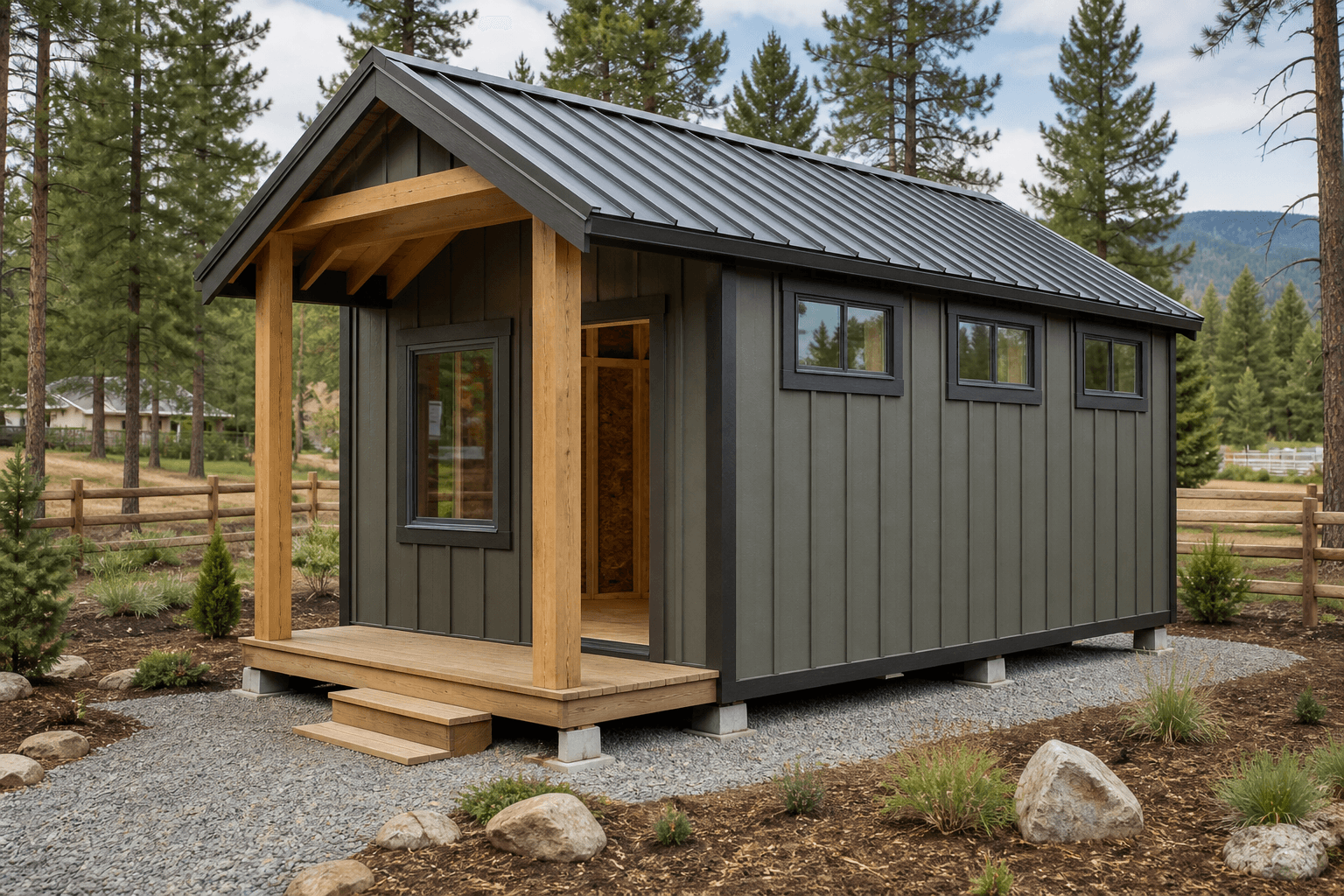
A tiny home is built for real living: an efficient layout, big windows for light, and a winter-tight, insulated shell.
A tiny home lives or dies on usable volume, so the rooflines that win are the ones that buy you height — for a loft, for tall windows, and for the headroom that keeps a small space from feeling like a box. A lofted barn (gambrel) is the classic tiny-home shape for exactly this reason: the broad-shouldered roof opens a genuine sleeping loft over the main floor, so the bed climbs out of the way and the whole ground level stays open for a kitchenette, a sitting spot, and a bath. A steep gable is the other strong choice when you would rather sleep on the main floor with a Murphy bed or a daybed; the tall ridge still gives you bright, vaulted ceilings and room for a wall of glass on the gable end. If your taste runs modern, a lean-to single-slope sheds North Idaho snow cleanly to one side and frames one tall window wall, though you trade away the symmetric loft.
Because a tiny home is a tiny home and not a workshop, plan the roofline around how you sleep and how light gets in, not around storage. Add a small covered porch — even a four-foot overhang with room for two chairs and a boot tray — and the building instantly feels like a home with a front step rather than a unit parked in the yard. Where you want the place to feel more like a finished little house with year-round polish and cottage trim, the cottage build shares the same conditioned-shell DNA and is worth comparing for finish level. And if you find yourself wanting a full residential kitchen, permanent utility hookups, and a permit to rent it out, that is an ADU, a heavier and more regulated project covered in its own guide.
A loft frees the whole main floor; a Murphy bed keeps everything on one level. This single choice sets your size more than any other — settle it before you pick a footprint.
A compact kitchen run and a wet bath each need a dedicated wall on the plumbing side. Group them together and the rest of the floor stays open and livable.
Stairs with drawers, a bench with a lid, a loft over the bath — design storage into the bones so the visible floor stays clear and the room feels twice its size.
Footprint is everything in a tiny home, because you are fitting sleeping, cooking, washing, and living into one room and every inch counts. A 10x16 tiny home is the efficient floor for a one-person, loft-sleeping plan: 160 square feet on the main level holds a galley kitchenette, a compact wet bath, and a sitting nook, with the bed up in a gambrel loft so the floor never fights the furniture. Step to a 12x16 tiny home and the extra two feet of width transforms the main floor — now the kitchenette, a small dining or work surface, a love seat, and the bath each get a real zone, and a Murphy bed becomes a comfortable option if you would rather skip the loft. A 12x20 tiny home is the sweet spot most North Idaho downsizers land on: 240 square feet gives you a true kitchen run, a roomier bath with a real shower, a defined living area, and either a loft or a fold-away bed without anything feeling pinched. When you want a tiny home that lives more like a small apartment — a couch and a chair, a generous kitchenette, a full bath, and storage you do not have to ration — a 12x24 tiny home is the honest top of the range, 288 square feet that still reads tiny but never feels tight. Pick the smallest size that holds your real daily life, then add a few feet of width before length; width is what makes a tiny home feel like a home rather than a hallway.
These three look alike parked in a yard, but they answer to different rules and different budgets, and naming the right one up front keeps you from building the wrong thing. A tiny home sits in the honest middle: it is built for real living — you sleep, cook, and bathe there — but it stays compact and is usually planned lighter on permits and permanent utilities than a full legal dwelling, often running on simple hookups or even off-grid power. An ADU is the heavy end: a permitted, full-time legal residence with a full residential kitchen, a full bath, approved water and sewer or septic, a dedicated electrical feed, and the inspections that let you rent it and add it to your property's value. If the plan is to house someone permanently and rent it legally, you are building an ADU, and the permits and utilities come first.
A guest house is the lighter end: a comfortable, optional place for visitors and the occasional overnight — a bed, a sitting corner, usually a half-bath, and at most a coffee-bar kitchenette — that nobody lives in full time. A tiny home is more committed than that: it is somebody's actual home, even if a small or seasonal one, so it earns a real kitchenette, a real shower bath, full insulation, and a heat source you can count on through January. The practical test is simple. If it is for guests and the occasional stay, plan a guest house. If someone needs to live there full time and you want it permitted and rentable, plan an ADU. If you want a small, efficient place to genuinely live — simply, affordably, maybe seasonally, maybe off-grid — that is a tiny home, and this is your guide. If your plan keeps drifting toward a full residential kitchen and a permanent rented tenant, price it as an ADU on purpose rather than discovering the line mid-build.
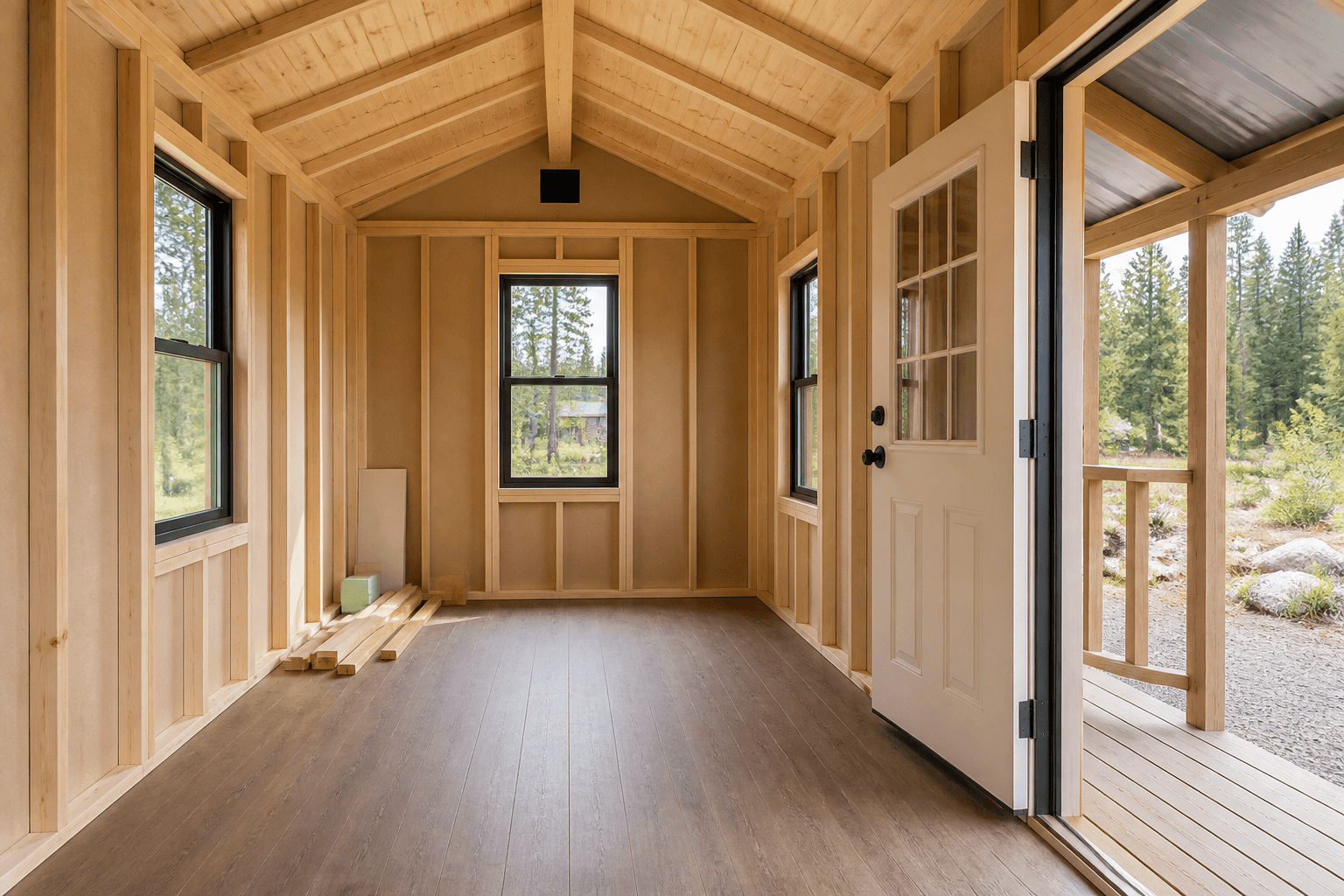
A loft overhead frees the main floor for a kitchenette, a sitting nook, and a bath — the layout that makes a small footprint live large.
A tiny home feels generous only when you plan it as a set of distinct zones stacked and tucked efficiently, not one room with furniture shoved against the walls. Build it around five zones and let the plumbing decide the anchor. The wet zone comes first: put the kitchenette sink and the bathroom on a single shared plumbing wall so the supply, drain, and vent lines run together in one insulated chase instead of crisscrossing the building — cheaper to plumb and far easier to keep from freezing in a North Idaho winter. The kitchen zone wants a continuous counter run along that wall with a two-burner cooktop, a sink, a compact refrigerator, and uppers and lowers, sized to actually cook a meal rather than just reheat one. The sleep zone is the choice that frees everything else: a loft overhead in a gambrel, reached by storage stairs or a ladder, or a Murphy bed or daybed on the main floor that folds away by day so the same square footage becomes a living room by afternoon.
The living zone is what keeps a tiny home from feeling like a cabin of the trade kind — a love seat or a built-in bench, a small folding or drop-leaf table, and a window to sit beside, the spot where you read, eat, and unwind. Finally, plan a tidy systems and entry zone: a place by the door for boots, coats, and a snowy-boot mat, plus a small mechanical nook for the water heater, the electrical panel, and the heat source, kept together and reachable. Sketch these five zones before you lock a footprint — it is the fastest way to learn whether a 10x16 truly fits your life or you want the width of a 12x20. In a tiny home the loft and the wet wall do the heavy lifting; get those two right and the rest of the plan falls into place.
Choose a gambrel loft reached by storage stairs to free the entire main floor, or a Murphy bed or daybed that folds flat by day so the sleeping space doubles as the living room. Either way the bed stops eating floor you need for living.
A continuous counter run with a two-burner cooktop, a deep single-basin sink, a compact under-counter refrigerator, and uppers and lowers, grouped with the bath on one plumbing wall. Add a vent fan and a moisture-tolerant floor so daily cooking has somewhere to go.
A corner or wet-bath layout fits a shower, a toilet, and a small vanity into a few square feet, tied to the shared plumbing wall with a vented fan to carry shower moisture out. It is the difference between a tiny home you live in and one you only visit.
Drawers built into the loft stairs, a bench with a lift-up lid, shelves above the door and bath, and a tall pantry column beside the fridge. Designing storage into stairs, walls, and benches keeps the visible floor clear and the small room calm.
The keyword for a tiny home is efficient daily living, and the fit-out is every multi-use piece that lets one small room do the work of a whole house. For sleeping: a loft mattress with a guardrail and a reading light, or a fold-down Murphy bed or a daybed-with-trundle on the main floor, plus a few open shelves or a slim wardrobe for clothes. In the kitchenette: a two-burner induction or propane cooktop, a compact 24-inch or under-counter refrigerator, a deep single-basin sink, a small convection-microwave, a drop-leaf or fold-out table that seats two and folds flat, and stools that tuck fully under the counter. In the bath: a corner shower or a wet-bath enclosure, a compact or composting toilet, a small vanity, a vented exhaust fan, and a towel bar and hooks that use vertical space. For storage, the tiny-home staples earn their place: a staircase with built-in drawers, a storage bench or ottoman, a Murphy desk that folds against the wall, a fold-down dining surface, wall-mounted rails and pegboards, a tall narrow pantry, and bins that slide under the loft or the bed. For comfort and light: big windows and a skylight to pull daylight deep into the room, layered lighting on dimmers, a few well-placed outlets and USB ports, and good Wi-Fi reach from the house. Walk your own list of what you use every single day before you settle on a size, because a tiny home has to hold all of it gracefully — which is exactly why the right footprint and a loft matter so much, and why a few extra feet of width often pays for itself in livability.
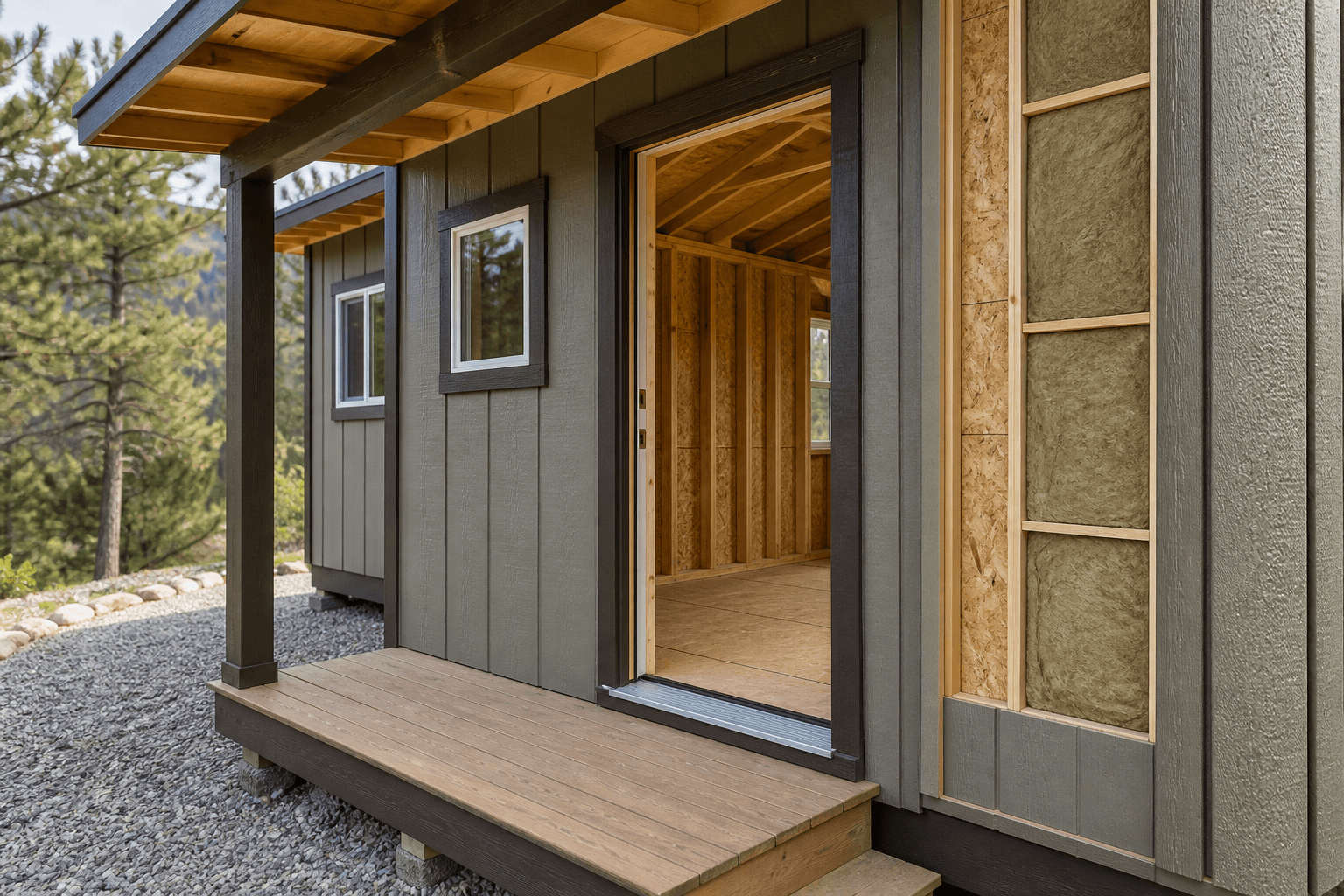
Detail that makes a tiny home work: loft stairs that double as drawers, a fold-down table, and a kitchenette on the shared wet wall.
| Tiny home planning checklist | |
|---|---|
| Best all-round size | 12x20 for a real kitchenette, a shower bath, a living area, and a loft or Murphy bed without anything feeling tight |
| Sleeping choice | A gambrel sleeping loft over the main floor, or a Murphy bed or daybed that folds away by day to free the floor for living |
| Kitchenette | Continuous counter run with a two-burner cooktop, a sink, and a compact refrigerator, grouped with the bath on one plumbing wall |
| Bathroom | A compact wet or three-quarter bath — shower, toilet, small vanity, vented fan — tied to the shared wet wall |
| Heat and insulation | A fully insulated envelope and a sized mini-split or efficient heater so the home stays warm and the pipes never freeze in winter |
| Power and water | Standard utility hookups, or an off-grid setup with solar, batteries, and a water tank for a basecamp or remote lot |
Three system decisions shape how, and where, your tiny home can live. Power comes first: most tiny homes on a home property run on a standard electrical hookup — a feed from the main service sized for a cooktop, a small refrigerator, lights, chargers, and the heat source — run and inspected by a licensed electrician. On a remote lot or for a true basecamp, an off-grid setup pairs a solar array with a battery bank and an inverter, often with a small backup generator, which is plenty for efficient LED lighting, a 12-volt or propane refrigerator, water pumps, and devices, as long as you size it honestly and lean on propane for cooking and heat. Water follows the same fork: a standard plumbing connection with an approved supply and a drain or septic tie-in, or an off-grid approach with a fresh-water tank, a 12-volt pump, a propane or electric water heater, and a gray-water plan — and on either path, a composting toilet can simplify the waste side considerably.
Winter heat is the part North Idaho will not let you skip. A tiny home is a small, tight space, which is an advantage: a fully insulated envelope — walls, ceiling, and floor — with sealed doors and quality windows holds warmth with very little energy. A ductless mini-split heat pump is the efficient workhorse for a grid-tied home, heating and cooling quietly and holding temperature through a Panhandle cold snap, while a propane or a small wood heater is a common off-grid choice. Whatever the source, keep the kitchenette and bath plumbing on an interior, insulated wet wall and maintain low background heat when the home sits briefly empty so nothing freezes. We build the shell tight, square, and dry on your property so your electrician, plumber, and HVAC installer can run and inspect every system cleanly, whether you plug into the grid or run on the sun.
Because we build on your property, the pad and placement are part of the plan. A level, well-drained gravel pad is the common base for a seasonal or part-time tiny home — it keeps the floor framing off wet ground and drains snowmelt away from the building — while a tiny home meant for committed, year-round living usually wants a more permanent frost-protected foundation so a building with plumbing stays put through freeze-thaw and the pipes never heave. Plan any utility trenches — water, drain or septic, and electrical — before the building is set, and place the home where the gravel driveway or a clear path lets our crew bring materials in to build. Site it for light and privacy: orient the big windows and the porch toward the trees, the morning sun, or the view, and angle the bath window away from the neighbor's yard so the little home feels like a retreat.
North Idaho weather drives the structure. We build for local snow load, so the roof and framing carry a heavy winter without strain, use treated and pine materials suited to freeze-thaw swings, and place the building so snow sliding off the roof clears the door, the porch, and the windows rather than burying them. Permitting is where the tiny-home line matters, and it depends on how you use the building. A compact tiny home is usually a lighter lift than a full accessory dwelling unit, but the moment it is occupied as full-time living space — with sleeping, a kitchenette, and a bath — many jurisdictions treat it as habitable space that triggers building, electrical, and plumbing permits and a measure of residential-code compliance. Lofts, ceiling heights, egress windows, and septic capacity all factor in. Rules vary across Kootenai County and the cities around Coeur d'Alene, so the first move, before you fall for a layout, is to confirm with your local building and planning department how a tiny home is classified on your parcel and what it requires. Check the rules for your town on the service areas pages, then we plan the build around exactly what your jurisdiction allows. When you are ready, get a free estimate or build and price a tiny home to see your size, roofline, loft, and window options come together.
Start by deciding how you sleep, because it frees up everything else. In a lofted barn (gambrel) shape, the bed goes up in a sleeping loft over the main floor, reached by a ladder or, better, by storage stairs with built-in drawers, which keeps the entire ground level open for a kitchenette, a sitting spot, and a bath. If you would rather stay on one level, a Murphy bed or a daybed folds away by day so the same square footage becomes a living room. From there, group the kitchenette and bath on a single shared plumbing wall, reserve a bright corner with a window for a love seat and a fold-down table, and build storage into the stairs, benches, and walls so the visible floor stays clear. A 10x16 handles a loft-sleeping plan for one person, while a 12x20 gives you room for a loft or a Murphy bed plus a real living area without anything feeling pinched.
Yes, and that is exactly what separates a tiny home you live in from a guest space you only visit. The trick is to stack the kitchenette and the bath on one shared plumbing wall so a single supply, drain, and vent run serves both, which keeps the install tight and easy to insulate against freezing. A working kitchenette fits a continuous counter run with a two-burner cooktop, a deep single-basin sink, a compact under-counter refrigerator, uppers and lowers, and a vent fan — enough to genuinely cook, not just reheat. The bath is usually a compact three-quarter or wet-bath layout that fits a shower, a toilet, and a small vanity into a few square feet with a vented exhaust fan to carry moisture out. A 10x16 holds a galley kitchenette and a compact bath; step to a 12x20 if you want a fuller kitchen run and a roomier shower.
A tiny home's small size is an advantage in winter: a fully insulated envelope — walls, ceiling, and floor — with sealed doors and quality windows holds warmth with very little energy. For a grid-tied home, a ductless mini-split heat pump is the efficient workhorse; it heats and cools quietly and holds a steady temperature through a Panhandle cold snap, sized to the square footage. Off-grid, a propane heater or a small wood stove is a common, reliable choice. Whatever the source, keep the kitchenette and bath plumbing on an interior, insulated wet wall and maintain low background heat when the home sits briefly empty so nothing freezes. Building the envelope tight from the start is far cheaper than trying to add insulation or chase cold drafts after the walls are closed up.
Either works, and the right answer depends on the lot. On a home property, most tiny homes run on standard hookups — an electrical feed sized for the cooktop, the refrigerator, lights, and the heat source, plus an approved water supply and a drain or septic tie-in, all run and inspected by licensed trades. On a remote lot or for a basecamp, an off-grid setup pairs a solar array with a battery bank and an inverter, often with a small backup generator, which comfortably runs LED lighting, a 12-volt or propane refrigerator, water pumps, and devices as long as you lean on propane for cooking and heat and size the system honestly. On the water side, off-grid means a fresh-water tank, a 12-volt pump, a propane or electric water heater, and a gray-water plan, and a composting toilet can simplify the waste side considerably. We build the shell either way; tell us which path you want so the wiring chases and plumbing wall are planned for it.
Design the storage into the structure rather than adding furniture that eats the floor. The tiny-home staples earn their place: a staircase to the loft with built-in drawers, a storage bench or ottoman with a lift-up lid, shelves above the door and the bathroom, a tall narrow pantry column beside the refrigerator, and bins that slide under the loft or the bed. Multi-use furniture does double duty — a Murphy bed that folds flat, a drop-leaf or fold-down table, a desk that folds against the wall, and stools that tuck fully under the counter. Wall-mounted rails, pegboards, and magnetic strips put vertical space to work in the kitchenette. The goal is to keep the visible floor clear and the sightlines long, which is what makes a small room feel calm and twice its size, so plan these built-ins during the framing rather than bolting them on afterward.
Usually some level of permitting applies, because the moment a building is used as living space — with sleeping, a kitchenette, and a bath — many jurisdictions treat it as habitable space rather than a storage shed. That can trigger building, electrical, and plumbing permits and a measure of residential-code compliance, with lofts, minimum ceiling heights, egress windows, and septic capacity all factoring in. How strictly it is regulated depends on whether you use the tiny home seasonally or full-time and on how your parcel is zoned, and a tiny home is generally a lighter lift than a full accessory dwelling unit, which is permitted as a legal residence with a full kitchen and approved utilities. Rules vary across Kootenai County and the cities around Coeur d'Alene, so the smart first step is to confirm with your local building and planning department how a tiny home is classified on your lot and what it requires before you finalize a size or layout. We then build the shell to plan so your inspections go smoothly.
A tiny home that stays livable through a Kootenai County winter needs a different insulation and air-sealing spec than a mild-climate build. Coeur d'Alene and Post Falls see sustained cold snaps where a poorly insulated small structure loses heat faster than it can be replaced — the small interior volume that makes a tiny home efficient in summer works against you in January if the envelope isn't tight. A tiny home framed on site is built to those conditions from the start: wall thickness, vapor barrier placement, and window U-values are chosen for North Idaho, not averaged across a national delivery catalog.
Lot access is the practical reason many North Idaho tiny home placements happen with an on-site build. On a wooded parcel near Hayden Lake, a steep rear lot in Coeur d'Alene's South Hill neighborhoods, or a property accessed by a single-lane private road, a crane-delivered or trucked-in unit can't always reach the placement. A crew building in place works with the terrain, pouring piers or setting blocking on the actual grade rather than requiring a flat, open delivery path.
Heat source choice matters more in a small structure than a large one. A mini-split handles shoulder seasons cleanly and conditions the space without combustion, but a backup radiant or propane source is a real consideration on North Idaho parcels where power outages during winter storms are occasional. Running the rough-in for both during framing costs very little compared to retrofitting later.
Permit classification in Kootenai County depends on how the structure is used — a sleeping space with a bath triggers different review than a non-habitable accessory building, and city-limits parcels in CDA and Post Falls have setback and lot-coverage rules that differ from unincorporated county. Knowing your parcel's classification before finalizing dimensions avoids a costly redesign. Start designing your layout or get a free estimate to see what a built-on-site tiny home costs on your property.
Tell us how you want to sleep, cook, and heat it, and we'll help you size, lay out, and price a tiny-home shell for your North Idaho property — loft, kitchenette, bath, and big windows included.
Keep planning your build with related North Idaho shed guides.