Seasonal toy storage works best when it is planned as a changeover room, not just a place to shove everything that no longer fits in the garage. In North Idaho, summer lake gear, RV accessories, trailer parts, snowmobile equipment, covers, tires, and trip totes all rotate through the year. A dedicated shed gives those pieces a dry, organized home close to the driveway, shop, or lake-property access point.
The right shell depends on the gear you actually move every season. Wide doors, a low threshold, durable flooring, ventilation, shelving, and blank bin zones matter more than simply chasing the biggest footprint. If the goal is to store a full boat, RV, or tall trailer indoors, that becomes a high-clearance storage or garage conversation. For many owners, the better shed solves the accessory problem: all the covers, tires, straps, paddles, chargers, tools, and winter handoff gear that make seasonal use faster.
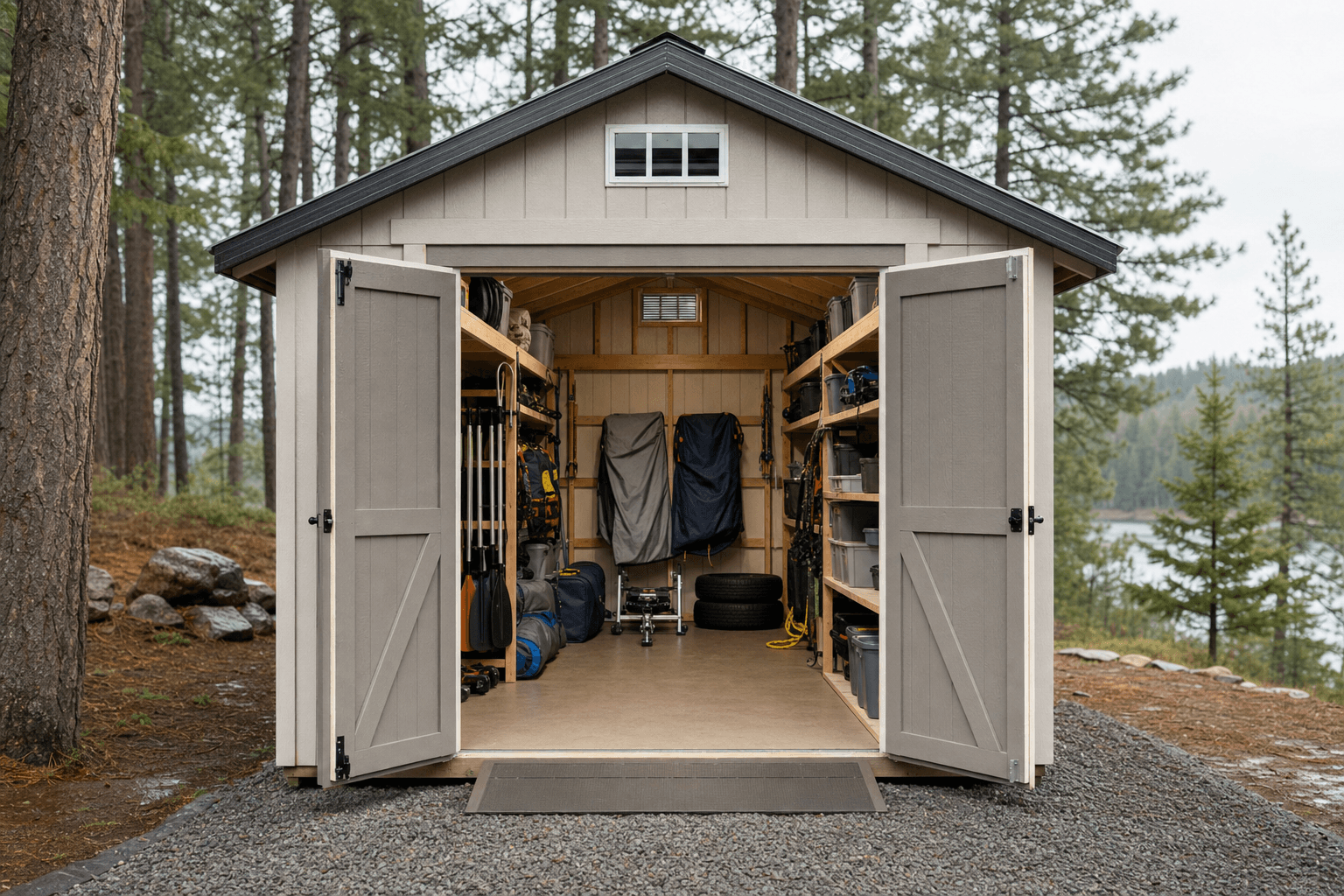
Wide doors, blank bins, spare tires, folded covers, paddles, and hooks keep seasonal gear organized without forcing oversized boats or vehicles into a shed bay.
Folded covers, dry bags, paddles, tow straps, life jackets, and trailer accessories should be easy to see before the first lake weekend. Put the items you grab together in the same wall zone instead of spreading them through the house and garage.
Snow gear, sled covers, spare belts, boot bins, tire chains, and cold-weather totes should sit near the door without blocking the center aisle. That keeps winter loading practical when the driveway is wet, icy, or packed with snow.
Keep clean textiles and covers away from fuel odors, oily tools, and dirty return gear. A simple separation plan reduces clutter and gives you a better checklist before anything goes back into use.
The most useful seasonal toy shed usually has a clear center aisle with storage on both side walls. One wall can hold long items such as paddles, skis, folding ramps, poles, and covers. The opposite wall can carry shelves for blank bins, trailer hardware, snow accessories, dry bags, and small tools. Lower shelves work well for heavy tires and hitches because they can be rolled or lifted without climbing.
A 10x16 or 12x16 shed can handle a focused accessory room for one family’s lake and winter gear. A 12x20, 12x24, or larger layout gives more breathing room for spare tires, bulky covers, multiple seasonal totes, and a mud-ready return area. The right answer depends on how many seasonal hobbies you are supporting and whether the shed also needs a small workbench.
Door planning should happen early. Double doors are usually the right starting point because seasonal gear is awkward and often moved in batches. A low threshold, durable floor edge, and clear gravel approach help when rolling totes, tires, or a small dolly through the opening.
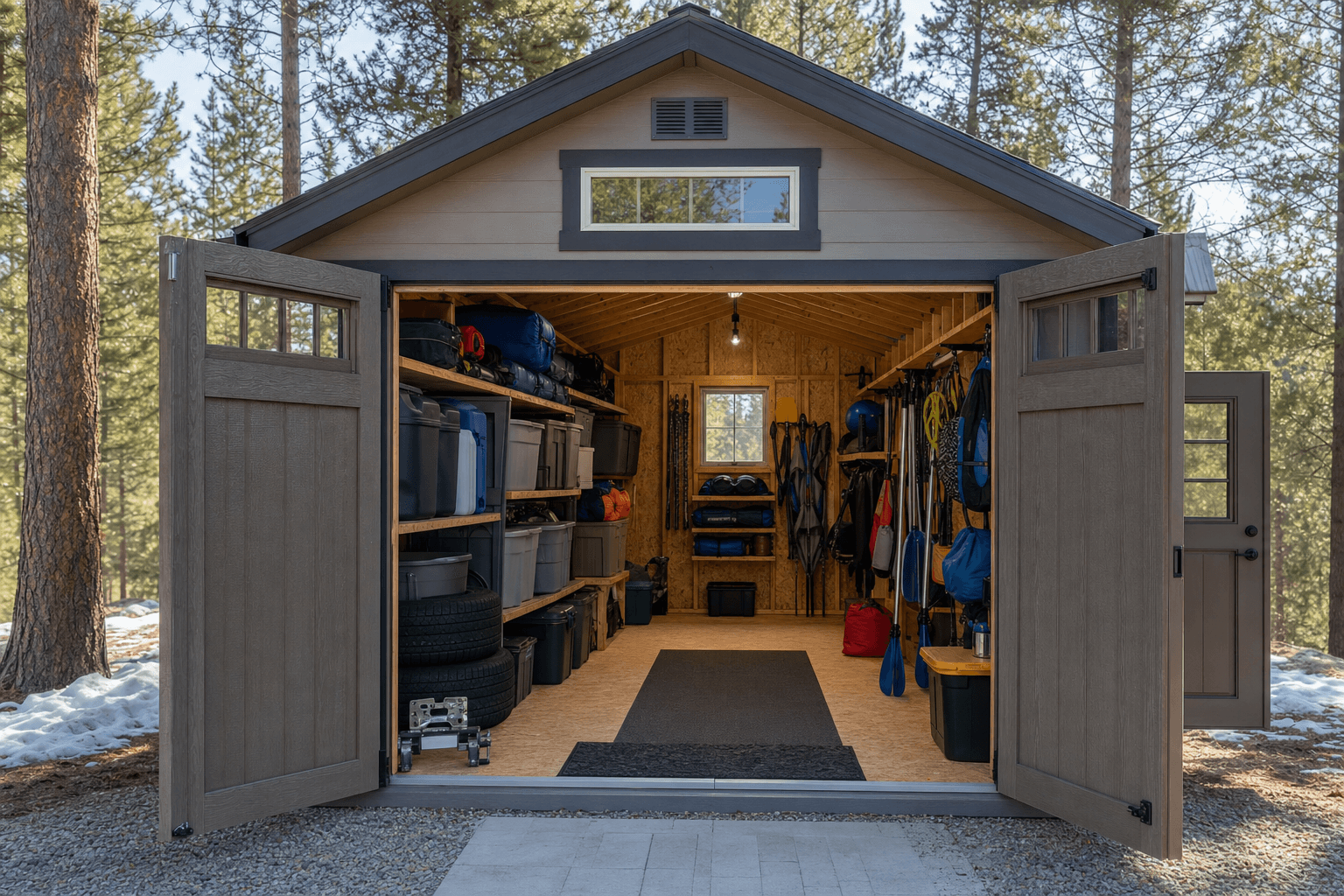
A clear aisle, lower shelves, blank bins, hooks, tire storage, and durable flooring make seasonal changeovers easier before boats, sleds, and trip gear leave the property.
Plan a wall for paddles, poles, skis, folded covers, ramps, and straps so long gear does not slide across the floor or crowd the door swing.
Reserve lower shelves or floor racks for spare tires, hitch gear, chains, and heavier bins. Heavy items should be reachable without a ladder.
Use a shelf zone for battery maintainers, tow adapters, spare bulbs, dry bags, and small accessories. Electrical work should be planned with qualified trades where power is needed.
A seasonal shed needs to stay useful through lake dust, mud season, early snow, and freeze-thaw mornings.
Use gravel, a durable threshold, and floor finishes that can handle wet covers, tires, and slush without turning the doorway into a soft spot.
Door placement should consider plowed paths, roof shed zones, and where snow piles will land after repeated storms.
Keep clean fabric gear, battery accessories, and oily or fuel-adjacent tools in separate zones with ventilation and clear storage habits.
Seasonal storage problems usually come from moisture and disorganization, not from the lack of one more tote. Covers should dry before they are folded tight. Wet straps and soft goods need airflow. Tires should be kept out of standing water. A vented shed shell, clean shelves, and a floor that can be swept or wiped down make the whole system easier to keep up with.
If you keep batteries, chargers, or power accessories in the shed, treat that as a planning cue rather than a promise that the shed itself solves electrical safety. Keep the area open, dry, and easy to inspect. Any installed power, charging, or permanent circuits should be designed and installed by qualified electrical professionals and follow the manufacturer instructions for the equipment you store.
Security and access also deserve a decision before construction. If the shed is near a driveway, think through sightlines, door hardware, motion lighting by others if needed, and whether the most valuable items are visible from outside when doors are open. Good storage should make gear easier to use without advertising everything inside.
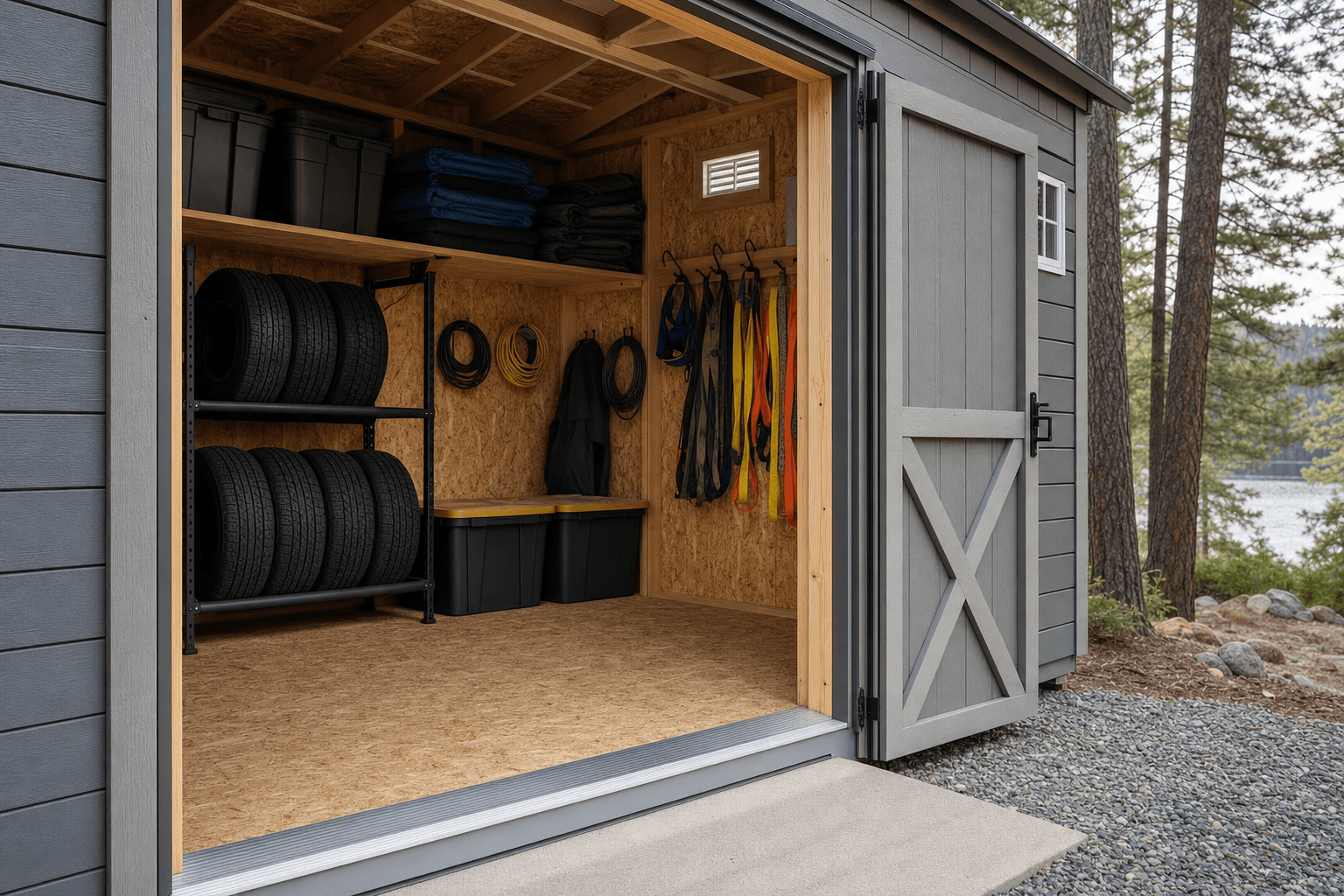
Threshold planning, tire and cover storage, hooks, blank bins, and careful cable routing keep seasonal gear accessible without crowding the doorway.
Start with the gear zones, then choose the footprint. A 10x16 or 12x16 can work for focused seasonal accessories, while 12x20 and larger layouts give more room for tires, folded covers, lake gear, snow gear, and a small workbench.
Sometimes, but that is a different sizing conversation. This page is mainly about accessory and changeover storage. Full boats, RVs, and tall trailers usually need high-clearance doors, deeper bays, and more site planning than a standard accessory shed.
Double doors are usually the practical starting point because covers, tires, bins, and long items are awkward to carry. Plan the opening, threshold, and approach together so gear can move through the doorway without catching on the frame or dragging through mud.
Give them a dry, open, easy-to-inspect shelf zone and avoid crowding them under soft goods. If you want permanent power or charging in the shed, have that planned and installed by qualified electrical trades and follow the equipment manufacturer instructions.
A durable shed floor with a clean threshold and gravel approach is easier to sweep, dry, and maintain. If wet covers, tires, or snow gear come through the door often, avoid layouts that trap water behind bins or pile heavy gear directly in the entry path.
Avoid turning the shed into a catch-all for fuel, trash, damp textiles, and unidentified parts. Keep fuel or oil-adjacent items separated from clean covers and soft gear, and follow local rules and manufacturer instructions for anything hazardous or powered.
Tell us what changes with each season, and we will help plan doors, shelving, floor flow, ventilation, and site access around the way you actually use your property.
Every shed we make is built on site in North Idaho. Explore other uses we build for.