A boat gear shed is for the equipment that makes lake days possible: fishing tackle, rods, paddles, life jackets, anchor line, boat covers, batteries, chargers, cleaning supplies, towables, and winterization gear. When those items are spread between a garage wall, truck bed, porch, basement, and boat storage compartment, every trip starts with a search. A dedicated shed keeps the season organized and gives wet gear a place to dry before it turns musty.
For North Idaho lake properties, the best shed plan usually balances wide access, dry storage, ventilation, and seasonal workflow. It should be close enough to the driveway, dock path, or parking area to load quickly, but placed high and dry enough that spring runoff and lake humidity do not work against the gear. North Idaho On Site Sheds can build that structure on your property so the layout matches the way you fish, paddle, tow, clean, and winterize.
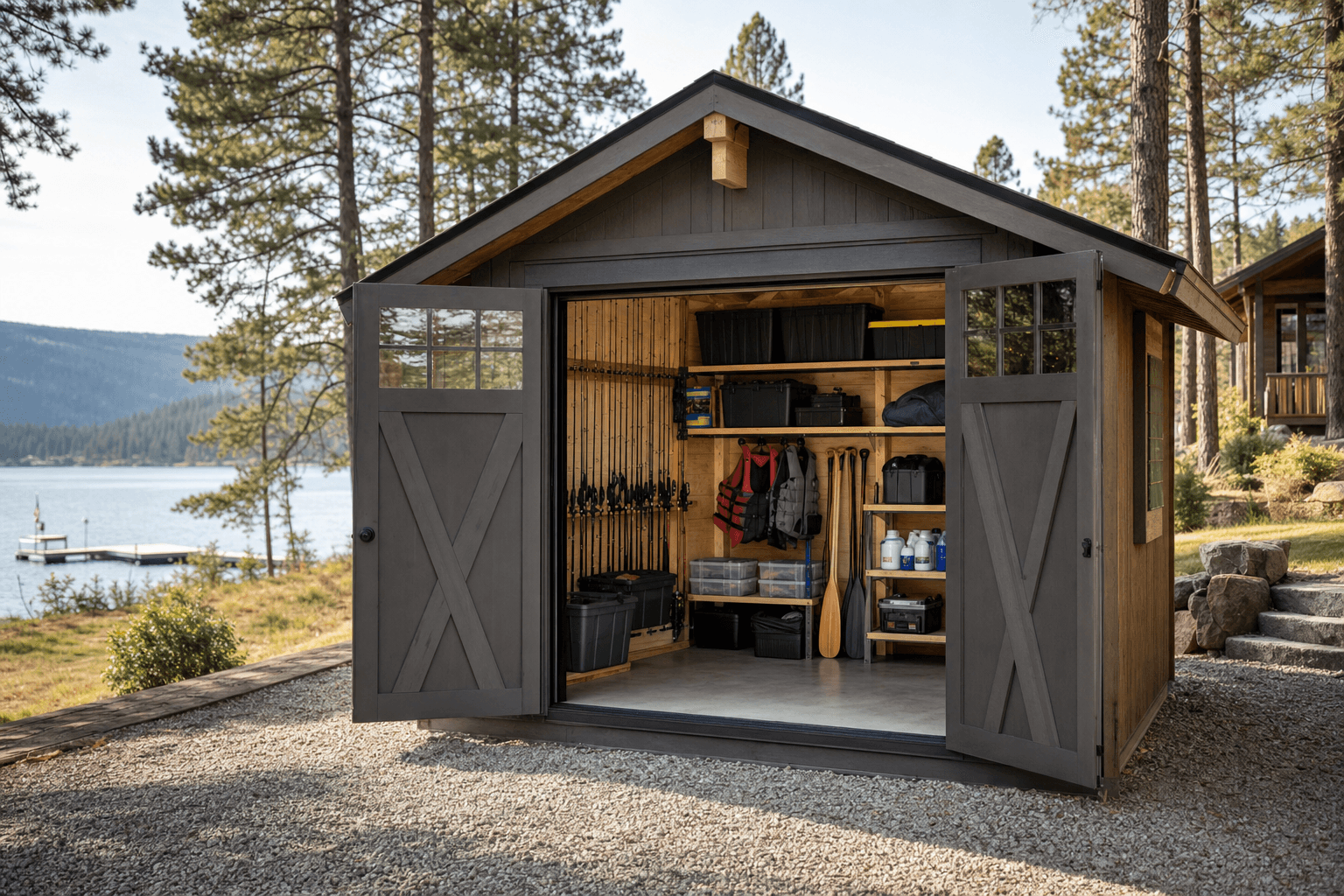
A boat gear shed should keep lake-season equipment dry, reachable, and close to the driveway or shoreline approach.
Boat gear has different storage needs than ordinary boxes. Life jackets need to dry before they are packed away. Rods and paddles need length without being bent or buried. Tackle needs organization by season, species, or trip type. Covers, ropes, and towables need room without taking over the floor. A useful boat gear shed creates zones for those categories instead of treating everything like general storage.
The simplest layout often starts with wide doors and an open center aisle for bulky bins, coolers, and covers. One wall can carry rods, paddles, nets, and long tools. Another can hold tackle trays, safety gear, cleaning supplies, and battery or charger shelves. Hooks near the door work well for items that come back wet, while sealed or lidded bins are better for gear that needs to stay clean between trips.
Life jackets and safety gear should dry fully before closed storage. Plan a ventilated hanging zone so damp gear is not sealed in a dark bin.
Rods, paddles, boat hooks, covers, and nets need length and gentle support. A dedicated wall bay prevents broken tips and tangled gear.
Chargers, stabilizer, oil, funnels, and small tools need a clean shelf away from the walking path and wet floor areas.
Wide access, an open aisle, and bins by use help you load the truck or boat without unpacking the entire shed.
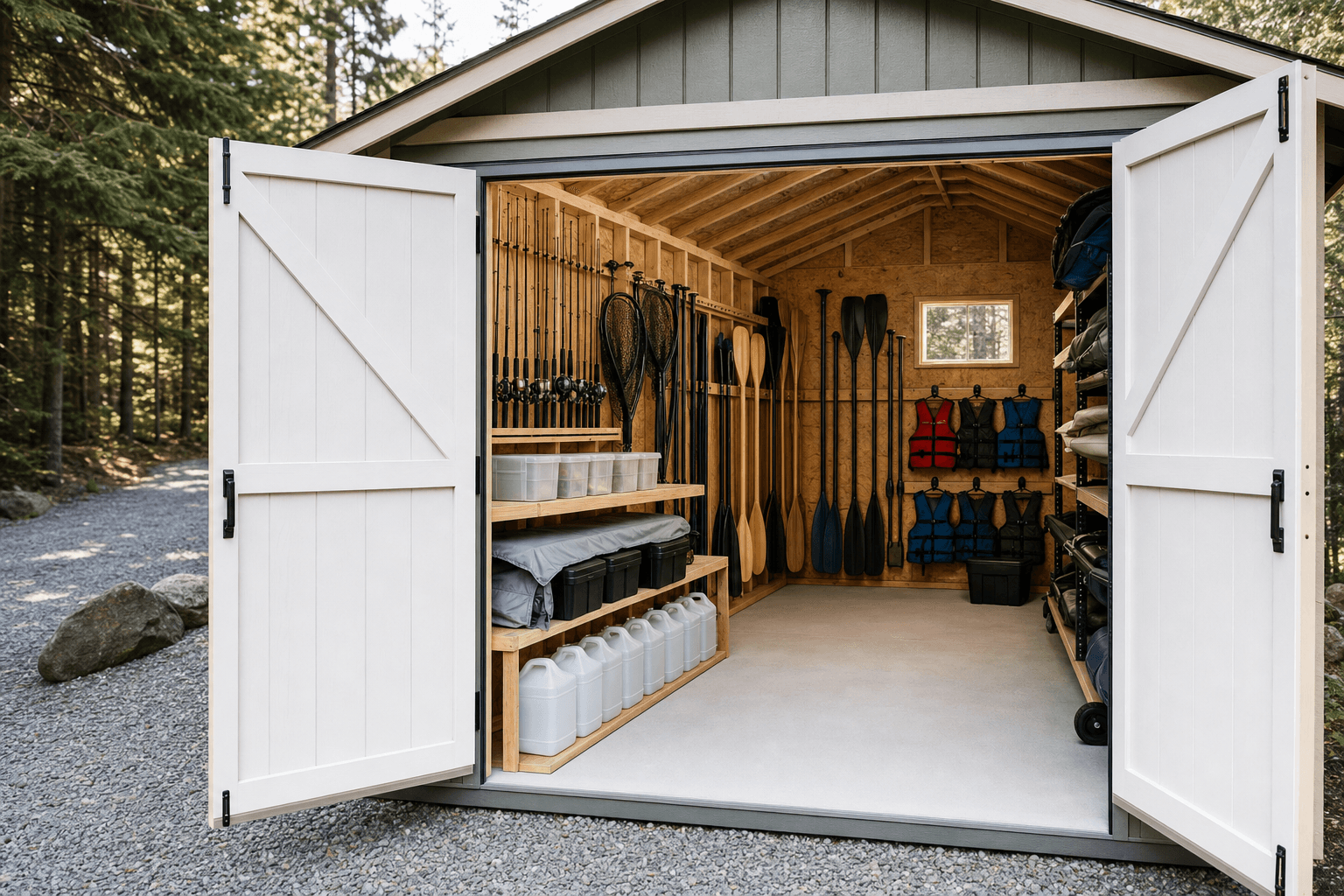
Shelves, hooks, and a clear center aisle keep fishing and boating gear from taking over the garage between lake trips.
Lake gear comes home damp even on good days. Spray, rain, wet towels, life jackets, waders, anchor line, and boat covers all add moisture to a small storage space. Ventilation, daylight, and a floor plan that keeps wet items off the floor help the shed stay useful. If gear is put away wet and sealed tight, the shed can protect it from rain while still trapping the moisture you brought inside.
A better plan gives wet gear a first-stop area near the door, then reserves shelves and bins for dry, clean storage. Consider hooks, open racks, washable floor space near the entry, and a window or vent path for air movement. For fishing tackle, separate lures, line, soft plastics, tools, and electronics so one wet trip does not turn every box into a mess.
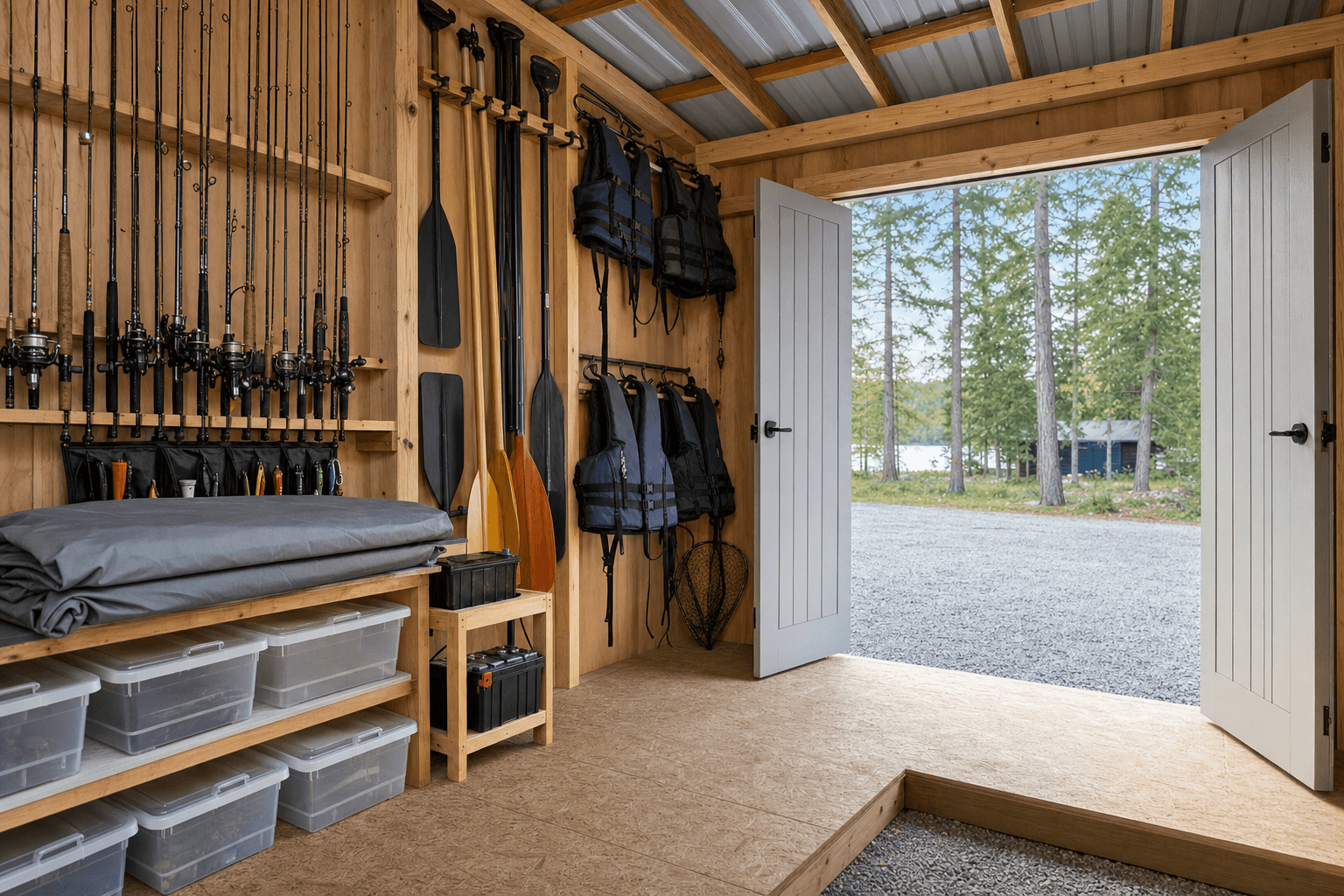
Detail planning matters most around rod racks, dry floor clearance, battery shelves, covers, and load-in space.
These sheds should work through spring prep, summer weekends, fall cleanup, and winter storage without feeling like a crowded garage corner.
Ventilation and hanging storage help life jackets, ropes, and covers dry before storage.
Winterization supplies, batteries, covers, and tackle can stay organized when the boat itself is put away.
Rods, paddles, nets, and oars need straight support and clear retrieval space.
A lockable on-site shed keeps valuable gear closer to use and out of weather exposure.
A boat gear shed should make the first trip of the season and the last cleanup of the season easier. In spring, the high-use items should be visible: tackle trays, PFDs, paddles, ropes, cleaning supplies, and charged batteries. In summer, the shed should support quick turnaround after evening trips, with wet gear hung up and tomorrow’s gear easy to reach. In fall, covers, winterization supplies, and maintenance items should not require digging behind stacks of summer bins.
Think about the shed in zones: grab-and-go, drying, long items, winterization, and deep storage. That plan keeps the building useful for family lake days, fishing mornings, paddleboard sessions, and off-season maintenance without asking one shelf to solve every problem.
Yes. A boat gear shed usually stores the equipment around the boat rather than the boat itself: tackle, rods, PFDs, paddles, covers, batteries, cleaning supplies, and winterization tools. That lets the shed stay smaller and more organized while the boat is stored separately.
Let them dry fully before closed storage, and plan a ventilated hanging area away from direct floor moisture. Hooks, open racks, and airflow matter more than sealed bins when gear comes home damp from the lake.
It depends on whether you are storing only tackle and safety gear or also paddles, covers, towables, coolers, and batteries. A compact shed can work for tackle, while long gear and bulky covers usually need more wall length and a wider door.
The layout can reserve shelves and work space for batteries, chargers, oil, stabilizer, covers, and small tools. Any electrical installation should be handled by the appropriate licensed trade, but planning the space early prevents cords and supplies from taking over the floor.
Place it near the natural loading path between the driveway, boat, dock path, or storage area, while keeping it on a dry, drainable pad. Avoid low spots where runoff, shade, and damp air will make gear drying harder.
Organize tackle by season, water type, or trip style, then keep the most-used boxes near the door. A small bench, shallow shelves, and clear bins help keep line, lures, tools, and electronics from becoming a single pile.
Plan one shed for tackle, PFDs, covers, paddles, batteries, and winterization supplies so every trip starts cleaner.
Every shed we make is built on site in North Idaho. Explore other uses we build for.