A bulk food storage shed should make dry goods easier to organize, inspect, rotate, and restock. It is not a substitute for food-safety rules, refrigeration, canning guidance, or climate-controlled storage when a product requires those conditions. The best use is a clean, weather-protected pantry-style shed for sealed bins, empty jars, packaged dry goods, emergency supplies, and household overflow that benefits from shelves, aisles, and clear zones.
In North Idaho, the shell has to respect wet winters, spring mud, summer heat swings, and rural pest pressure. That means planning raised storage, sealed containers, airflow, durable flooring, a gravel approach, and enough aisle width that bins can be checked without pulling everything outside. The shed should feel calm and useful, not packed floor to ceiling like a forgotten closet.
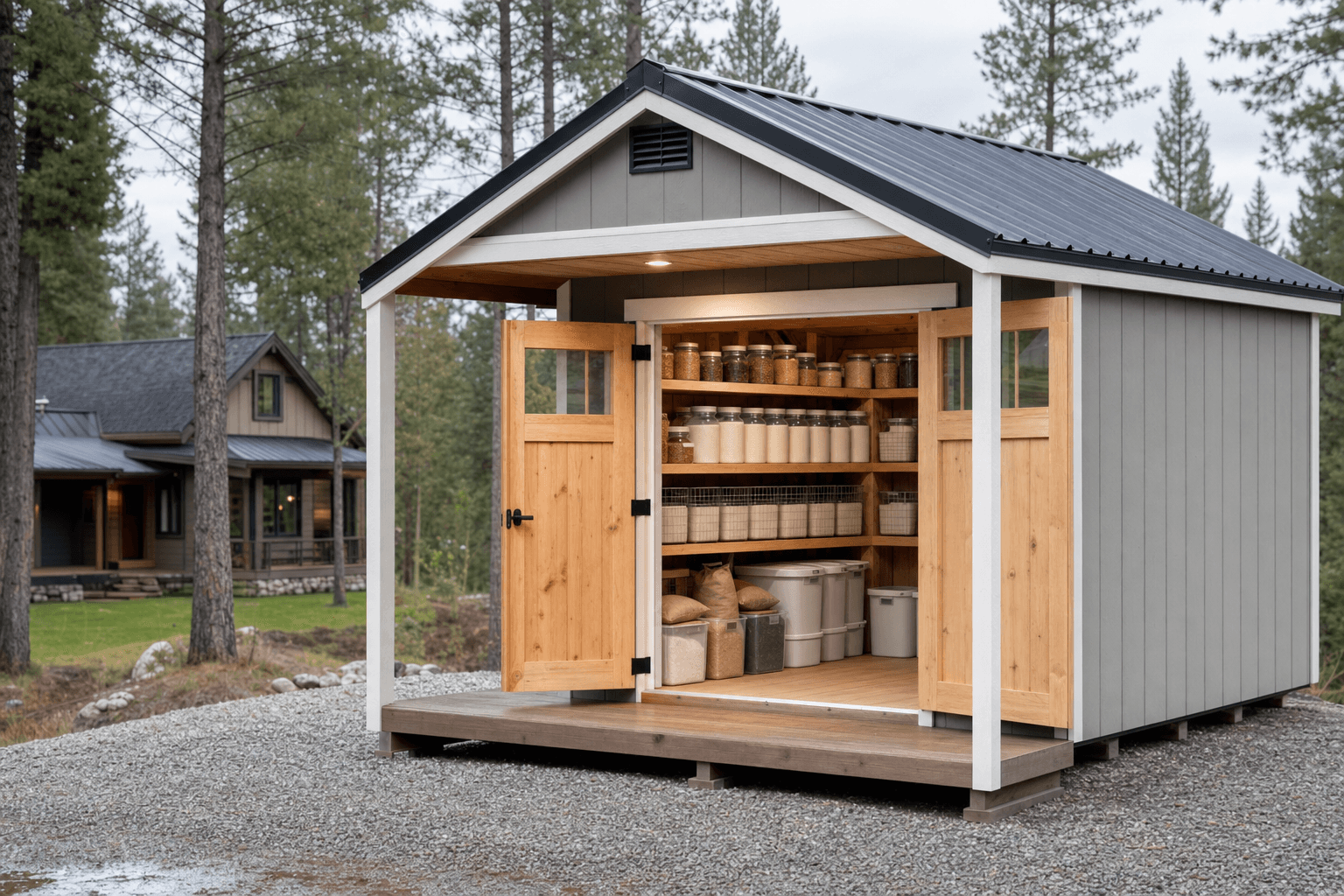
A pantry-style storage shed should protect dry goods from weather while leaving shelves, bins, and access paths easy to inspect.
Shelves should fit the bins you actually use while leaving a clear aisle for restocking, rotation, and quick visual checks.
Use blank sealed containers, raised lower storage, and easy-to-clean corners so moisture and pest awareness are part of the layout.
Ventilation can help the shed breathe, but it does not turn a detached shed into a climate-controlled pantry or safe storage for every food.
A pantry shed works best when fast-moving goods sit near the door, heavy bins stay low, and long-term supplies have shelf labels in your own system rather than cluttered packaging. Leave the lower shelf raised above the floor so the corners can be swept and inspected. Keep the center aisle wide enough for a tote, hand truck, or a person carrying a case without knocking items off both sides.
Temperature-sensitive foods, opened packages, home-canned goods, and products with strict storage instructions may need a conditioned pantry, refrigerator, freezer, or other proper environment. The shed shell can support dry organization and weather protection, but the owner still has to follow product labels, food-preservation guidance, and common-sense storage limits. That distinction keeps the page honest and helps buyers plan the right mix of shed storage and indoor pantry space.
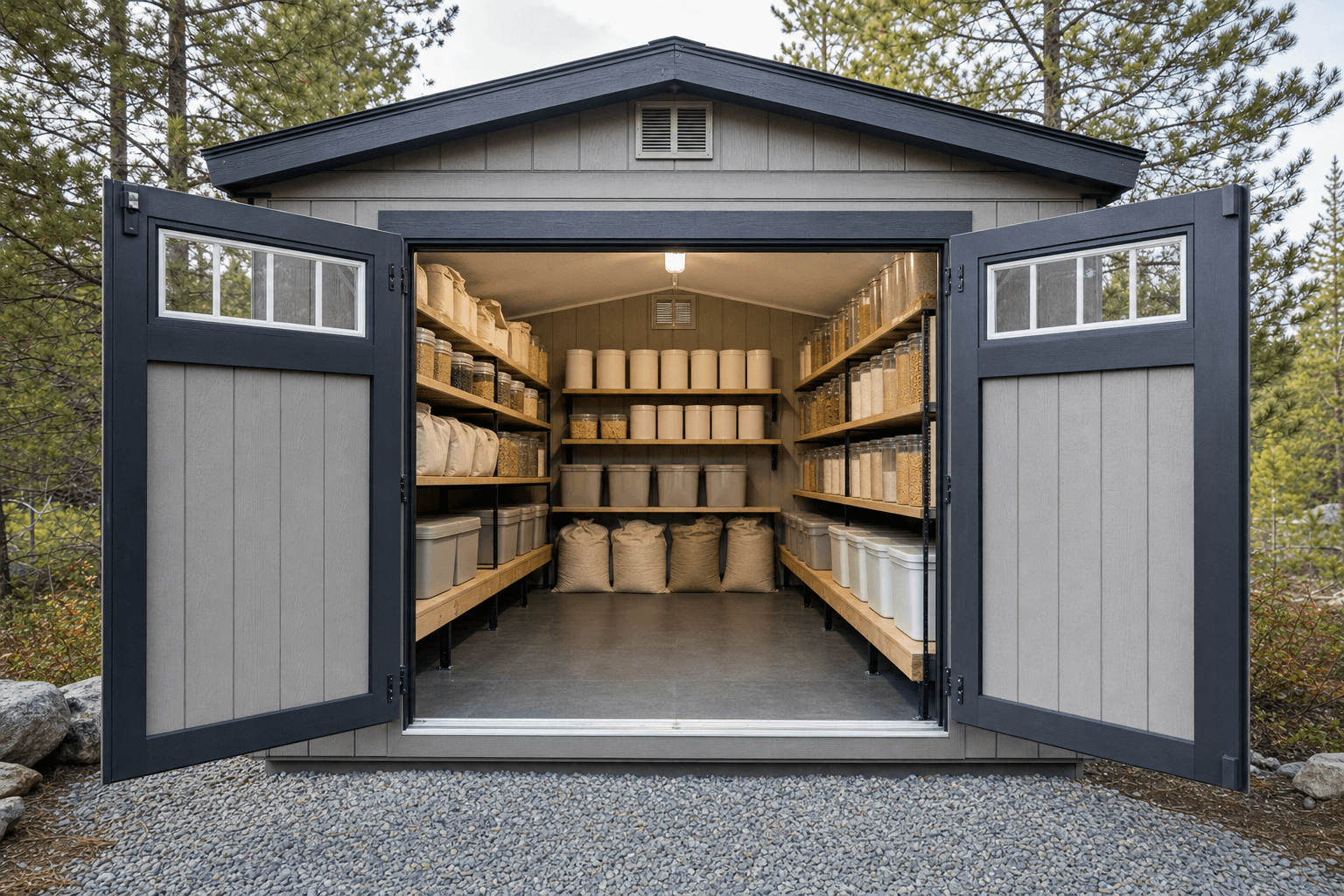
Clear aisles, raised lower shelves, blank sealed bins, and ventilation cues make bulk storage easier to rotate, inspect, and keep dry.
Place daily or monthly restock bins near the door so grocery overflow and emergency rotation do not turn into a full shed cleanout.
Bulk bags, water-adjacent supplies, and dense bins belong low, but not directly on a damp floor or tight against uninspectable corners.
A few inches of visibility around shelves can matter more than one extra row of containers when moisture or pests need to be caught early.
| Layout | |
|---|---|
| Shelf depth | Match the actual bins and jars instead of guessing from generic closet dimensions. |
| Aisle | Keep a clear route for lifting, restocking, and checking dates or contents. |
| Door access | Wide doors help when cases, totes, or seasonal emergency supplies arrive in one trip. |
| Protection | |
| Raised storage | Use lower shelf clearance or platforms to keep bins off the floor and corners visible. |
| Air movement | Plan vents or windows for the shell while recognizing that airflow is not climate control. |
| Site prep | Use a dry gravel approach and roofline that keeps rain and snow from dumping into the entry. |
| Feature | Good pantry-shed candidates | Keep in proper controlled storage |
|---|---|---|
| Dry staples | Sealed bins of dry goods, empty jars, paper goods, and restock overflow. | Opened foods, heat-sensitive goods, and items with strict indoor storage instructions. |
| Emergency supplies | Rotated sealed containers and non-food preparedness items with inspection access. | Medical items, perishables, or anything that cannot tolerate temperature swings. |
| Canning support | Empty jars, lids in sealed containers, boxes, racks, and staging supplies. | Food processing, active canning, refrigeration, or safety-critical preservation steps. |
The biggest pantry-shed mistake is chasing maximum shelf count at the expense of inspection. Deep shelves, floor-stacked boxes, and bins pushed tight to the wall may store more on day one, but they make moisture, damaged packaging, or unwanted pest activity harder to spot. A smaller number of orderly shelves with visible corners is usually more useful than a wall packed so tightly that nothing can be checked.
Another mistake is using the shed as if it were a refrigerator, freezer, canning kitchen, or conditioned indoor pantry. Some dry goods tolerate detached storage better than others, and many foods have specific storage instructions that should win over convenience. The shed should support sealed dry storage and preparedness organization while keeping temperature-sensitive or safety-critical items in the right environment.
Think about restocking too. If cases arrive by truck, the door, landing, and first shelf zone should make unloading simple. If the shed is for emergency pantry rotation, the oldest bins need a path back out. The layout should help the household use the storage, not just admire rows of containers.
The shed should make storage easier through wet winters and warm summers without making unsafe food-storage promises.
Roof overhang, threshold planning, and a dry approach reduce water intrusion at the entry.
Restocking should still work when the path is plowed and the door swing has snow nearby.
Sealed containers, clear corners, and raised shelves make inspection easier than deep clutter.
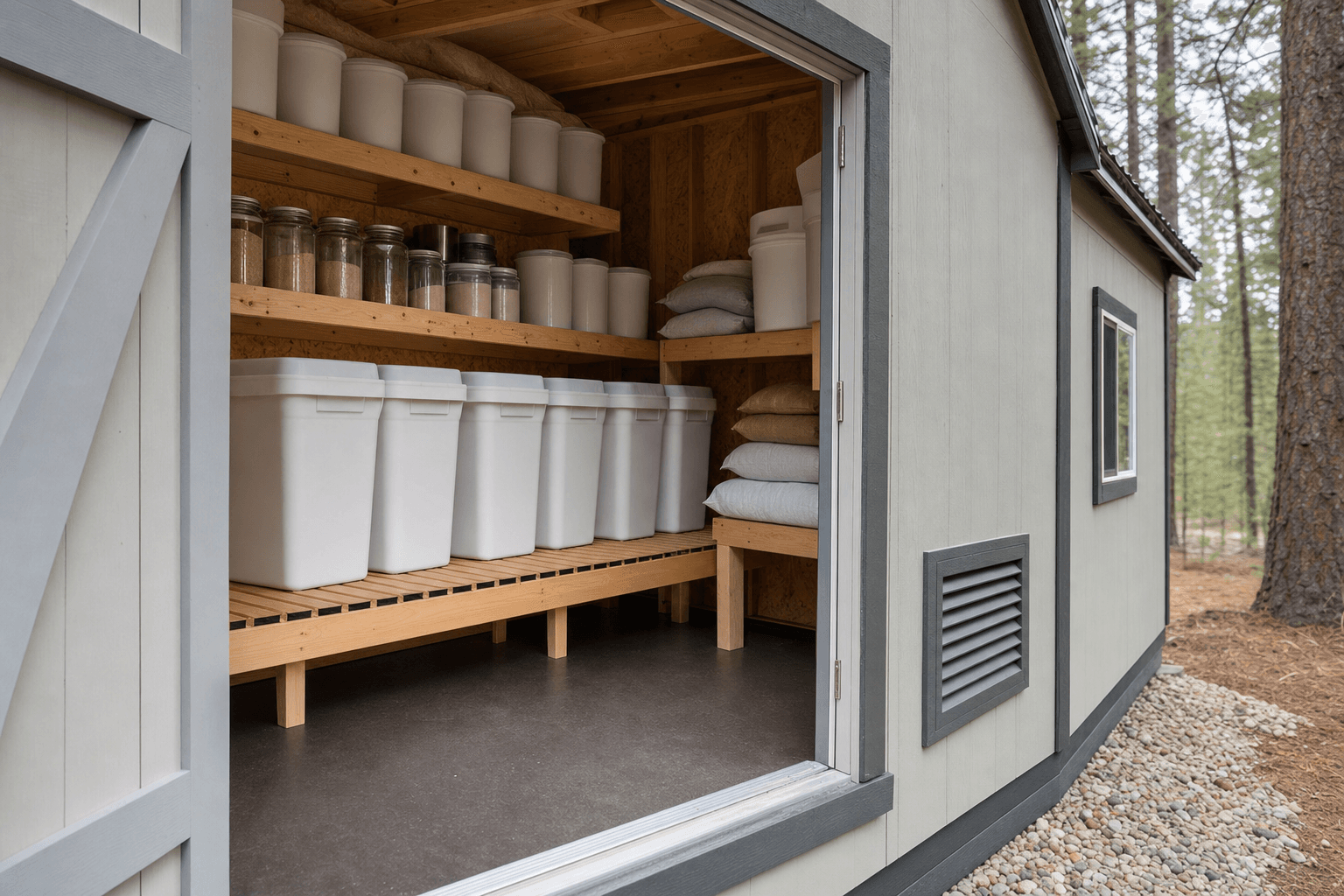
Raised shelves, sealed blank containers, ventilation cues, and clean inspection space help a bulk-storage shed stay organized and serviceable.
A shed can be useful for sealed dry goods, pantry overflow, jars, emergency supplies, and organized household storage. It should not replace refrigeration, freezing, canning safety, or climate-controlled storage when the food or product instructions require those conditions.
A compact dry-storage setup may start around 8x12 or 10x12, while larger households often prefer 10x16, 12x16, or 12x20 for shelves on multiple walls and a real center aisle. Count bins and shelf depth before choosing the footprint.
Start with a dry site, gravel approach, weather-protected entry, raised lower shelves, sealed containers, and ventilation cues. A shed can help manage exposure, but it is not the same as a conditioned indoor pantry.
Keep frequently used bins near the entry, heavy containers low, and long-term supplies where dates and contents can still be checked. Avoid shelves so deep that older goods disappear behind newer purchases.
Good construction, sealed containers, clean corners, and regular inspection all help, but no detached storage space should be treated as pest-proof by default. Plan the layout so problems are visible early and food is not stored in open packaging.
Opened foods, heat-sensitive goods, perishables, home-preserved items with specific storage requirements, medications, and anything that needs controlled temperature or humidity should stay in the proper indoor, refrigerated, frozen, or otherwise specified storage environment.
Tell us how many bins, jars, shelves, and seasonal supplies you need to organize. We will help plan a weather-ready shed shell with practical access, airflow, raised storage, and room to inspect what matters.
Every shed we make is built on site in North Idaho. Explore other uses we build for.