Kayaks and paddleboards are awkward because they are long, easy to scuff, and often wet when they come off the lake. A good storage shed is not just a box for boats. It is a wide-access layout with rack depth, paddle hooks, PFD shelves, dry bag storage, and enough aisle space to move gear without scraping every wall.
For North Idaho lake properties, the shed also needs to work through rain, pollen, dust, and winter downtime. North Idaho On Site Sheds can build a practical lake-gear shell with wide doors, dry access, ventilation, and rack planning that fits how you launch and put gear away.
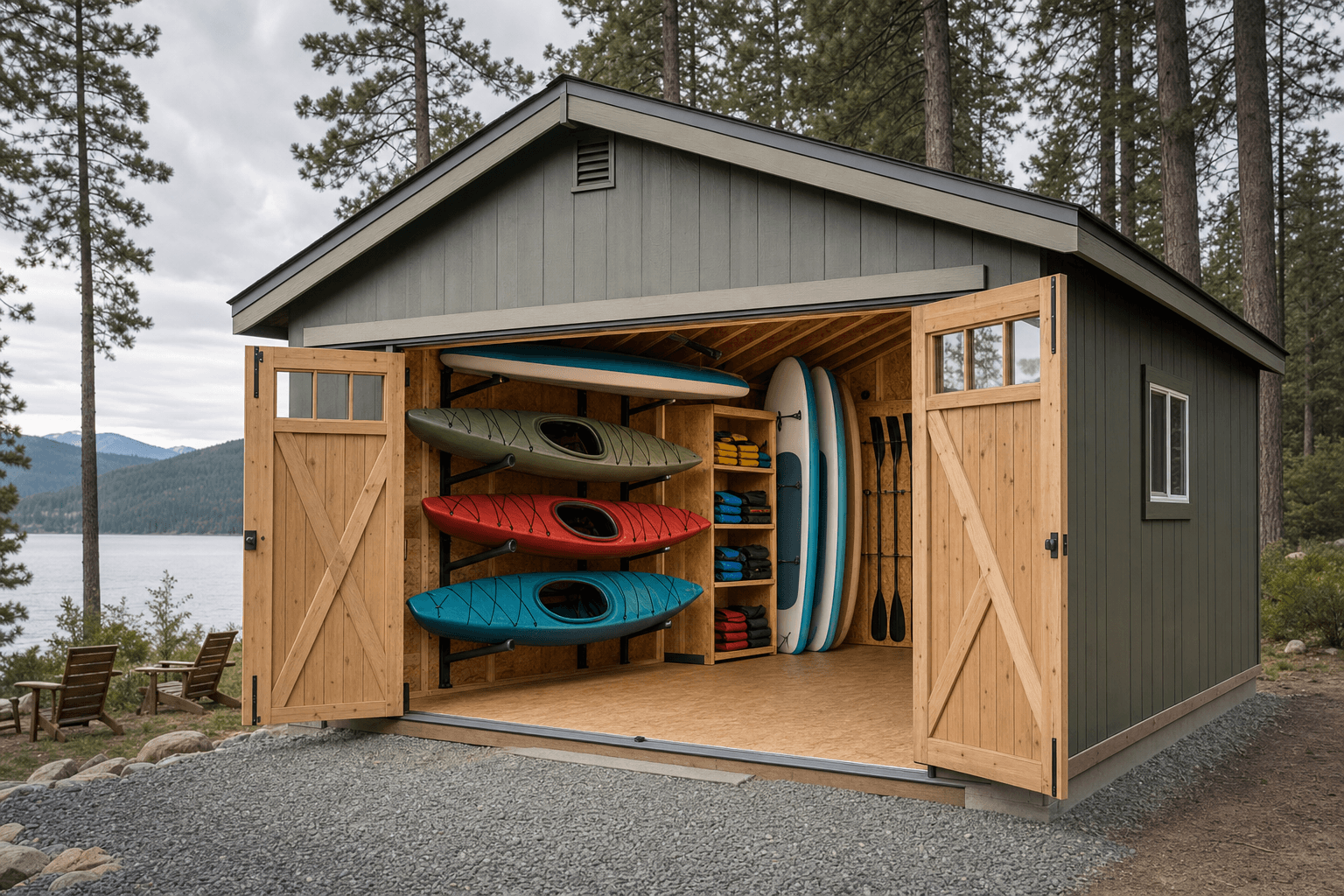
A lake-season storage shed should provide wide access, long gear clearance, wall racks, dry entry planning, and organized paddle and PFD storage.
A kayak or paddleboard shed should be sized from the longest item first. Touring kayaks, fishing kayaks, tandem boats, rigid SUPs, paddles, and roof-rack gear all need more length than a normal storage wall. If the door opening or interior turn is too tight, every lake day starts with a wrestling match.
Wide double doors help because long gear can move straight in and out. Inside, wall racks should support weight evenly and keep pressure points from deforming boards over time. Paddles, PFDs, dry bags, pumps, fins, and leashes need separate storage so the long rack area stays clear.
Measure the longest kayak, SUP, paddle, and roof-rack accessory before choosing the shed footprint and door placement.
Use wall rack spacing that supports boards and boats without tight straps, pinching, or awkward lift angles.
Plan ventilation, dry floor paths, and open storage so lake water, rain, and damp PFDs do not sit in a closed corner.
Keep paddles, PFDs, dry bags, pumps, and towels close to the door so lake access stays fast and organized.
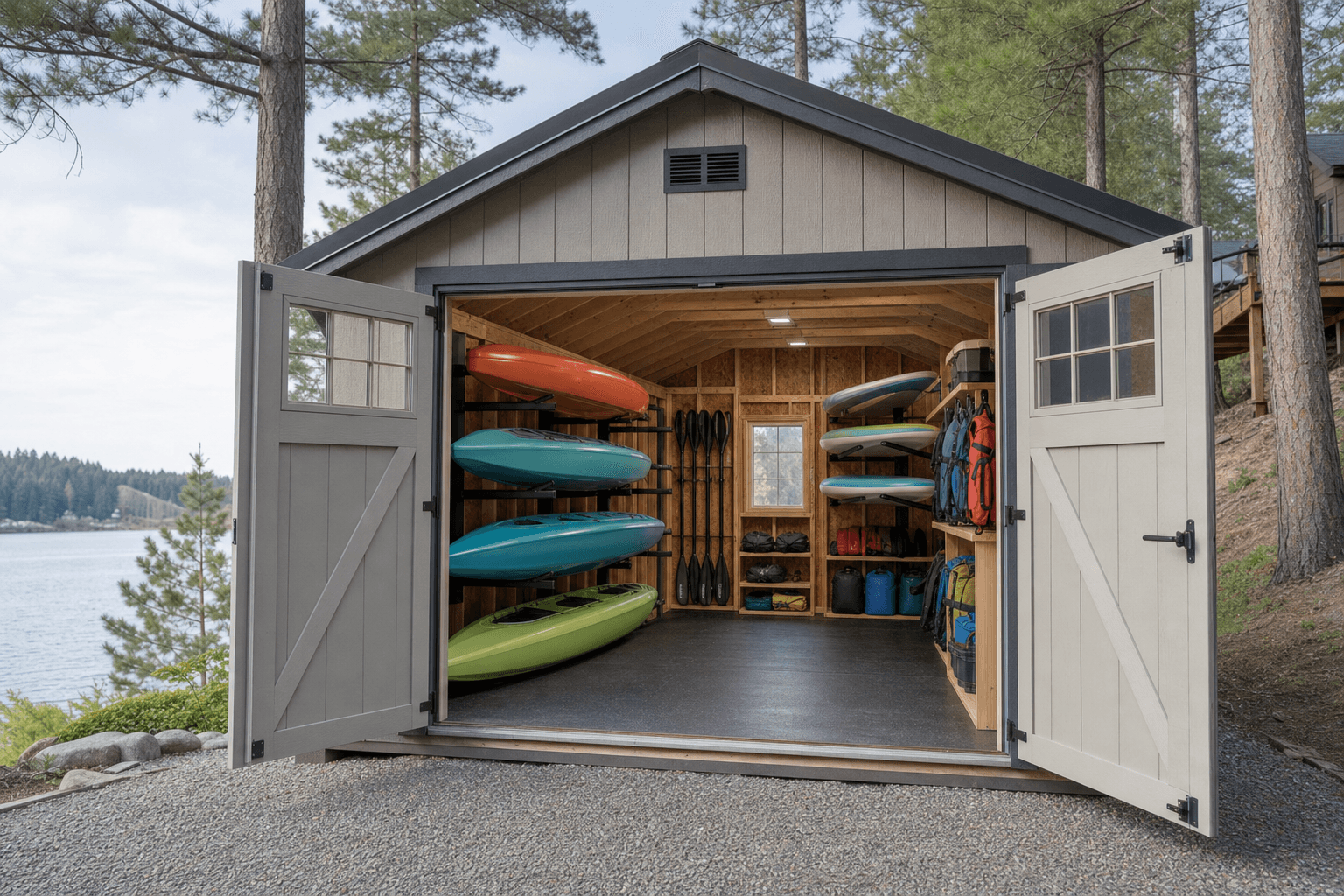
The body image shows how long wall racks, paddle hooks, PFD shelves, and a clear dry aisle can keep lake gear ready without blocking the doors.
The easiest layout usually puts kayaks and boards on one or both long walls and keeps the center aisle clear. That lets one person carry a board in, set it on a lower rack, and step back without moving three other items. Vertical paddle storage can sit between racks or near the door.
PFDs, throw bags, dry bags, pumps, towels, repair kits, and fishing accessories should not land on top of the boards. Shelves, cubbies, and hooks keep those items visible and dry. The more often you paddle, the more valuable it is to keep lake-day items near the door instead of buried behind winter storage.
Choose the footprint and rack wall around the longest kayak, paddleboard, and paddle you plan to store.
Use open shelves or hooks so life jackets and dry bags can air out before the next lake day.
Pair airflow with dry floor planning to reduce musty gear and trapped moisture.
Plan the opening so long gear moves straight through without sharp turns or scraped door jambs.
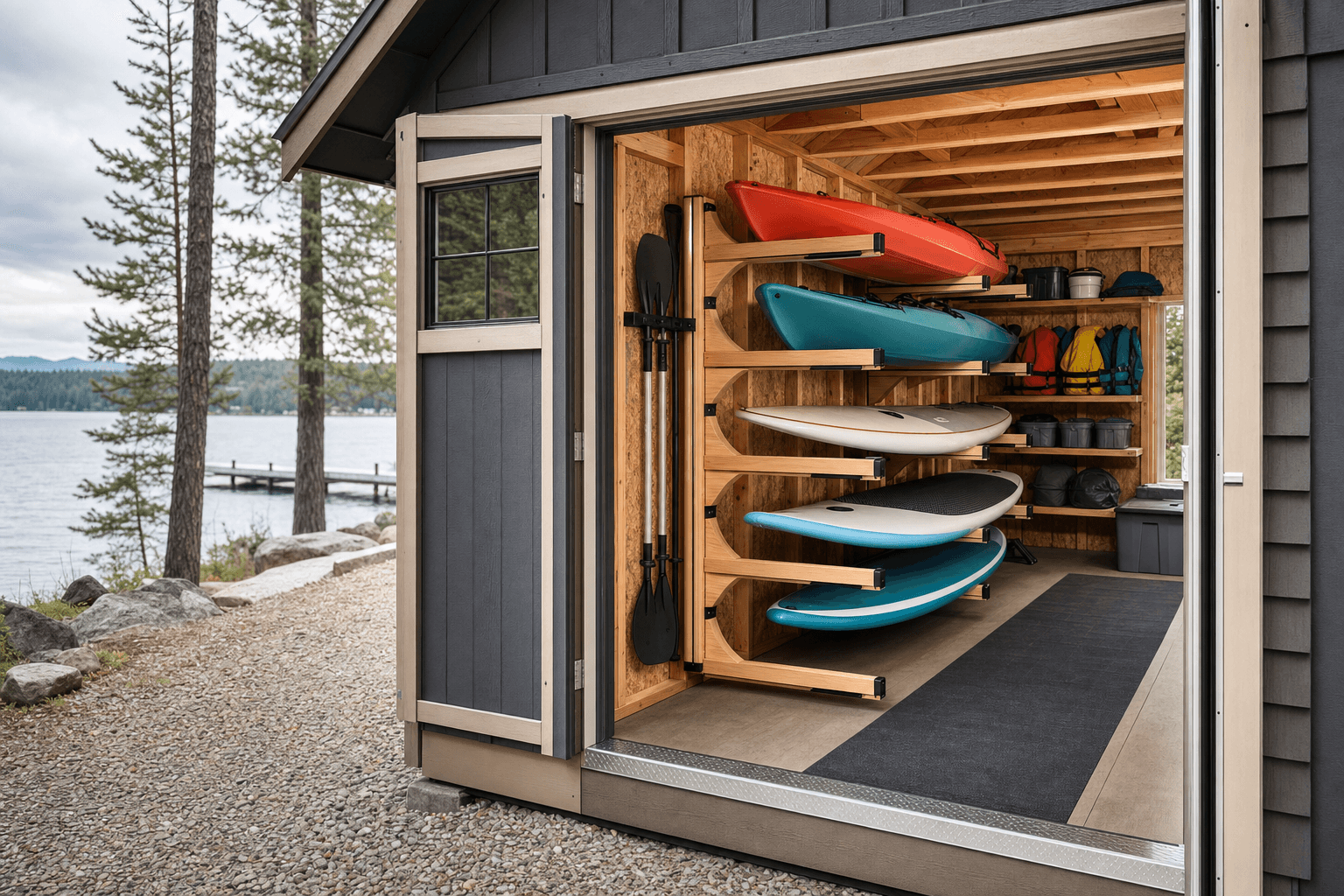
Detail planning matters around rack clearance, paddle storage, PFD shelves, threshold durability, and keeping a dry path for long lake gear.
Lake gear comes with water, sand, pine needles, and small items that critters like to explore. A shed can protect boards from sun and storm exposure, but it should also avoid trapping moisture. Rinse when needed, let gear dry, and store PFDs and textiles where air can reach them.
Pest control starts with good habits and clean storage. Keep snacks, fish scent, and damp towels out of the shed. Use bins for small accessories, but do not seal wet items into them. A clean gravel pad, tight door fit, and visible storage make it easier to see problems before they spread.
| Access | |
|---|---|
| Door style | Wide double doors for long boards and kayaks |
| Aisle | Clear center path for carrying and turning |
| Threshold | Durable dry transition from gravel or lake path |
| Storage | |
| Racks | Padded or well-supported wall racks with even weight distribution |
| Paddles | Hooks or rails near the door |
| PFDs and dry bags | Open shelves or hooks with airflow |
A lake-gear shed should protect long equipment without slowing down the launch routine.
Ventilation and dry access help gear recover after wet launches and sudden storms.
A shed keeps boards and boats out of direct sun, snow, and open weather exposure.
Clean, visible shelves and tight door planning help reduce nesting and hidden clutter.
The footprint can be planned around kayaks, SUPs, paddles, PFDs, and lake totes.
The first mistake is buying racks before choosing the shed layout. Rack height, lift angle, and aisle width matter more than the rack brand. A lower rack can be easier for heavy fishing kayaks, while vertical board storage may work better when the shed has enough height and depth.
The second mistake is treating wet PFDs, towels, and dry bags like clean closet storage. Give them hooks or shelves to dry first, then move off-season items into bins.
Start with the longest kayak or paddleboard, then add room for rack depth, door swing, and a clear aisle. Many lake-gear sheds start around 12x16 or 12x20, while multiple kayaks, rigid SUPs, and fishing gear often push the plan toward 12x24 or larger.
Yes, wall racks are often the best way to keep long gear organized, but support and spacing matter. Racks should distribute weight evenly, avoid sharp pressure points, and leave enough room to lift boards without scraping the wall, door, or another rack.
Only after they are clean and dry. PFDs, towels, dry bags, and neoprene gear should have an open drying spot first. Once dry, bins can help organize small accessories, but sealed damp gear can lead to odor and mildew problems.
Wide double doors usually make long gear much easier to handle than a narrow man door. The right opening depends on boat length, rack placement, and whether one person needs to move gear straight in and out without tight turns.
A shed can keep boats and boards out of direct snow, sun, and open weather exposure. Winter storage still needs dry gear, good rack support, and enough ventilation to avoid trapping moisture around PFDs, dry bags, and fabric accessories.
Place it close enough to the launch path to be useful, but high and dry enough to avoid runoff and splash zones. The best spot has a stable gravel approach, room to open the doors, and a carry path that does not require sharp turns with a long boat.
Tell us what you paddle, how many boards or boats you store, and how you access the water. We will help plan rack clearance, door width, dry storage, and site placement.
Every shed we make is built on site in North Idaho. Explore other uses we build for.