North Idaho On Site Sheds

Fishing Tackle & Rigging Shed Built On-Site in North Idaho

Need a fishing tackle shed in North Idaho? On-site builds with serving counters. Custom sizes for snow, setbacks, and year-round use. Get a free estimate.

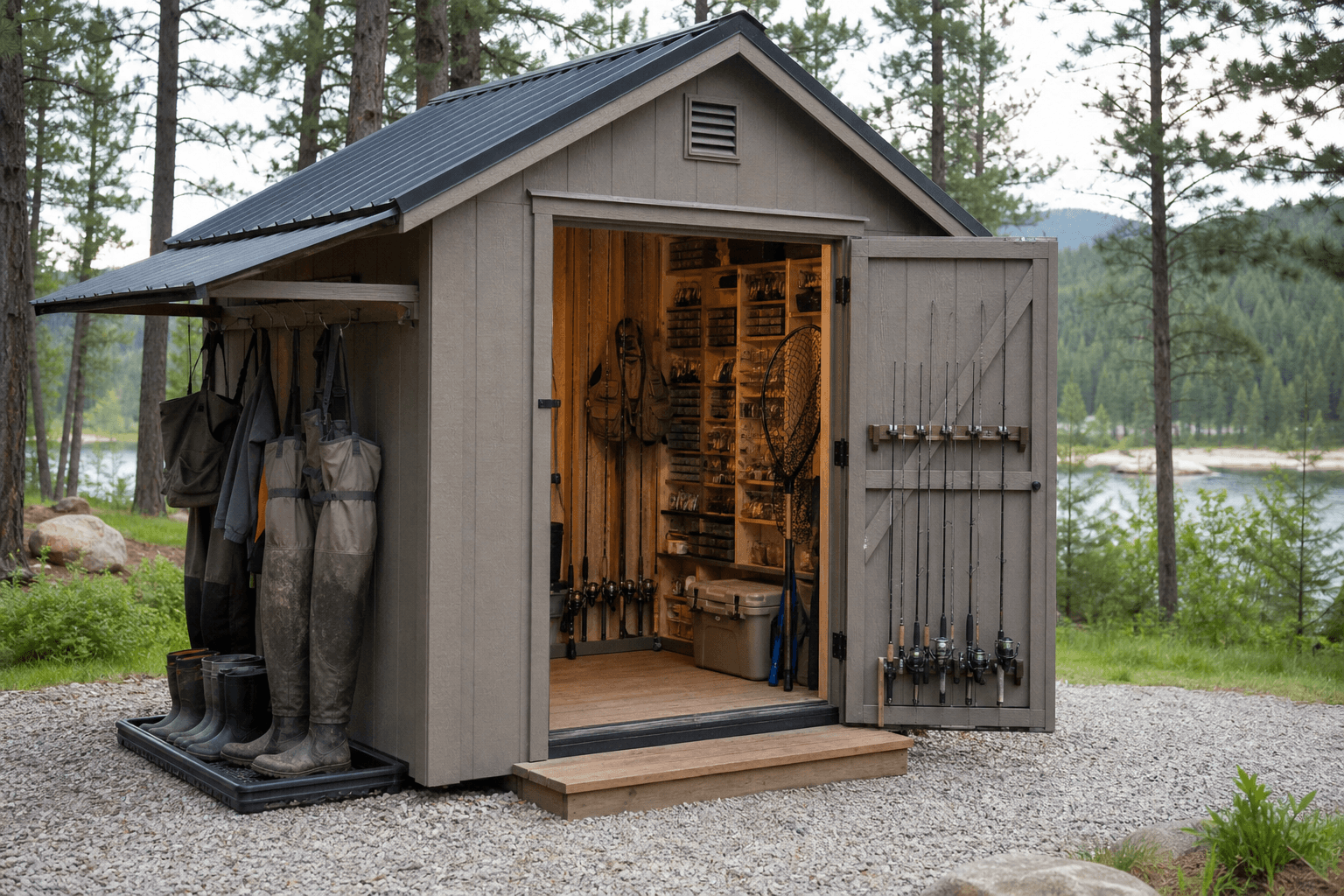
A fishing tackle shed works best when it is laid out like a real rigging room, not like a storage closet with a pegboard. We build these sheds on-site so the counter space, rod storage, humidity control, and seasonal organization can be matched to your property, your gear, and the wet-cold conditions that come with North Idaho fishing seasons.

Fishing Tackle & Rigging Shed Built for North Idaho Weather

Fishing gear is surprisingly easy to ruin when it lives in the wrong place. Rods get bent or crowded, soft plastics melt together, line degrades in heat, terminal tackle rusts in damp corners, and the whole setup becomes harder to use because it is scattered across the garage. A dedicated tackle and rigging shed solves that, but only if the room is built around North Idaho weather and the way anglers actually prep for the next trip.

The shell has to start with the same regional realities as the rest of our buildings. Roof framing needs to be sized for local snow loads, which can range from roughly 40 psf on some properties to much higher on others. The base needs to stay stable through freeze-thaw cycles, and the room should be placed where wet gear coming back from the lake or river does not create a mess at the house. Once the building becomes larger or more permanent, the common 24-inch frost-depth conversation in North Idaho is part of the planning.

This category also cares more than people expect about temperature swings and humidity. Fishing gear might not look fragile, but line, electronics, lures, adhesives, and scents all store better in a room that avoids the worst garage heat and dampness. That is why on-site construction helps. It gives you more control over orientation, insulation choices, and where the shed sits relative to the driveway, boat parking, or rigging area.

Fishing Tackle Shed Features & Build Options

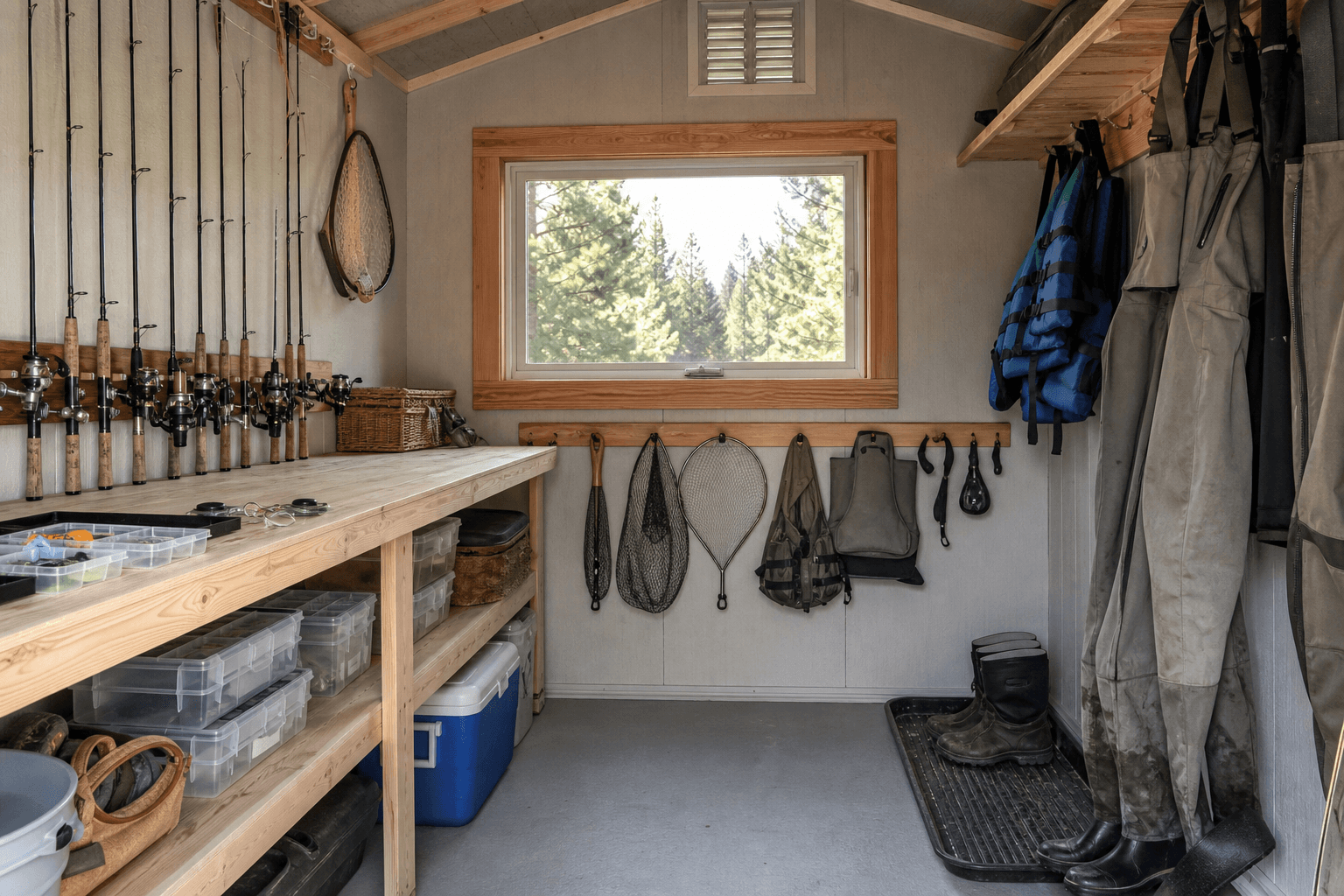
A real tackle shed is built around prep. The goal is to let you sort, tie, respool, repair, and restock gear in one place without turning every trip into a scavenger hunt. That is why counter space matters so much. A dedicated rigging counter immediately changes how useful the room feels.

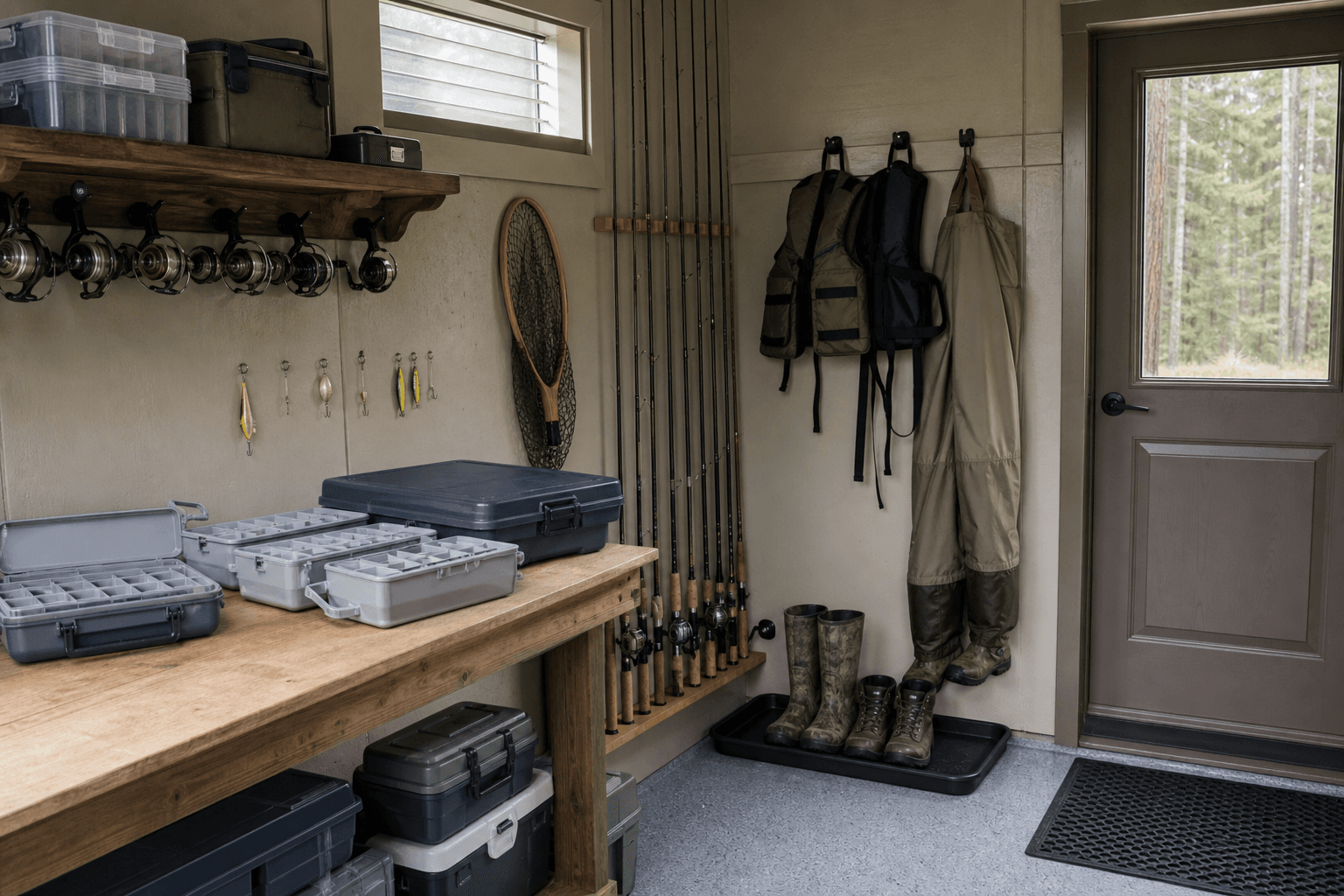
Rod storage is another major differentiator. Vertical holders, horizontal racks, and long-item wall planning all need to work with the number of rods you actually own. The same goes for pegboard, drawer systems, bins, and shelves sized around terminal tackle, hard baits, plastics, tools, and seasonal accessories. Building a tackle room: storage systems anglers actually use is a helpful guide because it focuses on repeatable systems instead of generic shelves.

Odor control matters more than most people expect too, especially when the room stores scents, soft baits, old waders, or damp rain gear. A mini-split or other climate-control strategy can help the room stay more stable year-round, which protects gear and makes the shed more pleasant to work in. Keeping lures, line, and soft plastics organized by season and ice fishing vs summer fishing storage: what changes are both useful resources because they show how fast fishing storage needs can shift through the year.

Common features include:

  • Rigging counters with enough depth to tie, sort, and prep gear comfortably.
  • Rod-holder systems that keep long gear organized and protected.
  • Pegboard, bins, and drawers sized to real tackle categories.
  • Odor-control and ventilation planning for baits, scents, and damp gear.
  • Mini-split or climate-ready layouts that help control temperature swings.

Lighting is another quiet difference-maker. Anglers work with small terminal tackle, line colors, and rigging details that are annoying to sort in a dim garage. Bright task lighting over the counter makes respooling, hook swaps, and pre-trip prep faster, especially during darker winter months when the room may be used after work.

Some owners pair this kind of room with a game processing shed because the property supports multiple fishing or hunting workflows. Others are simply looking for a dedicated hobby room in the same spirit as an archery range shed: one place built around one activity, laid out properly from the start.

Popular Fishing Tackle Shed Sizes & Layouts

An 8x10 is a strong starting point for a compact tackle room. It can support one solid counter wall, rod storage, and a manageable amount of seasonal gear.

An 8x12 adds just enough length to make the room more comfortable. This size is often ideal for one serious angler who wants a true prep wall instead of a crowded storage nook.

A 10x12 is one of the best all-around sizes for this category. It gives room for a real rigging counter, better circulation, and more rod/tackle separation without making the project oversized.

A 10x16 works well when the room needs multiple zones, such as a dedicated rod wall plus a second side for bins, clothing, or ice-fishing crossover gear.

A 12x16 is usually chosen when the owner wants more elbow room, more counter length, or a space that can support both tackle prep and broader fishing-equipment organization all season long.

Long-item planning matters too. Nets, rod tubes, ice augers, tip-up gear, and even rainwear can eat awkward wall space faster than the trays and boxes do. The best layouts protect those long items instead of making them the first things that get bent or shoved into a corner.

What Size Fishing Tackle Shed Works Best?

The best size depends less on the number of tackle boxes and more on the number of systems you need the room to support. If the shed only needs to hold rods and a few trays, a compact footprint can work. If it needs to support rod racks, plastics bins, line storage, outerwear, ice gear, electronics, and a true prep counter, the layout grows quickly.

One of the most useful questions is whether you want the room to be storage only or a real rigging space. Once you add a counter deep enough to work at comfortably, you also need aisle room, wall storage, and enough flexibility that long rods do not dominate the whole shed. That is where going up one size often pays off. It also gives you room to leave an active project set up without shutting down the whole room.

Seasonal overlap matters too. Many North Idaho anglers are not just storing summer gear. They are rotating between open-water tackle, shoulder-season outerwear, and ice-fishing gear. If the room has to handle all of that, it usually needs a more deliberate zoning plan and a little more square footage than the name "tackle shed" might suggest. If it also needs room for electronics, boat paperwork, charger stations, or scent-heavy bait storage, that should be counted in the layout early instead of forced into whatever wall space is left.

How Does On-Site Fishing Tackle Shed Building Work?

Fishing tackle sheds use the same core NIOS build process as other smaller service pages, but organization and climate stability matter earlier in the discussion.

  1. Gear inventory and prep-style planning We start with the rods, tackle categories, and prep tasks the room needs to support so the layout is shaped around real use.
  2. Site and access planning We look at where the shed sits relative to the driveway, the boat or trailer, and how wet gear will move in and out without creating problems.
  3. On-site framing and shell construction Building on-site lets the room fit the real property instead of forcing you to work backward from a delivered prefab size.
  4. Counter, rod-storage, and climate planning This is where the service-specific value comes together: the rigging counter, rod wall, organization system, and temperature-control strategy.
  5. Final walkthrough and workflow check Before the project wraps, we make sure the room supports the way you actually store and prep gear from season to season.

On-site construction matters here because a fishing room is most useful when it sits in the right place on the property. If it is hard to access from the truck or boat, the whole prep routine becomes less convenient than it should be.

Fishing Tackle Shed Service Areas Across North Idaho

We build fishing tackle sheds across the five counties we serve. Around Bonners Ferry, Sandpoint, Coeur d'Alene, Post Falls, and other lake-and-river-heavy parts of the region, anglers often want a place that keeps fishing gear organized and ready without taking over the garage.

In tighter neighborhoods, the biggest challenge is usually fitting a useful rigging room onto the lot while keeping access easy. On rural properties, the conversation often shifts toward humidity, snow access, and where the shed fits best relative to other outdoor gear buildings. Either way, on-site construction gives more freedom to solve the property layout correctly.

If you are comparing rough ranges, see our pricing guide. If you want help sizing the room around your rods, tackle systems, and rigging routine, request a free estimate. That early sizing conversation usually prevents the most common storage mistakes. It also helps protect long rods, wet gear, and expensive tackle from being jammed into bad corners.

Frequently Asked Questions About Fishing Tackle Shed

The FAQ section below covers the most common questions we hear about cost, size, permits, and build timing. If you want a dedicated room that keeps rods straighter, tackle cleaner, and trip prep easier, request a free estimate and we can help map it out.

Built for North Idaho weather

  • Engineered for snow load

    Roofs framed for North Idaho's 70+ psf ground snow load.

  • Wind-rated

    Anchored and braced for the gusts that funnel down our valleys.

  • Sealed for freeze-thaw

    Detailed drip edges, sealed penetrations, and breathable wraps.

  • 12-year warranty

    Bumper-to-bumper coverage on materials and workmanship.

What you get

  • Rigging counter

  • rod holders

  • pegboard

  • odor control

  • mini-split

How it works

  1. Step 1Site visit

    We come to you, listen to how you want to use the shed, and read the site.

  2. Step 2Free estimate

    You get a single, all-in price — no surprises, no upsell.

  3. Step 3Build day

    We build it on your property in a single visit. No delivery permits, no crane fees.

  4. Step 4Walkthrough

    We hand it over with a walkthrough of materials, doors, and aftercare.

Frequently asked questions

  • How much does a fishing tackle shed cost in North Idaho?

    Most fishing tackle shed projects in North Idaho start around $4,500 and can reach $11,000 depending on size, foundation, utilities, insulation, and finish level. Site access, snow loads, and feature upgrades can move pricing higher. See our pricing guide or request a free estimate.

  • What size fishing tackle shed works best in North Idaho?

    Most fishing tackle shed builds land in the 8x10, 8x12, 10x12 range, while 10x16, 12x16 works better when you need more clearance, storage zones, or finished space. North Idaho lot layout, setbacks, and access matter as much as square footage. Compare 8x10, 8x12, and 10x12.

  • Do I need a permit for a fishing tackle shed in North Idaho?

    Sometimes. A simple fishing tackle shed under 200 square feet may follow the common North Idaho permit-exempt path, but setbacks, HOA rules, utilities, and placement still need review. Once you go larger or add power, plumbing, or finished interiors, permitting becomes more likely. Review permit basics and request a site-specific estimate.

  • How long does it take to build a fishing tackle shed on-site in North Idaho?

    Most fishing tackle shed projects take about 1-2 on-site days once the site is ready and materials are staged. Larger footprints, slab work, insulation, wiring, plumbing, and muddy or tight North Idaho access can extend the schedule. See how our build process works.

Ready to get started?

Get Your Free Estimate