A generator shed should make backup-power equipment easier to protect, inspect, and service. It should not imply that a portable generator can be run inside a closed building. The shed shell can help with weather cover, pad placement, storage separation, ventilation planning, and clear access, while operation details must follow the generator manufacturer, local code, and the appropriate licensed trades.
For North Idaho properties, the design problem is practical: snow blocks doors, cords get dragged through slush, fuel cans end up too close to tools, and maintenance gets skipped when the generator is buried behind storage. A dedicated backup-power shed gives those details a place before the next outage, winter storm, or well-pump problem.
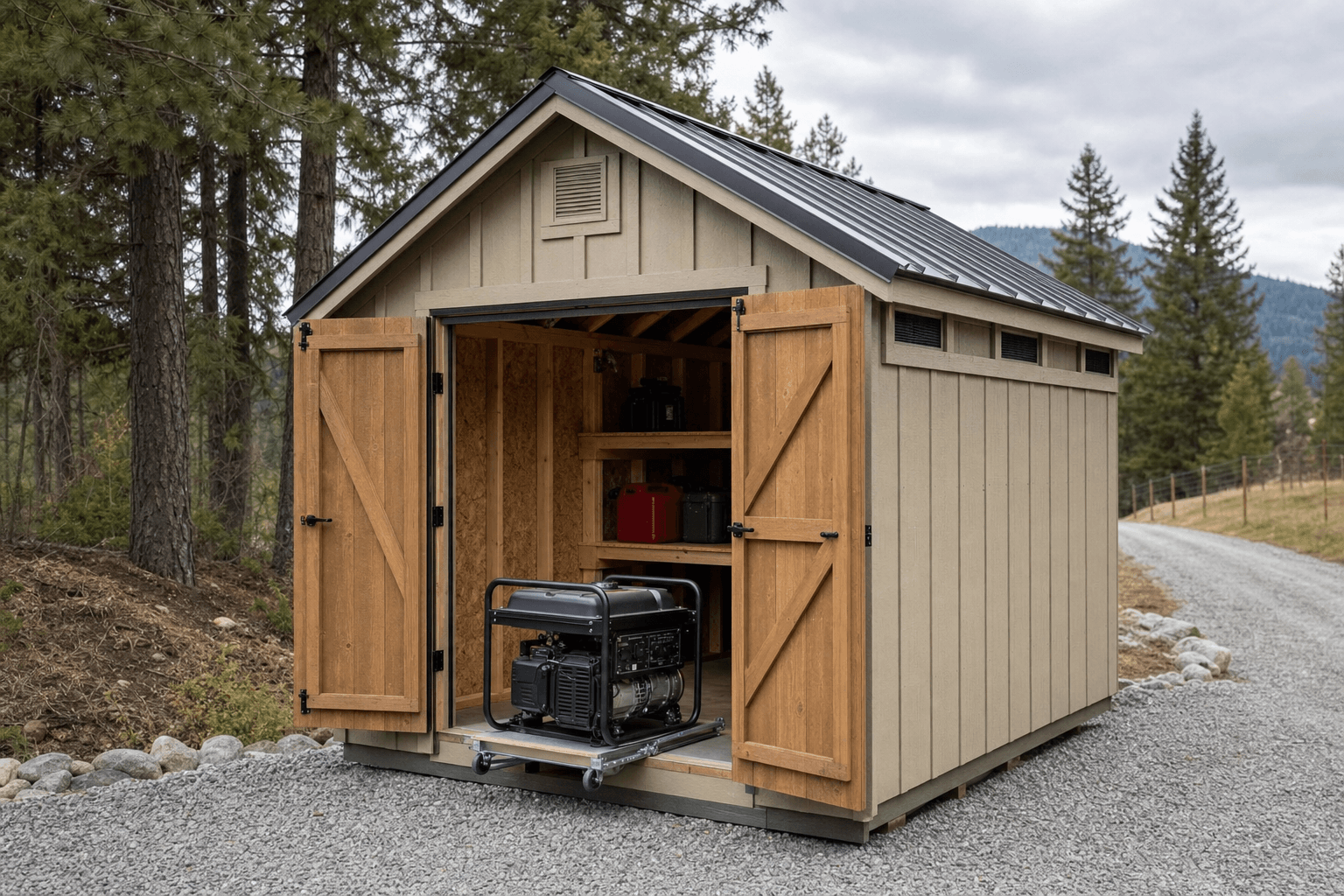
A generator shed should be planned around weather protection, ventilation, clear service access, and separated storage rather than active operation inside the shed.
Vents and openings can support a serviceable storage space, but they are not a blanket permission to operate equipment inside. Running, exhaust, and code requirements need manufacturer and trade guidance.
Leave room to roll the generator out, open panels, change oil, inspect cords, and access storage without unloading the entire shed first.
Fuel cans, cords, covers, and maintenance supplies need organized zones. The layout should avoid stacking combustible clutter against equipment or vents.
A buildable generator shed starts by separating what the shed can do from what the equipment requires. The shed can protect a powered-off generator from weather, keep a roll-out path clear, provide wall space for cable organization, and give fuel or maintenance items a separate shelf. It cannot replace a transfer switch, exhaust design, load calculation, grounding requirement, or manufacturer instructions.
That distinction matters for searchers because many people ask for a generator shed when they really need a storage and staging plan. If the generator will ever connect to home circuits, that is an electrical conversation. If noise, exhaust, or permanent standby equipment are part of the plan, those details should be coordinated before the shed opening, vents, pad, and service clearances are finalized.
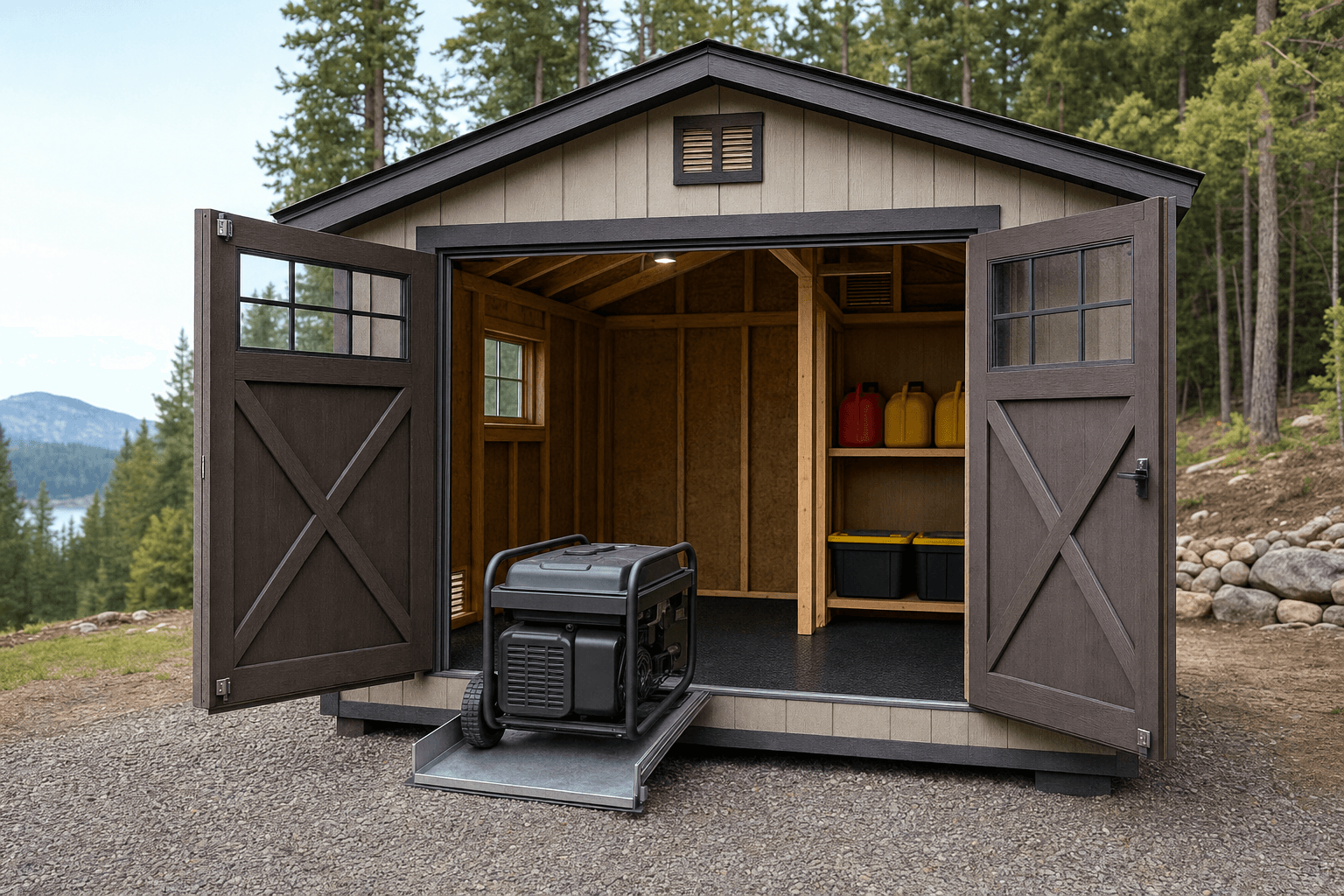
A usable generator shed keeps the service path open, separates fuel and gear storage, and leaves ventilation and access details visible for planning.
A roof, overhang, and clean threshold help keep the generator, cords, and maintenance items out of direct rain and snow when they are being staged or stored.
Door placement should account for where cords, transfer equipment, or service paths may need to run after a qualified electrician reviews the setup.
A low threshold or ramp planning area makes it easier to move a portable unit for inspection and service instead of wrestling it over a lip.
Keep cords, covers, oil, funnels, stabilizer, and fuel-related items visible but separated so outage prep does not become a cluttered shelf search.
Pad location is more than a convenience choice. A generator shed should sit where winter access, drainage, service clearance, distance from openings, and future trade work can all be discussed. A shed tucked into the wrong corner may look clean in summer and become frustrating when snow piles up or a cord route crosses a walking path.
For many rural North Idaho properties, the right conversation includes the well, freezer, driveway, house panel, outbuildings, and where a truck can reach during a storm. The shed builder can shape the structure and access around those realities, while the electrician or generator professional handles equipment operation, connection, and code requirements.
| Access and shell | |
|---|---|
| Common footprints | 8x12 or 10x12 for compact storage; 10x16 or 12x16 when roll-out access, shelving, and service clearance all matter. |
| Door opening | Plan enough width and a low transition for moving a powered-off portable unit without fighting the threshold. |
| Pad placement | Use gravel drainage and a clear approach that can be reached after snow, rain, or a long outage. |
| Equipment planning | |
| Ventilation cues | Add plain passive vents and wall spacing as part of storage planning, not as a promise of safe indoor operation. |
| Cable routing | Keep cord storage visible and off the floor; final connection routes belong with a qualified electrician. |
| Fuel separation | Use a separate shelf or bay for fuel-related items and keep the service aisle open. |
The shed should help when conditions are messy, not only when the generator is parked neatly for a photo.
Door orientation, pad height, and snow storage areas should be considered before the shed is placed.
Roof runoff, gravel drainage, and threshold details help keep storage and service areas usable in wet weather.
The shed shell supports storage and access; operation, exhaust, electrical connection, and code compliance require proper guidance.
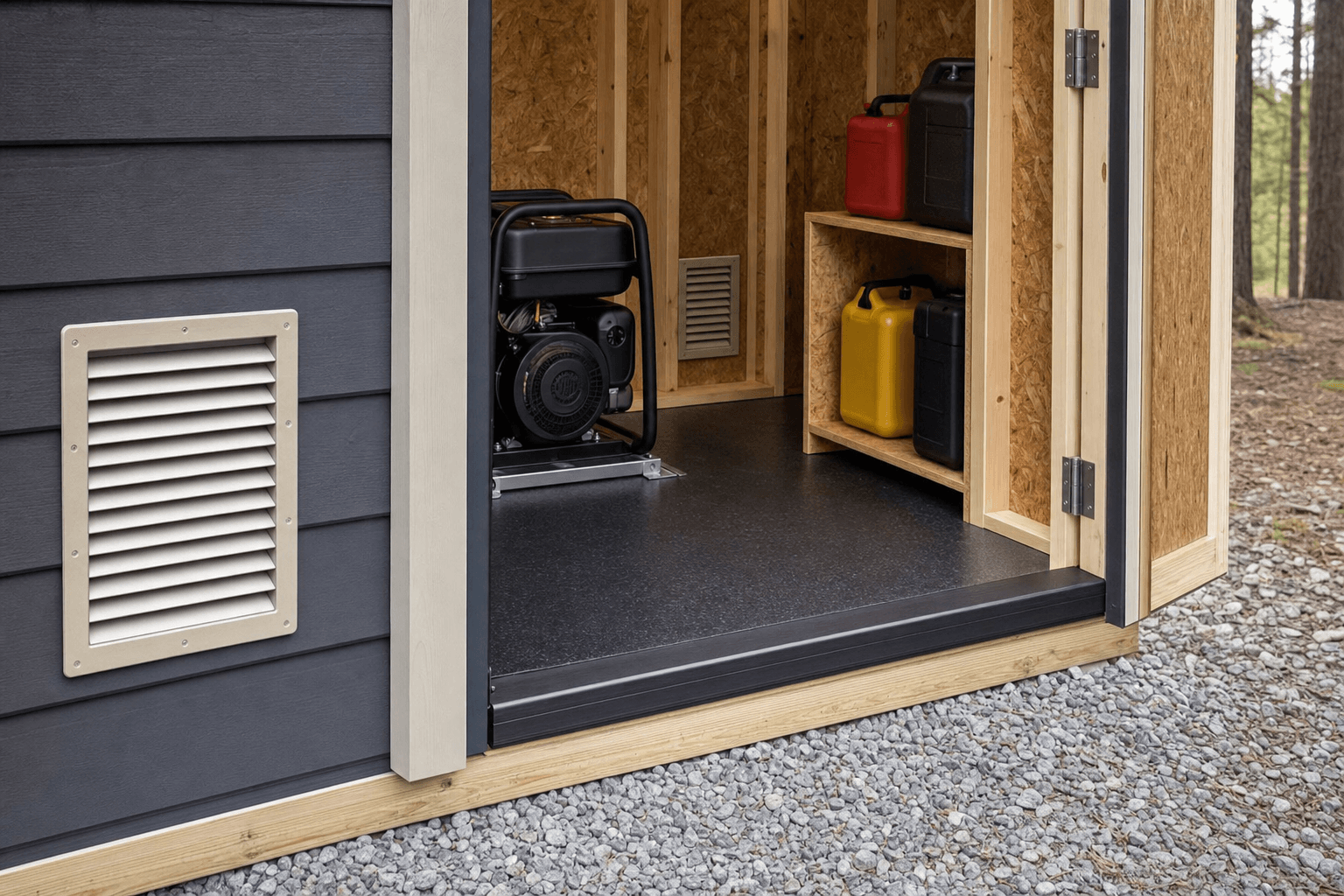
Ventilation cues, a roll-out threshold, gravel drainage, and separated storage are the planning details that make a generator shed easier to service.
| Feature | Portable generator storage shed | Standby-generator project |
|---|---|---|
| Primary purpose | Protect and organize a powered-off portable unit, cords, covers, and maintenance supplies. | Coordinate a permanent equipment location, connection, exhaust, and service plan. |
| Shed role | Weather cover, roll-out access, storage separation, and staging. | May require different clearances, equipment pads, and trade-designed details. |
| Electrical work | Any home connection still needs appropriate transfer equipment and qualified electrical guidance. | Usually planned directly with the generator installer and electrician. |
| Best fit | Homeowners who want backup supplies organized and protected before an outage. | Properties planning a dedicated permanent backup-power system. |
Do not treat a standard shed as a safe place to run a generator. Carbon monoxide, exhaust, heat, electrical connection, and code requirements are serious issues. This page is about storage, weather protection, service access, and planning boundaries; operation details need manufacturer guidance and qualified trades.
A compact 8x12 or 10x12 shed can work for storage when the generator is small and the aisle stays clear. If you want a roll-out tray, shelves, maintenance room, and separated fuel or cord storage, 10x16 or 12x16 often gives a more workable plan.
Fuel storage needs careful handling and should follow local rules, container instructions, and common-sense separation. If fuel-related items are stored nearby, keep them in a dedicated area away from heat, clutter, and the generator service path.
Ventilation cues are useful for a storage shed that may hold fuel odors, equipment, or moisture, but vents alone do not make indoor generator operation safe. Treat ventilation as one part of storage planning and defer operation or exhaust design to qualified guidance.
Choose a spot that balances winter access, drainage, service clearance, distance from building openings, and the route a licensed electrician may need for transfer equipment or future wiring. Pad placement should be discussed before the shed is built.
North Idaho On Site Sheds builds the shed shell, doors, roofline, pad-ready layout, and storage features. Electrical circuits, transfer switches, generator connections, permits, and code-specific operation details should be handled by the appropriate licensed professionals.
Tell us what equipment you need to store, how winter access works, and what trade guidance you already have. We will help shape the shed shell around safe storage and service access.
Every shed we make is built on site in North Idaho. Explore other uses we build for.