An EV charging shed is not a shortcut around electrical planning. It is a protected, organized structure that gives the parking spot, charger location, cable path, weather exposure, and storage clearances a better plan before an electrician installs equipment. In North Idaho, that planning is especially useful when snow, rain, cold mornings, and long driveways all affect daily charging.
The shed builder’s job is the shell: roofline, doors, pad, protected access, ventilation cues, wall space, and practical storage. The electrician’s job is the charging equipment, circuits, load calculations, permits, and code details. A good page and a good shed should keep that boundary clear while still helping the homeowner make smart layout decisions before construction starts.
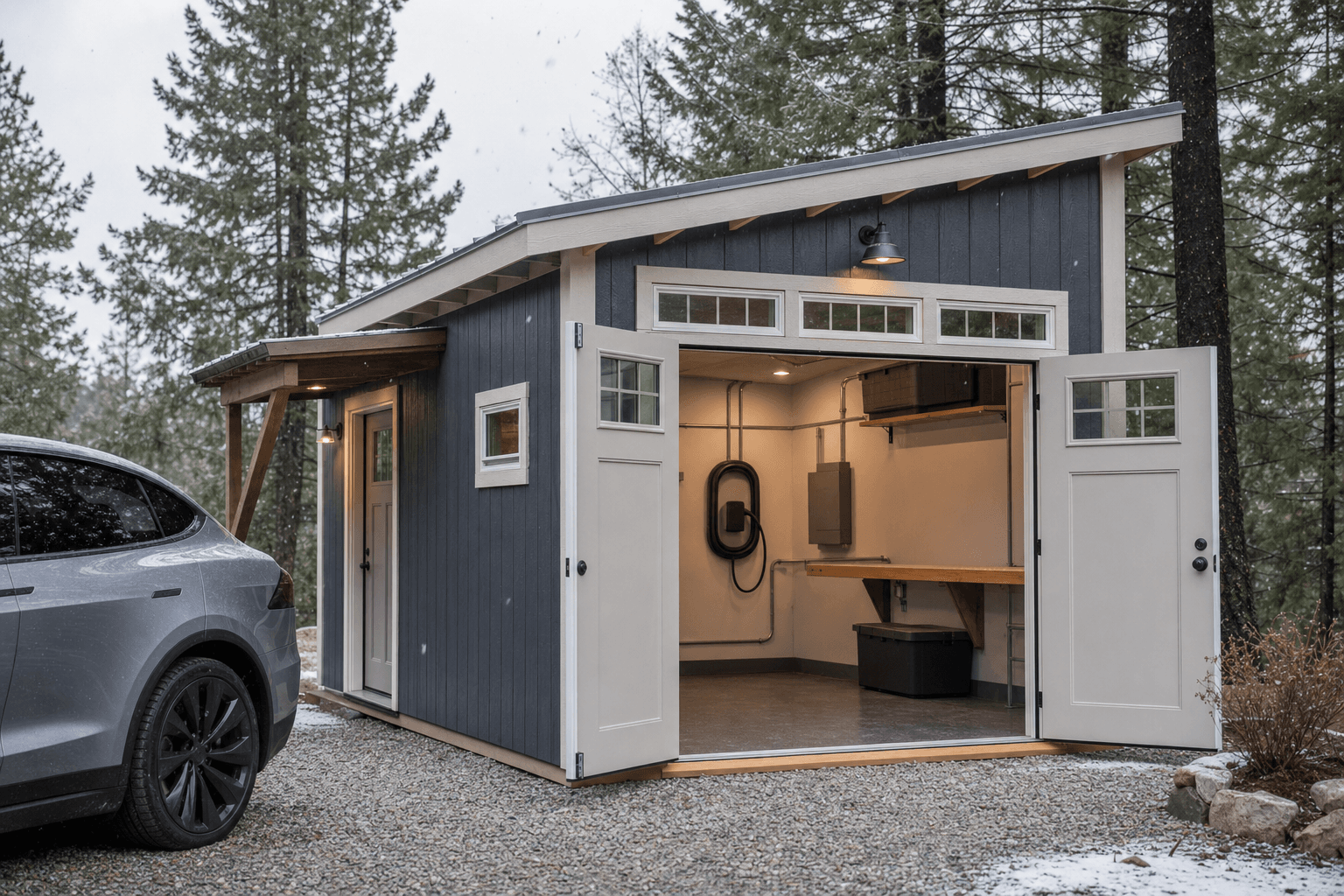
A dedicated power-shed layout can give charging equipment, cable storage, and weather protection their own planned space near the driveway.
A covered or adjacent bay can keep the charging area easier to use in snow, rain, and freezing mornings without pretending the shed replaces code-required equipment.
Wall space, vehicle position, and cable hooks should be planned together so cords do not cross the main walking path or land where snow piles up.
Dry storage is useful, but combustibles, clutter, and portable power gear need spacing so the charging wall does not become a crowded utility closet.
Conduit paths, wall backing, access panels, and equipment zones should be easy for a qualified electrician to review before anything is energized.
Home EV charging decisions start with the vehicle, the panel, the parking location, and the owner’s driving routine. A shed can support those decisions by giving the charger a protected wall, keeping the connector off the ground, and making the parking position repeatable. It should not claim to make a circuit safe or code-compliant on its own.
For many homes, the key question is whether the daily routine works with Level 1 equipment or whether a Level 2 charger is worth planning for. That is an electrical and lifestyle discussion, not just a shed-size question. The shed layout should leave room for the equipment a qualified electrician recommends and enough access to service it later.
Cold weather changes the routine. The charging connector needs a place to hang, the cable should not freeze into a snowbank, and the walking path from house to vehicle should stay clear. A protected shed bay or dedicated power shed can make those small daily details easier to manage.
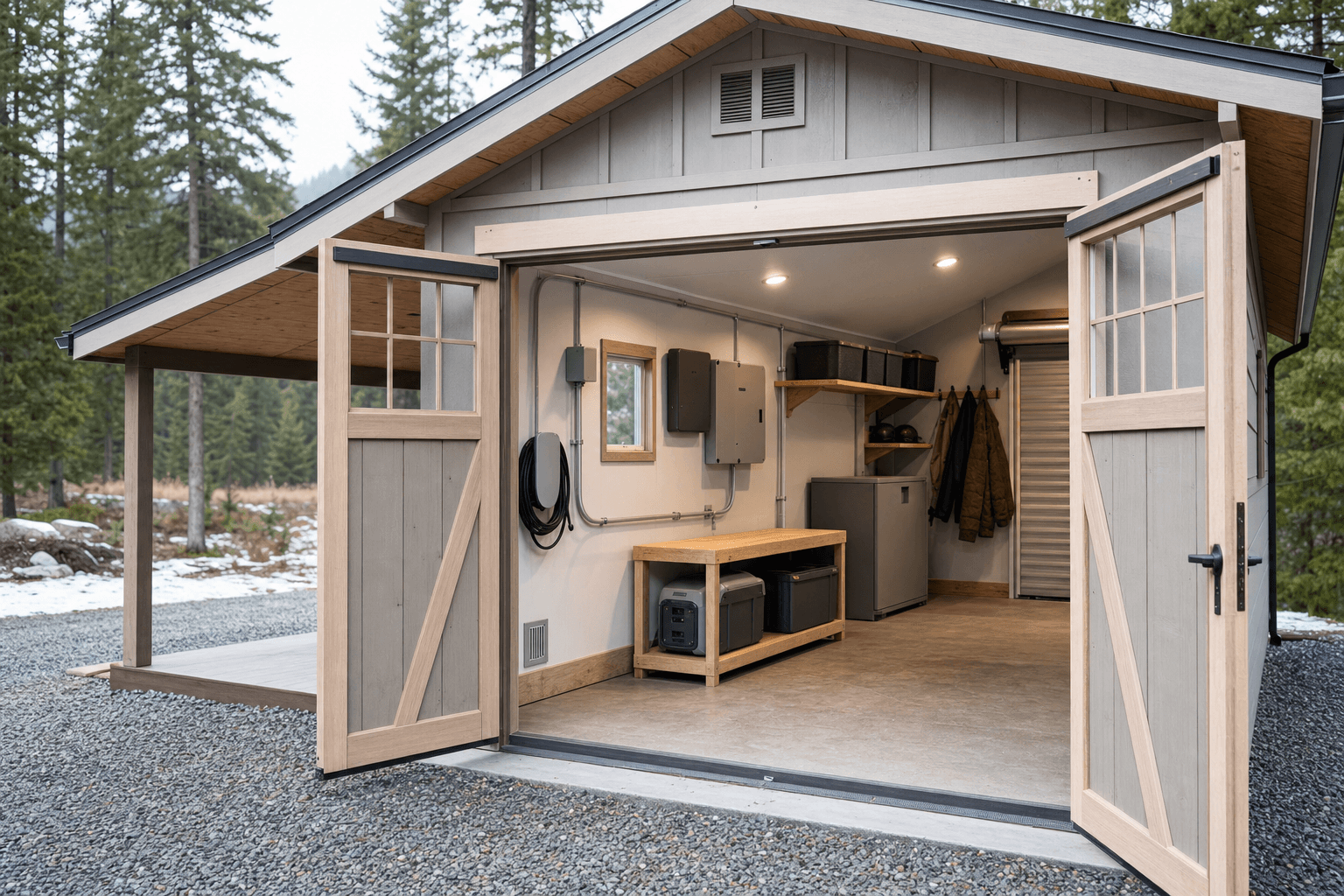
Clear aisles, wall-mounted cable organization, blank equipment zones, and ventilation cues keep the space useful without turning it into a crowded utility closet.
| Exterior and access | |
|---|---|
| Parking position | Plan where the charge port lands when the vehicle is parked consistently, then place doors and wall zones around that reach. |
| Weather protection | Roof overhangs, entry orientation, and a clean pad can help keep snow, roof runoff, and connector icing from becoming daily frustrations. |
| Service access | Leave room around equipment zones so an electrician can install, inspect, and maintain the charging setup. |
| Interior and storage | |
| Cable route | Use hooks, reels, and wall paths that keep the cable off the floor and out of the walking path. |
| Dry shelf | Store portable power gear and accessories with spacing, not stacked against charger equipment. |
| Ventilation | Plan air movement for a small utility space without claiming ventilation solves electrical or battery safety by itself. |
North Idaho charging plans need practical weather protection, not vague promises.
Covered parking or a protected charger wall helps reduce snow and ice hassles around the connector and cable path.
The shed can shelter the area, but outdoor-rated equipment and installation choices belong with the electrician and manufacturer guidance.
A planned wall keeps cable storage, dry shelves, and equipment zones from turning into a cluttered corner.
EV owners often want the same shed to hold winter gear, tools, portable power equipment, and the charging cable. That can work when the layout has boundaries. Keep the charger wall visible, avoid storing boxes against equipment, and give portable power gear a dry shelf with breathing room instead of stacking it below the connector.
Good content should be honest about fire safety. A shed can provide spacing, weather protection, cable organization, and a better daily routine. It cannot certify an electrical system. Use safety-certified equipment, avoid extension-cord habits, and have charging circuits, load management, and permits handled by the qualified professionals responsible for that work.
A North Idaho EV shed also needs to be boring in the best way: easy to park at, easy to shovel around, easy to see into, and easy to maintain. If the charging area takes extra steps every cold morning, the plan needs to be simplified before construction.
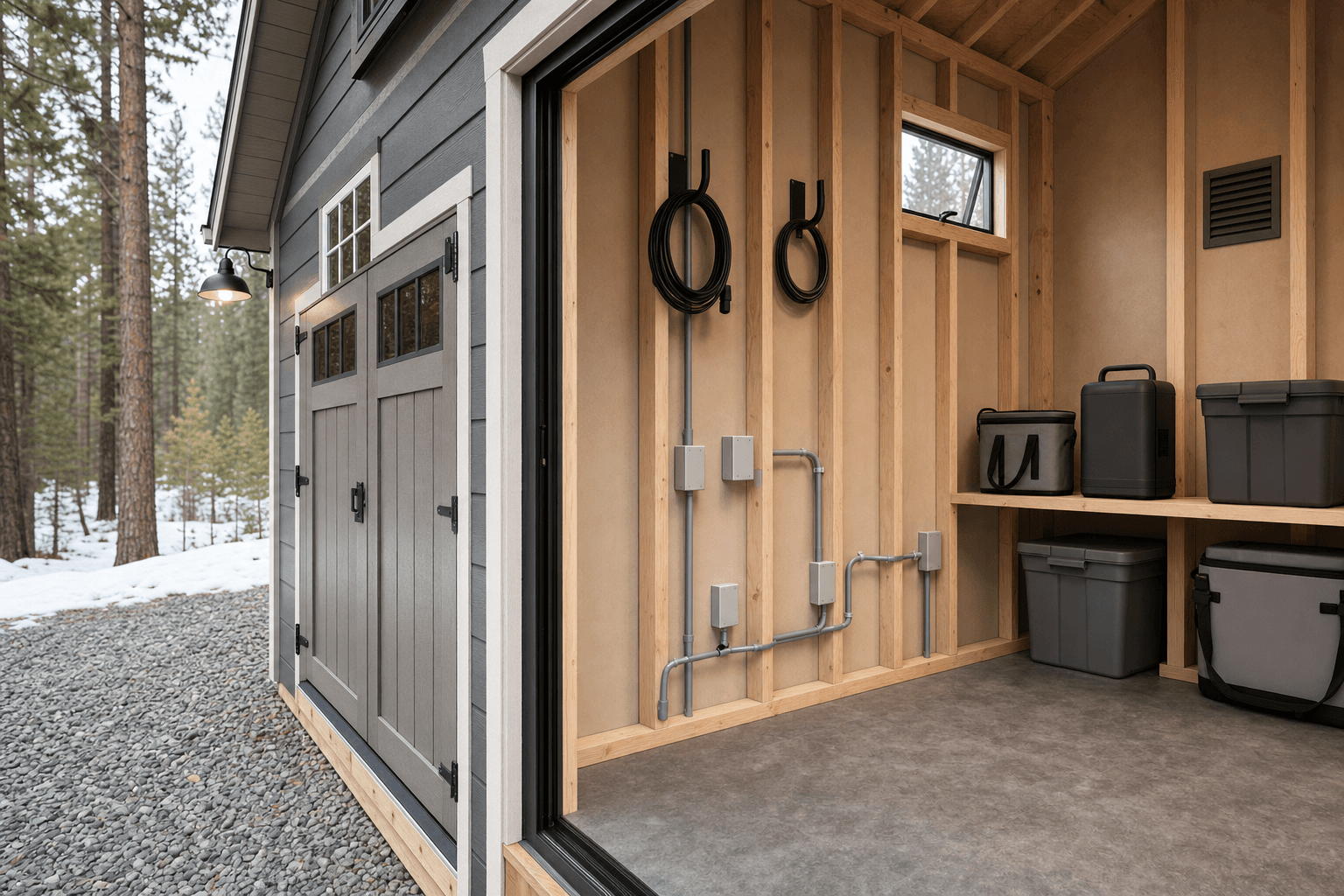
Cable routing, clearances, ventilation, dry shelving, and durable flooring should be planned with a qualified electrician before equipment is installed.
| Feature | Wall-only charging area | Dedicated EV power shed |
|---|---|---|
| Weather exposure | Works when the wall and parking spot are already protected. | Adds roof, pad, and storage planning around the charger location. |
| Cable management | Often limited to a wall hook or charger holster. | Can include planned cable paths, hooks, dry shelves, and a clear walking route. |
| Storage | Easy to crowd with garage or outdoor clutter. | Can separate dry accessories from charger equipment before clutter builds up. |
| Trade coordination | May be simpler if panel, parking, and wall access already line up. | Worth discussing early when trenching, distance, snow access, or future power needs are part of the project. |
A shed can be planned as the protected structure around a charger location, cable route, and parking spot. The electrical equipment, circuit sizing, permits, and installation still need to be handled by a qualified electrician and matched to the charger and vehicle requirements.
Ventilation can be useful for a small utility-style shed, especially when it also stores gear or portable power equipment. It should be treated as part of comfort and moisture planning, not as a substitute for code-compliant electrical work or manufacturer instructions.
The size depends on whether the shed is only a protected charger wall, a covered parking bay, or a combined storage and charging support space. A compact 10x12 or 10x16 may fit equipment and dry storage, while larger layouts make sense when the vehicle, walkway, and gear storage all need cover.
Keep the cable off the ground, away from the main walking path, and out of areas where snow sheds from the roof or piles from plowing. Hooks, reels, protected wall placement, and a consistent parking position can make winter charging less frustrating.
We do not design around extension-cord charging. Fire-safety guidance commonly warns against using extension cords or multi-plug adapters for EV charging. Plan the shed location and charger wall so the permanent equipment can reach the vehicle as intended.
Ask about panel capacity, charger level, circuit route, trenching or conduit needs, load management, equipment ratings, permits, and service access. Those answers can affect where the shed sits, which wall gets backing, how the doors work, and where cable storage belongs.
Tell us where the vehicle parks, how winter access works, and what equipment your electrician is considering. We will help shape the shed shell around that plan.
Every shed we make is built on site in North Idaho. Explore other uses we build for.