A good firewood shed is not just a roof over a pile of wood. In North Idaho, it has to protect split wood from roof runoff and snow while still letting air move through the stack. The best plans start with how many cords you keep, where the wheelbarrow rolls, and how far you want to carry armloads in January.
North Idaho On Site Sheds can build the shell around that routine with an open covered bay, raised stacking surface, gravel approach, and enough roof overhang to protect the pile. This page is about safe storage and access, not stove, chimney, or appliance installation.
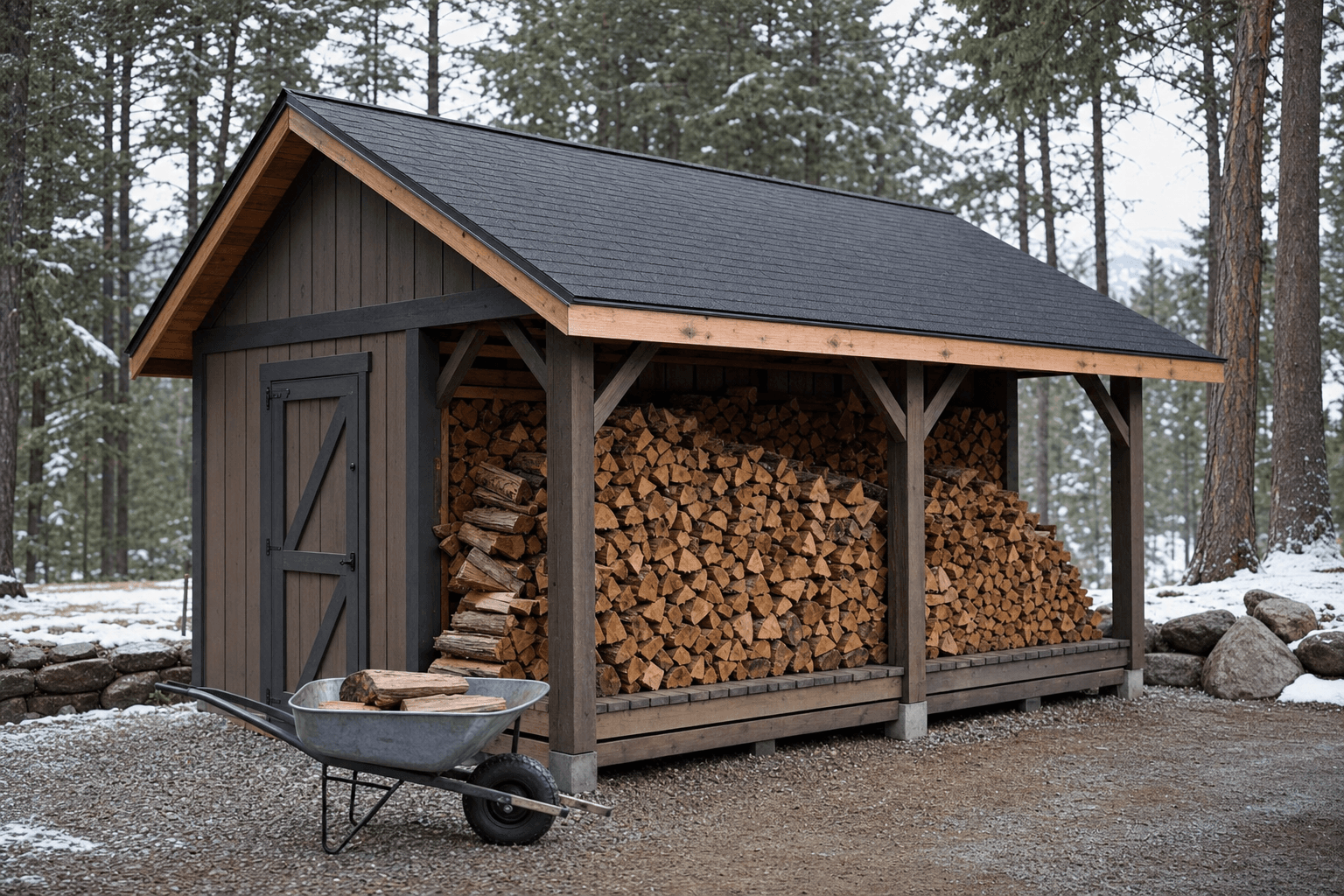
A practical woodshed layout protects split firewood from rain and snow while leaving the stack open to airflow and easy wheelbarrow access.
Firewood dries by releasing moisture, so the shed should protect the top while keeping sides open enough for moving air. Slatted walls, open bays, and raised floors help the pile breathe instead of trapping dampness against the siding.
Wide front access lets you load, rotate, and pull from the stack without crawling over loose rounds. A roofline with useful overhangs keeps rain and snow off the pile while leaving the working face easy to reach.
A cord is a volume, not just a row of wood, so the bay depth and stack height matter. Separate lanes for seasoned, drying, and shoulder-season wood make it easier to burn the oldest dry wood first.
Keeping the wood raised, separated from soil, and not pressed tight against the house helps reduce moisture and pest pressure. Gravel, daylight, and a clean perimeter make the shed easier to inspect.
A common woodshed mistake is closing the structure in so tightly that it behaves like a damp storage closet. For North Idaho use, the better approach is usually a covered bay with strong roof protection, open faces, and side gaps that allow cross-breeze.
That does not mean the shed should be flimsy. Posts, bracing, roof pitch, snow-shedding direction, and a raised platform all need to match the site. We plan the opening so snow piles, roof drip lines, and wheelbarrow turns do not make the best-looking placement hard to use.
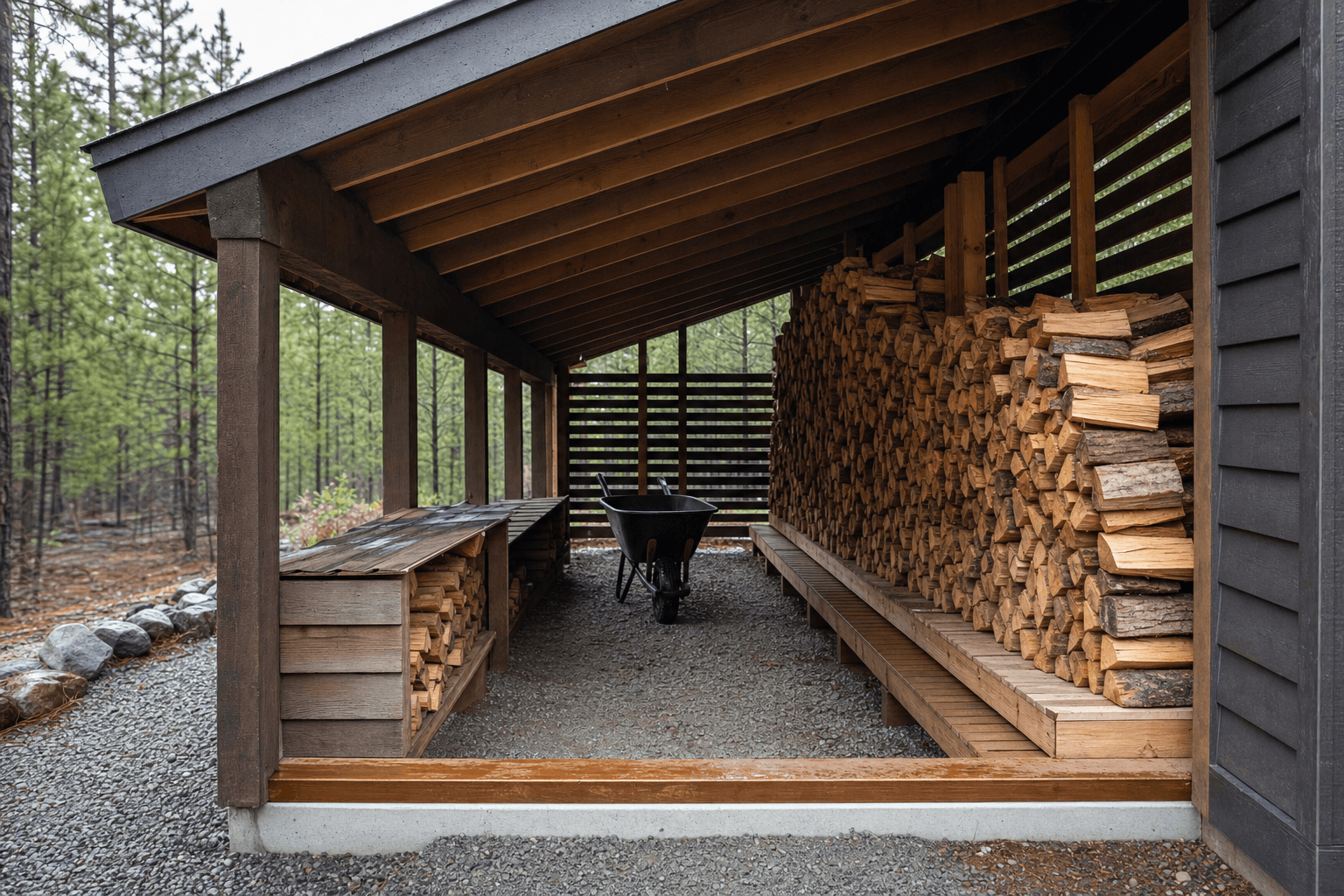
Clear access, raised stacking, open side airflow, and a simple kindling zone make a woodshed easier to use through wet North Idaho seasons.
Face the main opening toward the route you will actually use from the driveway or splitting area. A clean gravel approach is more valuable than a pretty side yard view when the ground is icy.
Many owners want wood close to the door, but the main storage pile should be planned with moisture, pests, and access in mind. A small porch rack can handle daily wood while the shed stores the larger reserve.
Skids, slats, or a framed platform keep the stack off wet ground and let air move under the first course. The floor should be strong enough for real cord weight, not just decorative bundles.
A shed that technically holds several cords can still be frustrating if the back row is impossible to reach. For frequent winter use, it helps to split the storage into bays or lanes: new wood on one side, seasoned wood on the other, and kindling or shoulder-season pieces near the front. This keeps rotation visible and makes it easier to bring in a few days of wood before a storm.
The same planning applies to site prep. A gravel pad helps drainage and keeps mud from mixing with bark. A low threshold keeps a wheelbarrow from catching. Side clearance gives you room to sweep chips, check for rodents, and keep snow from sealing the stack face.
| Storage and access | |
|---|---|
| Common footprints | 8x12 or 10x12 for compact household storage; 10x16, 12x16, or 12x20 when multiple cords and easier rotation matter. |
| Stack direction | Keep the working face open and visible so seasoned wood is easy to pull without disturbing the newest stack. |
| Approach | Plan a wheelbarrow-friendly gravel path with room to turn and a low, durable threshold. |
| Weather and protection | |
| Roofline | Use overhang and roof direction to move runoff away from the stack face and the main walking route. |
| Ventilation | Open sides, slatted walls, and raised floors help the stack keep drying after wet weather. |
| Pest awareness | Avoid burying wood against the house or ground; leave inspection space and keep bark, chips, and loose scraps cleaned up. |
A woodshed in this region has to handle rain, snow, freeze-thaw, and long stretches of damp air.
Placement should account for where the roof sheds water so the stack face and wheelbarrow route do not become the drainage path.
Door orientation, pad height, and snow storage areas should be discussed before construction, especially on rural drives.
Covered wood still needs airflow. A breathable shed is usually more useful than a sealed box for long-term firewood storage.
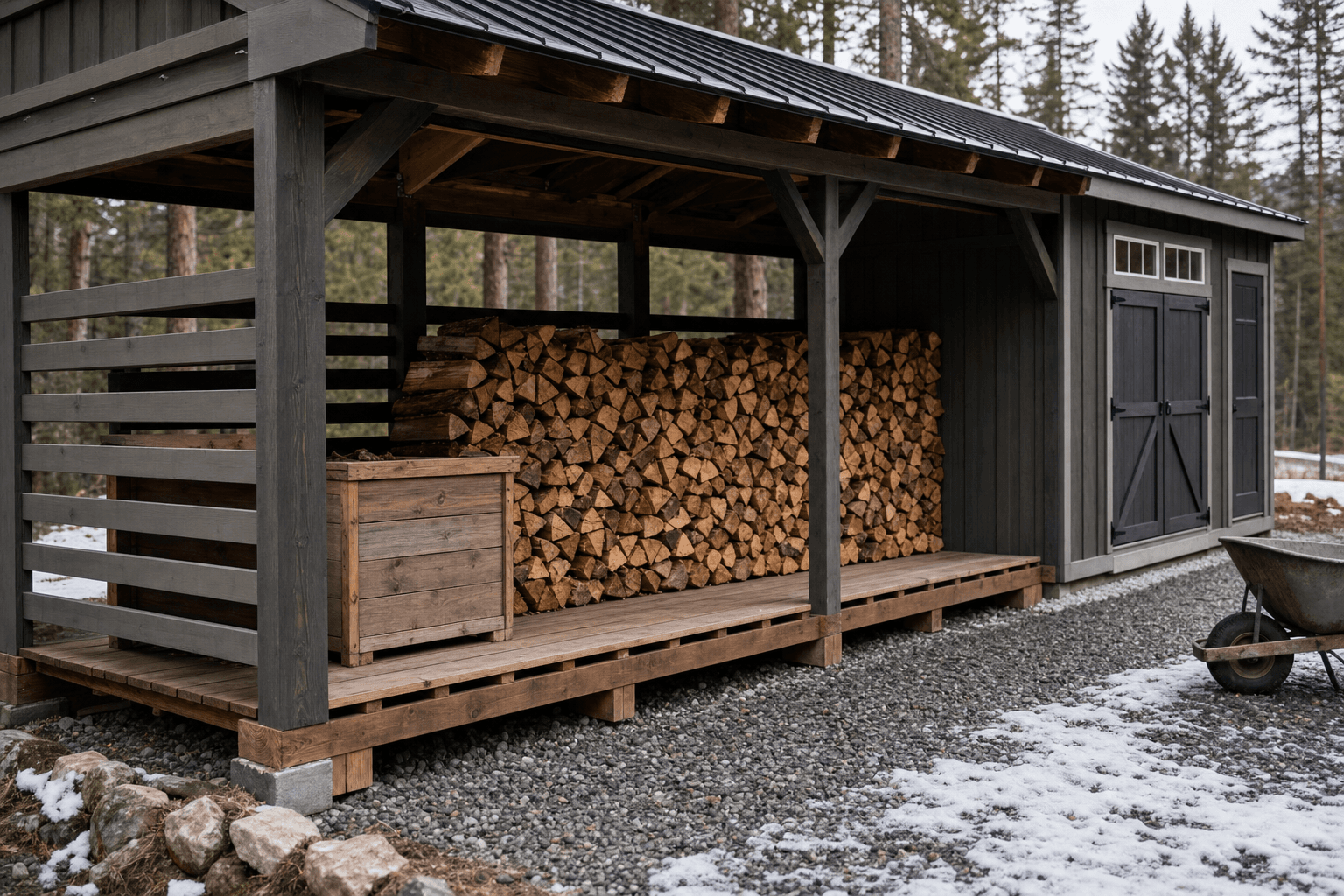
Raised stacking, ventilation gaps, and gravel drainage are small details that keep a woodshed more useful through rain, snow, and freeze-thaw cycles.
| Feature | Open woodshed bay | Enclosed storage shed |
|---|---|---|
| Drying | Best for split firewood that needs airflow after stacking. | Better for tools and supplies, but can trap moisture around firewood. |
| Weather protection | Protects the top and work face while leaving sides breathable. | Keeps wind-driven weather out but needs careful ventilation planning. |
| Daily use | Fast wheelbarrow loading and easy cord rotation. | Useful when the shed also stores tools, but the wood pile can become crowded. |
| Best fit | Primary cord storage near the driveway, splitter, or winter access route. | Mixed utility storage with a smaller dedicated wood zone. |
A full cord is 128 cubic feet when stacked, but the shed footprint depends on stack height, aisle space, and whether you want separate bays for seasoned and green wood. Compact household storage may start around 8x12 or 10x12, while larger winter reserves often need a 10x16, 12x16, or 12x20 layout.
Most firewood storage benefits from a covered roof and open airflow rather than a sealed room. Open sides, slatted walls, and raised stacking help wood keep drying while the roof protects it from direct rain and snow.
Place it where the wheelbarrow route, driveway access, drainage, and winter snow management all work together. Many owners keep the main pile a practical distance from the house, then use a smaller porch rack for daily wood.
A good shed can reduce pest-friendly conditions by keeping wood off the ground, improving airflow, and making the area easier to inspect and clean. It should not be built tight against the house or left with bark, chips, and loose scraps piled around the base.
A gravel pad is usually a smart choice in North Idaho because it drains better than bare soil, keeps mud away from the stack, and gives a wheelbarrow a firmer approach. The exact pad size should account for the shed footprint, overhang, and work area.
This service page is about firewood storage, not indoor burning or stove installation. If you want a heated building or appliance installation, that needs separate planning, permits, clearances, and qualified trade guidance.
Tell us how much wood you store, where you split and park, and how you want to access the stack in snow season. We will help plan a buildable shed shell around that routine.
Every shed we make is built on site in North Idaho. Explore other uses we build for.