A good garden shed is not just a small building near the fence. It is the dry, reachable working spot between the house, the beds, the hose, the compost area, and the equipment that makes the garden easier to keep up with. In North Idaho that means planning for muddy spring access, hot dry storage in summer, early freezes, and snow that can block the wrong door.
Start with what you carry most often. Long-handled tools need wall space and a path that does not tangle with a mower. Potting supplies need a bench, shelves, and a floor that can handle soil. Seed trays, hoses, amendments, bins, and hand tools all need zones so the shed stays useful after the first season. NIOS builds garden sheds on-site, so the footprint and openings can fit the actual path, grade, and garden layout instead of forcing a delivered box into a tight corner.
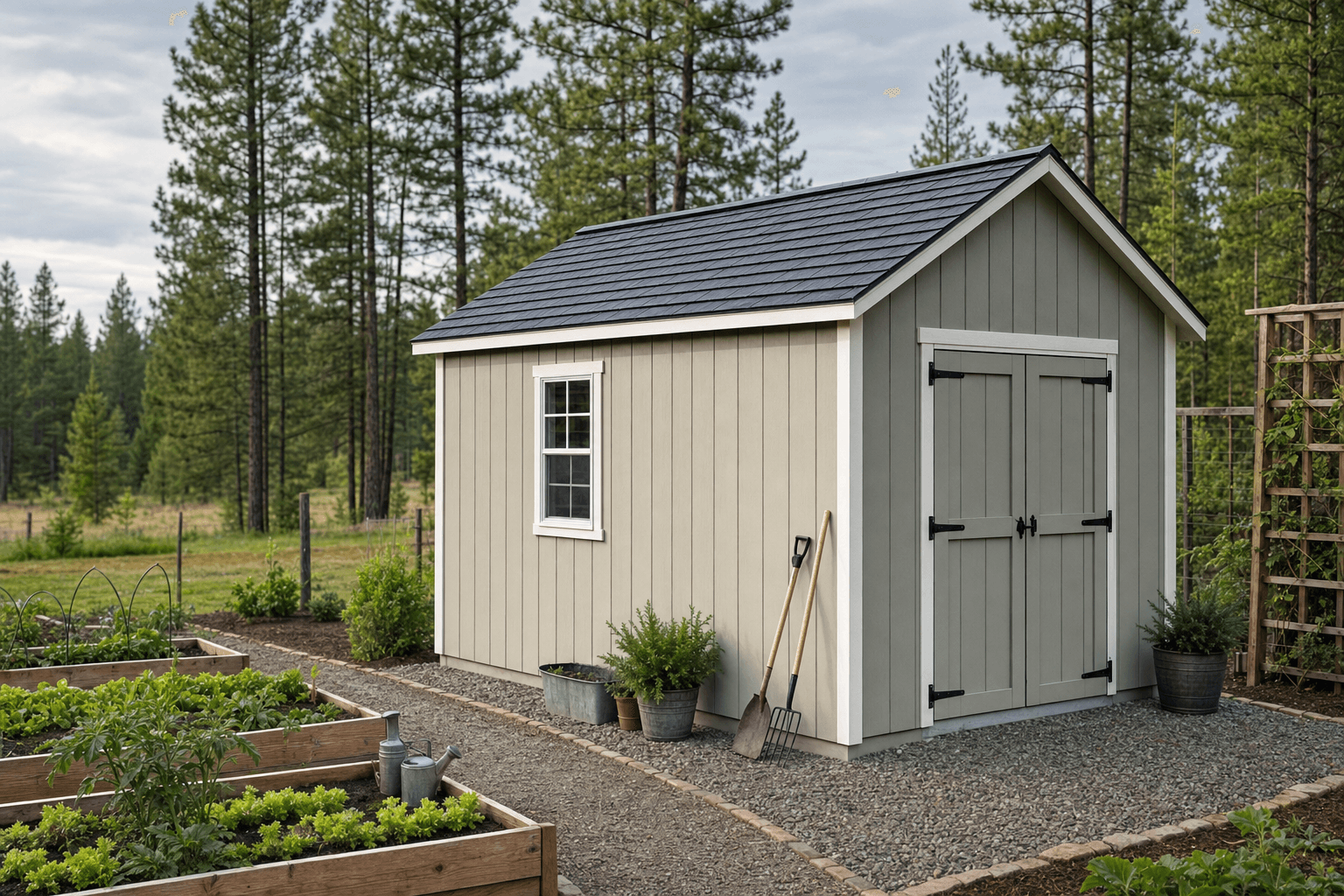
A garden shed should sit close to the growing area with weather-ready access, durable doors, and practical daylight.
Line up the door with the gravel path, gate, mower route, or raised beds so the shed works with muddy boots and full hands.
A potting bench changes wall layout, window placement, shelf height, and how much clear floor space should stay open.
Wet tools, soil bags, hoses, and pots need airflow so the interior does not become stale or mildew-prone.
The pad, roof edge, and door swing should keep runoff and winter snow from trapping the most-used entrance.
Small gardens often work well with an 8x10 or 8x12 garden shed when the goal is basic tool storage, a few shelves, and one clear aisle. A 10x12 gives most homeowners room for long tools, soil bins, hoses, and a compact potting counter without making every trip a shuffle. When you also need mower access, wheelbarrow clearance, a seed-starting shelf, or winter storage for patio items, 10x16 and 12x16 sizes are easier to live with.
Door planning matters as much as square footage. Double doors help with mowers, carts, and bulky bags. A man door can be useful when you want daily tool access without opening the whole front. Windows should serve the work area, not just the elevation. Put daylight where you sort pots, sharpen pruners, or check seedlings, and keep direct hot sun away from supplies that should stay cooler.
Inside, the goal is to keep the floor open. Put deep shelves where bins can stack without covering tools. Use hooks for rakes, shovels, hoses, and extension cords. Keep potting soil and amendments off the floor so they do not soak up moisture. If electrical, heat, or water might come later, mention that before the estimate so framing, clearances, and placement do not block a future upgrade.
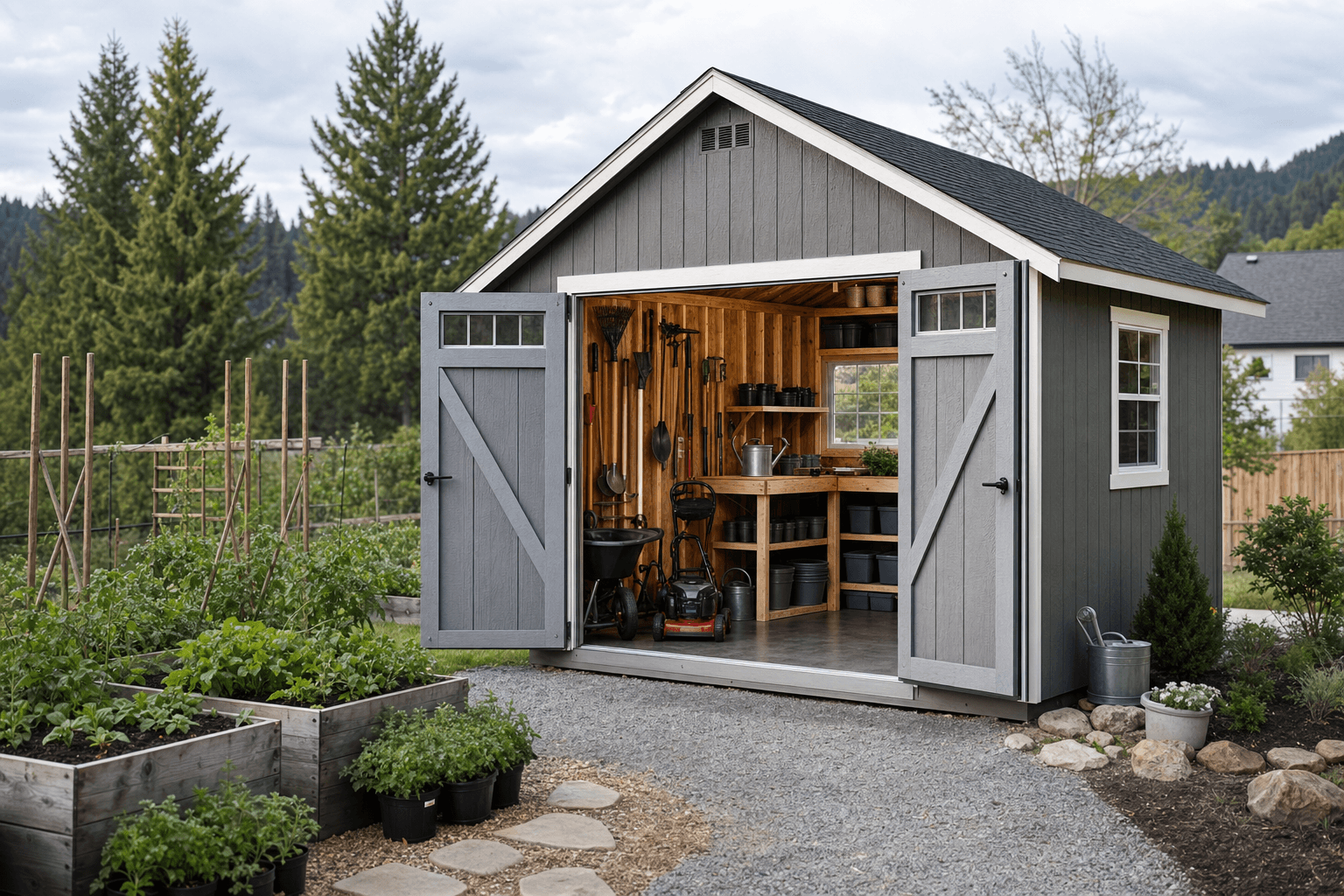
Open-door workflow cues show how a garden shed can support tools, potting work, and clean seasonal access.
A bench under or near a window gives you a clean spot for trays, hand tools, soil work, and small repairs.
Hooks and open wall space keep rakes, shovels, hoes, and pruning tools visible instead of piled in a corner.
Double doors and a durable threshold make it easier to move carts, mowers, bags, and patio items.
Shelves and blank bins help separate seed trays, gloves, fertilizers, sprayers, and winter supplies.
Simple airflow and daylight keep damp gear from sitting in a dark sealed box after wet weather.
Siding, trim, roof, pad, and door swing should be chosen for North Idaho rain, snow, and freeze-thaw cycles.
Garden sheds need to stay reachable and dry through wet spring starts, hot summer storage, and winter snow.
A gravel pad and site slope should move water away from the threshold and planting paths.
Door placement and roof edge planning should account for plowed paths, drift zones, and winter use.
Ventilation helps tools, pots, hoses, and soil supplies dry between wet garden days.
Building on-site helps when gardens, fences, trees, or tight gates make delivered shed placement difficult.
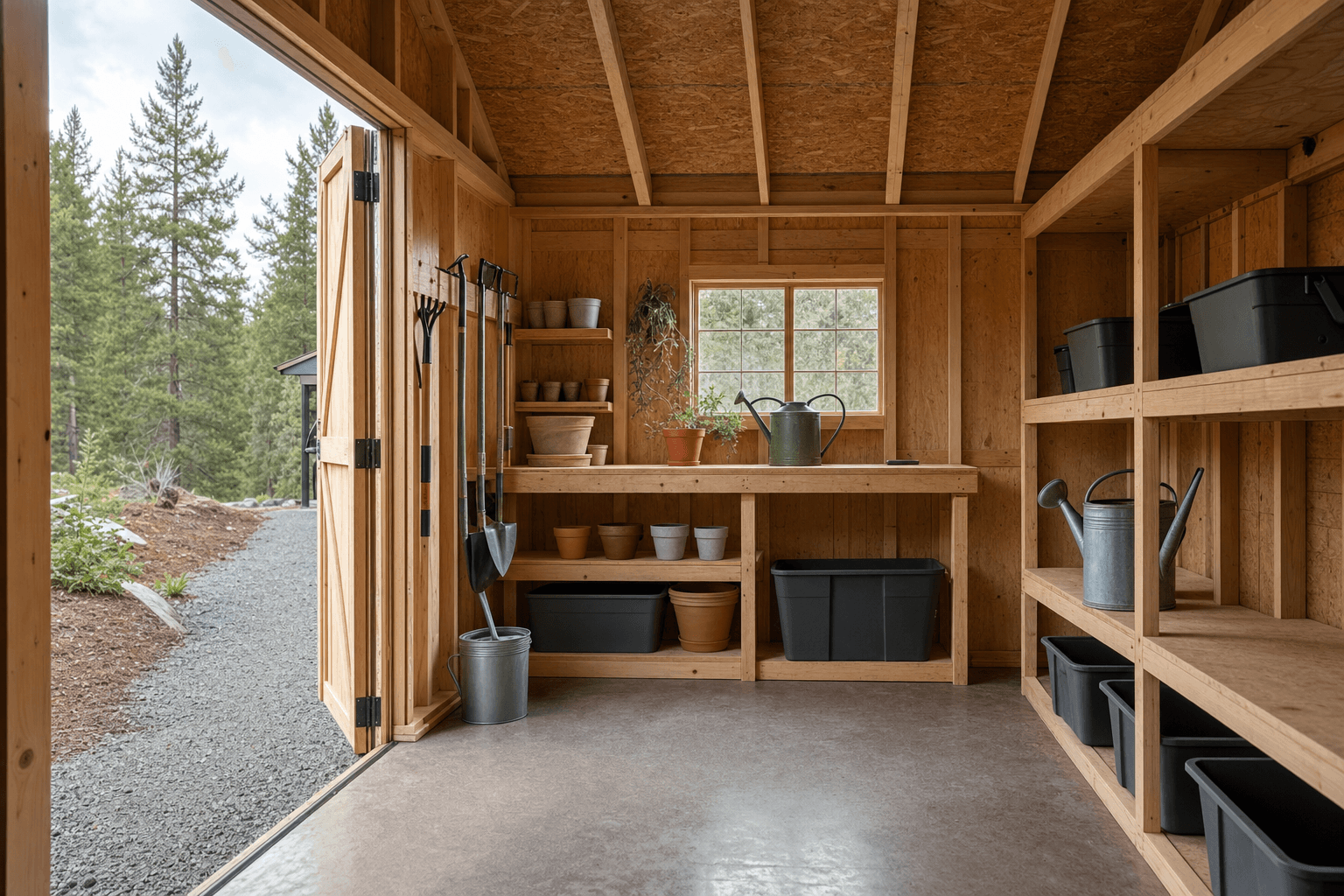
Detail views help buyers picture shelves, hooks, potting surfaces, and protected storage before choosing size and layout.
Before you ask for pricing, walk the garden route with a wheelbarrow or the largest tool you expect to store. Look at where water runs, where snow piles up, where a hose crosses the path, and whether the shed door would open toward the work or away from it. Those details often decide whether a garden shed feels natural or frustrating.
Be clear about whether this is a storage shed, a potting shed, or a shed that may eventually support seed starting, a small sink, electrical outlets, or light climate control. A true greenhouse-shed hybrid has a different glazing and moisture conversation than a dry tool shed. NIOS can help sort those choices, but the best estimate starts with an honest list of what must stay dry, what needs light, what comes in muddy, and what has to move through the door.
An 8x12 can work for basic tools and a small bench, but a 10x12 or 10x16 is easier when you want shelves, bins, a clear aisle, and room to turn with soil bags or a wheelbarrow.
Windows are useful when you have a potting bench, seed trays, or detailed hand-tool work. Place them for daylight and ventilation, not just exterior symmetry, and avoid adding glass where wall storage is more valuable.
Yes, but mower storage changes the door and floor plan. Use double doors, leave a straight entry path, and keep shelves or benches from narrowing the route you need for the mower deck.
Start with a dry pad, good roof and door detailing, and basic ventilation. Inside, keep tools off the floor, leave air around wet items, and avoid sealing damp soil bags or hoses into a tight corner.
No. A garden shed is usually a dry storage and work building. A greenhouse is designed around light, heat, humidity, and plant growing. A hybrid is possible, but it needs a more specific glazing and moisture plan.
Put it close enough to the beds that you will use it, but high and dry enough to avoid runoff. Also check wheelbarrow access, snow storage, gate width, sun exposure, and whether doors can open fully.
Tell us what you grow, store, and move through the space. We will help plan a shed that fits the garden instead of fighting it.
Every shed we make is built on site in North Idaho. Explore other uses we build for.