A good potting shed is a workroom first. It should make it easier to fill trays, sort seed packets, stage soil amendments, hang hand tools, and step directly back to the garden without dragging every task through the garage or kitchen.
In North Idaho, that room has to handle more than sunny spring days. Mud season, cold nights, snowmelt, fall cleanup, and shoulder-season wind all influence where the doors go, how much light the bench gets, and how much ventilation the shed needs. A potting shed can support seed starting and plant care, but it should not be sold as a climate-controlled greenhouse or a promise of plant performance.
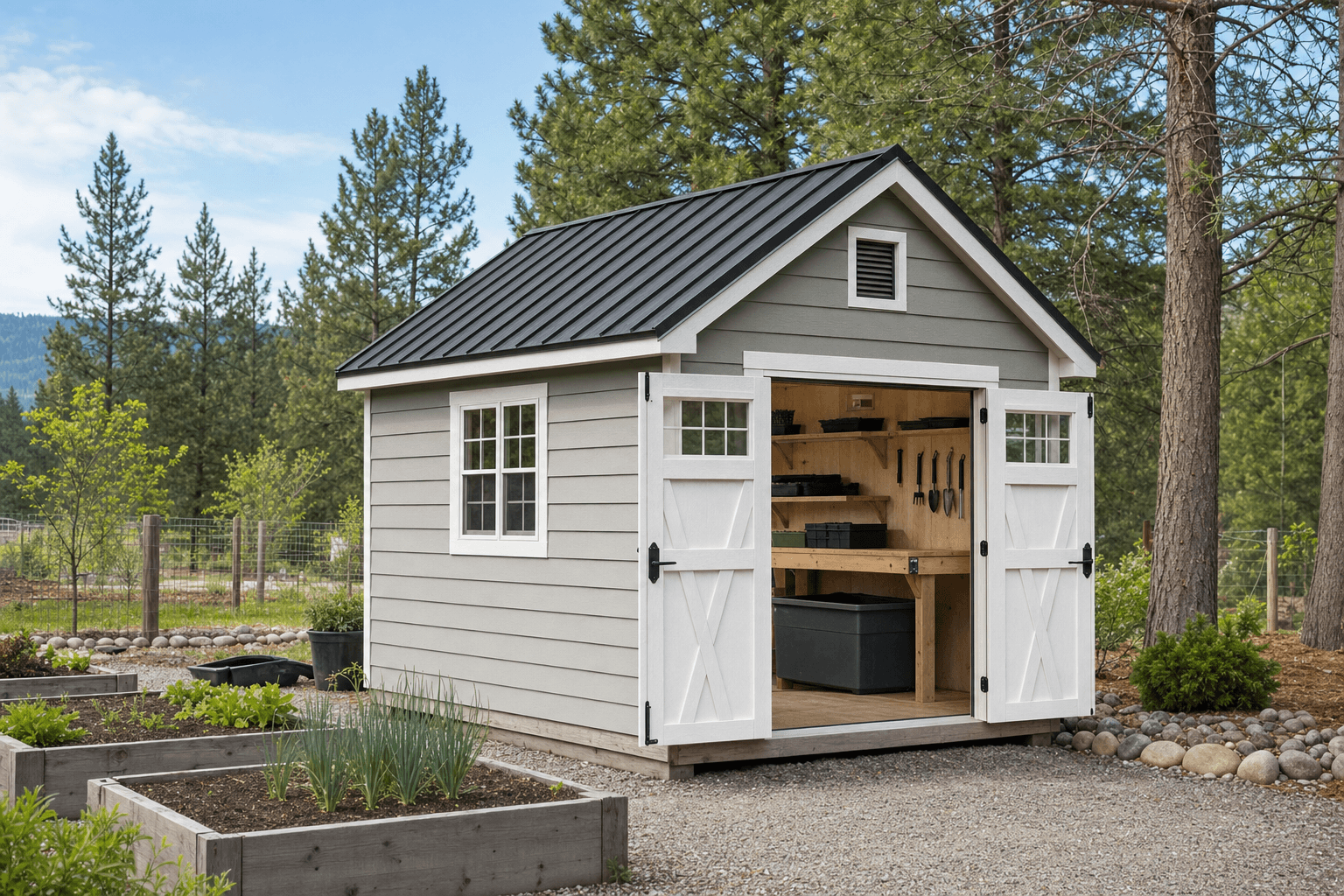
A potting shed should start with a buildable shell, a dry gravel approach, practical windows, ventilation, and a bench layout that connects cleanly to the garden.
The bench needs enough depth for trays, pots, and soil mixing without stealing the aisle. Plan the door swing and the main work surface together.
Bags, bins, and blank containers should be easy to lift and close. Keeping amendments off the floor helps with moisture control and pest awareness.
Shelves near light and power-ready planning zones can support seed starts, but the owner’s lighting, heat, and watering practices determine plant results.
Hand tools, gloves, twine, stakes, and pruners work best on a dedicated wall so the bench stays clear for actual potting work.
A potting shed needs light where the work happens, not just glass for looks. Window placement should brighten the bench, support easy inspection of starts, and avoid creating an overheated all-glass corner. If you need more protected growing space than a bench and shelves can provide, compare this plan with a greenhouse shed before choosing the final shell.
Ventilation matters because soil, wet trays, stored pots, and spring weather all add moisture. A screened vent, operable window, or fan-ready location can keep the shed from feeling stale. The goal is a practical workspace, not a sealed plant room.
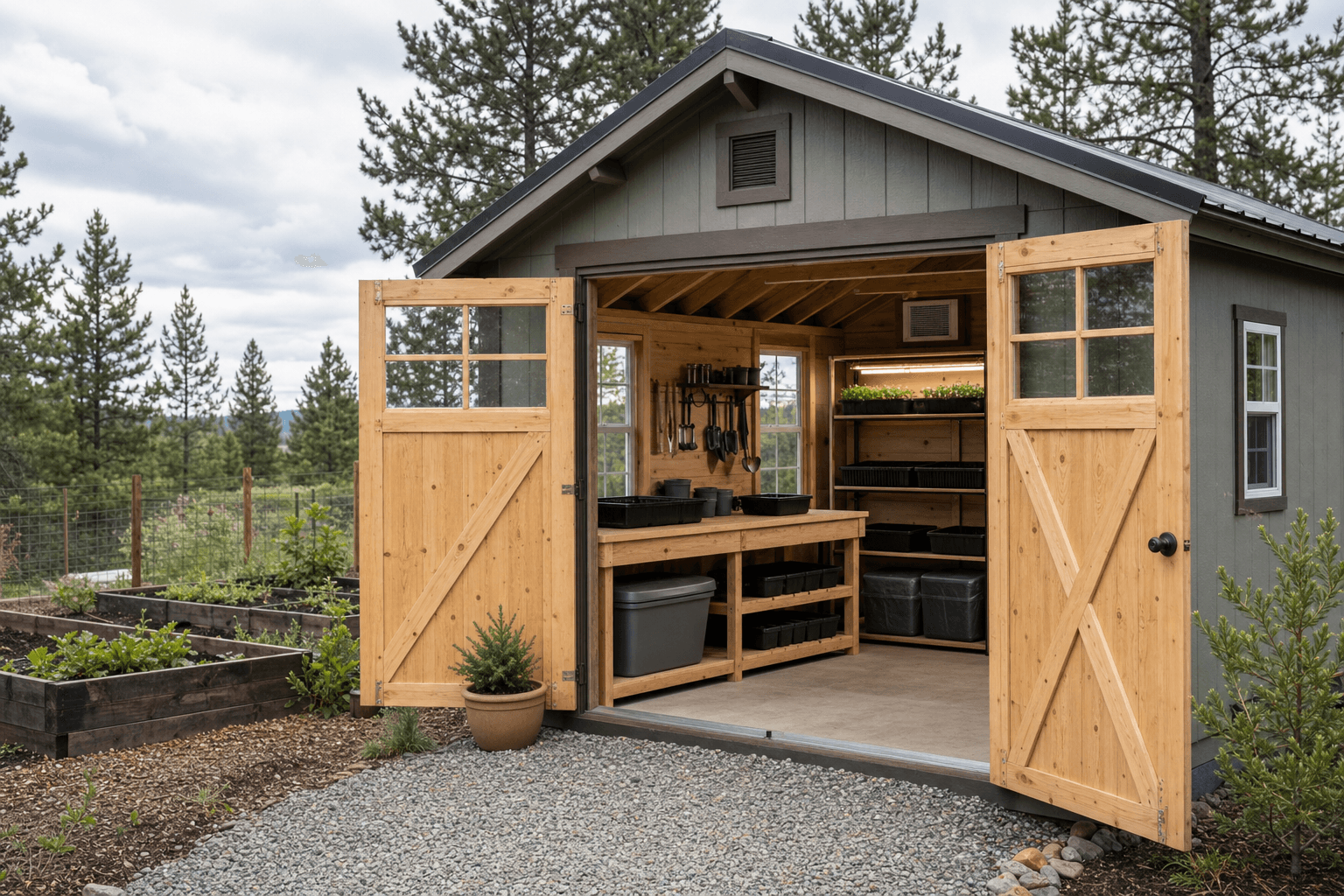
An open-door workflow view shows how bench space, blank trays, soil storage, hand tools, windows, vents, and garden access fit together.
A clear aisle from the doors to the bench keeps tray carrying, pot washing, and soil handling from turning into a shuffle around stored items.
Shelves can support starts, hardening-off trays, and supplies, but crop performance still depends on owner setup, light, water, and temperature management.
A gravel threshold, sealed storage bins, and tool hooks reduce dirt piles, loose bags, and hiding places for rodents or insects.
Overhangs, door placement, and drainage planning help the shed stay usable during spring rain, fall cleanup, and snowy access days.
| Garden workflow | |
|---|---|
| Bench wall | Place the main work surface near daylight and keep it clear of door swing. |
| Tool wall | Hang small tools where they are visible without crowding trays or soil bins. |
| Seed shelves | Leave adjustable shelf space for trays, domes, and supplies the owner manages. |
| Site and shell | |
| Access | Connect the doors to the garden path, raised beds, or compost route. |
| Ventilation | Use operable windows, vents, or fan-ready locations to manage heat and moisture. |
| Drainage | A gravel pad and dry threshold help keep mud from following every trip inside. |
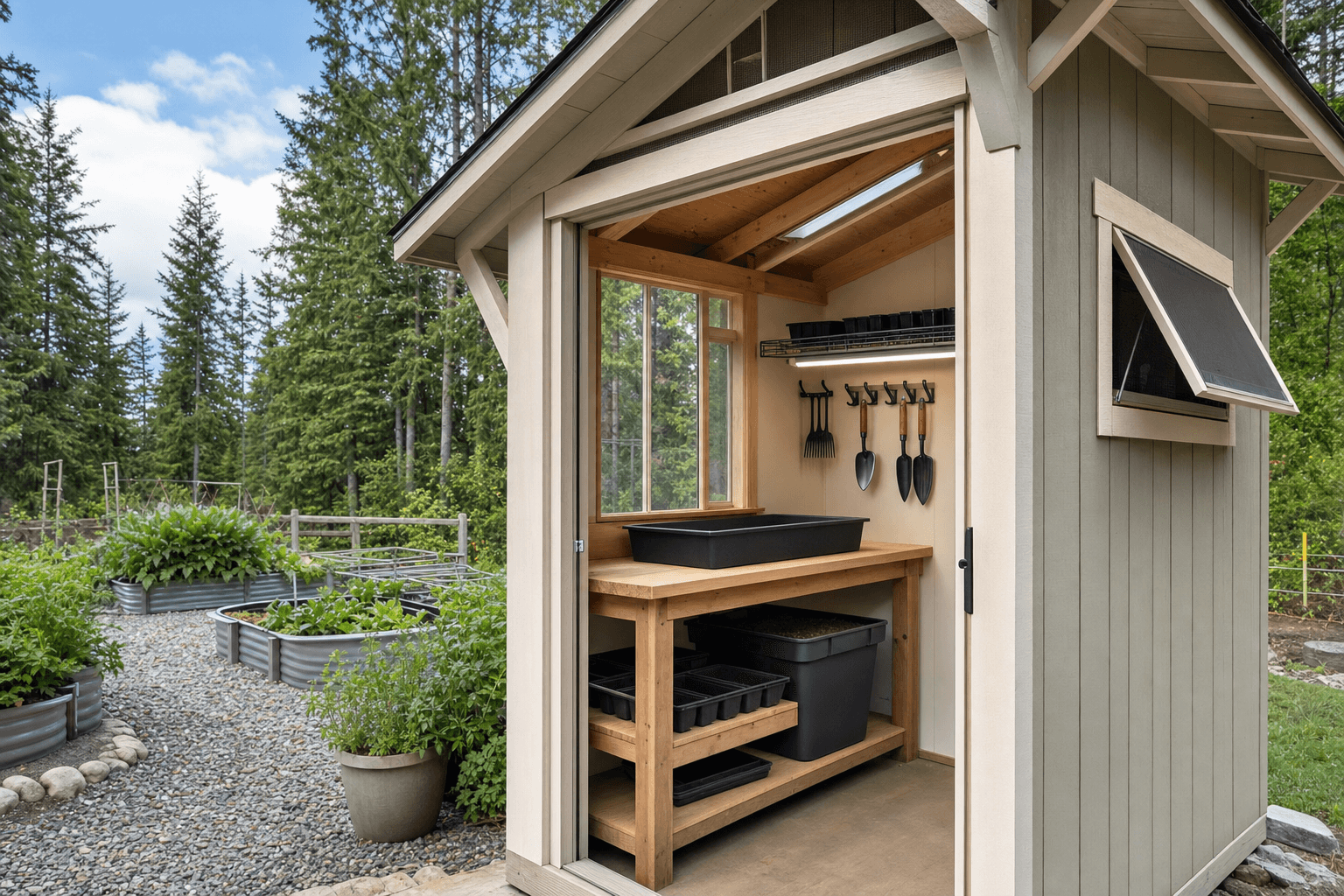
Detail planning should keep the bench, blank trays, soil bin, hand-tool storage, ventilation, windows, and gravel threshold visible and practical.
Garden work moves soil, water, pots, and tools back and forth. A shed that sits low, drains poorly, or opens into mud will be harder to keep useful, especially during North Idaho spring and fall weather.
Built as a practical garden work shed for local weather, not an impossible glass-room greenhouse.
Spring thaw and fall cleanup are easier when the shed has a dry approach and organized interior zones.
Windows should support bench work and starts without creating unrealistic greenhouse expectations.
The layout should support potting, seed starting, transplant staging, and end-of-season cleanup.
Some supplies tolerate cold storage and some do not; owner storage choices still matter.
Start with the work you repeat most: filling trays, repotting starts, storing soil, hanging hand tools, staging pots, or carrying flats to raised beds. That answer will point toward a compact garden shed, a bench-heavy potting shed, or a larger custom layout with more storage.
NIOS can build around the shell, roofline, doors, windows, vents, siding, trim, shelves, bench planning, and site access. Plant performance still depends on the owner’s light, water, sanitation, seed timing, temperature management, and the actual garden site. The goal is a durable, organized workspace that makes gardening easier without overstating what a non-conditioned shed can do.
Most potting sheds work best with a bench, soil or amendment storage, blank trays, hand-tool hooks, shelves for seed-starting supplies, ventilation, and a clear aisle from the garden path to the work surface.
No. A potting shed can support seed starting, staging, and garden work, but it does not replace a climate-controlled growing space. Plant performance depends on owner-managed light, water, temperature, and timing.
Windows should put light on the bench and make the shed pleasant to work in without creating an overheated glass wall. Operable windows or vents can help manage heat and moisture.
Common starting points include 8x10, 8x12, 10x12, and 10x16. The right size depends on bench depth, aisle clearance, soil storage, door access, and whether larger garden tools also need to fit.
Give every task a zone: bench work, soil bins, tool hooks, tray shelves, pots, and cleanup supplies. A clear main aisle and sealed storage containers keep the shed useful during busy planting weeks.
A compacted gravel pad, dry threshold, roof-drip planning, and direct garden access all matter. Mud control is part of the workflow because every tray, bag, and tool moves through the doorway.
Tell us how you use the bench, trays, soil, tools, and garden paths, and we will help plan a buildable shed around that daily workflow.
Every shed we make is built on site in North Idaho. Explore other uses we build for.