A ski tuning shed is for the work that never fits cleanly inside the house: dripping boots, sharp edges, wax scrapings, wet gloves, tuning benches, and boards leaning wherever there is open wall space. A dedicated shed keeps that workflow close to the driveway or gear drop while giving the bench, racks, ventilation, and storage a real plan.
For North Idaho skiers and snowboarders, the best layout starts with the tuning sequence. Gear comes in wet, skis or boards need a safe place to stand, the bench needs enough length for edge work and waxing, and finished gear needs a dry return spot before the next Schweitzer, Lookout, Silver, or backcountry day. The shed shell should support that flow without pretending to be a certified commercial wax room.
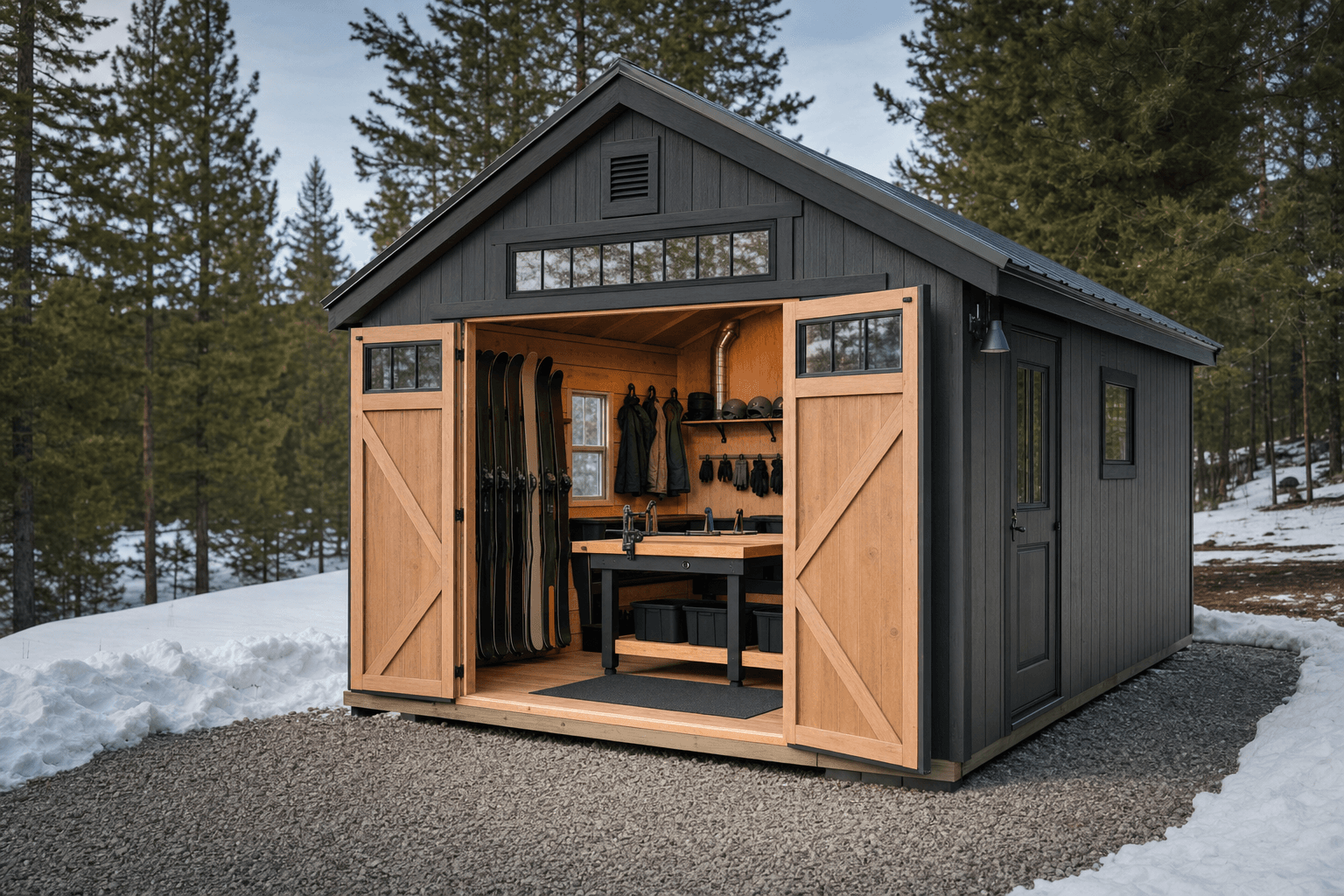
A dedicated ski tuning shed keeps racks, bench space, boot storage, and ventilation close to winter access without bringing wax, edges, and wet gear into the house.
A tuning bench needs enough length for skis and snowboards, stable support, room for a scraper stroke, and a wall nearby for tools. Plan the bench before shelves, not after.
Waxing and tuning create fumes, dust, and scrapings. Use ventilation cues, window placement, and a clean work zone, and follow wax manufacturer directions rather than relying on the shed alone.
Boot trays, glove hooks, jacket pegs, and floor surfaces should sit near the entry so snowmelt stays out of the tuning bench area.
A ski tuning shed does not need to be huge, but it does need clear dimensions. The bench should be deep enough for vise-style supports, wax tools, scrapers, brushes, and small trays without forcing the ski tips into the doorway. Wall racks should hold skis and boards where edges do not scrape trim, windows, or people moving through the aisle.
An 8x12 can work as a compact wax and storage shed when the bench is focused and the racks are vertical. A 10x12 adds a more comfortable aisle and boot storage. A 10x16 or 12x16 layout gives room for multiple family members, a longer bench, more shelves, and a dedicated wet gear side without crowding the work surface.
Lighting and power should be planned as part of the workflow. Tuning is detail work, and shadows make edge inspection harder. If permanent outlets, dedicated circuits, or heat are part of the plan, those pieces should be designed and installed by qualified trades. The shed layout should leave space for safe access, clear cords, and serviceable walls.
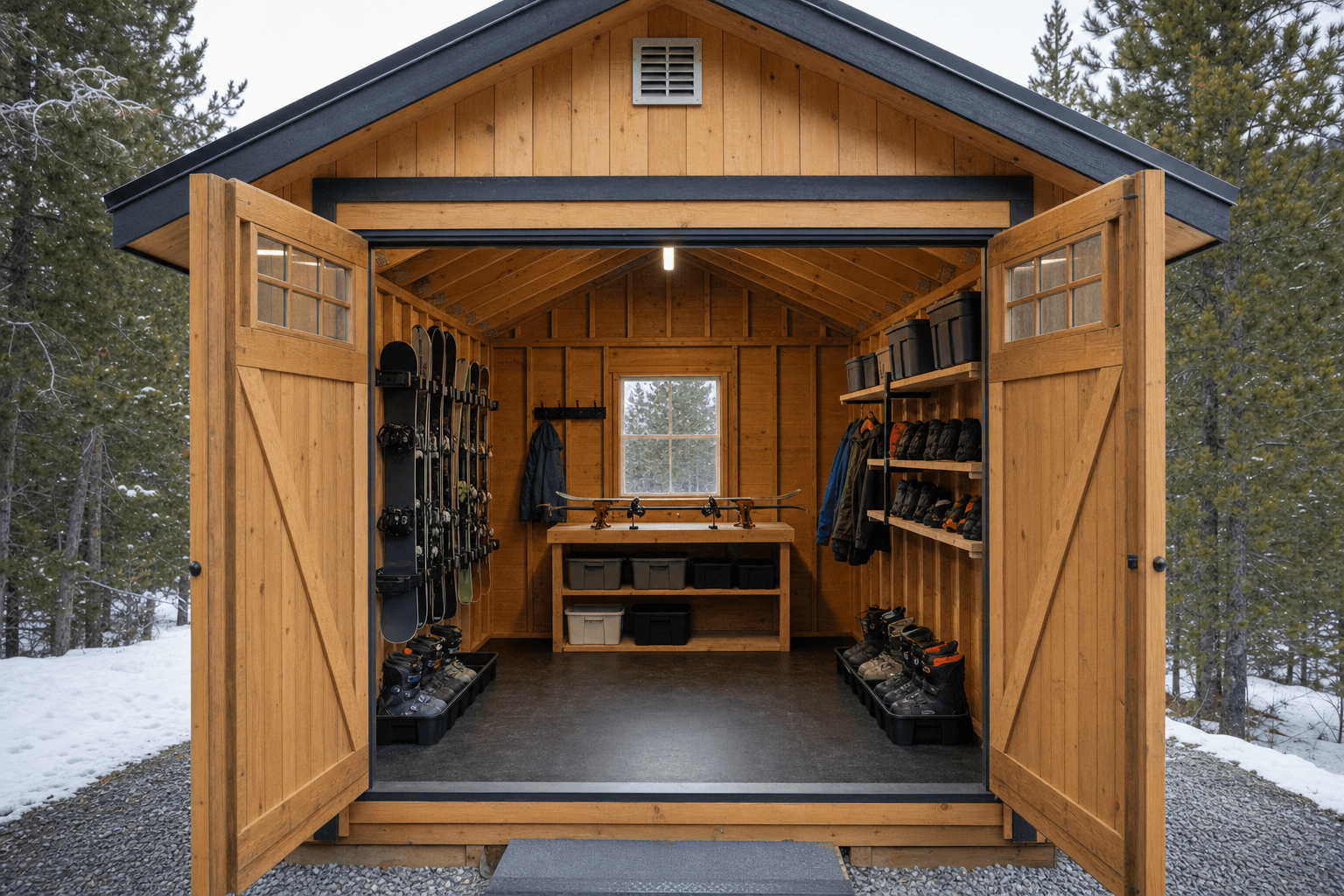
Bench space, racks, boot trays, glove hooks, and ventilation give tuning work a dedicated zone while wet winter gear stays out of the house.
Reserve the straightest wall for the bench, ski supports, scraper clearance, wax trays, brush storage, and a trash location for scrapings.
Keep skis, boards, poles, and tuning guides vertical or neatly racked so they do not fall into the aisle or block the door swing.
Boot trays, glove hooks, helmet shelves, and jacket pegs keep wet gear organized without mixing snowmelt into the wax and tool zone.
A tuning shed should stay usable when the driveway is slushy, the gear is wet, and the next storm is already on the way.
Door placement should account for plowed paths, snow piles, and enough gravel or walkway space to enter with boots and gear.
Durable floors, trays, hooks, and airflow help keep wet gear from turning the shed into a pile of damp soft goods.
Windows, vents, and work-zone planning support airflow, but wax use still needs manufacturer directions and common-sense fume control.
Home tuning guides consistently point to the same workflow: clean the base, handle edge work, wax with the right temperature range, scrape, and brush from tip to tail. The shed should make that process easier by giving every tool a place and keeping the workbench away from boots, food, soft goods, and clutter.
Ventilation matters. Wax should be used in a ventilated area, and the iron should not be so hot that wax smokes. Research around fluorinated ski wax also shows why serious wax work deserves caution, especially in enclosed spaces. For a residential shed, the practical design goal is a clean, ventilated layout with room to work, not an unsafe claim that the structure eliminates exposure risk.
Cleanup is part of the design. Scrapers, brushes, shavings, metal filings, and wax dust need a trash zone and a bench surface that can be wiped down. If you share the shed with boot drying, keep wet storage on one side and tuning work on the other so the bench stays dry and ready.
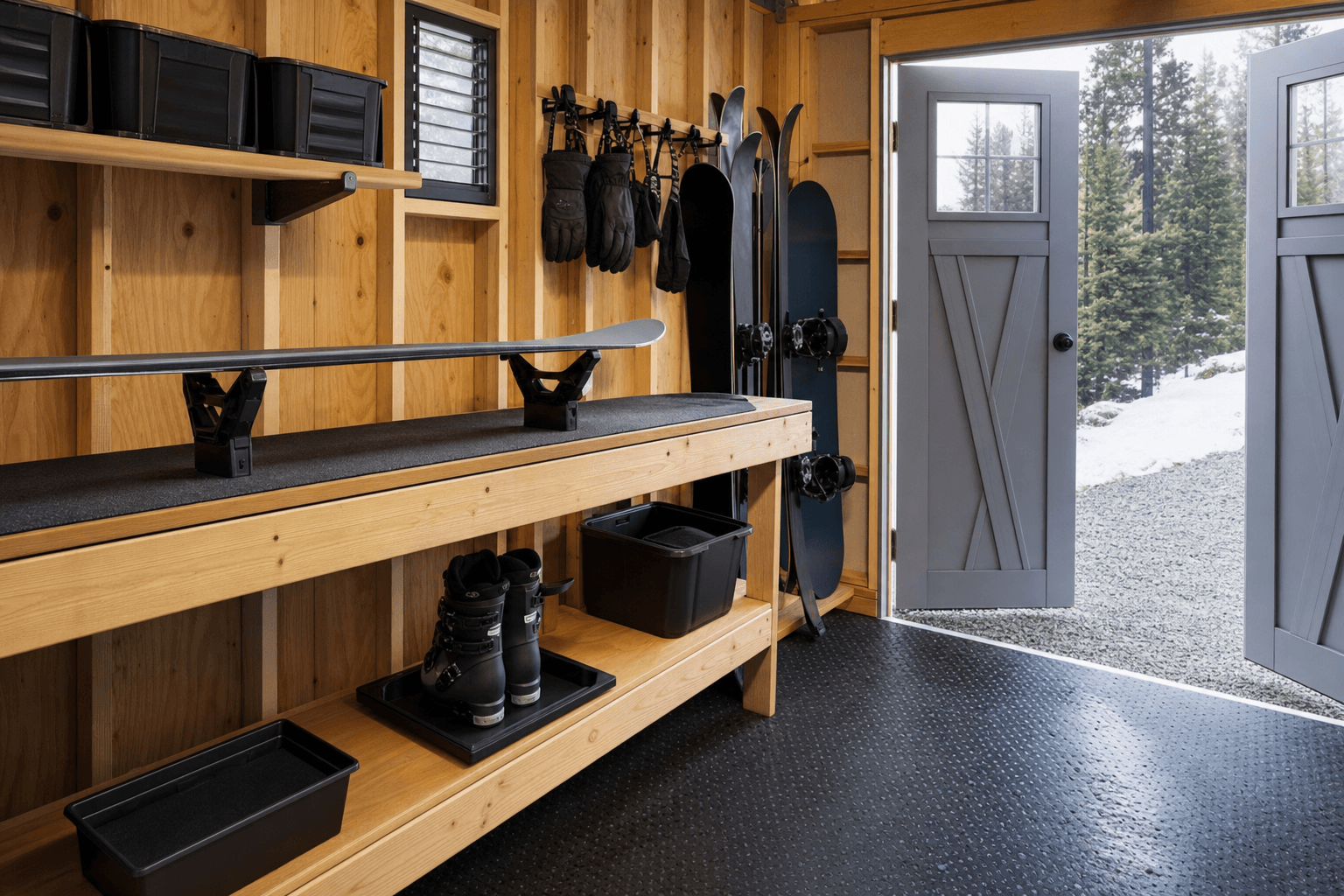
A close planning view shows the details that matter: bench edge, rack spacing, boot trays, glove hooks, ventilation, and a floor that can handle snowmelt.
An 8x12 can work for a compact bench and vertical racks. A 10x12 is more comfortable for a clear aisle and boot storage, while 10x16 or 12x16 layouts are better for family gear, a longer bench, and a separate wet gear side.
Yes, plan for airflow. Waxing and tuning can create fumes, dust, and scrapings, and wax should be used according to manufacturer directions in a ventilated area. A shed can be designed with vents and windows, but it should not be treated as certified fume-control equipment.
Yes, if the zones are separated. Keep boot trays, glove hooks, and wet jackets near the entry, then keep the bench area dry and clean. That prevents snowmelt and damp gear from taking over the tuning surface.
Plan for ski supports, scraper and brush storage, wax trays, edge tools, a trash location, good task lighting, and enough wall clearance for ski tips. The bench should not sit where the door swing or boot traffic interrupts the work.
The shell can be planned with future electrical paths and wall space in mind. Permanent outlets, circuits, heat, or dedicated task lighting should be installed by qualified electrical trades and sized for the actual equipment you plan to use.
No. It is a home workspace for regular care, waxing, storage, and simple tuning tasks. Deep base damage, binding work, major edge repairs, and uncertain safety issues should go to a qualified ski shop.
Tell us how many skis, boards, boots, and tools you need to store. We will help plan the shell, doors, bench wall, ventilation cues, and winter access around that workflow.
Every shed we make is built on site in North Idaho. Explore other uses we build for.