North Idaho On Site Sheds

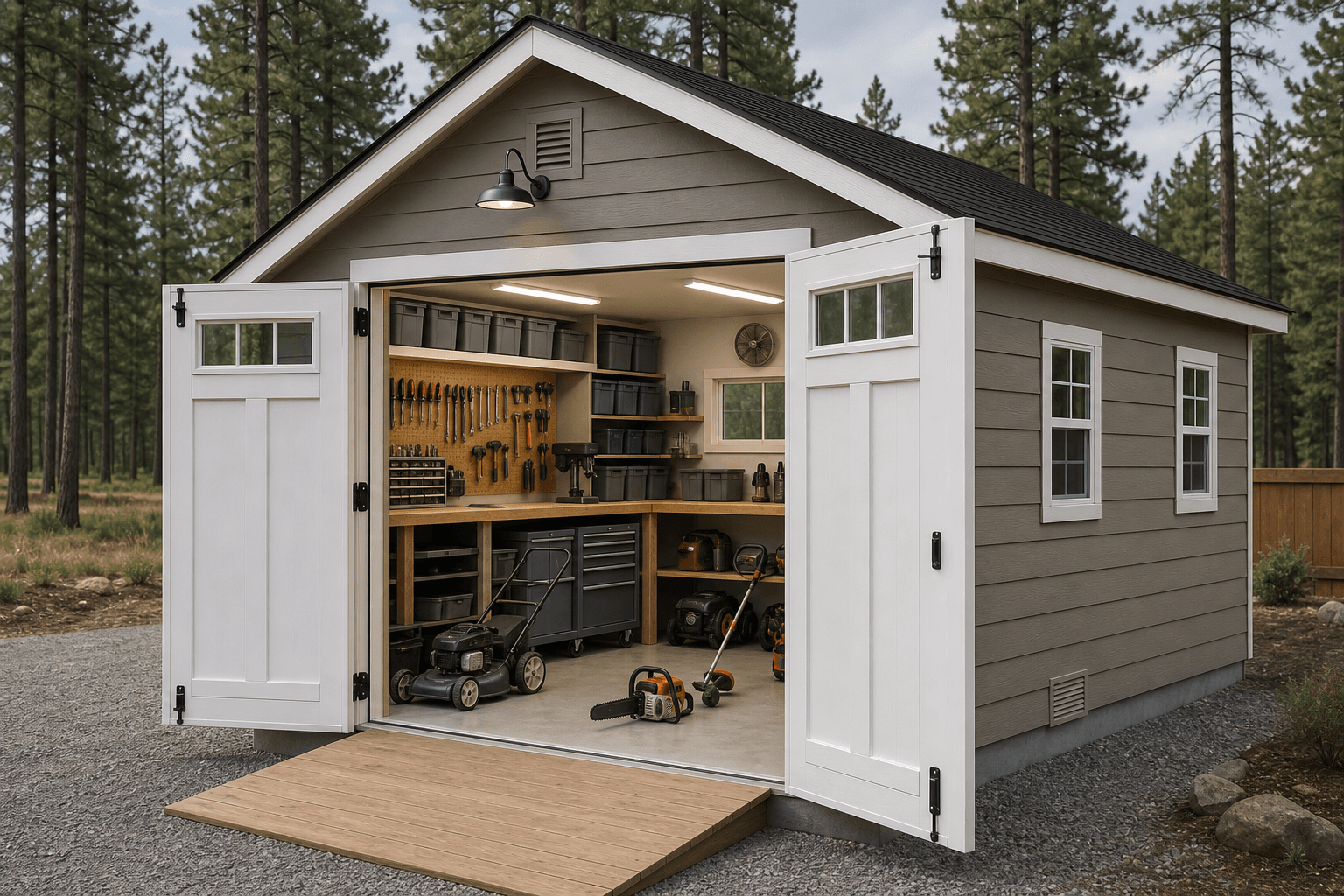
Small Engine Repair Shed Built On-Site in North Idaho

Need a small engine repair shed in North Idaho? On-site builds with power planning, plus custom sizing made for North Idaho snow. Get a free estimate today.

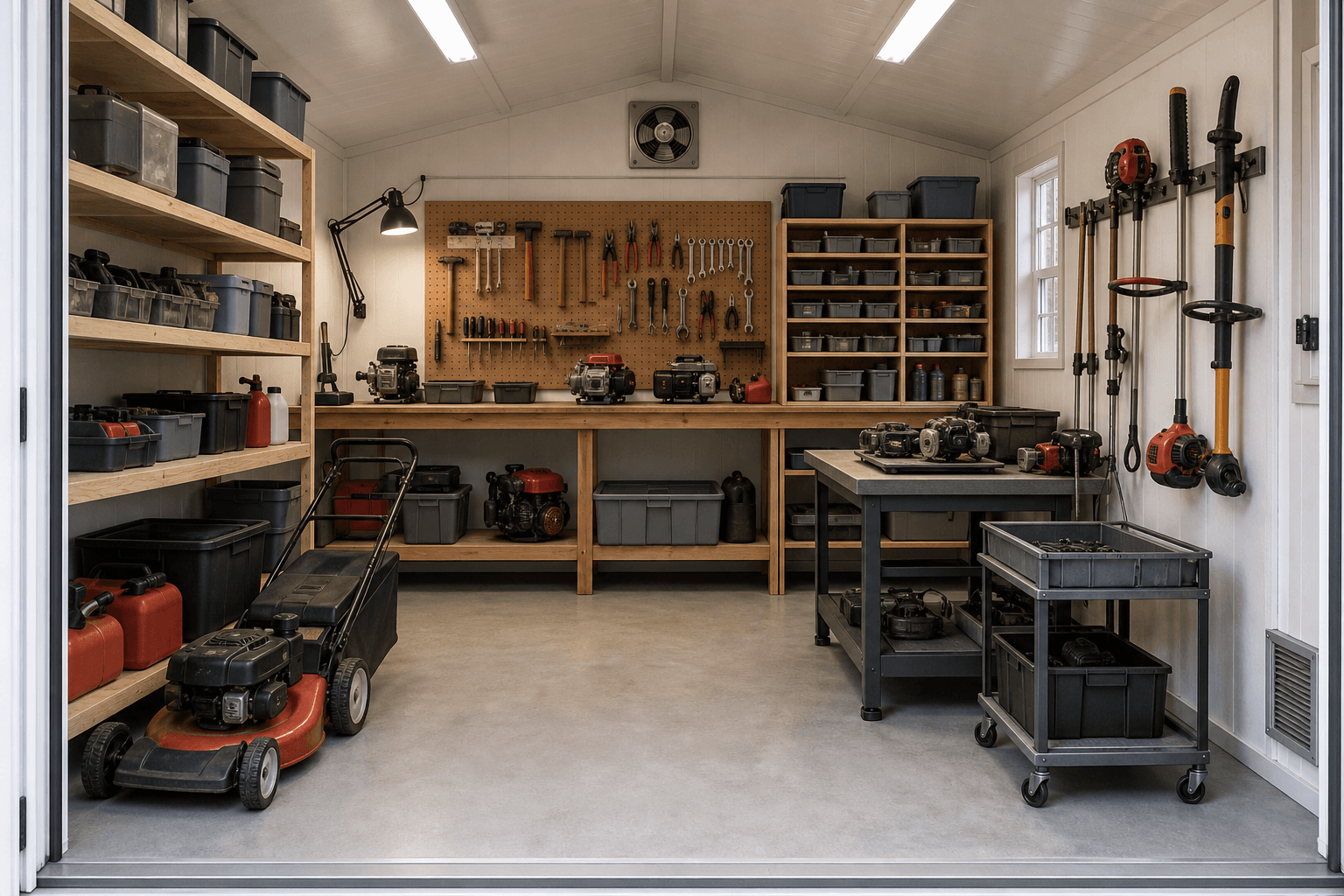
A small engine repair shed only works if the bench layout, parts storage, ventilation, and fuel-aware cleanup strategy are planned around real shop use. We build these sheds on-site so workbench power, shelving, oil-resistant flooring, access, and utility runs can be matched to your equipment and your North Idaho property instead of forcing everything into a generic shell that was never meant for repeated repair work.

Small Engine Repair Shed Built for North Idaho Weather

A small engine repair shed in North Idaho has to function like a working shop, not just a place to stash mowers and chainsaws. If the room is going to support repairs on lawn mowers, snow blowers, chainsaws, trimmers, generators, or similar equipment, it needs enough power, enough ventilation, and enough organization that the work stays efficient instead of turning into cluttered garage overflow.

Local weather makes that more important. In North Idaho, small engine work is often tied directly to the seasons. Snow equipment needs service when it is cold. Lawn and landscaping equipment comes in dirty and wet during shoulder season. Spring startup and fall shutdown both bring fuel, mud, oil, and parts into the room. That means the shed still has to be framed for local snow loads and sit on site prep that respects the common 24-inch frost-depth standard, but it also needs to stay practical through the same seasons that drive the repair workload.

A working shop also behaves differently than a hobby room because the mess has a pattern. Fuel odors, oily parts, tools, hardware, and half-finished repairs can overwhelm a room that was not designed around workflow. A repair shed needs better zoning: one place for active bench work, one place for parts and consumables, and one place for larger equipment waiting its turn.

On-site construction is a strong fit because these buildings usually need to sit close to driveways, trailers, or loading zones while still working around the actual lot. Access matters, and so do power routing, floor durability, and whether the room feels usable during a muddy March weekend or a snowy December repair session.

A good repair shed should also tolerate the stop-and-start reality of seasonal maintenance. Projects do not always get finished in one sitting, and machines sometimes need to sit partially disassembled while parts arrive or weather clears. That means the room needs enough order and enough resilience that a paused repair does not take over the entire space or make the next job harder to start.

Small Engine Repair Shed Features & Build Options

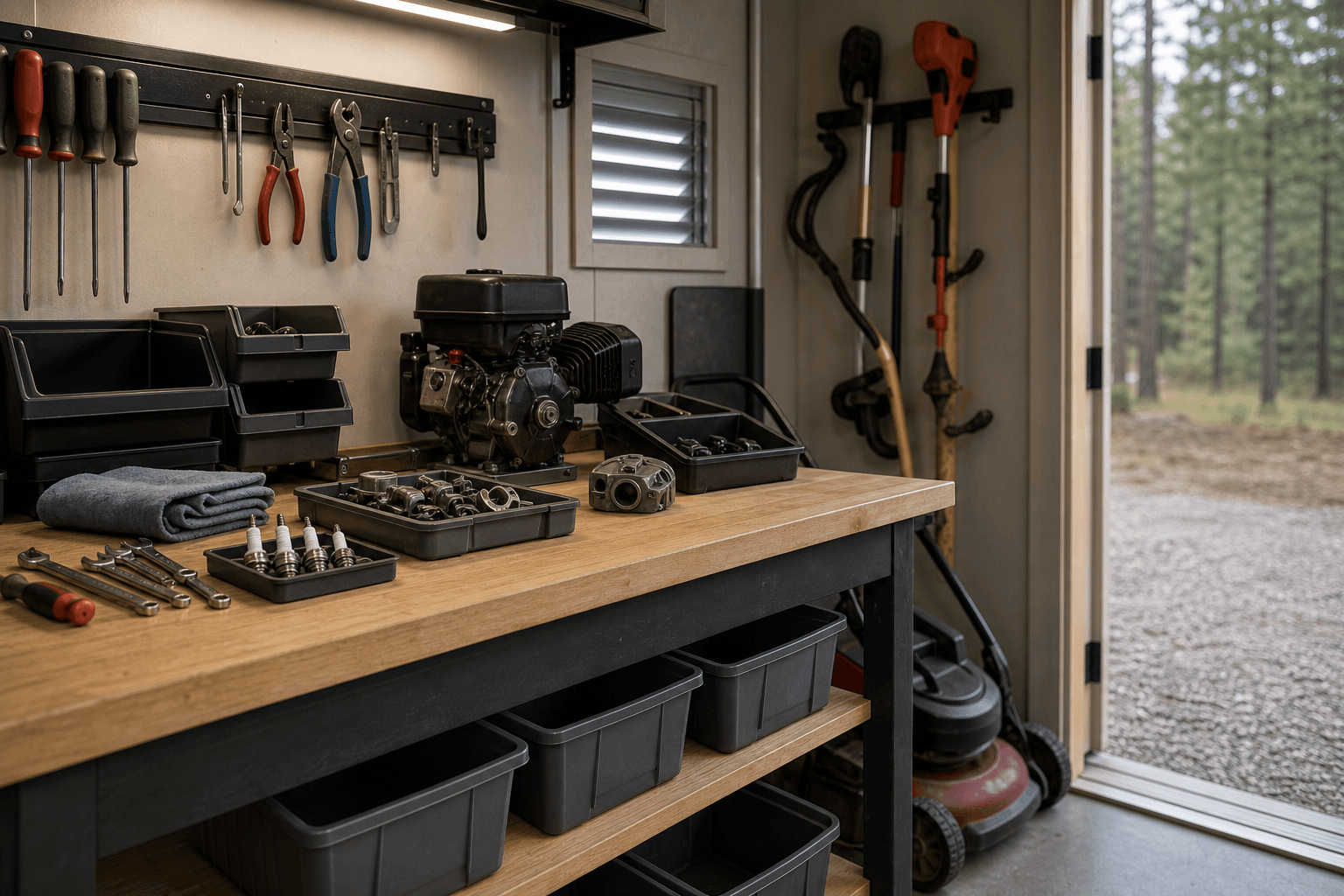
Workbench power, parts shelving, oil-resistant flooring, and ventilation are usually the core features that separate a true repair shed from general storage. A good bench wall does not just give you a place to set tools down. It creates a repeatable work zone for tear-down, diagnosis, and reassembly.

Parts storage matters just as much. Small engine projects generate bins, filters, plugs, oils, blades, belts, carb kits, and specialty tools fast. If those items do not have clear homes, every repair takes longer. Small engine shop layout with bench, parts, and tool wall planning is one of the most useful guides for this page because it focuses on how the room should actually work, not just what should fit inside it.

Floor and finish choices are another major decision. The room will see oil, fuel, grime, and repeated cleanup. Oil-resistant floors and easy-cleanup finishes matters early because the wrong floor or lower-wall materials make the whole shop harder to maintain. Some owners compare the project to a welding shed or an auto detailing shed, which helps clarify how much of the room is truly mechanical work versus broader utility or service work.

The best repair sheds also leave space for equipment staging. A shop that technically has a bench but no sane place to park the mower, generator, or snow blower waiting for service will feel cramped right away.

Electrical layout matters too. Outlets, task lighting, battery charging, and how cords move around the bench area can make a repair room feel either efficient or frustrating. Even when the tool set is modest, a good power plan saves time and keeps benches more usable because chargers, lights, and handheld tools all have predictable places in the workflow.

Popular Small Engine Repair Shed Sizes & Layouts

A 10x16 is a practical starting point for a compact but workable repair shop with one bench wall, parts storage, and enough floor area for one active project plus limited staging. It works well when the workload is steady but not high volume.

A 12x16 gives more flexibility for wider bench runs, more shelving, and a little more breathing room around equipment. For many owners, this is where the shed begins to feel like a real working shop rather than a storage building with a repair corner.

A 12x20 is one of the strongest all-around footprints because it supports clearer separation between active work, parts storage, and equipment staging. A 12x24 or 14x20 makes sense when the room needs to handle larger seasonal swings in equipment volume or support more serious repair workflow.

The best layout usually keeps the bench and tool wall on one long side, gives larger equipment a clean path in and out, and avoids forcing the active repair zone to share the same floor space as long-term storage.

What Size Small Engine Repair Shed Works Best?

The right size depends on the equipment mix and how often the room will handle more than one active project. A homeowner servicing a small number of machines may do very well in a 10x16. Once the room has to hold multiple units, more parts inventory, or broader seasonal equipment turnover, 12-foot widths and longer footprints become much more forgiving.

Most people start by comparing 10x16, 12x16, and 12x20. Those sizes usually cover the jump from compact functional shop to a room that stays calmer under real workload. Going larger often becomes worthwhile when the owner wants cleaner staging, better access around machines, or room for a dedicated tear-down and rebuild routine.

Placement matters too. A slightly larger shop is not much help if it is hard to reach with equipment, trailers, or parts deliveries. On-site construction helps because the footprint and site location can be chosen together around the actual flow of work on the property.

A little extra floor area also pays off when repairs overlap with storage seasonally. Snow equipment, summer equipment, fuel-safe storage, and incoming parts all compete for room at different times of year. A shop that can absorb those swings without losing its bench workflow is usually worth more than the tightest possible footprint.

How Does On-Site Small Engine Repair Shed Building Work?

On-site construction is especially useful for repair shops because these projects are access-driven and utility-driven. We look at where equipment will come from, how the room should sit relative to driveways or work areas, where power needs to be routed, and how the shed should be entered during muddy or snowy conditions.

The process usually begins with the intended workflow. From there, the room can be framed around the bench wall, parts shelving, staging area, and the type of finish package that makes sense for oil, solvents, and cleanup. If the property has grade changes, fences, narrow access, or awkward service routes, those can all be solved before the footprint is finalized.

On-site building also avoids the problem of forcing a generic delivered shed into a shop role it was never planned for. That usually leads to a more honest layout and a room that keeps working as the tool set and repair load grow.

Small Engine Repair Shed Service Areas Across North Idaho

We build small engine repair sheds across Kootenai, Bonner, Boundary, Shoshone, and Benewah counties. Around Post Falls, Rathdrum, Athol, and the broader North Idaho contractor and acreage corridor, these rooms often make the most sense because owners need a dedicated place to service equipment without taking over the garage or barn aisle.

On tighter lots, the challenge is usually fitting a useful shop footprint into the property while preserving sane access for machines and materials. On larger rural parcels, exposure and driveway logistics become bigger design issues, especially when the room needs to stay useful through winter. In both cases, the shop works best when it is planned around the real repair routine instead of just around maximum square footage.

If you are comparing budget or layout options, the next useful stops are the pricing guide and the free estimate page. Small engine repair sheds benefit from a quick site-specific conversation because access, power, ventilation, and floor durability all matter much more here than they do in general storage.

That local fit becomes especially important on properties where the room supports both personal equipment and occasional side-work or contractor use. The best sheds are the ones that match the actual volume and seasonality of the repairs rather than just chasing the biggest footprint the lot could hold.

Frequently Asked Questions About Small Engine Repair Shed

The FAQ section below covers the short answers on cost, permits, timing, and common sizes. Those are helpful, but the real success of a small engine repair shed usually comes from whether the room supports a cleaner, faster, more organized repair routine through the seasons when the work is actually happening.

If you want a repair shed that functions like a real shop instead of a cluttered equipment room, request a free estimate. That is the best way to line up the footprint, bench plan, and site placement with the kind of work you actually do.

Built for North Idaho weather

  • Engineered for snow load

    Roofs framed for North Idaho's 70+ psf ground snow load.

  • Wind-rated

    Anchored and braced for the gusts that funnel down our valleys.

  • Sealed for freeze-thaw

    Detailed drip edges, sealed penetrations, and breathable wraps.

  • 12-year warranty

    Bumper-to-bumper coverage on materials and workmanship.

What you get

  • Workbench power

  • parts shelving

  • oil-resistant floor

  • ventilation

How it works

  1. Step 1Site visit

    We come to you, listen to how you want to use the shed, and read the site.

  2. Step 2Free estimate

    You get a single, all-in price — no surprises, no upsell.

  3. Step 3Build day

    We build it on your property in a single visit. No delivery permits, no crane fees.

  4. Step 4Walkthrough

    We hand it over with a walkthrough of materials, doors, and aftercare.

Frequently asked questions

  • How much does a small engine repair shed cost in North Idaho?

    Most small engine repair shed projects in North Idaho start around $7,000 and can reach $16,800 depending on size, foundation, utilities, insulation, and finish level. Site access, snow loads, and feature upgrades can move pricing higher. See our pricing guide or request a free estimate.

  • What size small engine repair shed works best in North Idaho?

    Most small engine repair shed builds land in the 10x16, 12x16, 12x20 range, while 12x24, 14x20 works better when you need more clearance, storage zones, or finished space. North Idaho lot layout, setbacks, and access matter as much as square footage. Compare 10x16, 12x16, and 12x20.

  • Do I need a permit for a small engine repair shed in North Idaho?

    Often yes. Many small engine repair shed projects land at or above 200 square feet or include utilities, which makes permit review more likely in North Idaho. Even when a simpler footprint follows the under-200-sq-ft path, setbacks, HOA rules, and intended use still matter. Review permit basics and request a site-specific estimate.

  • How long does it take to build a small engine repair shed on-site in North Idaho?

    Most small engine repair shed projects take about 3-5 on-site days once the site is ready and materials are staged. Larger footprints, slab work, insulation, wiring, plumbing, and muddy or tight North Idaho access can extend the schedule. See how our build process works.

Ready to get started?

Get Your Free Estimate