North Idaho On Site Sheds

Livestock Tack Room Shed Built On-Site in North Idaho

Need a tack room shed in North Idaho? On-site builds with reinforced floors. Custom sizes for snow, setbacks, and year-round use. Get a free estimate.

A good tack room has to do more than keep gear out of the rain. It needs to handle saddles, pads, bridles, boots, blankets, and daily chore traffic without turning into a damp, crowded mess. We build tack room sheds on-site so the size, floor system, door layout, and moisture control can be matched to your barn setup, your animals, and the way North Idaho weather actually hits your property.

Livestock Tack Room Shed Built for North Idaho Weather

A tack room works hardest when the weather is at its worst. In North Idaho that means muddy springs, dusty late summers, wet fall shoulder seasons, and long stretches where snow, frozen ground, and condensation all try to ruin leather, fabric, and metal hardware. A true tack room shed is different from a generic storage building because it needs to protect gear that is expensive, shape-sensitive, and used constantly. Saddles do not like damp corners. Blankets and pads do not dry well when they are piled on top of each other. Bits, buckles, grooming supplies, and barn tools need a predictable place so chores stay fast when the temperature drops.

That is why on-site construction matters. A prefab building can be limited by delivery width, road access, overhead wires, and the simple fact that horse-property layouts are rarely perfect rectangles. We build on-site so the shed can sit where it actually helps: near the barn aisle, beside a turnout gate, off a gravel lane, or on the dry side of the chore path instead of wherever a delivery trailer can reach. That flexibility also helps when you want wider doors, a deeper footprint, or a layout that leaves room for saddle racks on one wall and blanket drying on another.

North Idaho conditions also push the structure itself. Roof framing needs to be designed around local snow loads that commonly run around 40 psf and can climb well beyond that depending on location and exposure. The site and base need to deal with freeze-thaw movement, drainage, and the usual 24-inch frost-depth conversation once the project and its use call for it. On livestock properties, access is another big issue. Mud season, manure traffic, uneven ground, and winter snowpack all make a tack room far more useful when it is positioned and built around the real work of the property rather than dropped in as an afterthought.

Tack Room Shed Features & Build Options

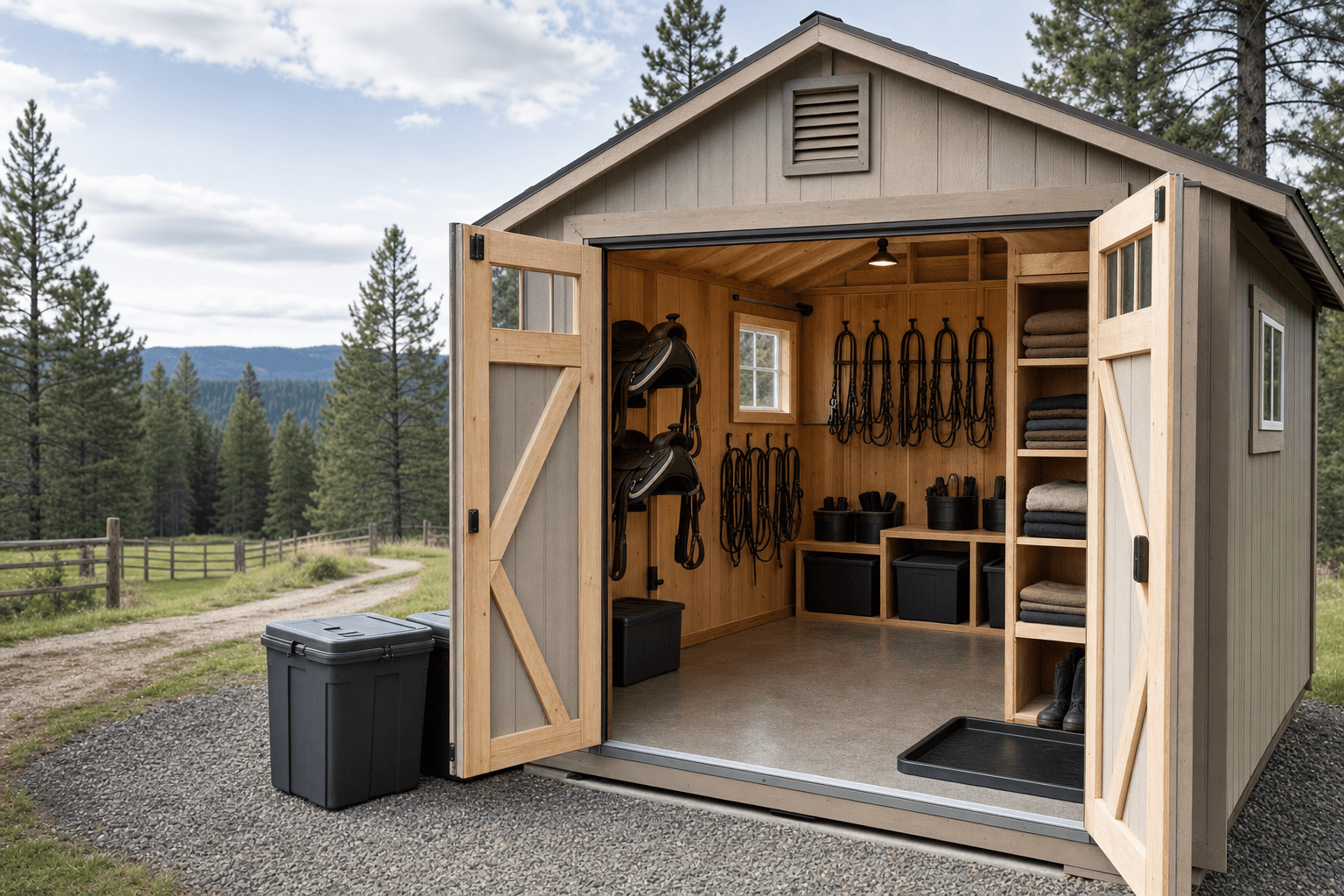
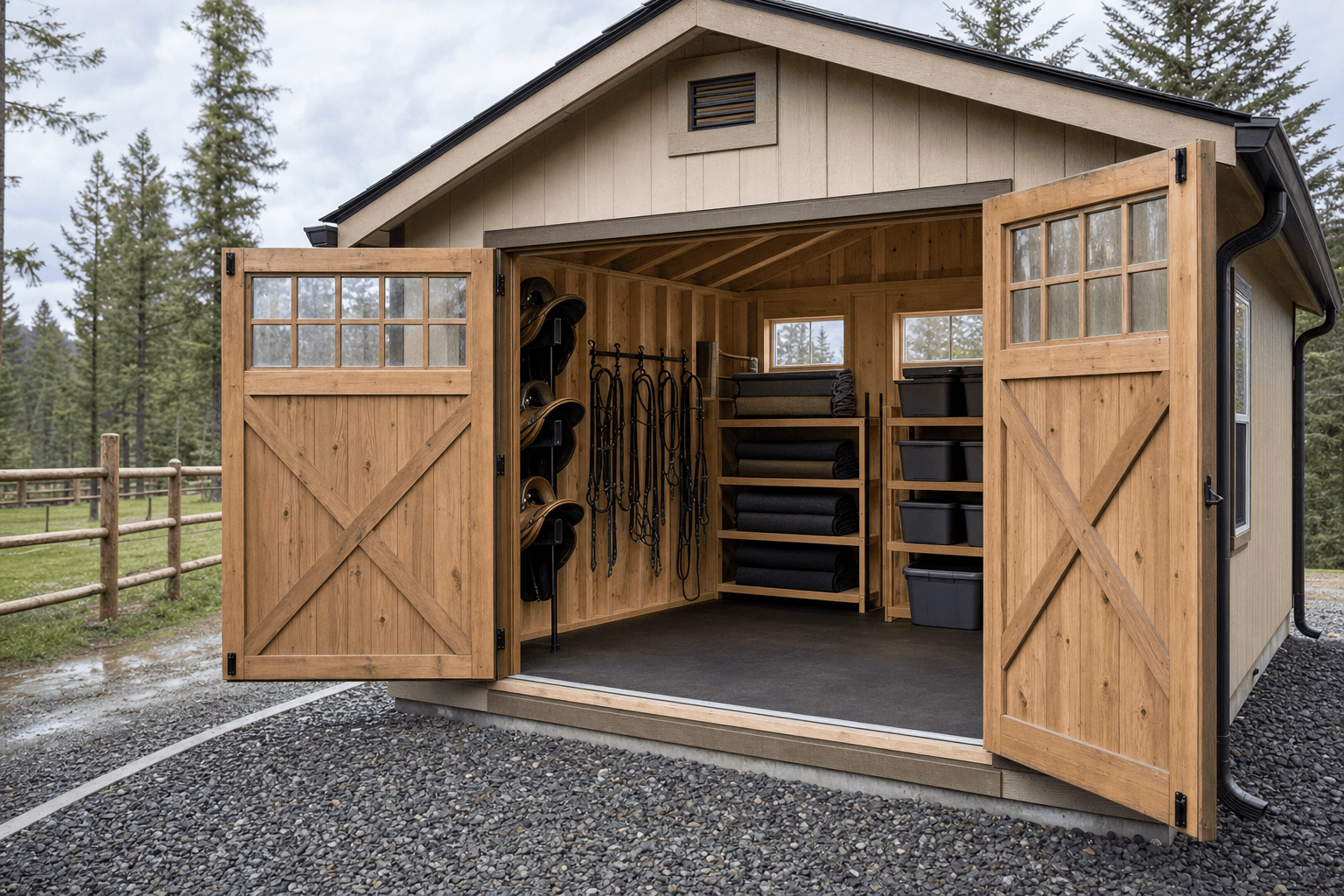
The best tack room sheds are planned from the inside out. Start with the gear list: saddles, bridles, halters, blankets, boots, feed scoops, grooming totes, first-aid supplies, and maybe a small bench or changing area. That list tells you what kind of wall storage, aisle space, and floor durability the shed really needs.

Durable floors matter because tack rooms see grit, moisture, hoof traffic at the doorway, and repeated movement of trunks, bins, and muddy boots. A floor system that feels fine in a light garden shed can wear out quickly when it is asked to support loaded tack trunks and daily barn use. Moisture control matters just as much. Leather and textiles hold onto humidity, and North Idaho properties can swing from wet cold to hot dry conditions in the same season. Tack room sizing, saddle racks, bridle storage, and drying is helpful because it shows how simple spacing decisions prevent gear damage and day-to-day clutter.

Common build options for a tack room shed include:

  • Durable floor framing and surfaces that handle heavy gear and repeated cleaning.
  • Saddle racks, bridle hooks, shelf runs, and wall space planned around real equipment counts.
  • Moisture-control details for leather, blankets, and textiles that would otherwise mildew or stiffen.
  • Lockable doors and windows so higher-value tack stays more secure.
  • Insulation when you want better temperature stability, less condensation, and a more usable space through winter.

Many owners also decide whether the tack room should stay tack-only or share space with broader working-property storage. If the building needs to absorb tools, fencing supplies, or other ranch gear, a separate farm storage shed can keep the tack room cleaner and more organized. If feed needs to stay nearby, pairing the project with a dedicated feed storage shed usually works better than letting grain bags creep into every open corner. A tack room stays more functional when it is not trying to serve as the entire property catch-all.

Moisture control deserves special attention. Leather, saddle pads, wool blankets, and seasonal outerwear can all be damaged by stale air and hidden dampness. Moisture and mold: protecting leather and textiles covers the issue in more depth, but the short version is that North Idaho tack rooms benefit from controlled ventilation, organized hanging space, and enough separation between gear types that items can dry properly after use.

Popular Tack Room Shed Sizes & Layouts

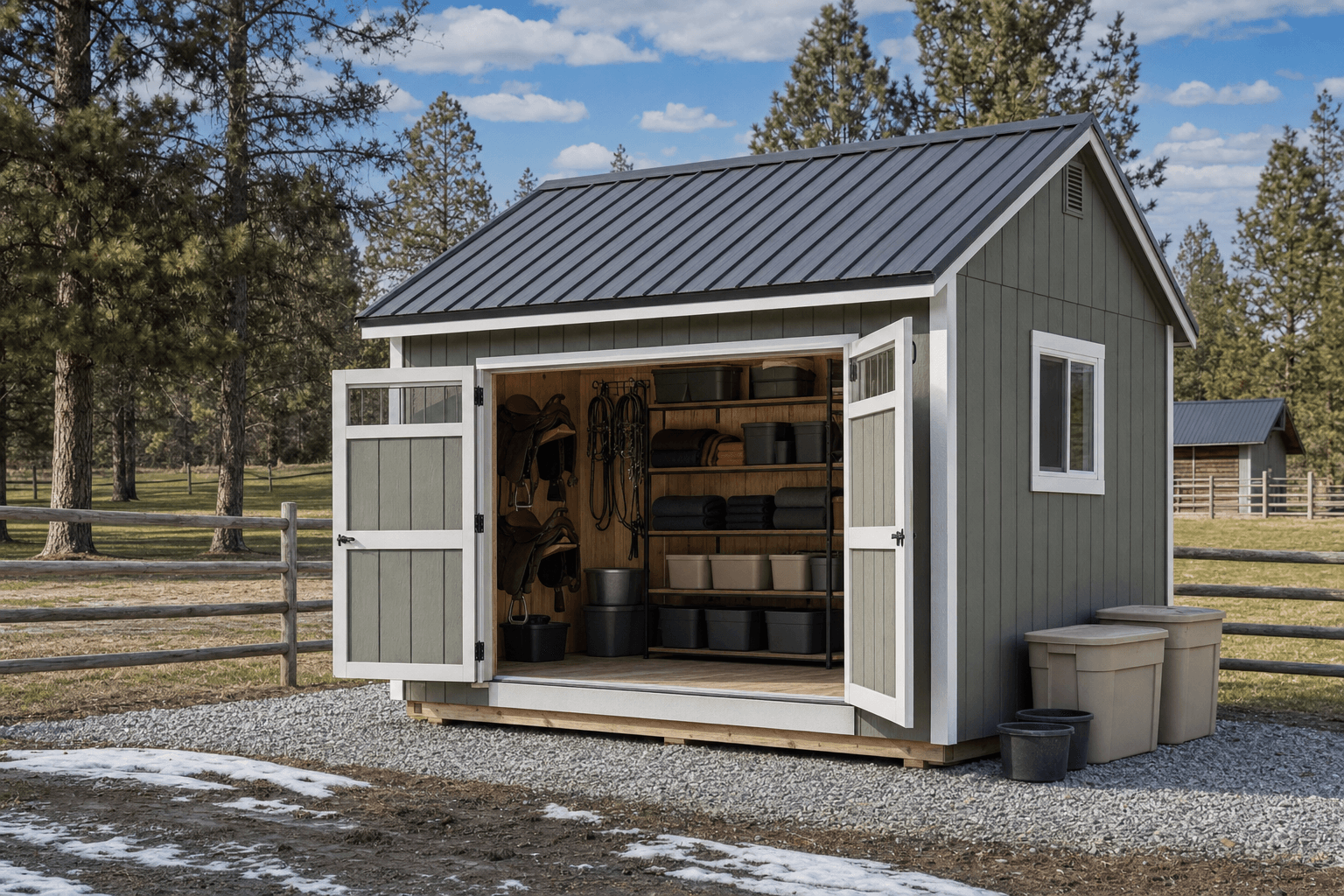
A compact 10x12 is often enough for one or two riders who mainly need protected saddle and bridle storage with a little room for boots, totes, and grooming gear. It works best when organization is kept vertical and the room is not also expected to swallow feed, wheelbarrow tools, or large trunks.

A 10x16 gives you more breathing room between storage walls and makes it easier to add a bench, blanket bars, or a cleaner aisle through the middle. This size is a common sweet spot for small horse properties because it feels meaningfully more usable without becoming oversized.

A 12x16 is one of the stronger all-around layouts when the goal is a real working tack room rather than a gear closet. The extra width helps with saddle spacing, walking clearance, and keeping damp gear separated from the cleaner storage zones.

A 12x20 or 12x24 makes sense when the building needs to support multiple riders, larger blanket collections, rotating seasonal gear, or a small hybrid use that includes a changing bench, first-aid supplies, and some room for overflow storage. Larger sizes also help when door location is dictated by paddock flow or fencing and you still need clean interior circulation.

What Size Tack Room Shed Works Best?

The right size depends less on the number printed on the plan and more on how the room will be used on a Tuesday night in January. Start with saddle count, blanket storage, and whether the space will hold only tack or also boots, helmets, grooming stations, medicine totes, and rider outerwear. Then look at how many people use the room at the same time. A space that feels fine for one person grabbing a bridle can feel tight fast when two riders are swapping blankets and reaching into trunks.

For many properties, the first real decision is whether the tack room must stand alone or work beside other buildings. If feed, bedding, and general chore supplies already live elsewhere, the tack room can stay smaller and better organized. If you are trying to combine several jobs into one building, stepping up in size is usually worth it. Bigger is not always better, but under-sizing a tack room creates frustration quickly because tack does not stack like boxed household storage.

Another factor is how clean you want the room to stay. Owners who want a drier, more finished space for better leather care often benefit from more square footage because gear can be spaced out instead of packed together. The common comparisons in North Idaho are 10x12, 10x16, and 12x16, with 12x20 and 12x24 coming into play when the room needs more clearance or a second use.

How Does On-Site Tack Room Shed Building Work?

We start with the property, not just the building. That means looking at where the animals move, where the barn doors are, how winter snow gets pushed, and how muddy the site becomes in spring. The goal is to put the tack room where it helps chores instead of adding extra walking and extra mess. On-site building is the advantage here because the project is not boxed into delivery constraints. We can adapt the footprint, door swing, and placement to the usable ground you actually have.

During planning we also talk through foundation approach, drainage, door width, insulation level, and whether the building needs power or more finished interior details. Costs vary with size, site work, snow-load requirements, and utility complexity, so it helps to review the broader pricing guide early. When you are ready to pin down real numbers for your lot, the next step is a free estimate.

Build time for a typical tack room shed is often a matter of a few on-site days once the site is prepared and materials are staged, though weather, utilities, and access can extend that. Projects at or above 200 square feet, or projects that add more complexity, can also trigger more permit review. That is why it helps to sort out setbacks, use, and site conditions before the schedule is locked in.

Tack Room Shed Service Areas Across North Idaho

We build tack room sheds across North Idaho, including Kootenai County horse properties, Bonner County acreage, and rural sites in Boundary, Shoshone, and Benewah counties. A lot of these projects sit on working ground where access is tight, slopes are real, and the best building location is not the easiest place to deliver a prefab shell. On-site construction solves that problem.

A place like Rathdrum is a good example. Some properties need a tack room close to a barn and pasture gate, while others need it tucked against tree lines, gravel lanes, or existing outbuildings. The same is true farther north and east where seasonal access and snow exposure can shape the whole plan. Because the shed is built on your property, the final layout can reflect county setbacks, driveway conditions, fencing, and how the animals actually use the space around it.

Frequently Asked Questions About Tack Room Shed

How much does a tack room shed cost in North Idaho?

Most tack room shed projects in North Idaho start around $5,800 and can reach $14,700 depending on size, foundation, utilities, insulation, and finish level. Site access, snow loads, and feature upgrades can move pricing higher. See our pricing guide or request a free estimate.

What size tack room shed works best in North Idaho?

Most tack room shed builds land in the 10x12, 10x16, 12x16 range, while 12x20, 12x24 works better when you need more clearance, storage zones, or finished space. North Idaho lot layout, setbacks, and access matter as much as square footage. Compare 10x12, 10x16, and 12x16.

Do I need a permit for a tack room shed in North Idaho?

Often yes. Many tack room shed projects land at or above 200 square feet or include utilities, which makes permit review more likely in North Idaho. Even when a simpler footprint follows the under-200-sq-ft path, setbacks, HOA rules, and intended use still matter. Review permit basics and request a site-specific estimate.

How long does it take to build a tack room shed on-site in North Idaho?

Most tack room shed projects take about 2-3 on-site days once the site is ready and materials are staged. Larger footprints, slab work, insulation, wiring, plumbing, and muddy or tight North Idaho access can extend the schedule. See how our build process works.

Built for North Idaho weather

  • Engineered for snow load

    Roofs framed for North Idaho's 70+ psf ground snow load.

  • Wind-rated

    Anchored and braced for the gusts that funnel down our valleys.

  • Sealed for freeze-thaw

    Detailed drip edges, sealed penetrations, and breathable wraps.

  • 12-year warranty

    Bumper-to-bumper coverage on materials and workmanship.

What you get

  • Durable floor

  • saddle racks

  • moisture control

  • lockable

  • insulated

How it works

  1. Step 1Site visit

    We come to you, listen to how you want to use the shed, and read the site.

  2. Step 2Free estimate

    You get a single, all-in price — no surprises, no upsell.

  3. Step 3Build day

    We build it on your property in a single visit. No delivery permits, no crane fees.

  4. Step 4Walkthrough

    We hand it over with a walkthrough of materials, doors, and aftercare.

Frequently asked questions

  • How much does a tack room shed cost in North Idaho?

    Most tack room shed projects in North Idaho start around $5,800 and can reach $14,700 depending on size, foundation, utilities, insulation, and finish level. Site access, snow loads, and feature upgrades can move pricing higher. See our pricing guide or request a free estimate.

  • What size tack room shed works best in North Idaho?

    Most tack room shed builds land in the 10x12, 10x16, 12x16 range, while 12x20, 12x24 works better when you need more clearance, storage zones, or finished space. North Idaho lot layout, setbacks, and access matter as much as square footage. Compare 10x12, 10x16, and 12x16.

  • Do I need a permit for a tack room shed in North Idaho?

    Often yes. Many tack room shed projects land at or above 200 square feet or include utilities, which makes permit review more likely in North Idaho. Even when a simpler footprint follows the under-200-sq-ft path, setbacks, HOA rules, and intended use still matter. Review permit basics and request a site-specific estimate.

  • How long does it take to build a tack room shed on-site in North Idaho?

    Most tack room shed projects take about 2-3 on-site days once the site is ready and materials are staged. Larger footprints, slab work, insulation, wiring, plumbing, and muddy or tight North Idaho access can extend the schedule. See how our build process works.

Ready to get started?

Get Your Free Estimate