A farm storage shed for a North Idaho property should be planned around small-acreage workflow, not around barn-scale assumptions. The goal is a practical place for hand tools, feed bins, buckets, fencing supplies, seasonal equipment, and chore supplies that need to stay organized and easier to reach.
The most useful layout starts with what moves through the doors. Feed bags, panels, hoses, bedding, buckets, and small implements all need different clearances. NIOS can build the shed shell, doors, roofline, siding, trim, vents, and site-ready layout; the owner still manages what is stored inside, sanitation, pest control, regulated materials, and applicable farm guidance.
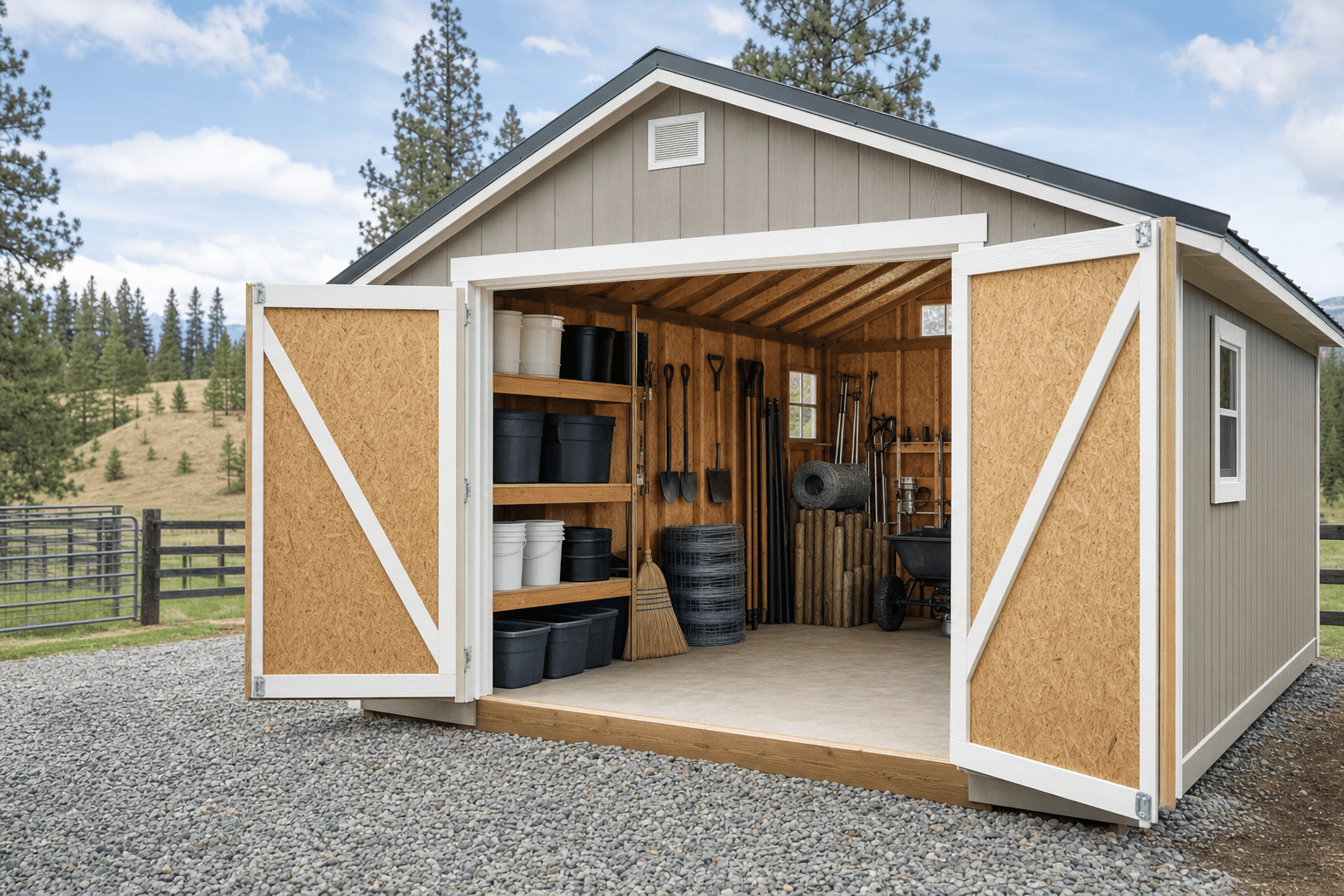
Wide-door planning helps show the practical workflow: shelving for daily supplies, bins kept off the floor, long-handled tools on the wall, and a clear aisle for buckets, carts, and seasonal equipment.
Rakes, forks, shovels, loppers, and fence tools should be easy to grab without stepping over feed bags or seasonal equipment. Wall storage and a narrow work zone keep daily chores from turning into a search.
Feed, bedding, seed, and supplements stay more manageable when they are off the floor, grouped by use, and stored in blank tight-lid containers. Leave enough room to inspect corners and sweep under shelves.
Fence posts, panels, gates, hoses, and poles often need a deeper wall or overhead support. Measure the longest item before choosing a shed size or door location.
Do not mix clean feed storage with wet tools, fuels, pesticides, or veterinary products. Those materials need separate handling based on product labels, local rules, and appropriate safety guidance.
Think through one normal week of chores before choosing the final footprint. If you carry feed every morning, store it near the door but away from splash and rodents. If fencing repairs happen throughout the season, keep staples, pliers, posts, and repair wire together. If the shed also holds mower attachments or a small cart, keep the center aisle open enough to move without unloading half the building.
Door placement is the biggest farm-storage decision after size. Double doors help when moving bulky supplies, but they only solve the problem when the approach is firm and the swing is not blocked by snow, mud, or stacked materials. A man door can make daily grab-and-go chores faster, while wider access can serve seasonal loading.
Ventilation should support dry storage without creating a rodent invitation or letting wind-driven rain into supplies. Screened vents, high wall openings, gable ventilation, and a site-specific roofline can help, but they work best alongside owner-managed containers, sanitation, inspection access, and sensible separation of materials.
This page is about a practical storage shed for small acreage chores, not a commercial barn. Keep the plan focused on supplies, tools, feed bins, buckets, and small seasonal equipment.
A useful farm shed needs a clear path for the items that actually move. Plan wall storage, bins, and work surfaces around that path before adding extras.
Ventilation, raised shelves, sealed containers, and inspection access work together. Avoid layouts where supplies sit directly against damp walls or on low spots.
Good storage makes it easier to notice spills, damaged bags, gnawing, or moisture. Tight containers and uncluttered corners support the owner’s pest-control routine.
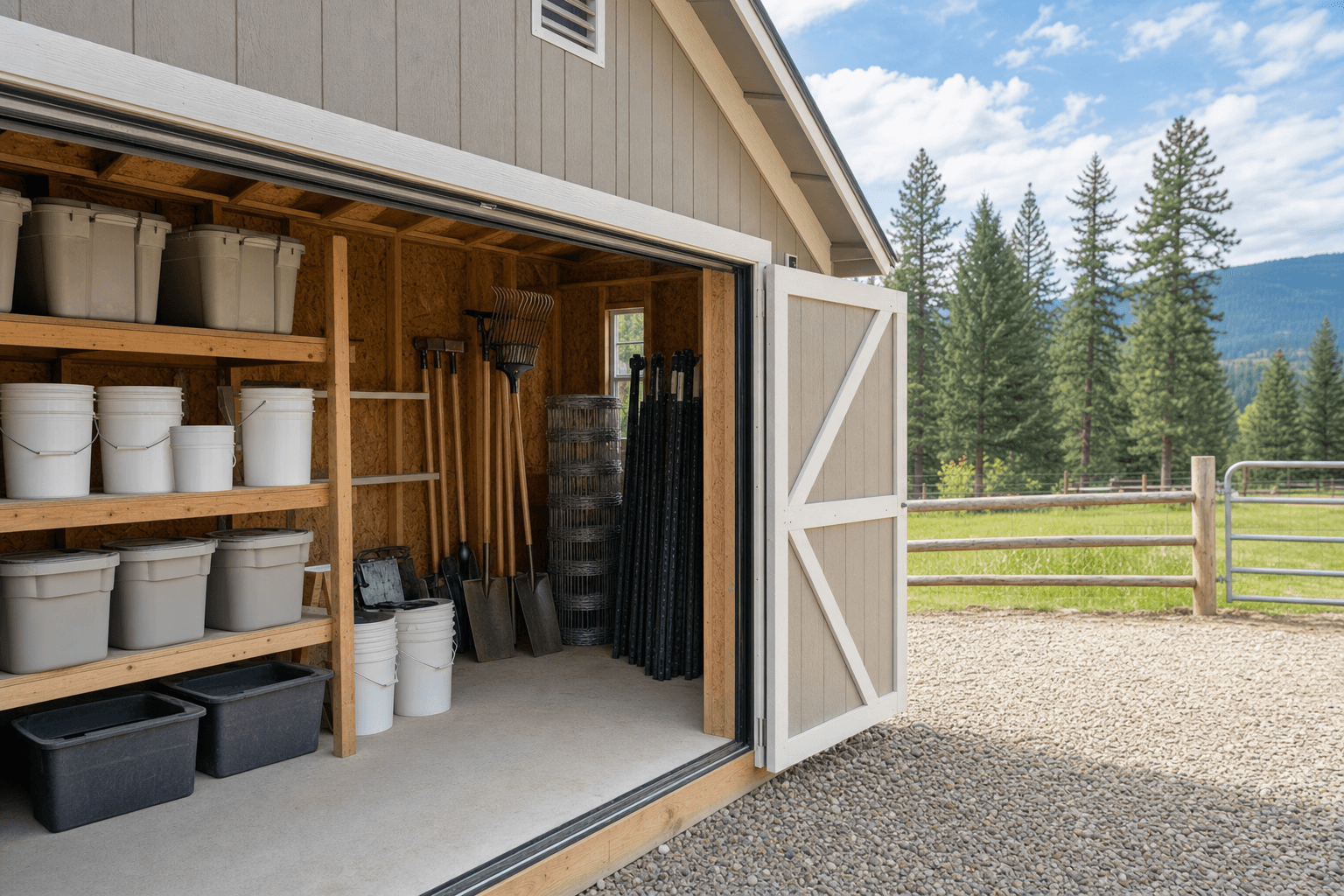
Detail planning is where the shed becomes useful: blank bins, wall tools, fencing supplies, a sweepable aisle, protected ventilation, and dry storage zones that are easy to inspect.
Farm storage has to stay useful after a snowstorm, during mud season, and when chores happen before or after daylight. The shed plan should make those ordinary days easier.
Place doors, overhangs, and gravel approaches so roof runoff and plowed snow do not block access to feed, fencing tools, or seasonal equipment.
A firm approach helps when carrying buckets, panels, bedding, or small tools. Gravel and drainage planning matter more than decorative finishes.
Raised shelving, tight-lid bins, screened ventilation, and separated zones help keep everyday farm supplies easier to inspect and maintain.
Start with the route equipment and supplies will actually take. A shed that looks right from the driveway can still frustrate daily work if doors face a drift zone, shelving blocks long-handled tools, or the apron turns soft every spring.
Yes. NIOS can build a shed-scale farm storage building around wide doors, shelving zones, tool walls, ventilation cues, siding, trim, roofline, and site-ready access. The owner still decides what supplies belong inside, how materials are handled, and what local or product-specific rules apply.
Many small-acreage storage plans start around 10x12, 10x16, 12x16, or 12x20, then adjust for feed bins, long-handled tools, spare fencing, buckets, and a clear aisle. If small implements or carts need to roll in, door width and turning room matter as much as square footage.
Plan doors around the heaviest and longest items first: fence panels, carts, mower attachments, bedding bales, or seasonal tools. A wider double door or roll-up opening is most useful when the gravel approach is firm, level, and not blocked by snow storage or roof runoff.
Do not treat one shed as a catch-all for every farm material. Feed and dry supplies should be protected from moisture and pests, while pesticides, fuels, veterinary products, and other risky materials need separate handling that follows product labels, regulations, and appropriate safety guidance.
Start with drainage, raised storage, covered containers, organized shelves, and inspection access. Screened or protected ventilation can help manage stale air, but it should not invite rodents or wind-driven rain. The owner still manages sanitation and pest control.
Place the shed where chores remain reachable in winter and spring. Think about plow piles, roof shed, muddy paths, trailer approach, and where seasonal items rotate. The best layout keeps daily-use supplies near the door and slower-season equipment deeper inside.
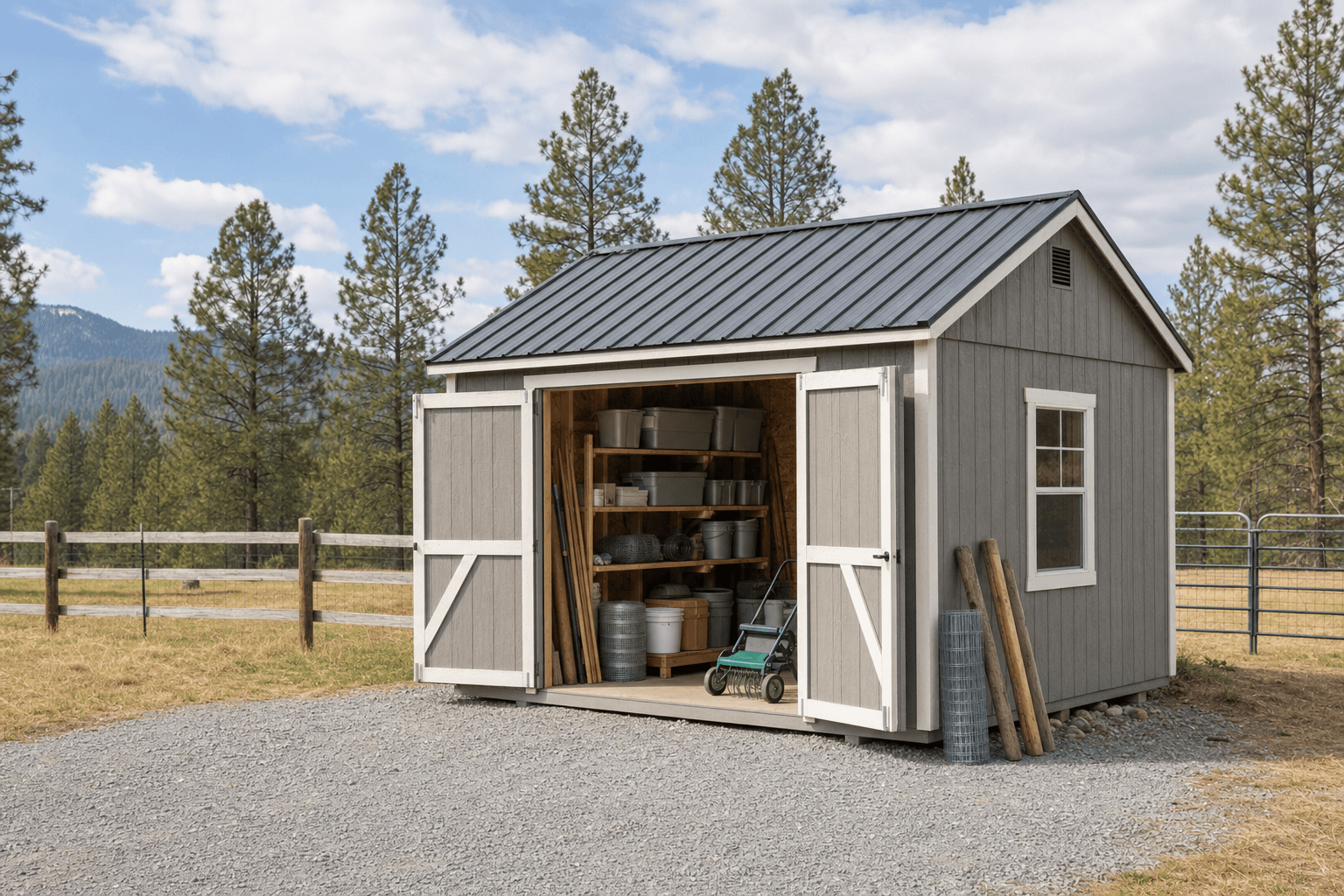
Bring the tool list, feed storage plan, door needs, seasonal equipment, and site access questions so the shed can be sized around real farm work.
Every shed we make is built on site in North Idaho. Explore other uses we build for.