An 8x12 shed gives you 96 square feet — the small footprint North Idaho buyers reach for when they need real storage but the yard is tight or the budget is lean. Eight feet is the classic shed width: deep enough for a full bench or a wall of shelving on the 12-foot side, narrow enough to slip along a fence line or beside the garage without eating the lawn. That makes 8x12 a go-to for a garden shed, a tool shed, or general overflow that has crowded out the cars.
Think of it as a deep, organized closet you walk up to rather than a room you walk around in. You line one or both long walls with gear and reach in for what you need — which is exactly right for storage, growing, and tools, where you grab things far more often than you stand and work inside. It is also the smallest footprint that still feels like a tidy little building, which is why a she-shed buyer on a budget often starts here.
At 96 square feet, an 8x12 reads as a generous walk-in closet rather than a room. The 8-foot width gives you a full bench or a wall of shelving on one side, and the 12-foot length runs long enough for a riding mower, a potting bench, or a season's worth of totes — you reach in from the door rather than circling the floor.
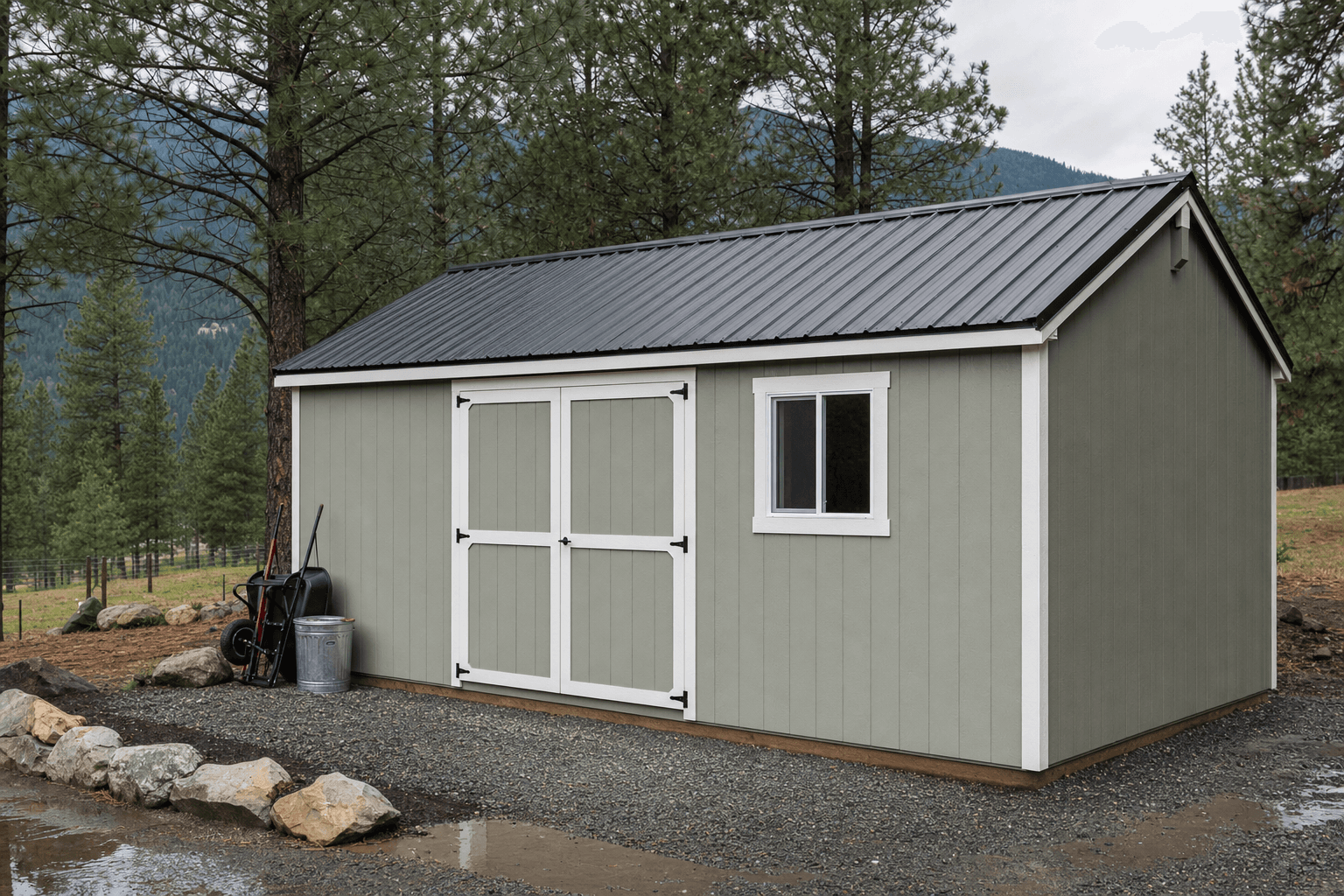
An 8x12 shed gives you 96 square feet — a full wall of storage on a footprint that tucks into a tight side yard.
The 8x12 footprint is built for grab-and-go storage, and it handles the everyday backyard jobs cleanly. As a storage shed, it swallows the seasonal load — totes on shelving, lawn furniture, holiday bins, and the bikes — that no longer fits in the garage, and the 12-foot wall gives you depth to stack it deep instead of high. As a garden shed, it fits a potting bench on the short wall with the wheelbarrow, bagged soil, pots, and long-handled tools lined up beside it.
As a tool shed, the 12-foot wall takes a full workbench with a pegboard above it for quick projects, with a push mower and gas cans tucked along the opposite side. And at the small end of personal space, 96 square feet works as a compact she-shed or reading nook — a chair, a small craft table, and a wall of shelves with light from a window — as long as you treat it as a cozy retreat rather than a room you furnish for company. The 8-foot width keeps the footprint affordable and easy to site, which is the whole appeal at this size.
An 8x12 works best as a reach-in. Line the 12-foot walls with shelving or a bench and grab from the door — don't plan a layout that needs a walking lane down the middle.
With only 96 square feet of floor, vertical space is your friend. Tall shelving, wall hooks, and overhead racks let an 8x12 hold far more than the floor alone suggests.
If you picture standing and working in the shed rather than reaching into it, step up to a 10-foot width. An 8x12 is made for storing, not for circulating around the floor.
Coming up from an 8x10, you keep the same 8-foot width and add two feet of length — that is one more section of shelving or the difference between a bench that fits and a bench that crowds the door. An 8x10 is the tight starter size for a mower and a few tools; the 8x12 gives the same reach-in layout a bit more breathing room on the long wall, which is usually worth the small jump. If you want even more wall without going wider, an 8x14 stretches the same footprint two more feet for a longer bench, a second storage zone, or a mower plus a full set of garden gear.
The bigger decision is whether to go wider. Step up to a 10x12 and you gain two feet of depth — and that is the difference between a shed you reach into and one you walk into. At 10 feet wide you can line both long walls and still pass between them, which turns a storage box into a space you stand and work in. Stay at 8x12 if the job is storing, growing, or grabbing tools and you want the footprint small and the price down; size up to 10 feet wide if you plan to spend real time inside, park a vehicle and work around it, or run two uses at once.
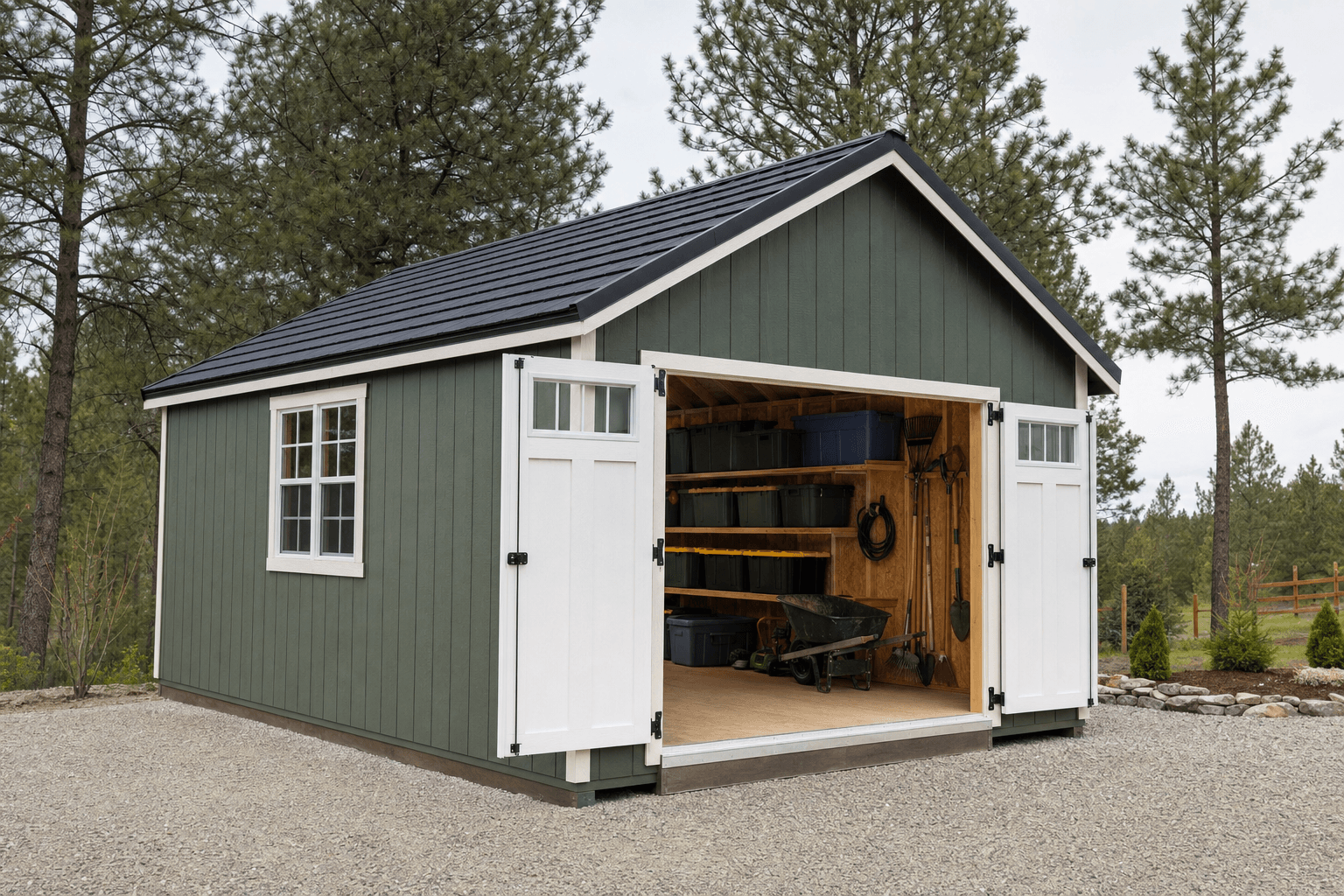
An 8x12 is a reach-in: line the long walls with a bench and shelving and grab what you need from the door.
| 8x12 at a glance | |
|---|---|
| Square footage | 96 sq ft — compact footprint, ideal for one storage-focused use |
| Typical door | A single 36-inch door for most uses; a 4-foot or double door if you roll in a mower |
| Foundation | Level, well-drained gravel pad, built on-site to carry North Idaho snow load |
| Best uses | Garden shed, tool storage and bench, seasonal storage, compact she-shed or nook |
| Sizes up to | 8x14 for a longer wall, or 10x12 when you need a width you can walk into |
| Sizes down to | 8x10 if the yard is tight or it is mostly a mower and a few tools |
Because we build every shed on your property, an 8x12 is finished around the job you have in mind — the door, windows, and shelving are chosen for the use, not pulled off a lot. For growing and yard work, a garden shed build puts a window over the bench wall and a wide door for the wheelbarrow; the garden shed planning guide covers bench height, light, and venting. For tools and quick projects, a tool shed build adds a bench wall and pegboard, walked through in the tool shed planning guide.
When it is mostly overflow, a storage shed keeps it simple with tall shelving and an easy-access door — the storage shed planning guide covers shelving and getting at what you stored. And when 96 square feet is going to be a small personal retreat, a she-shed build leans into a window, a finished interior, and a tidy footprint; the she-shed planning guide covers insulation, power, and making a compact space feel calm. Any of these can start in the configurator so you see the roofline, door, and windows before you commit.
Quite a lot, because 96 square feet of floor goes further than it sounds once you build up the walls. A typical 8x12 holds a riding or push mower along one wall, a full 8-foot workbench or potting bench on the back, and 10 to 12 large totes on shelving — plus bikes, lawn furniture, and long-handled tools hung on the walls. The trick is to treat it as a reach-in and go vertical: tall shelving and wall hooks let an 8x12 store as much as a bigger building that wastes its height. What it will not give you is open floor to stand and work in the middle.
Both are 12 feet long, so they hold the same wall of bench or shelving — the difference is two feet of width. An 8x12 is 96 square feet and works as a reach-in: you stand at the door and grab from shelves along the long walls. A 10x12 is 120 square feet, and that extra depth opens a real walking aisle, so you can line both long walls and pass between them. If you only store and grab, 8x12 saves yard space and money; if you want to step inside and work, the 10-foot width is the upgrade to make.
Yes. Most lawn tractors are roughly 6 feet long and 4 feet wide, so a riding mower parks along the 12-foot wall of an 8x12 with room left for a few tools and gas cans on the side. What you lose at this width is the space to walk all the way around it — you back it in and pull it straight out rather than circling it. Add a 4-foot or double door so the mower rolls in square without you wrestling it through a narrow opening. If you want to park the mower and still have a clear work zone, look at a 10x12 or wider.
It depends on what goes in and out. For a garden shed, a tool shed, or general storage, a single 36-inch door handles people and most gear, though a 4-foot door clears a wheelbarrow or wide totes without a fight. If you plan to roll in a riding mower, snow blower, or ATV, go with a wide single or double door so the machine enters straight. On a 12-foot wall there is room to place the door where it lines up with how you load the shed, and we set it to the use when we build.
It is the smallest size that works, and it works if you keep it focused. At 96 square feet an 8x12 holds a comfortable chair, a small desk or craft table, and a wall of shelves with daylight from a window — plenty for a reading nook, a quiet craft corner, or a one-person retreat. Where it falls short is anything that needs open floor or seating for guests; for that, a 10x12 gives you room to move and furnish. For year-round use in North Idaho, plan insulation and a power run for light and a small heater even at this size.
A level, well-drained gravel pad is the standard base for an 8x12 here. It keeps the floor framing off wet ground, drains snowmelt away from the building, and gives the structure even, stable footing through freeze and thaw. Because we build on your property, the pad and placement are part of the plan, and the framing and roofline are built to carry local snow load. Site an 8x12 off the lowest, soggiest spot in the yard and where snow sliding off the roof clears the door instead of burying it — easy to get right on a footprint this small.
Ninety-six square feet is the footprint where an 8-foot-wide shed stops feeling tight. An 8x12 gives you enough depth to run a lawnmower and a bike in from one end while keeping a wall of shelving at the other. It is the most common small shed size NIOS builds in Coeur d'Alene and Post Falls, and for good reason — it fits most side yards, satisfies typical setback requirements, and handles real household storage without a lot of wasted space.
Garden gear is the primary use: a push mower or riding mower, long-handled tools hung on the wall, a bag of fertilizer, seed starting supplies, and seasonal overflow like patio cushions. If you add a small potting bench along the 8-foot back wall, you still have a center aisle and room to store a wheelbarrow on its side.
She-sheds and craft rooms at this size work, but be realistic — 8x12 is cozy for one person and a chair, not a full studio with a cutting table. If you want a real workspace, consider stepping up to a 10x12 or 10x14.
On site, the 8x12 footprint is one of the easiest to work with on a sloped or wooded North Idaho lot. The crew can adjust the foundation level or use a gravel pad and skid-style base to handle grade changes without major earthwork. Roof pitch and overhang are specified for local snow loads, which matter even on a small building after back-to-back storms.
See pricing and options in the configurator, or browse finished 8x12 builds in our gallery. Customers in the Coeur d'Alene area can also review local permit notes before ordering.
Pick your door, window, and roofline, then get a free estimate or price an 8x12 in the configurator.
Compare nearby footprints to find the right fit for your site and storage needs.