An 8x14 shed is 112 square feet in a long, narrow shape — the footprint North Idaho buyers reach for when the yard has depth to spare but not much width. At 8 feet wide it tucks against a fence line or down the side of a house where a wider building would never fit, and the 14-foot length is the payoff: a long run of wall for shelving, and floor enough to lay down the kind of gear that nothing shorter will hold. Think of it as a deep, organized galley rather than a room you walk around in.
People pick 8x14 for one reason above all — they have long things to store and a slim strip of ground to put them on. It is a natural storage shed for a narrow lot, and the standout choice for kayaks and paddleboards that need a full 12 to 14 feet of clear length to lie flat. If your problem is length and lot width, this is the footprint to measure against first.
At 112 square feet, an 8x14 reads as a long galley, not a room. The 8-foot width means you load and reach from one open aisle along a single wall, while the 14-foot length gives you the long, uninterrupted run that ladders, kayaks, lumber, and long-handled tools need to lie down flat.
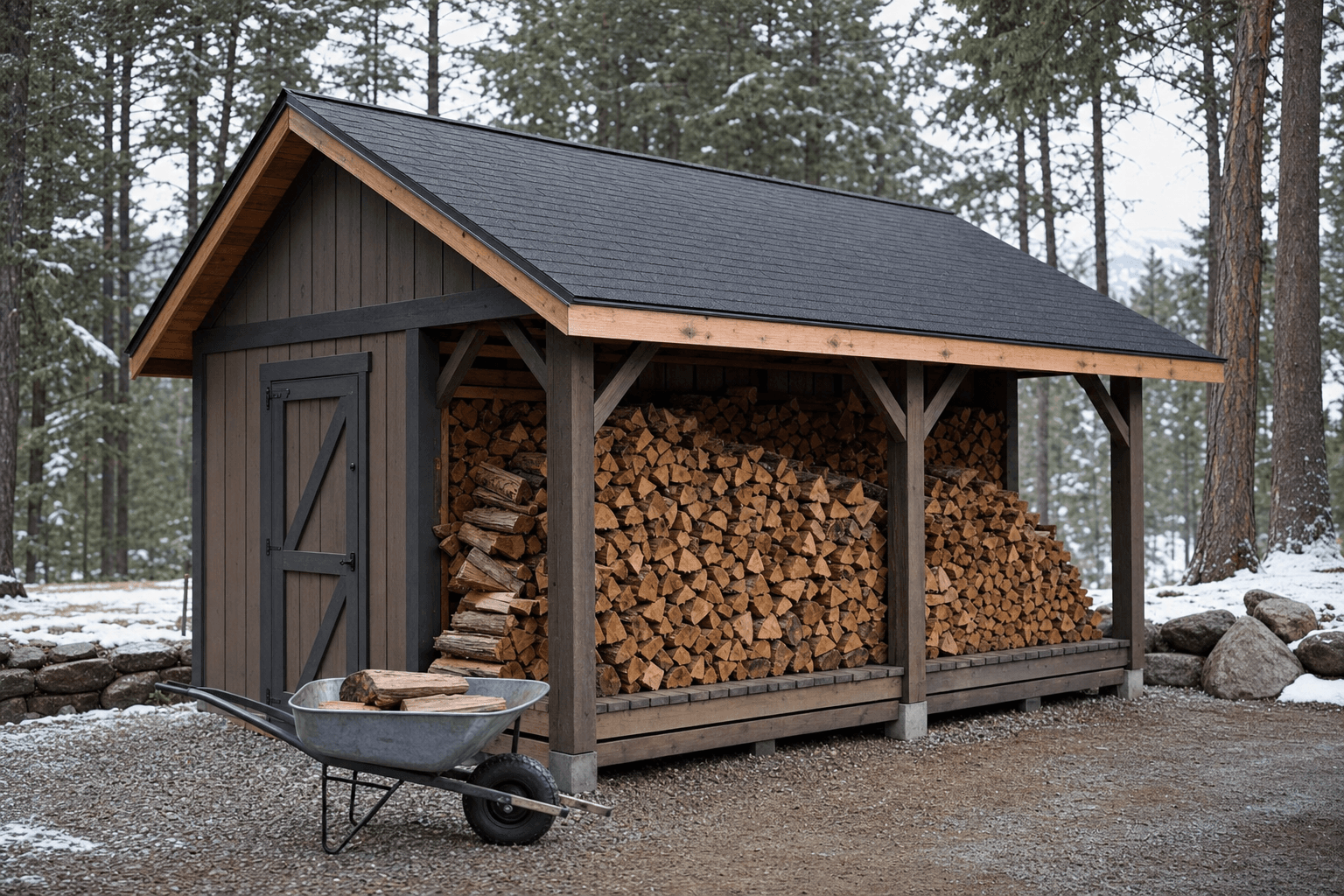
An 8x14 (112 sq ft) slides into a tight side yard and gives you 14 feet of length for long gear.
The 8x14 footprint earns its keep on narrow lots and with long loads. As a storage shed, the 14-foot length lets you run shelving the full depth of one wall — seasonal totes, camp gear, and yard supplies stacked top to bottom — while the open floor down the middle stays clear for the bulky, awkward stuff. It is the size that finally fits the extension ladder, the canoe paddles, and the long-handled tools end to end instead of wedged in at an angle.
It is the go-to for paddlecraft. A kayak or paddleboard shed build uses wall racks down the 14-foot length so two or three boats hang off the floor, with PFDs, paddles, and wetsuits on hooks above and dry storage underneath. The same long, narrow shape works as a garden shed — a potting bench at the far end, wall hooks for rakes and shovels, and a wheelbarrow parked along the open side — or as a slim tool shed with a workbench on one end and pegboard above it. The trade-off to know going in: at 8 feet wide you work from one side, so you organize along the length, not across the room.
At 8 feet wide you load from one side, so plan one deep wall of racks and shelving and keep the opposite aisle open. Think galley, not garage.
The 14-foot length is the whole reason to pick this size. Confirm your kayak, ladder, or lumber lies flat with room to spare before you commit.
On a narrow shed, an end door keeps the long wall free for storage. A side door eats into the run, so put the opening where it costs you the least.
Coming up from an 8x12, you keep the same 8-foot width and add two feet of length — and on a narrow building, length is the dimension that counts. An 8x12 holds a 12-foot wall of shelving and most yard gear, but a 14-foot kayak, a long extension ladder, or full-length lumber wants those extra two feet to lie down clean. If long items are the reason you are building, the jump from 8x12 to 8x14 is the one that solves it without widening your footprint on the lot.
Going up in length again, an 8x16 gives you another two feet — pick it when you want a small work zone at one end on top of the long-storage run, or you are stacking several long loads. Going wider, a 10x14 keeps the same 14-foot length but adds two feet of width, and that is the difference between a reach-in galley and a building with a real walking aisle down the middle. Choose the 10-foot width when you want to flank both long walls and work inside; stay at 8 feet wide when the lot is tight and one organized wall is all you need.
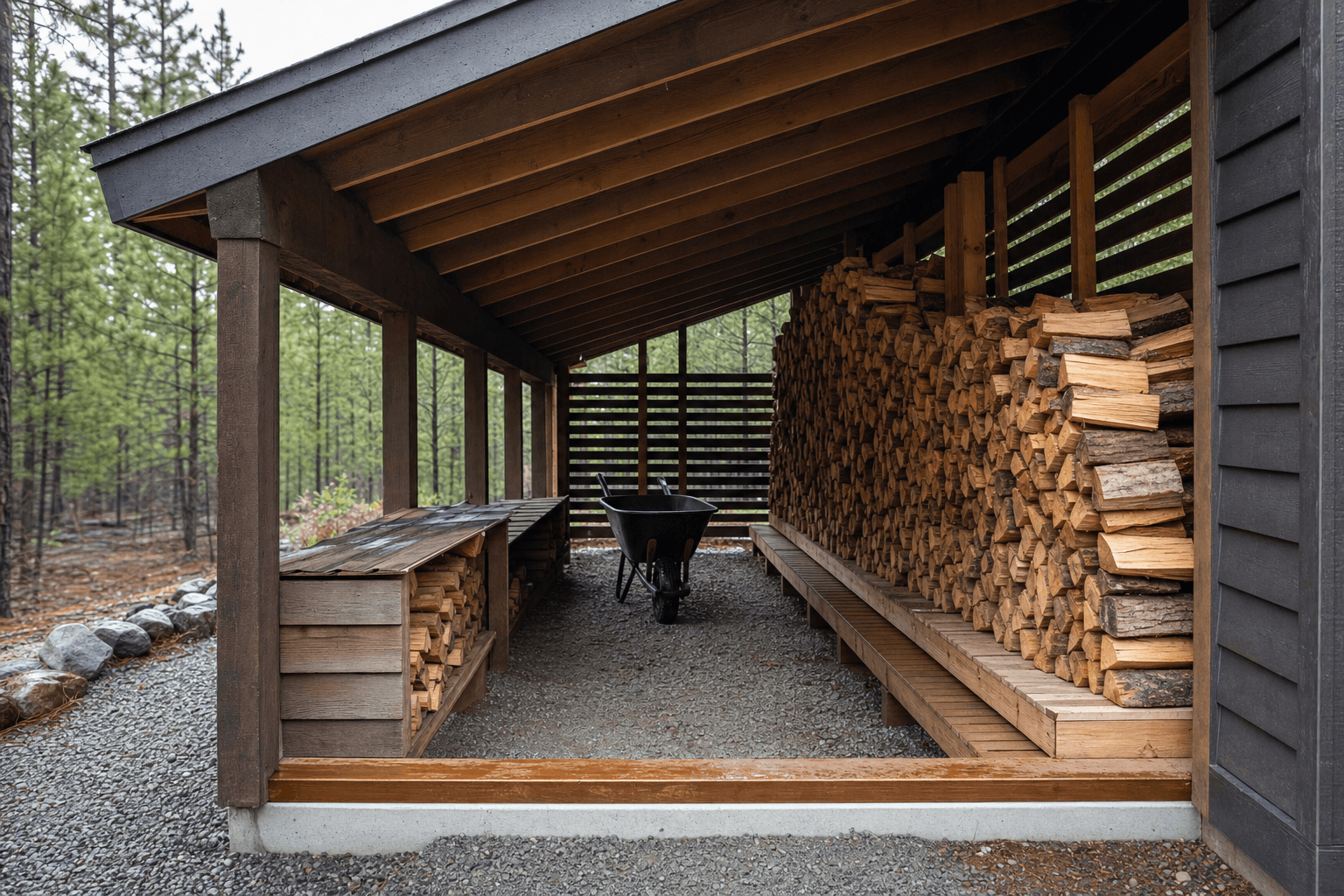
The 14-foot length of an 8x14 gives long gear a clean run while one open aisle keeps it reachable.
| 8x14 at a glance | |
|---|---|
| Square footage | 112 sq ft — a long, narrow footprint for tight side yards and long gear |
| Typical door | A single 36-inch or 4-foot door; placing it on the 8-foot end keeps the long wall clear |
| Foundation | Level, well-drained gravel pad, built on-site to carry North Idaho snow load |
| Best uses | Narrow-lot storage, kayak and paddleboard racks, garden gear, a slim tool shed |
| Sizes up to | 8x16 for more length, or 10x14 when you want a real walking aisle |
| Sizes down to | 8x12 if your longest item fits in 12 feet and you want to save yard depth |
Because we build every shed on your property, an 8x14 gets framed and fitted around what is going inside — the door, racks, and shelving are planned for the use, not pulled off a lot. For a narrow-lot catch-all, a storage shed build runs shelving the full length with an end door; the storage shed planning guide covers shelving depth and keeping the floor clear. For paddlecraft, a kayak and paddleboard shed build adds wall racks sized to your boats and ventilation so wet gear dries — the kayak and paddleboard shed planning guide walks through rack spacing and door access.
For growing and yard work, a garden shed build puts a bench and a window at the far end with wall hooks for long-handled tools, covered in the garden shed planning guide. And when it is a slim workspace for repairs, a tool shed build adds a bench and pegboard on one end; the tool shed planning guide covers bench layout and storage. Any of these can start in the configurator so you see the roofline, door placement, and windows before you commit.
Yes, and that long run is the main reason people choose this size. Most recreational kayaks are 10 to 12 feet and touring boats reach 14, so the 14-foot length lets them hang on wall racks and lie flat without bending against the end wall. Run the racks down the long wall and you can store two or three boats off the floor, with paddles and PFDs on hooks above and dry gear underneath. If your boat is right at 14 feet, mention the exact length so we place the racks and the door to clear it.
Both are 8 feet wide, so they share the same narrow, reach-in layout — the difference is the two feet of length. An 8x12 is 96 square feet and handles most yard gear and a 12-foot wall of shelving. An 8x14 is 112 square feet, and that extra length is what lets a long kayak, an extension ladder, or full-length lumber lie down flat instead of jamming in at an angle. If your longest item fits comfortably in 12 feet, the 8x12 saves yard depth; if it does not, the two extra feet of the 8x14 are exactly what you are paying for.
A narrow footprint is about the lot, not the storage. An 8-foot-wide building slides down the side of a house or against a fence line where a 10- or 12-foot shed would crowd the setback or block a path. You give up the center aisle a wider building has — at 8 feet you load from one side and reach across rather than walking around the room — but you keep the full 14 feet of length for long gear. If width is tight and depth is available, 8x14 fits where a wider shed cannot.
It depends on which dimension is short. Go to an 8x16 when you want even more length — a small workbench zone at one end on top of the long-storage run, or room for several long loads at once. Go to a 10x14 when the width is the problem: the same 14-foot length but two more feet across gives you a real walking aisle and lets you put gear on both long walls instead of one. Stay at 8x14 when one organized wall on a tight lot is all you need.
On a narrow shed, door placement matters more than usual because every foot of wall is storage. Putting a single door on the 8-foot end keeps the entire 14-foot long wall free for racks and shelving, which is usually the right call for kayaks or deep storage. A side door is handy if you want to reach the middle of the run quickly, but it interrupts the long wall, so place it where it costs you the least. We size and locate the door around what is going in and out so the opening lines up with your aisle.
Yes — the long, narrow shape suits a galley-style garden setup. Put a potting bench and a window at the far end for light, run wall hooks down the long side for rakes, shovels, and other long-handled tools, and park a wheelbarrow along the open aisle. The 14-foot length is generous for storing long tools flat, and the 8-foot width keeps the building tight against a fence or path. If you want a bench you can stand back from and work both sides of, a 10-foot width gives you more elbow room, but 8x14 is plenty for organized garden storage on a slim strip of yard.
At 112 square feet, the 8x14 is essentially an 8x12 with a dedicated end zone — enough extra depth to store a 12-foot kayak or stand-up paddleboard flat along the wall without blocking anything else. That single feature makes it the go-to size for North Idaho lake-home owners in Coeur d'Alene and Hayden who want to keep water gear close without leaving it outdoors all season.
Long gear is the defining use case: kayaks, canoes, extension ladders, sections of lumber, irrigation pipe, or a full set of snow removal tools plus a snow blower. The depth handles it; the 8-foot width keeps it manageable on a narrow side-yard strip.
A typical layout runs storage bins and shelves down one long wall, a bike hook or two on the other, and the long-item bay at the far end. Double doors on the gable end — not the long wall — make that end-access workflow practical.
On sloped Coeur d'Alene lots and wooded Sandpoint properties, the 8-foot width is the key advantage: the on-site crew can fit into spaces that simply won't accept a wider delivered building. They frame the roof for local snow loads, set the door swing to clear your grade, and finish the exterior to match your house.
Design an 8x14 with the door placement and roof style you need. For kayak and paddleboard storage details or Post Falls service-area specifics, those pages have more.
Pick your door placement, racks, and roofline, then get a free estimate or price an 8x14 in the configurator.
Compare nearby footprints to find the right fit for your site and storage needs.