An 8x8 shed gives you 64 square feet — a small, even square that does one job and does it cleanly. It is the size North Idaho homeowners pick when they want their hand tools, bikes, and yard gear out of the weather and off the garage floor, without giving up a big piece of the lot to do it. Eight feet on each side is just enough to step inside and reach the walls, which is what separates an 8x8 from a lean-to or a deck box: it is a real building you can organize, not a bin you dig through.
Because it is square rather than long, the 8x8 shines at tidy, single-purpose storage and small utility roles. It is a natural tool shed for the rakes, the string trimmer, and a pegboard of hand tools, or a compact storage shed for totes, lawn chairs, and the bikes. It is also one of the most common footprints for a well house — big enough to shelter a pump, pressure tank, and the valves, with room to kneel and service them. Pick an 8x8 when the goal is to keep one category of stuff dry, reachable, and in one place.
At 64 square feet, an 8x8 reads as a tidy walk-in closet rather than a room. You step through the door, turn once, and every wall is within arm's reach — which makes it fast to grab the one thing you came for, as long as you store along the perimeter and keep the small center clear.
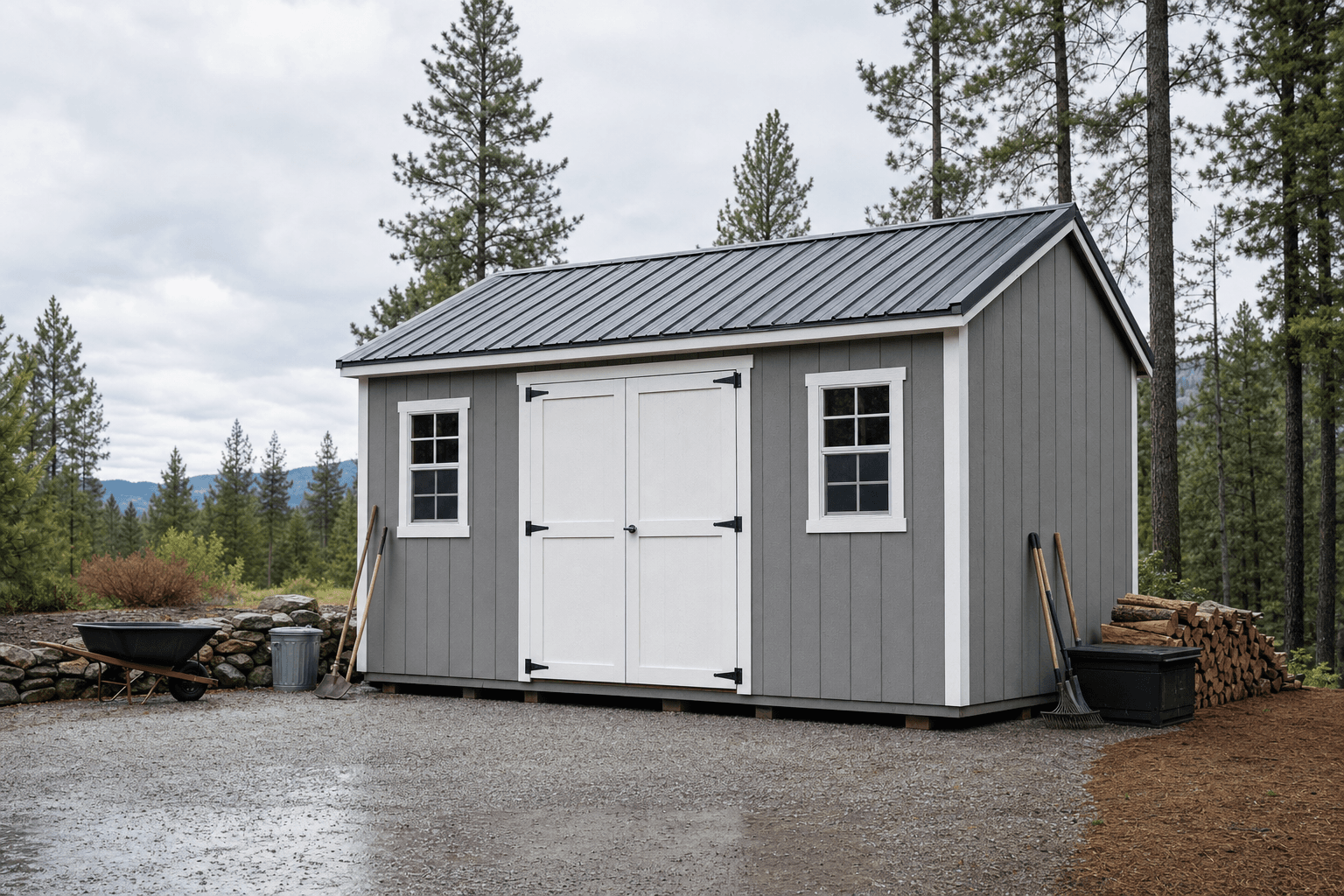
An 8x8 shed gives you 64 square feet — a compact square that keeps one category of gear dry and reachable.
The 8x8 footprint is a specialist, not a generalist, and that is its strength — it nails the small jobs that a bigger building is overkill for. As a tool shed, an 8x8 takes a short workbench or potting counter on one wall, a pegboard of hand tools above it, and long-handled tools hung on the adjacent wall, with the floor left for a mower or wheelbarrow. As a garden shed, the same square holds bagged soil, pots, a few trays of seedlings near a window, and the rakes and hoses — everything the yard needs without walking back to the house.
It is just as useful for plain storage: a wall of shelving for totes and seasonal bins, hooks for bikes and lawn chairs, and a clear path to the door. And in its utility role as a well house, 64 square feet comfortably covers a pump, pressure tank, and plumbing with space to kneel and work — and the small interior is easy to insulate and heat-tape against a North Idaho freeze. The common thread is focus: an 8x8 is the right size when you have one clear thing to store or shelter and you want it handled in a neat footprint.
In 64 square feet the perimeter is your storage and the center is your standing room. Shelving, pegboard, and hooks keep the floor clear so you can actually walk in.
An 8x8 does a single category well — tools, garden gear, or a pump house. Asking it to be storage and a workspace at once is where it gets cramped.
If a riding mower or ATV needs to park inside with room around it, an 8x8 is tight. Step to an 8x10 or 8x12 so the machine does not eat the whole floor.
Coming up from a 6x8, the 8x8 adds two feet on the short side — and that is the jump from a reach-in to a step-in. A 6x8 is 48 square feet, deep enough to hang tools on the back wall but too narrow to turn around inside once anything sits across from it. At 8 feet on both sides you can walk through the door, pivot, and reach all four walls, which makes the 8x8 the smallest footprint that feels like a building you go into rather than one you only open. If all you need is a tool locker against the house, the 6x8 saves space; if you want to step inside and organize, the 8x8 is the one.
Going the other direction, an 8x10 keeps the 8-foot width and adds two feet of length, which buys you a longer wall for a real bench or a second run of shelving — the move when 64 square feet fills up faster than you expected. An 8x12 stretches that to a full 12-foot wall, enough to park a mower along one side and still hang tools, and it is the size to choose if anything you drive needs to live inside. Stay at 8x8 when the job is one tidy category of storage or a pump house; size up to 8x10 or 8x12 the moment you are adding a machine or combining two uses.
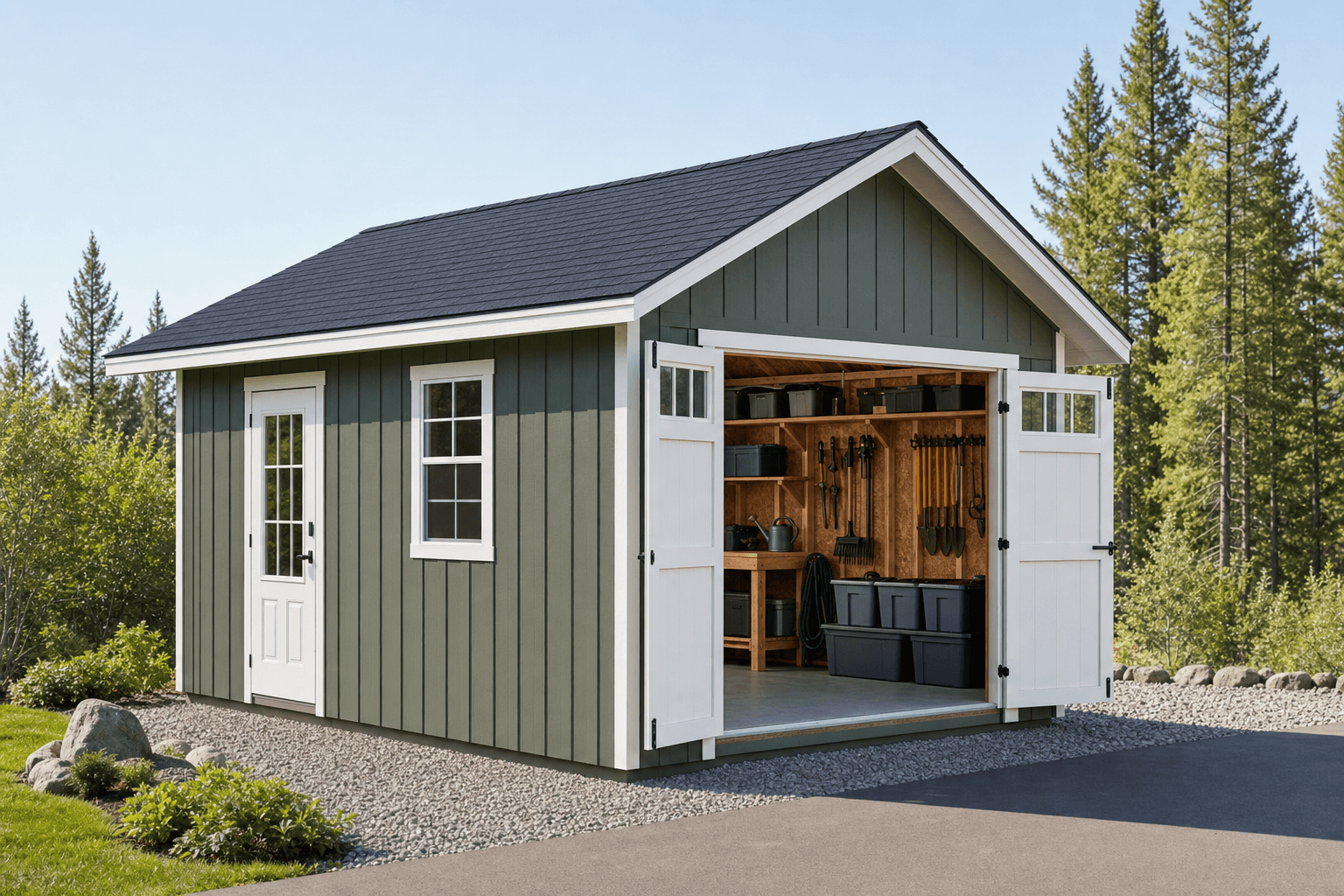
Eight feet on each side lets you reach every wall — store on the perimeter and the 8x8 stays easy to walk into.
| 8x8 at a glance | |
|---|---|
| Square footage | 64 sq ft — a compact square, ideal for one focused use or a utility shelter |
| Typical door | A single 36-inch door for tools and storage; a 4-foot door if you roll in a mower |
| Foundation | Level, well-drained gravel pad, built on-site to carry North Idaho snow load |
| Best uses | Tool storage, garden gear, seasonal storage, or a pump and pressure-tank well house |
| Sizes up to | 8x10 for a longer bench wall, or 8x12 when a mower needs to park inside |
| Sizes down to | 6x8 for a slim tool locker against the house when yard space is tight |
Because we build every shed on your property, an 8x8 can be finished for the exact small job you have in mind — the door, window, and venting are chosen around the use rather than pulled off a lot. For hand tools and yard equipment, a tool shed build adds a bench wall and pegboard; the tool shed planning guide covers bench height, hanging storage, and door width for a footprint this size. For growing and yard work, a garden shed puts a window over the potting bench, and the garden shed planning guide walks through light, venting, and bench layout.
When the job is simply keeping the seasonal overflow dry, a storage shed keeps it plain with shelving and a clear floor — the storage shed planning guide covers shelving and access for a compact square. And for the utility role, a well house build focuses on insulation, heat tape, and an access door sized to service the equipment; the well house planning guide covers freeze protection and clearances for a North Idaho winter. Any of these can start in the configurator so you see the roofline, door, and window before you commit.
For small storage, the square shape is an advantage. An 8x8 puts every wall within arm's reach from the center, so you turn once and grab what you need instead of walking down a narrow aisle. A long, skinny shed of the same 64 square feet — say a 4x16 — gives you more wall but forces you to shuffle past everything to reach the back, and you lose the open center the square keeps. Where a rectangle wins is parking something long, like a mower or kayak; for hand tools, bikes, and bins, the 8x8 square is the easier shape to live with.
Quite a bit, if you store on the walls. Sixty-four square feet comfortably holds a short workbench or potting counter, a pegboard of hand tools, long-handled tools hung on a wall, and 8 to 10 totes on shelving — with the floor left for a push mower, a wheelbarrow, or a couple of bikes. What it does not do well is swallow a riding mower or an ATV plus everything else; once a machine parks inside, it claims most of the floor. Think of an 8x8 as enough room for one category of gear kept tidy, not a catch-all garage.
Both are 8 feet wide, so the difference is the four extra feet of length. An 8x8 is 64 square feet and works best as focused storage or a pump house — one short bench wall and shelving. An 8x12 is 96 square feet, and that longer wall is enough to park a riding mower along one side and still hang tools and shelving on the other. If you are storing hand tools and bins, the 8x8 is plenty; if anything you drive needs to live inside, jump to the 8x12 so the machine does not eat the whole footprint.
Yes — an 8x8 is one of the most common sizes for it. Sixty-four square feet comfortably shelters a pump, pressure tank, and the plumbing, with room to kneel and service the equipment instead of working through a tiny hatch. The small interior is also easy to insulate and run heat tape in, which is what keeps a North Idaho well house from freezing. We size the access door so the tank and valves can be reached and replaced, and the build focuses on freeze protection and clearances rather than windows and finish.
For tools, garden gear, or a well house, a single 36-inch door is the standard and leaves the most usable wall inside. Step up to a 4-foot door if you want to roll a push mower or a wheelbarrow straight in without angling it through the opening. Because an 8x8 has short walls, where the door lands matters — placing it toward one corner preserves a long unbroken wall for a bench or shelving, and we set the swing so it clears your storage. A double door is usually more opening than a footprint this small needs.
A level, well-drained gravel pad is the standard base for an 8x8 here. It keeps the floor framing off wet ground, lets snowmelt drain away from the building, and gives the small structure a stable, even footing. Because we build on your property, the pad and placement are part of the plan, and the framing and roofline are built to carry local snow load. Site it off the lowest, soggiest spot in the yard and where snow sliding off the roof clears the door rather than burying a building this compact.
At 64 square feet, an 8x8 is genuinely compact — a single stall that holds a lawn mower or a pair of bikes, a wall of garden tools, and maybe a small shelf for fertilizer and potting mix. It is not a workspace; it is a purpose-built storage box. That clarity is exactly why it sells well in Coeur d'Alene neighborhoods where a 10x12 simply won't fit the setbacks.
The footprint also works as a secure well-house shell or a tidy electrical utility enclosure. Slap a quality latch on a single door, add a vent or two, and it does exactly one job without wasting a square foot.
Because NIOS builds on site, an 8x8 can go into a tight corner, against a fence line, or on a narrow side-yard strip in Post Falls or Hayden where a delivered shed can't be maneuvered in. The crew frames, sheathed, and roofs it in place — no lot-clearing gymnastics required.
North Idaho's snow loads matter even at this size. The roof is framed for local conditions from the start, not sized to a national average. If you plan to use it year-round for anything sensitive — a well pump, a battery bank — ask about insulating the walls and a small vent-stack to manage condensation.
Design yours in the shed builder to see door and window options at this footprint. If you want to see what a finished 8x8 looks like alongside larger builds, browse our buildings.
Pick your door, window, and roofline, then get a free estimate or price an 8x8 in the configurator.
Compare nearby footprints to find the right fit for your site and storage needs.