A 10x20 shed gives you 200 square feet in a shape most buyers do not think to ask for: long and narrow instead of square. At 10 feet wide and 20 feet deep, it is built around a single run rather than a center aisle — a 20-foot wall you can fill end to end, with one clear lane down the open side. That makes it the right footprint when the thing you are storing is long, or when one job needs a deep bench run more than it needs floor in the middle. It is the size people land on for a deep backyard workshop, a long storage building, or gear like sleds and boats that loads in a straight line.
It is the building you pick when length is the constraint and width is not. A 10x20 holds a 20-foot bench wall, a snowmobile or two nose to tail, or a rack of touring kayaks — loads a square shed of the same area handles worse, because you carry a long object in straight, not around a corner. If you do not need to walk fully around what is inside, the 10-foot width is plenty and the 20 feet of length is where the value is.
At 200 square feet, a 10x20 reads as a long, single-run room rather than a boxy one. The 10-foot width keeps a clear walking lane down one side, and the 20-foot depth gives you a continuous wall long enough to rack a 14-foot kayak, run an unbroken workbench, or park two sleds nose to tail without anything blocking the door.
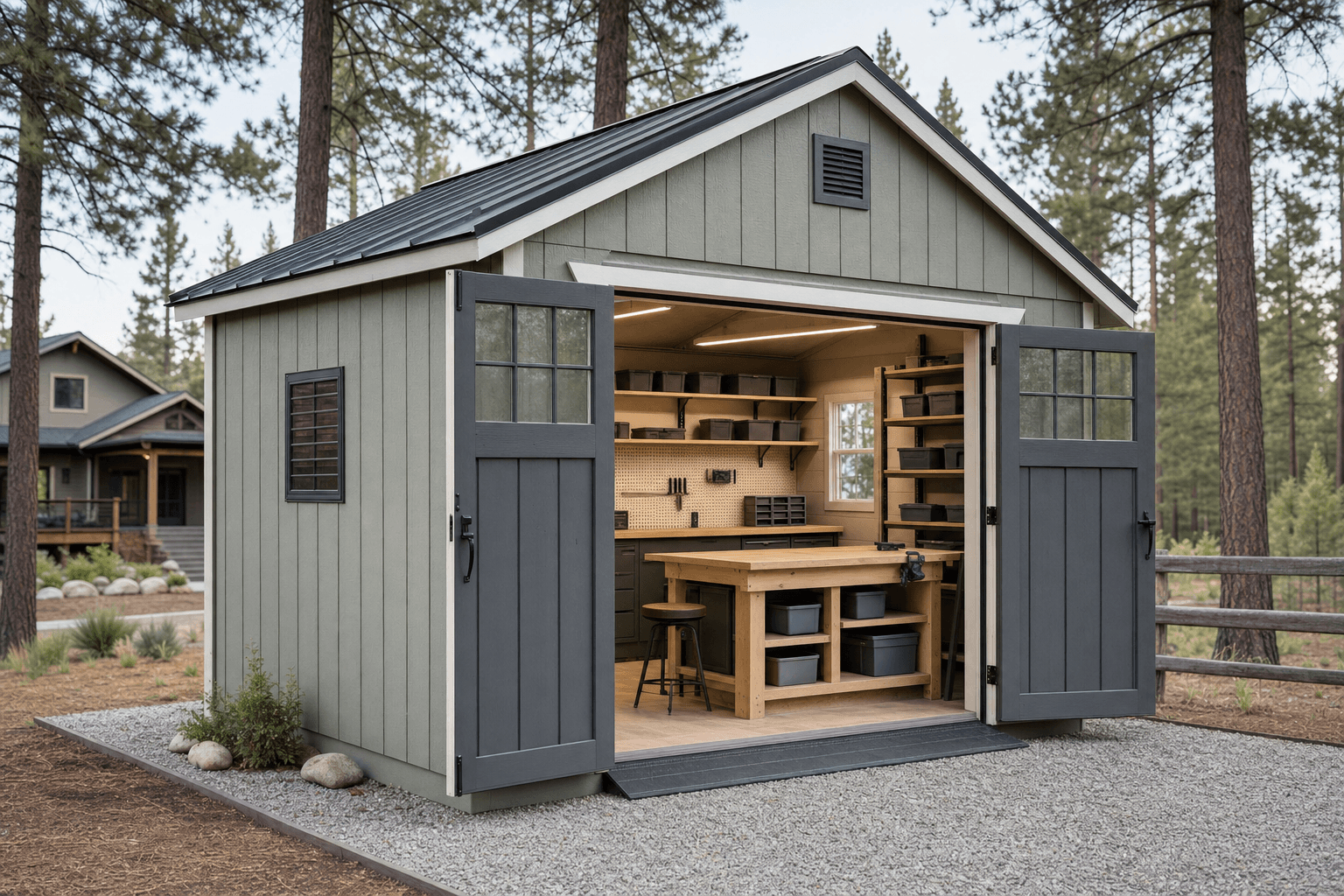
A 10x20 (200 sq ft) is the long, narrow footprint built around one 20-foot run and a clear lane to the door.
The strength of 200 square feet in this shape is length. As a backyard workshop, a 10x20 gives you an unbroken 20-foot bench wall — a layout station, a saw, an assembly spot, and a sharpening corner all in a line — with shelving on the opposite wall and a lane between them. The narrow width keeps everything within reach of that bench, which suits a one-person shop where you work along a wall, not around an island. As a storage shed, the long run swallows the deep stuff: lumber, ladders, kayaks, seasonal furniture, and totes lined two-deep with a clear path to the back.
It comes into its own for gear that is long before it is heavy. A snowmobile shed wants exactly this shape — a long, narrow bay where the sled and the loading ramp both run in a straight line, with a waxing bench and a drying spot for wet suits at the far end. A kayak and paddleboard shed is the same story: the 20-foot run racks the longest touring hulls and canoes horizontally on one wall, with a paddle-and-PFD wall and a drying corner, while the open lane stays clear to slide a boat in without a three-point turn.
Pick a 10x20 because something is long — a bench run, a kayak, a sled and ramp. If your gear is bulky but short, a wider square shed of the same area uses the floor better.
Load the long wall and leave the 10-foot width as a clear lane. That single open path is what lets you carry a long boat or feed stock in a straight line.
A 10x20 works for a one-person shop or a single rack wall. If you need a center aisle, a second worker, or a vehicle bay, step up to 12 feet of width.
Coming up from a 10x16, you keep the same 10-foot width and add four feet of length — and in a long-run building those four feet matter. A 10x16 racks most of a paddle fleet and runs a solid bench, but it stops short of the longest touring kayaks and canoes, and a snowmobile plus a real tuning bench in line gets tight. The 20-foot wall is what fits the longest hulls horizontally, parks two sleds nose to tail, or runs an unbroken bench with no break in the middle. Step up to a 10x20 when the thing you store is longer than 14 feet or your bench keeps wanting more wall.
Going wider, a 12x20 keeps the 20-foot length but adds two feet of width, and that is the jump from a single-run shed to one with a true center aisle. Pick it when you want a workbench on one wall and racked boats or sleds on the other, a side-by-side gear-up bay, or room to walk fully around what is inside. A 14x20 goes wider still — enough for a vehicle bay plus a shop, or two people working without bumping elbows. Stay at 10x20 when one long run does the job; size up to 12 or 14 feet of width when you need to work across the building instead of along it.
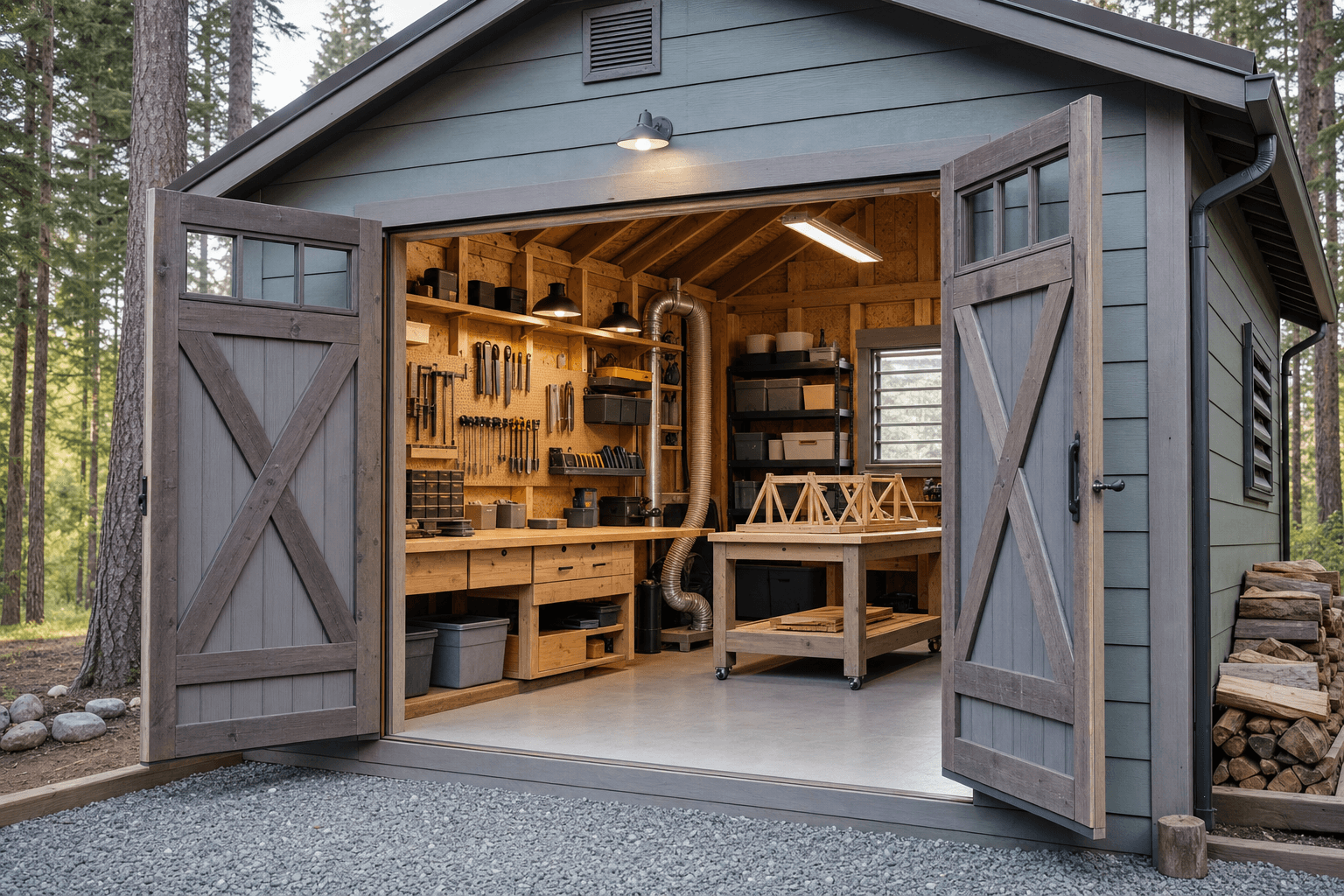
The 20-foot run of a 10x20 gives you an unbroken bench or rack wall, with the 10-foot width left as a clear lane.
| 10x20 at a glance | |
|---|---|
| Square footage | 200 sq ft (10 ft x 20 ft) — a long, narrow footprint built around one 20-foot run |
| Typical door | A 36-inch entry on the long wall for a shop or storage; a wide single or double on the gable end when a sled, mower, or boat loads in lengthwise |
| Foundation | A compacted, well-drained gravel pad for most uses; a concrete slab sloped to drain for a sled bay or a year-round heated shop |
| Best uses | Deep one-person workshop, long storage run, snowmobile bay, or kayak and paddleboard rack shed |
| Sizes up to | 12x20 for a center aisle and a work-plus-rack layout, or 14x20 for a vehicle bay or side-by-side work |
| Sizes down to | 10x16 when your longest item is under 14 feet and a shorter run will do |
Because we build every shed on your property, a 10x20 gets framed and finished around the run it is meant to hold — the door, windows, and wall height chosen for the use, not pulled off a lot. For a deep one-person shop, a backyard workshop build sets the bench wall, lighting, and power for working along a 20-foot line; the workshop planning guide covers wall height, 240V circuits, and a tool layout that flows in a narrow footprint. When it is mostly a long storage run, a storage shed build keeps it simple with deep shelving and a clear lane — the storage shed planning guide walks through shelving depth, door placement, and laying out the floor so the back stays reachable.
For winter gear, a snowmobile shed build adds a gentle ramp, a rot-proof floor that drinks meltwater, and venting for fuel and a warm engine — all detailed in the snowmobile shed planning guide. And for human-powered boats, a kayak and paddleboard shed build plans wall and ceiling racks, a paddle wall, and a drying corner; the kayak and paddleboard shed planning guide covers racking the longest hulls and keeping the loading lane clear. Any of these can start in the configurator so you see the roofline, door, and door placement before you commit.
Because what you are storing is long. A 10x20 and a 12x16 are both close to 200 square feet, but the 10x20 puts almost all of it into one 20-foot run, while the 12x16 spreads it into a near-square room with a center aisle. If your load is a kayak, a sled, lumber, or a continuous workbench, the long run wins — you carry or feed a long object in a straight line. If your gear is bulky but short and you want to walk all the way around it, a wider, squarer footprint uses the floor better. Match the shape to the longest thing going inside.
Yes, nose to tail. A 10x20 is the long, narrow bay a snowmobile wants, because the sled and the loading ramp both run in a straight line down the length of the building. Two average sleds park front to back along the 20-foot run with room at the far end for a waxing and tuning bench and a corner to dry wet suits. What a 10x20 does not give you is two sleds side by side with a walking lane between them — for that you want the two feet of extra width in a 12x20. For one or two machines loaded lengthwise, the 10-foot width is all you need.
Yes. The 20-foot length is the reason to pick this size for boats — it racks the longest touring kayaks and canoes horizontally along one wall, set on padded arms at the bulkheads, while the 10-foot width stays open as a loading lane. Send paddleboards and the boats you launch least up to ceiling racks overhead, and keep a paddle-and-PFD wall and a drying corner by the door. Because boats are long before they are heavy, a long, narrow building beats a square one of the same area here — you slide a 14-foot kayak in straight instead of wrestling it around a turn.
Step up to a 12x20 when you need to work across the building, not just along it. The two extra feet of width turn a single-run shed into one with a true center aisle — a workbench on one wall and racked boats or sleds on the other, two snowmobiles side by side, or a gear-up bay you can walk all the way around. A 10x20 is right when one long wall does the job and the open side is just a lane. A 12x20 is the move when you want a second working wall facing the first, or room to circle what is inside.
It depends on whether things load in lengthwise. For a workshop or storage, a 36-inch entry door on the long 20-foot wall is usually best — it keeps both ends free for bench and shelving and drops you straight into the lane. For a snowmobile, a mower, or boats that come in end-on, put a wide single or double door on the short gable end so the machine or hull runs straight down the length of the building. Because the floor is one long run, door placement sets where your clear lane starts, so it is worth deciding early.
For most uses, a level, compacted, well-drained gravel pad is the standard base — it keeps the floor framing off wet ground and drains snowmelt away, and it is plenty for a workshop, a storage run, or a kayak shed. If the building is a snowmobile bay or a heated year-round shop, a concrete slab sloped to a drain is worth it: it takes the tracked-in meltwater and lake water, hoses out clean, and gives a loading ramp a level landing. Either way, because we build on your property, the pad, the door side, and the roofline are planned so snow sliding off clears the door rather than burying it.
Two hundred square feet in a 10x20 footprint is a long, efficient run that rewards single-purpose planning. The 20-foot depth is the standout dimension: it handles a kayak or paddleboard lying flat with room to walk around it, parks a single snowmobile or dirt bike end-to-end with gear space behind it, or gives a workshop the outfeed length a table saw actually needs. The 10-foot width is workable but not generous — it works best when you're not trying to fit two wide things side by side.
In Coeur d'Alene and Post Falls, customers with long, narrow side yards frequently land on 10x20 because the footprint slides into that corridor without eating the rear yard. A 6-foot-wide double door at the front turns it into an efficient drive-in storage bay for recreational equipment: the building is deep enough for a pontoon trailer pulled forward, kayaks stacked on wall racks, and seasonal bins at the back. For a dedicated tool shed or small shop, the long wall gives you 20 feet of unbroken bench and shelving run on one side.
One practical note for North Idaho lots: because this footprint is only 10 feet wide, a steeper roof pitch — say 6:12 or higher — adds meaningful loft storage height without adding to the building's footprint. That decision is easier to make at framing time than after the fact. The crew accounts for local snow loads and the site grade as they set the sill, so the building sits right even on a lot that drops a few inches across its 20-foot span.
Lay out your 10x20 in the shed builder to position the door and choose a roof pitch, or see how Post Falls customers have used this footprint for long-gear storage and work bays.
Tell us whether it leads as a shop, storage, a sled bay, or a paddle shed, and we'll set the door, lane, and layout — then build and price your 10x20 online.
Compare nearby footprints to find the right fit for your site and storage needs.