An 8x16 shed gives you 128 square feet in a shape most buildings do not: long and narrow. At 8 feet wide it stays a reach-in rather than a walk-around, but 16 feet of length is the whole point — it is the footprint that holds things that are long. A pair of 12-foot sea kayaks lie down flat with room to spare, full cords of firewood stack in a deep run along one wall, and a side yard too tight for a square building still has room for a narrow shed against the fence line. That combination makes 8x16 the size people pick when length matters more than width.
It is the building for the gear that does not fit anywhere else: a kayak and paddleboard shed where the boats rack lengthwise instead of hanging off a garage wall, a dry firewood shed sized to a season's heating wood, or organized storage squeezed onto a narrow lot. Pick it when you have a long, skinny strip to work with — or long, skinny things to store — and a square footprint would waste the shape.
At 128 square feet, an 8x16 reads as a long corridor rather than a room: you stand at the door and reach in, but the 16-foot run gives you a deep wall for racks, rows, or shelving that a square shed can't match. It is the footprint where length does the work that width usually has to.
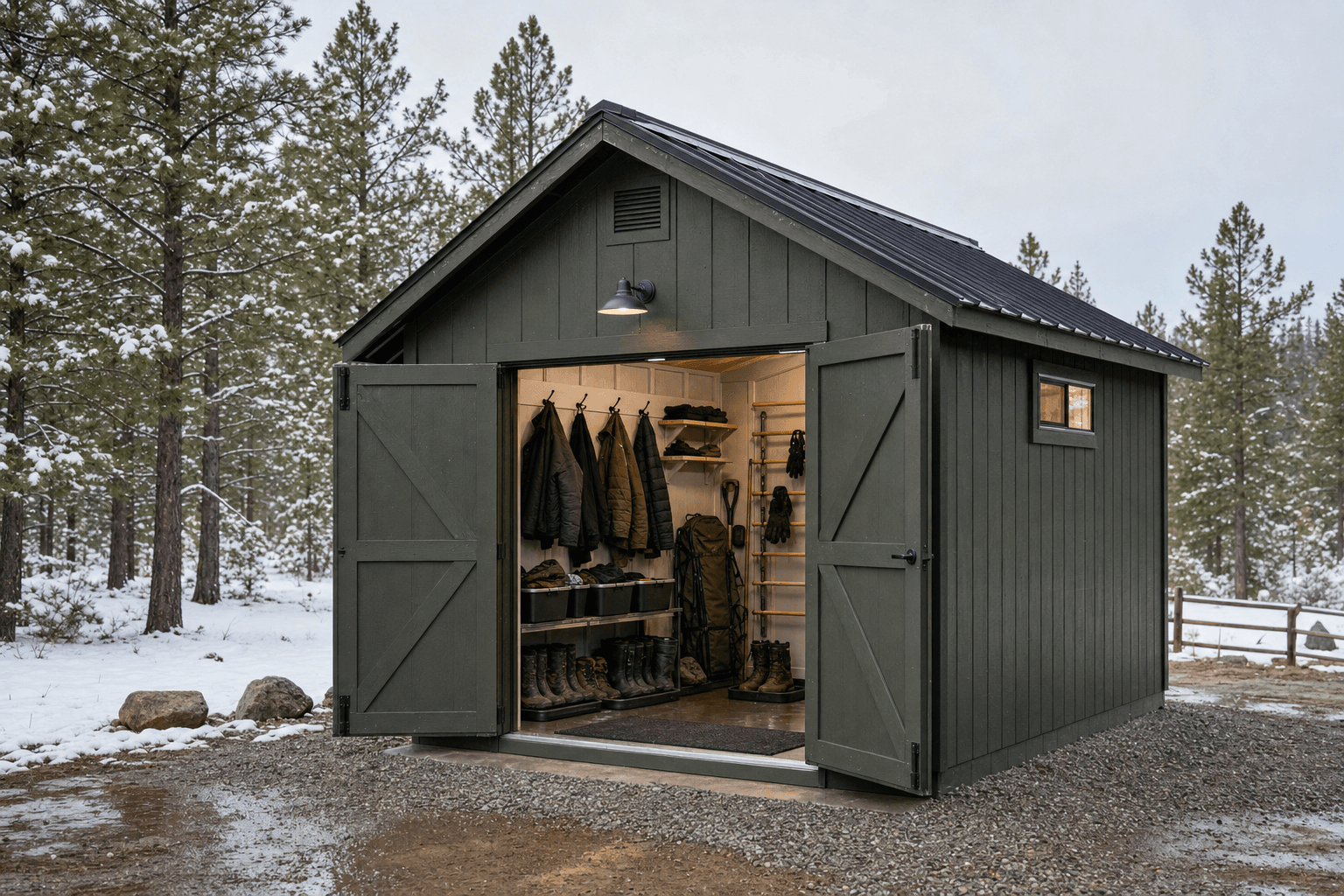
An 8x16 (128 sq ft) is the long, narrow footprint built for kayaks, firewood, and tight side yards.
The 8x16 footprint earns its keep with length, so it shines wherever the things you store are longer than they are wide. As a kayak and paddleboard shed, the 16-foot wall takes a vertical or horizontal rack that holds several boats lying flat, with paddles, PFDs, and dry bags on the end wall — no more hauling hulls past the car in the garage. As a firewood shed, the deep run stacks a real heating supply in long rows that stay off the ground and under a roof, with open or louvered sides so the wood seasons instead of rotting.
It is just as useful for boat gear — trolling motors, oars, life jackets, wakeboards, and tow ropes lined along one wall with the long stuff laid down the length of the room. And for plain storage on a narrow lot, an 8x16 swallows ladders, lumber, a trailer's worth of seasonal gear, and long-handled tools that never sit right in a square shed. The trade is width: at 8 feet deep you load from the aisle rather than walking both sides, so the footprint rewards storing along the length, not stacking across it.
At 8 feet wide, you load from the aisle, not from both sides. Plan racks and rows down the 16-foot wall so the length does the work the width can't.
An 8x16 is made for kayaks, lumber, firewood, and ladders. If most of your gear is bulky and square, a wider footprint will use the space better.
Storing wood? Add louvered or open sides so the rows season. A sealed-up narrow shed traps moisture and the cord never dries.
Coming up from an 8x14, you keep the same 8-foot width and add two feet of length — and on a long-load building those two feet matter more than they sound. An 8x14 racks shorter kayaks and a tidy firewood run, but 16 feet is what clears a 12-foot touring boat with paddles laid alongside, or adds another deep row of wood. If your longest item is right at the edge of fitting, the extra length is the easiest upgrade to justify; stay at 8x14 only if the lot or the budget is truly tight.
Going wider, a 10x16 keeps the 16-foot length but adds two feet of depth — and that is the jump from a reach-in to a building you walk into. Pick it when you want an aisle down the middle with gear on both long walls, or a real work zone instead of a narrow end bench. A 12x16 goes further still, with room for a center aisle wide enough to pass a vehicle or set up a proper shop. Size up to 10x16 or 12x16 if you need to work inside the shed, not just store along its length; stay at 8x16 when the priority is a slim profile against a fence and storing things that are long and skinny.
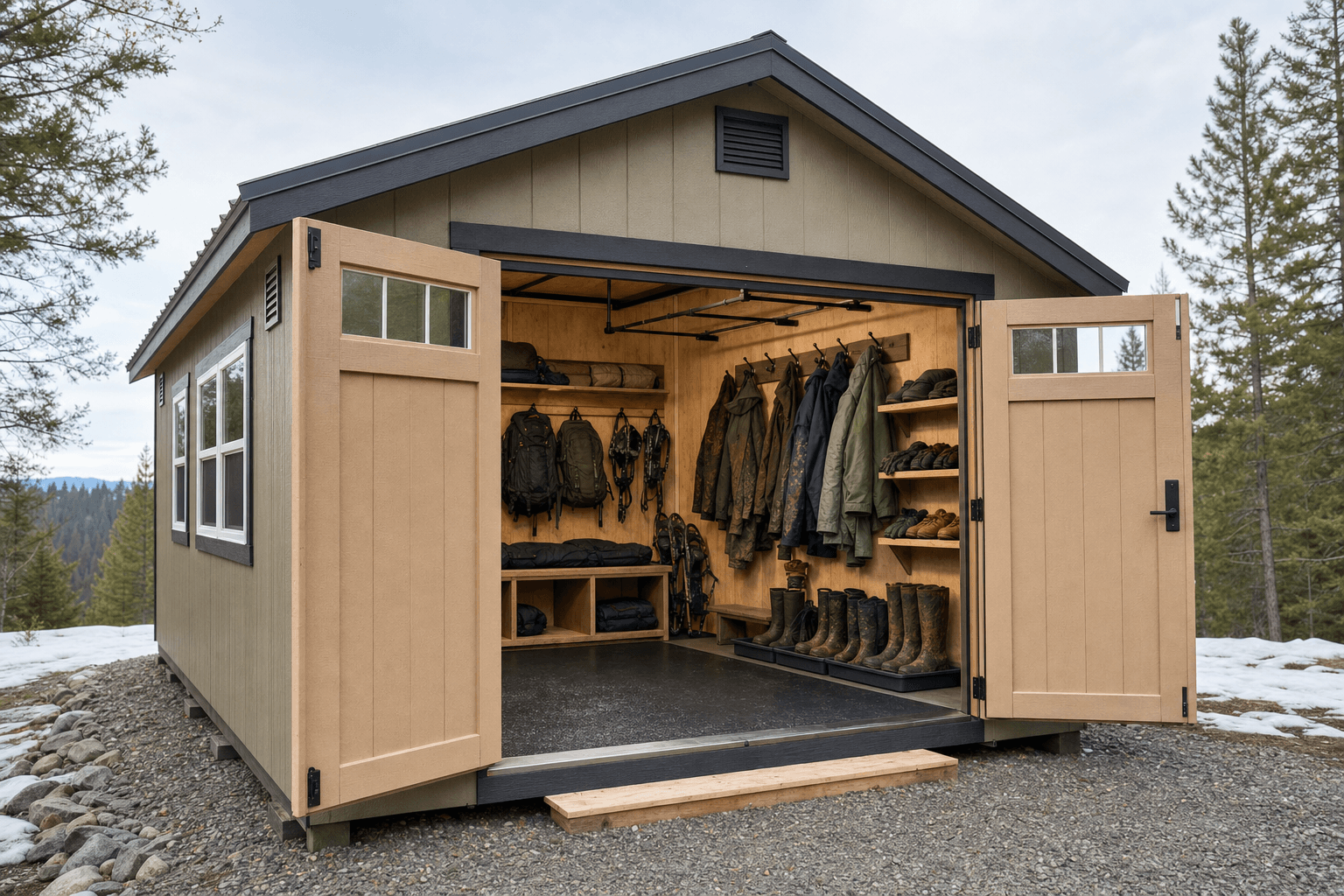
The 16-foot run of an 8x16 gives long gear a deep wall to live on that a square shed can't match.
| 8x16 at a glance | |
|---|---|
| Square footage | 128 sq ft — long, narrow footprint built for length over width |
| Typical door | A 36-inch end door for access; a wide or double door on the long side when loading kayaks or a snowblower |
| Foundation | Level, well-drained gravel pad, built on-site to carry North Idaho snow load |
| Best uses | Kayak and paddleboard storage, seasoned firewood, boat gear, narrow-lot storage with a work end |
| Sizes up to | 10x16 for a walk-in aisle, or 12x16 when you need a center aisle and a real work zone |
| Sizes down to | 8x14 for a slightly shorter run on a tighter lot |
Because we build every shed on your property, an 8x16 can be finished for whatever long load it has to carry — the door placement, racks, and siding are chosen around the use, not pulled off a lot. For paddlers, a kayak and paddleboard shed build adds lengthwise racks and a wide door for loading hulls; the kayak and paddleboard shed planning guide covers rack height, door width, and keeping boats off the ground. For heating wood, a firewood shed build leans into open or louvered sides and a deep stacking run, walked through in the firewood shed planning guide.
For anglers and boaters, a boat gear shed build organizes the long stuff and the small stuff on one wall — the boat gear shed planning guide covers racks, hooks, and venting for wet gear. And when the job is simply a slim storage shed on a narrow lot, the storage shed planning guide covers shelving and door placement for a long, skinny footprint. Any of these can start in the configurator so you see the roofline, door, and proportions before you commit.
Three to four for most setups, more if you rack vertically. The 16-foot length is the reason to choose this footprint for paddling gear: even a 12-foot touring kayak lies down flat with paddles alongside it, and a wall rack stacks several boats off the floor without them hanging into the aisle. Recreational boats in the 9-to-11-foot range fit even more easily. Add a wide door on the long side so you can load and unload hulls straight in rather than threading them through a narrow end opening.
A deep run along the 16-foot wall holds roughly one to two full cords stacked off the ground, which covers a season of heating wood for many North Idaho homes. The narrow 8-foot depth actually helps here — you stack against one long wall and load from the aisle, so the rows stay accessible and you are not climbing over a pile. The thing to plan for is airflow: open or louvered sides let the cord season and dry instead of trapping moisture, so the wood is ready to burn when you need it.
Both are 16 feet long, so they hold the same length of rack, row, or shelving — the difference is the two feet of width. An 8x16 is 128 square feet and works as a reach-in: you load from the aisle along one long wall. A 10x16 is 160 square feet, and that extra depth turns it into a walk-in with room for gear on both long walls and a path between them. Choose 8x16 when you want a slim profile and store things lengthwise; step up to 10x16 when you need to work inside the shed or use both walls.
That is exactly what the footprint is for. At only 8 feet wide, an 8x16 slips into a side yard or against a fence line where a 10- or 12-foot-wide building would not, while the 16-foot length keeps the storage capacity up. Put the door on the end so you still have access in a tight corridor, or on the long side if there is room to load from the open yard. Site it on a level, well-drained spot and leave a little clearance from the fence for airflow and for snow sliding off the roof.
Yes, on the end wall. The 8-foot back wall fits a narrow workbench with pegboard above it for repairs, sharpening, or rigging gear, while the 16-foot length stays open for racks and rows. It is a work end, not a full workshop — at 8 feet deep there is no room for a center aisle or a stationary machine with outfeed. If you want to genuinely work inside rather than just maintain gear, a 10x16 or 12x16 gives you the width to set up a real bench with room to move around it.
It depends on what goes in and out and where you place it. For general storage or firewood, a single 36-inch door on the end is plenty and keeps the long walls free for racks and rows. If you load kayaks, paddleboards, or a snowblower, a wider single or a double door — often on the long side — lets you bring long or bulky items in straight instead of angling them through a tight end opening. Because we build on-site, we place the door to match your access, whether that is the open yard side or the end facing the path.
One hundred twenty-eight square feet in a long, narrow run gives an 8x16 a specific personality: it excels at linear storage where depth matters more than width. A canoe or 14-foot kayak lies flat along the wall. A full cord of split firewood stacks three rows deep with room to walk the length. An extension ladder, a set of scaffolding, or a seasonal trailer's worth of gear fits without awkward stacking.
The 8-foot width is the constraint to name honestly. Side-by-side use is limited — one person can work comfortably, not two. If you want a storage zone at one end and a functional workbench at the other, an 8x16 delivers that, but a center aisle leaves each wall with about 12 inches of clear depth once a shelf bracket is in.
For North Idaho lake-home owners in the Coeur d'Alene area, the 8x16 is a practical boat-gear shed: life jackets, tow ropes, wakeboards, and tubes on wall hooks, with a wet-gear drying zone at the gable end. A louvered vent on each gable moves air without letting in rain, which matters here after a wet week in spring.
On site, this footprint works on the side of a house where a wider building would crowd the driveway or violate setbacks. The crew frames from scratch on your property, so they can adjust for frost heave and install a properly pitched roof designed for the Kootenai County snow load — not a generic national spec.
Price an 8x16 in the shed builder to see door locations and gable-end options. You can also view our finished buildings to get a sense of exterior profiles at this length.
Pick your door, siding, and roofline, then get a free estimate or price an 8x16 in the configurator.
Compare nearby footprints to find the right fit for your site and storage needs.