Snow-load and wind: what 'North Idaho-ready' should mean
In North Idaho, 'weather-ready' should mean more than a nice-looking roof and a generic promise about snow. It should mean the shed is sized, framed, sited, and detailed for real snow loads, drifting, wind exposure, spring runoff, and the way the owner will actually use it. On-site construction matters here because a climate-ready build is as much about the lot and exposure as it is about the shed itself.
Snow-Load Wind North Idaho-Ready in North Idaho
When people say they want a shed that is "North Idaho-ready," they usually mean three things even if they do not say them out loud. They want the roof to hold real snow. They want the doors and siding to survive wet winter weather. And they want the building to stay usable after storms instead of becoming something they only reach in July.
That matters in this region because North Idaho is not one climate. A sheltered lot near town can behave very differently from a windy opening outside Athol, a ridge with drifting snow, or a shady property that stays frozen deep into spring. The same 8x10 storage shed can perform very differently depending on roof pitch, prevailing wind, tree cover, how the pad drains, and whether the builder accounted for drifting and meltwater.
For a small storage shed, "ready" usually means more than a code minimum mindset. It means matching the roof system to real local snow loads, keeping water away from the base of the walls, limiting weak points around doors and windows, and thinking through how winter wind hits the structure. It also means not pretending a flat-looking economy roof and light-duty trim package are the same as a build designed for repeated freeze-thaw cycles.
This is where on-site construction changes the conversation. A delivered prefab has to be designed around highway transport first. An on-site build can be designed around the real lot, the direction the storm hits from, and the actual access path you will shovel or plow after a storm. That does not just make the shed easier to place. It makes it more honest about the climate it has to live in.
A good rule is simple: if the builder cannot explain how the roof, overhangs, ventilation, pad, and door placement respond to snow and wind, the phrase "North Idaho-ready" is probably just marketing.
When does shed size change snow-load design?
Size starts changing snow-load design sooner than many owners expect, because the issue is not just total square footage. It is span, door openings, roof shape, and how much drifting potential the roof creates.
8x10: the simple baseline
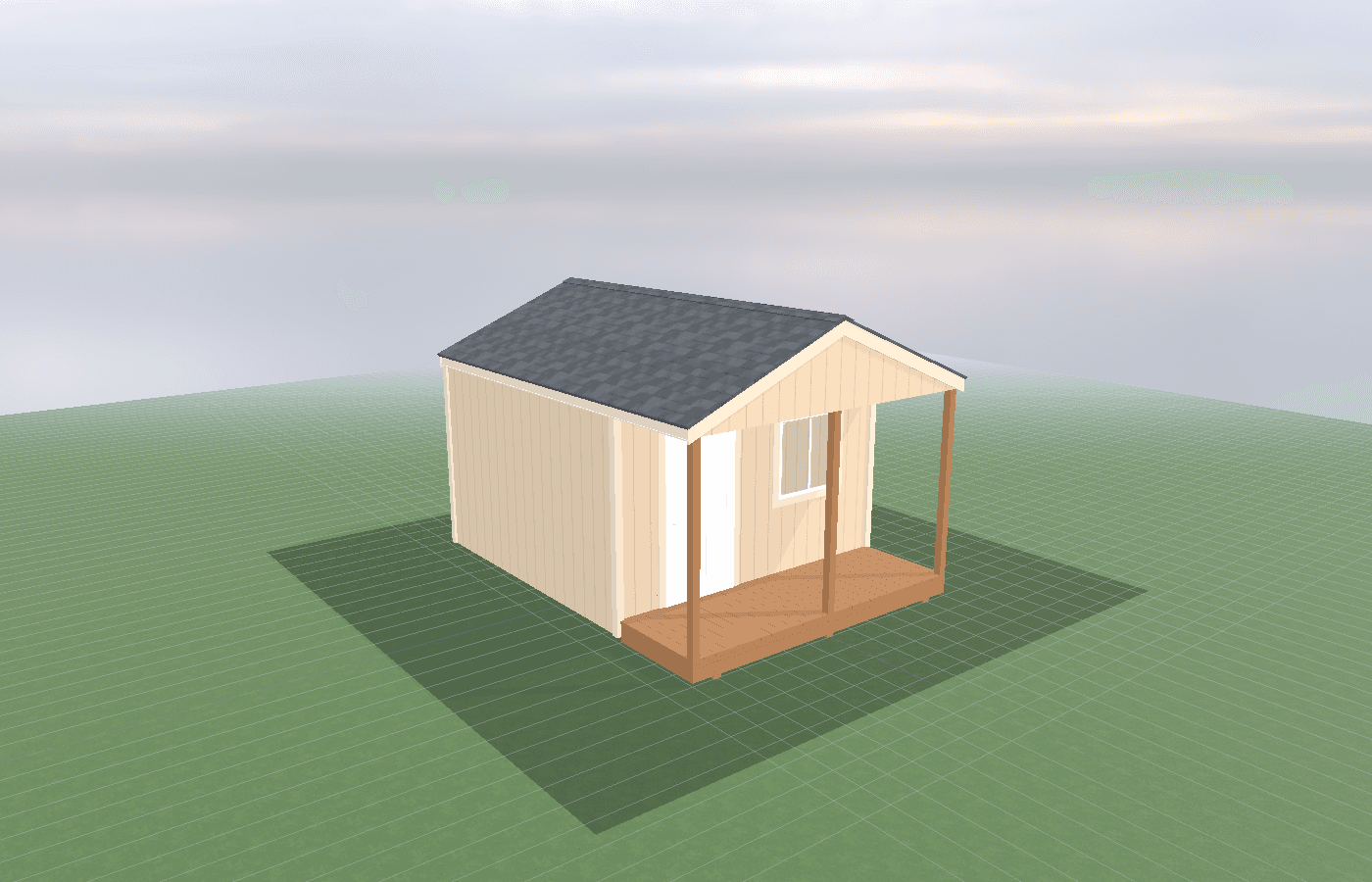
An 8x10 is still a small building, which makes it one of the easier sizes to frame honestly for snow country. Roof spans are shorter, door openings are usually modest, and the structure can stay straightforward if the pad is sound and the roof pitch is appropriate. This is one reason 8x10 works so well for homeowners who want a climate-ready storage shed without paying for more structure than they need.
8x12: the point where details matter more
The jump from 8x10 to 8x12 does not sound dramatic, but it is often the point where owners start adding more door width, deeper shelving, or more roof area that catches snow and wind differently. That is why the broader size discussion in storage shed sizes explained for rural lots and suburban yards matters. Two more feet can change how much snow sheds off the roof, how much overhang you can sensibly carry, and how the front door area handles drifting.
10x12: no longer a tiny shed
At 10x12, you are not dealing with a "little box" anymore. The extra width changes the roof span, increases the roof area catching snow, and often tempts people to ask for wider doors and more glass. Those are all fine goals, but they increase the need for a roof system and layout that is honest about North Idaho conditions. Once sizes get wider, roof pitch, truss selection, and the placement of the main opening matter more than they did on compact footprints.
The other thing size changes is how people use the building. A shed that stores bins and a mower is not stressed the same way as a shed that stores snow gear, fuel cans, heavier shelving, and seasonal equipment. That is why size planning should happen alongside site prep. The best climate-ready roof in the world cannot make up for a muddy base, blocked drainage, or a low spot that traps spring runoff. Before finalizing the footprint, it is smart to review how to prep a shed site: gravel pad vs concrete vs skids.
North Idaho weather and material performance
Snow and wind punish weak materials in specific ways. Wet snow holds moisture against roofing and trim. Wind-driven rain tests every joint around doors and corners. Freeze-thaw cycles punish sloppy flashing and low-quality paint systems. So "material performance" is really about the whole assembly, not one magic product.
Roof pitch is the first big decision. For storage sheds in this climate, a 4:12 roof is the practical starting point, while 6:12 and 8:12 pitches shed snow faster and reduce lingering buildup. Roofing underlayment, eave protection, and careful flashing around penetrations matter because even a good roof can leak if meltwater backs up at vulnerable points.
Siding performance matters too. Wood-based sidings can work well when they are detailed correctly and kept off splash zones, but the bottom edge of the wall needs clearance above grade and roof runoff needs to be controlled. Trim and fasteners should be chosen for wet conditions, not just appearance. Cheap hardware and low-grade paint packages often show their weakness first on the weather side of the shed.
Ventilation and air sealing also matter more than people think. A roof that sheds snow well still performs better when attic or roof ventilation is correct and warm interior air is not leaking upward and melting the underside of snow unevenly. That matters even on simple storage sheds because trapped moisture shortens material life. When the structure is built on-site, details like vent placement, overhang length, and the relationship between the pad and grade can be adjusted for the actual exposure instead of guessed from a catalog drawing.
Cost, timing, and build-planning factors
A truly climate-ready shed usually costs more than an entry-level one, but the money tends to go into the right places: better roof structure, better site prep, better water management, and fewer weak points around openings.
The main cost drivers are span, roof pitch, door package, site work, and whether the lot needs grading or engineered pad work. A small shed can still turn into an expensive mistake if it is dropped into a low spot, pushed too close to a drift zone, or framed with a roof package that only looks good on paper.
Timing matters too. In North Idaho, the smartest builds often start with the site before deep winter or mud season arrives. If access is tight, the driveway is soft, or you need grading work, planning ahead protects both schedule and budget. County requirements, HOA review, and utility conflicts can also slow things down even when the shed itself is simple.
That is why it helps to plan the shed as a weather system, not just as a box. If you are narrowing down sizes or trying to price the right climate-ready package, request a free estimate before you lock in the footprint. It is cheaper to adjust the plan early than to fix a bad winter layout later.
Popular sizes and layouts for storage sheds
For true storage use, the most practical climate-ready sizes in this cluster are 8x10, 8x12, and 10x12.
An 8x10 is often the best fit when the job is simple: mower, snow blower, hand tools, and seasonal bins. An 8x12 is the common next step when the owner wants shelving depth, a more comfortable aisle, or room for longer items without creating clutter at the door. A 10x12 becomes attractive when the building needs to feel less like overflow storage and more like an organized utility room.
Layout matters as much as size. Put the door where drifting is least likely to block it. Preserve a long wall for shelving. Keep the back corners usable instead of cutting them up with too many windows. On-site construction helps because the building can be oriented for the real wind, sun, and access path instead of whatever direction the delivery truck forces.
If your main goal is year-round, low-hassle storage, start smaller and build smarter. A well-sited 8x10 or 8x12 with the right roof and pad will usually outperform a larger shed that ignores North Idaho weather.
Frequently asked questions about storage sheds
When does shed size start changing snow-load planning for a storage shed in North Idaho?
Once spans get wider and the roof carries more drifting potential, size starts to matter a lot more for truss design, pitch, and door placement. Comparing a 8x10 shed to a 8x12 shed is often the point where structure, overhangs, and site exposure need a closer look. See 8x10 and compare 8x12.
What roof pitch prevents snow buildup on a storage shed in North Idaho?
A minimum 4:12 pitch is recommended for North Idaho snow loads. Steeper pitches like 6:12 or 8:12 shed snow faster and reduce the chance of dangerous accumulation. See climate-ready builds.
Frequently asked questions
When does shed size start changing snow-load planning for a storage shed in North Idaho?
Once spans get wider and the roof carries more drifting potential, size starts to matter a lot more for truss design, pitch, and door placement. Comparing a 8x10 shed to a 8x12 shed is often the point where structure, overhangs, and site exposure need a closer look. See 8x10 and compare 8x12.
What roof pitch prevents snow buildup on a storage shed in North Idaho?
A minimum 4:12 pitch is recommended for North Idaho snow loads. Steeper pitches like 6:12 or 8:12 shed snow faster and reduce the chance of dangerous accumulation. See climate-ready builds.
Ready to plan your build?
Tell us your site, your dimensions, and the use case. We'll come out and price it.