Wood vs Metal vs Vinyl Sheds in North Idaho
Decision
Wood vs metal vs vinyl
Wood fit
Custom and repairable
Panel fit
Basic storage
Next move
Test finishes
Material choice
Choose the shed material path before choosing colors
Comparison
Key factor
FAQ support
- Compare repairability, condensation, denting, cracking, and finish upkeep.
- Think about how the shed should look after several North Idaho winters.
- Use the 3D builder to test the material and color decision on a real shed.
Wood, metal, and vinyl sheds can all work in the right situation, but North Idaho weather makes the tradeoffs more important. Snow, moisture, wind exposure, freeze-thaw cycles, and seasonal temperature swings all affect how a shed looks and performs over time.
The short answer
Wood is usually the most flexible and repairable material path for a custom shed, especially when the shed should match the property or support long-term use. Metal can be cost-effective for basic storage but can introduce denting, noise, and condensation concerns. Vinyl can reduce some exterior maintenance, but it offers less structural and finish flexibility than a custom wood-based build.
Think beyond the first year
The best material is not only the one that looks good when it is installed. It is the one that can be repaired, maintained, and trusted after winters, wet springs, summer heat, and everyday use. For many custom North Idaho shed projects, that points buyers back toward wood framing and durable exterior finishes.
Compare this guide with wood shed materials and the shed pricing guide before you lock the finish package.
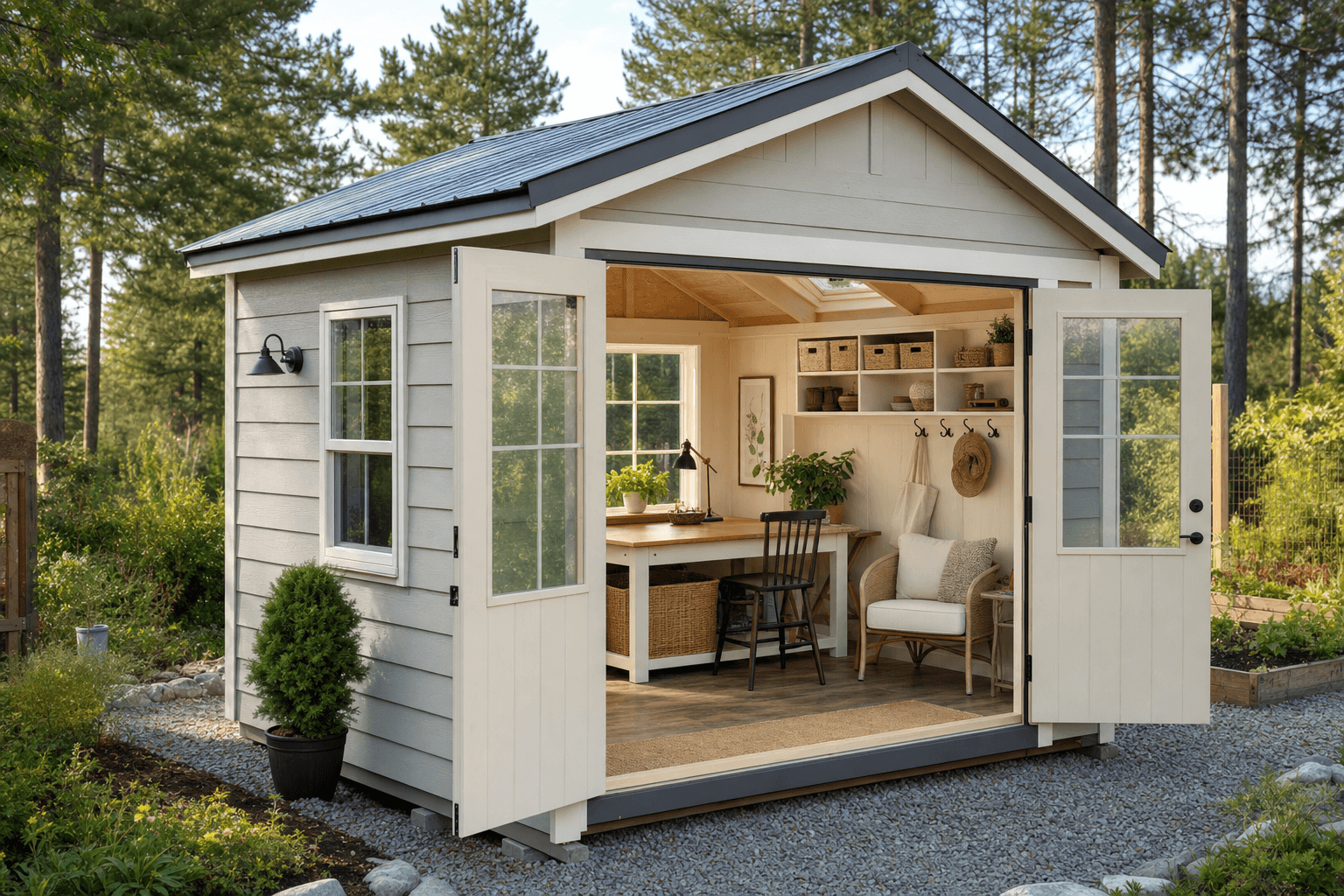
Material choice affects more than color. It changes maintenance, repairability, condensation risk, and how the shed fits the property over time.
Wood vs metal vs vinyl sheds: side-by-side
Customization
- Wood shed
- Strong for doors, windows, lofts, trim, finishes, and property match
- Metal or vinyl shed
- Often more limited by panel systems and model options
Repairability
- Wood shed
- Individual parts and finishes are usually easier to repair or replace
- Metal or vinyl shed
- Panel damage, dents, cracks, or matching can be harder to correct cleanly
Weather feel
- Wood shed
- Can be built and finished for snow-country use
- Metal or vinyl shed
- Metal can be noisy or prone to condensation; vinyl can move with temperature
Appearance
- Wood shed
- Best for a custom shed that should look built for the property
- Metal or vinyl shed
- Can look more generic depending on panel style and color options
Maintenance
- Wood shed
- Needs normal finish upkeep over time
- Metal or vinyl shed
- May need less painting but still needs inspection, cleaning, and repairs
Best fit
- Wood shed
- Custom, long-term, property-matched sheds
- Metal or vinyl shed
- Basic storage when low exterior upkeep is the main goal
| Feature | Wood shed | Metal or vinyl shed |
|---|---|---|
| Customization | Strong for doors, windows, lofts, trim, finishes, and property match | Often more limited by panel systems and model options |
| Repairability | Individual parts and finishes are usually easier to repair or replace | Panel damage, dents, cracks, or matching can be harder to correct cleanly |
| Weather feel | Can be built and finished for snow-country use | Metal can be noisy or prone to condensation; vinyl can move with temperature |
| Appearance | Best for a custom shed that should look built for the property | Can look more generic depending on panel style and color options |
| Maintenance | Needs normal finish upkeep over time | May need less painting but still needs inspection, cleaning, and repairs |
| Best fit | Custom, long-term, property-matched sheds | Basic storage when low exterior upkeep is the main goal |
Wood, metal, and vinyl shed FAQ
Which shed material is best for North Idaho?
For many custom sheds, wood is the strongest all-around material path because it is flexible, repairable, and easier to build around the intended use. The right answer still depends on budget, site, finish preferences, and maintenance expectations.
Are metal sheds a good choice in snow country?
Metal sheds can work for simple storage, but buyers should consider denting, noise, condensation, anchoring, and whether the structure is appropriate for local snow and wind exposure.
Do vinyl sheds require less maintenance?
Vinyl can reduce painting, but it does not remove every maintenance concern. Temperature movement, impact damage, panel replacement, and the underlying structure still matter.
Can I choose shed colors and finishes in the builder?
Yes. Use the 3D shed builder to compare siding, roof, doors, windows, and finish choices before sending your free estimate request.
Test the material decision on a real shed design.
Open the 3D builder, compare siding and roof choices, then send your design to NIOS for a free estimate.
Next step