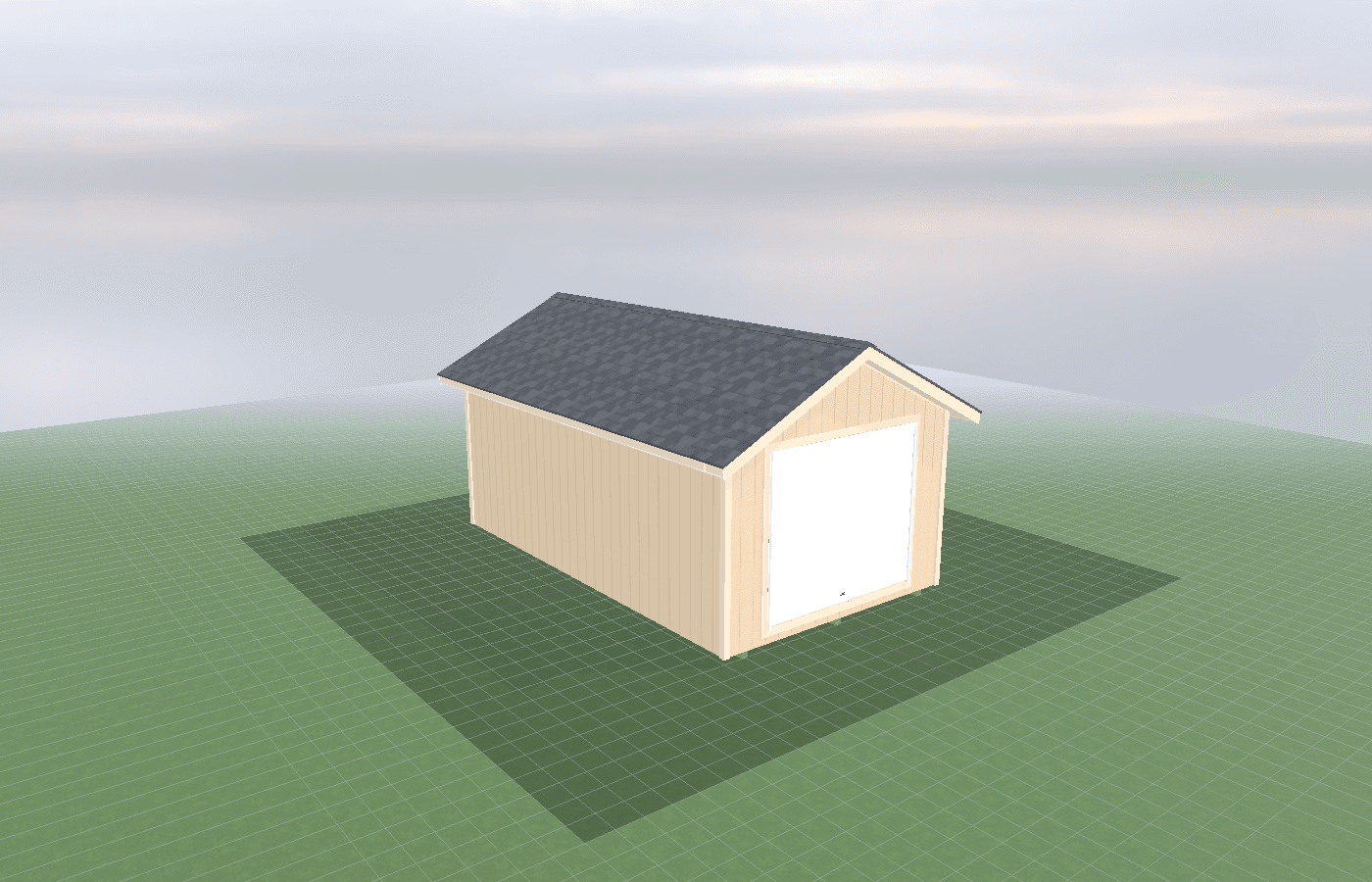
Garage sheds in snow country: roof pitch, drift zones, and access
Snow-country garage problems usually show up at the door, not on the brochure. In North Idaho, roof pitch, door orientation, drift zones, and plow access often matter as much as the raw footprint. On-site construction helps because those details can be adjusted to the real wind, grade, and driveway approach on your lot.
Garage Sheds in Snow Country in North Idaho
Snow-country garage planning is mostly about what happens after the storm, not how the building looks in August. A garage can be big enough and still be frustrating if the roof holds snow too long, drifts pile against the overhead door, or the driveway approach never gets winter sun. North Idaho garages live under repeated snow events, freeze-thaw cycles, and spring runoff, so roof pitch, orientation, and access should be treated as part of the structure, not cosmetic choices.
The biggest mistake is assuming any garage that meets square footage needs is automatically climate-ready. In practice, the weak points show up where snow moves: at eaves, in valleys, against leeward walls, and in front of doors. A garage with the wrong door orientation can turn into a shovel job every time wind shifts, even if the trusses are adequately designed for roof load.
For buyers shopping garages, it helps to think in systems. Roof pitch affects shedding. Door location affects drift buildup. The apron and pad grade affect whether meltwater refreezes at the threshold. On-site construction matters because the garage can be placed to work with the lot, the wind exposure, and the plow path instead of being dropped wherever a delivery route allows.
A garage that is easy to use in February is usually the result of dozens of small decisions made early. None of them are glamorous, but they are what separate a climate-ready building from one that only works well in summer.
When does shed size change snow-load design?
Snow-load planning starts changing once the garage gets wide enough that the roof and door openings are doing real structural work, not just covering space.
A 14x24 single-car garage is often the simplest snow-country footprint in this category. The spans are manageable, the openings are usually smaller, and there is more freedom to place the overhead door where drifting will be less severe. That does not mean it is automatically safe or low-maintenance, but the structural and snow-management questions are more straightforward.
A 16x24 garage is often the point where owners ask for either a wider one-car bay or a more ambitious mixed-use layout. That is where roof geometry, header design, and exposure start mattering more. Wider openings and more roof area create more opportunity for drifting and unbalanced snow buildup, especially on exposed lots.
A 20x20 garage adds another shift. Even though the square footage is familiar, the wider front wall often pushes buyers toward larger overhead doors or two openings. That changes how the front elevation handles drifting, where snow dumps off the eaves, and how much uninterrupted wall is left for bracing and storage. As size grows, the question is no longer just "what load rating are the trusses?" It becomes "how will snow move across this exact roof and lot?"
The wider the shell, the more important it becomes to think about snow movement and structure at the same time instead of as separate design conversations.
North Idaho weather and material performance
North Idaho weather punishes three things first: shallow pitches, weak eave detailing, and doors placed in bad drift zones.
For garages, a 4:12 roof is usually the practical minimum starting point, but many snow-country builds perform better at 6:12 or steeper because they shed wet snow faster and reduce long periods of loaded roofs. Roof pitch alone is not enough, though. Good air sealing, attic insulation, and ventilation reduce uneven snow melt and ice dam conditions at the eaves. DOE cold-climate guidance also points to peel-and-stick protection at the eaves as part of managing ice-dam risk.
Material selection should support that roof strategy. Metal roofing is popular because it sheds snow and handles freeze-thaw well, but it still needs solid underlayment, careful flashing, and a plan for where sliding snow lands. If there is a man door or walkway below an eave, that drop zone needs attention. Engineered siding, durable trim, and high-quality seals around overhead doors matter because drifting snow and splashback attack the lower portions of the wall first.
Door placement is where many winter problems begin. North-facing doors and leeward corners often collect the worst drifts. Doors near fences, house walls, or retaining walls can also create snow traps where wind drops its load right in the apron. Before finalizing the foundation and apron, it helps to review garage shed slab vs stem-wall foundation basics so the threshold, drainage, and grade work together.
The takeaway is simple: a garage in snow country should be oriented for winter use, not just driveway convenience. If you are still comparing bay counts and door widths, single-car vs double-car garage shed sizing and door options is the next design conversation.
Cost, timing, and build-planning factors
Snow-ready garages cost more when they are honest about winter, but they usually cost less than fixing a bad layout later.
The biggest cost drivers are stronger roof systems, steeper roof pitch, larger headers over doors, better apron drainage, and grading that gives snow somewhere to go after plowing. Overhangs, awnings, and snow-management details may look optional in summer, yet they often decide whether the garage remains easy to use in February.
Timing is part of the cost picture too. Site prep, concrete, and driveway work are much easier when planned ahead of deep winter. If the lot is in a neighborhood or tighter setting around Post Falls, snow storage on the apron and side yards should be part of the plan before the footprint is approved. A front-loaded garage with nowhere to pile snow can feel undersized even when the building itself is adequate.
County review matters as well. In unincorporated Kootenai County, garages are permit work. In city limits or HOA neighborhoods, local requirements may be different but the need for early planning is the same. If you are sorting out roof pitch, door orientation, and access on the same project, request a free estimate before you lock the site plan. That is when on-site construction provides the most value, because the garage can still be adjusted to the real plow route, drift pattern, and driveway approach.
Access should also be planned for the build itself. A great snow-country design still needs room for excavation, concrete placement, and material staging without destroying the route you will use all winter.
Think about where plowed snow will actually go after three or four storms, not just the first one. A garage door may stay clear, but if the only pile zone blocks the man door, buries a downspout outlet, or forces meltwater back toward the slab, the winter layout still failed. South exposure, room for a blade to roll snow, and an apron that can be cleared without stacking drifts against the sidewall all improve daily use. Those are site decisions more than product decisions, which is exactly why an on-site build is easier to tune to real snow-country access.
Popular sizes and layouts for garages
For snow-country garages, the most useful footprints in this group are 14x24, 16x24, and 20x20, but the right one depends on how winter access works on your lot.
A 14x24 is a dependable single-car size when the roof pitch is adequate and the door is placed out of the worst drift direction. A 16x24 is often the better one-car-plus-gear layout because it allows more wall storage and a cleaner path from the overhead door to a side man door without crowding the vehicle.
A 20x20 can be a compact double, but this is also the size where roof span, header design, and snow-storage planning need closer attention. If the driveway approach is narrow or the lot is exposed, a smaller garage with better orientation can outperform a bigger one with a poor winter layout.
Sizing and snow planning should be done together, not separately. If you are still comparing one-bay versus two-bay options, single-car vs double-car garage shed sizing and door options is the next step. The best garage in North Idaho is the one that stays usable after a storm, not just the one that looks biggest on paper.
The same square footage can behave very differently depending on wind exposure, tree cover, and where plowed snow ends up. On-site construction lets those local realities shape the final build instead of being treated like afterthoughts.
Frequently asked questions about garages
When does shed size start changing snow-load planning for a garage in North Idaho?
Once spans get wider and the roof carries more drifting potential, size starts to matter a lot more for truss design, pitch, and door placement. Comparing a 14x24 shed to a 16x24 shed is often the point where structure, overhangs, and site exposure need a closer look. See 14x24 and compare 16x24.
How do snow drifts affect garage shed door placement in North Idaho?
Position doors away from prevailing wind directions to minimize drift buildup. North-facing doors tend to drift worst. A covered overhang or awning helps keep entries clear. See our build process.
Frequently asked questions
When does shed size start changing snow-load planning for a garage in North Idaho?
Once spans get wider and the roof carries more drifting potential, size starts to matter a lot more for truss design, pitch, and door placement. Comparing a 14x24 shed to a 16x24 shed is often the point where structure, overhangs, and site exposure need a closer look. See 14x24 and compare 16x24.
How do snow drifts affect garage shed door placement in North Idaho?
Position doors away from prevailing wind directions to minimize drift buildup. North-facing doors tend to drift worst. A covered overhang or awning helps keep entries clear. See our build process.
Ready to plan your build?
Tell us your site, your dimensions, and the use case. We'll come out and price it.