Single-car vs double-car garage shed sizing and door options
Most garage sizing mistakes are not about the vehicle. They come from forgetting door swing, shelving, snow gear, and how people actually walk around a parked truck in January. A good garage shed plan in North Idaho starts with usable room, not just a rough parking outline. On-site construction helps because door placement and bay width can be matched to the actual lot and vehicle mix.
Single-Car Double-Car Garage in North Idaho
Choosing between a single-car and double-car garage shed is not really about counting doors. It is about how much usable room you need once a vehicle is parked, the doors are open, the snow gear comes off, and the lawn tool or workbench still needs a home. A garage that only fits the vehicle on paper is not much of a garage in North Idaho.
That is why "single-car" and "double-car" can be misleading labels. A 14x24 shell with one overhead door may be a true single-car garage for a full-size pickup, but the same footprint can feel cramped if you also want shelving, a freezer, or winter toy storage. Likewise, a "double-car" garage with one wide 16-foot door may technically hold two compact vehicles, but it may not feel comfortable if you cannot walk around them with boots and bulky coats.
Most buyers in this region want the garage to do more than parking. It becomes tire storage, tool storage, battery charging space, and a place to get out of the weather. If you are comparing garages, start by listing the non-vehicle items that have to live inside. They are usually what decides whether one bay is enough. On tighter lots around Post Falls, the footprint also has to fit setbacks, driveway approach, and snow storage without dominating the whole yard.
This is where on-site construction matters. NIOS can adjust door placement, wall height, and footprint to the real lot instead of forcing you into the nearest transportable size. That makes a big difference when you are trying to decide whether a one-bay garage is enough or whether you will regret not building for two.
What size garage gives you enough usable room?
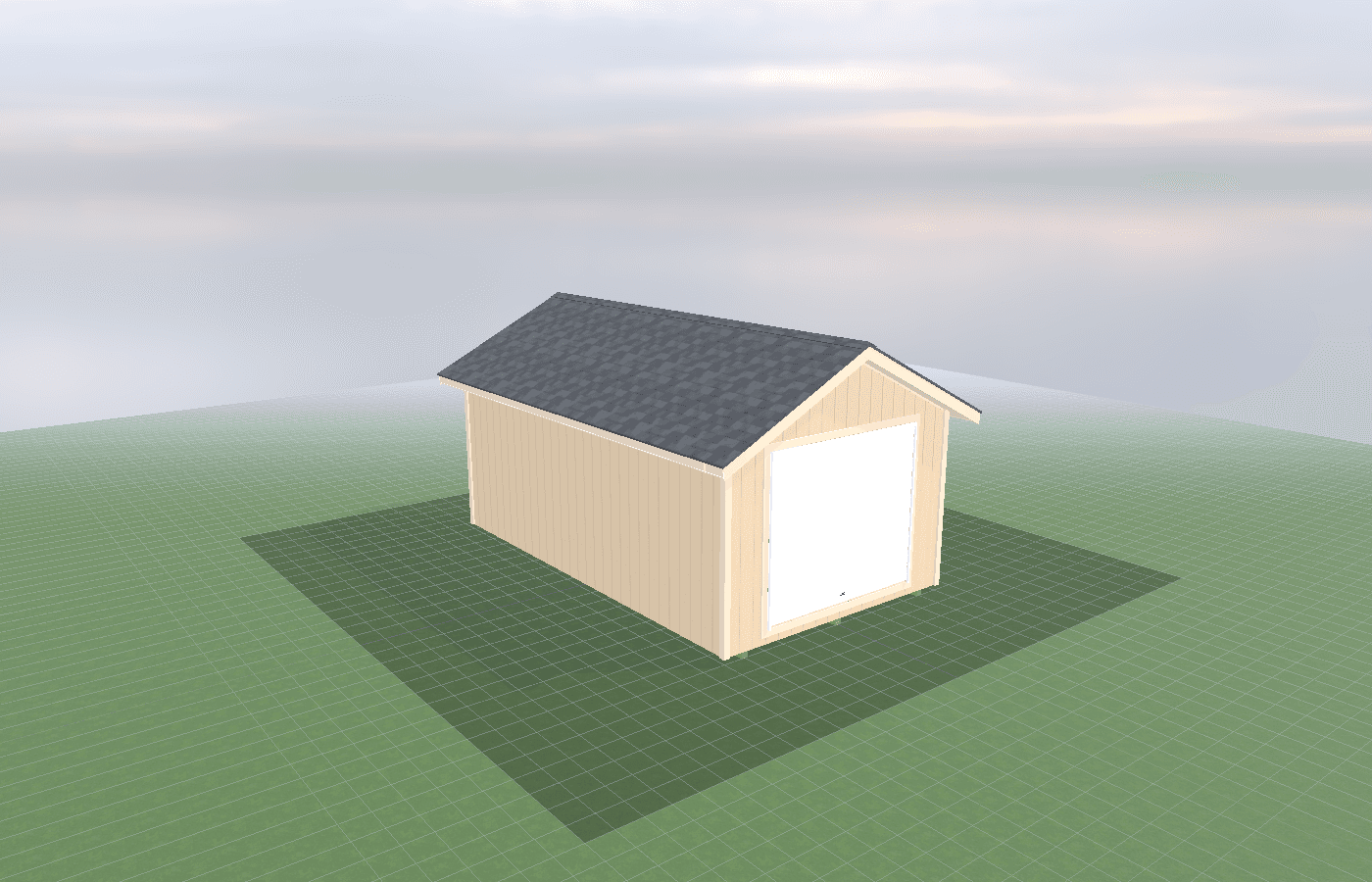
For a real single-car garage shed, 14x24 is the common starting point. It gives enough length for one vehicle plus some room at the nose or tail, especially if storage is kept to one wall. It works well when the main goal is protected parking with modest shelves and maybe a snow blower tucked into a corner.
A 16x24 is where a one-car garage starts feeling comfortable instead of merely workable. The extra two feet of width is not dramatic on paper, but it changes door swing clearance, walkway space, and the ability to keep cabinets or a workbench along a wall. If the vehicle is a half-ton truck or SUV, that extra width usually gets used immediately.
A 20x20 can function as a compact double-car garage, especially for two smaller vehicles or one vehicle plus toys. The tradeoff is depth. Two parked vehicles fill the square quickly, so long shelving or a deep bench has to be planned carefully. A 20x24 is the more forgiving double-car footprint because it restores working room at the front or rear and gives better wall space for storage.
Door sizing matters just as much as floor size. A single-car garage door is usually 9 to 10 feet wide. A double door is commonly 16 to 18 feet wide, but two single doors are often better in snow country because they reduce header size, give you more flexibility on vehicle placement, and can be easier to manage if one bay drifts in. The practical question is not just "will it fit?" It is "will it still work when the mirrors are out, the roof rack is on, and the floor is wet from snow?"
If you are storing a pickup, side-by-side, or ATV along with a vehicle, the difference between workable and frustrating usually shows up in side clearance, not raw square footage. A little spare room around the vehicle is what keeps the garage useful after the novelty of a new build wears off.
Best layouts and features for garages
One wide door vs two single doors
A single wide 16- or 18-foot door is convenient when the priority is simple parking and a clean exterior look. The tradeoff is structural and practical: the header gets bigger, the opening creates a large weak spot on the weather side of the building, and if drift or ice blocks the threshold, both bays are affected. Two single doors cost more in hardware but give cleaner separation, easier parking alignment, and more flexibility if one side of the garage becomes storage or a shop bay.
Wall space matters more than people think
As soon as you put one large opening on a wall, you lose cabinet and shelving options. That is why many single-car garages feel cramped even before the vehicle is parked. A side man door, carefully placed windows, and at least one uninterrupted wall for storage can do more for daily usefulness than another two feet of depth. If you are comparing layouts, garage sheds in snow country: roof pitch, drift zones, and access explains why door location also affects winter usability.
Features worth planning early
Good lighting, more outlets than you think you need, blocking for wall cabinets, and a realistic plan for floor drains or wash-downs all belong in the early conversation. So do ceiling height and door height if the vehicle has a rack, antenna, topper, or lifted suspension. The foundation matters too; a wide opening and vehicle loads want a base that stays stable through spring thaw, which is why garage shed slab vs stem-wall foundation basics should be part of the comparison.
The best garages are the ones that are honest about daily use. If one bay will always be tools, motorcycles, or freezers, say that up front and size the garage around it. On-site construction makes that easier because the shell, headers, and openings can be tailored to the real use instead of forcing everything into a standard delivered bay width.
Cost, timing, and build-planning factors
Garage pricing does not rise only with square footage. Door package, foundation type, wall height, insulation, driveway approach, and electrical rough-in all change the budget quickly.
A 14x24 single-car garage is usually the lowest-cost way into a true vehicle enclosure, but it can still become expensive if you add a tall door, upgraded concrete, insulation, and finished interior walls. A 20x24 double-car garage costs more in obvious ways because there is more building, but it also adds cost through larger headers, more concrete, wider aprons, and often more grading. If you are comparing tiers, the best starting point is pricing, then narrowing the design around how many vehicles and how much storage you actually need.
Timing matters too. In Kootenai County, garages are treated as permit projects, and nearly every footprint in this conversation is well over the county's 200-square-foot storage threshold anyway. In Bonner County, a 20x24 garage is also over the county's 400-square-foot planning threshold. Either way, site review, permit timing, utility routing, and HOA coordination should be part of the schedule before concrete is ordered.
Winter also changes the schedule. Frozen ground, mud season, and cold weather concrete rules can stretch the job if the foundation and driveway approach are not lined up early. On-site construction helps because the garage can be built to the approved plan after the site is truly ready, not before.
It also pays to price the garage by use-case, not just by bay count. A well-designed single-car garage with the right door, slab, and storage may outperform a budget double that is constantly crowded.
Popular sizes and layouts for garages
For most North Idaho buyers, the practical shortlist is 14x24, 16x24, 20x20, and 20x24.
A 14x24 is the efficient single-car choice when the main goal is weather protection and modest wall storage. A 16x24 is the better one-car-plus-workspace option and is often the smartest compromise when you want one vehicle inside but do not want to give up cabinets, bicycles, or a snow blower corner.
A 20x20 works as a compact double when the vehicles are moderate in size and the storage plan is disciplined. It is less forgiving for trucks, trailers, or deep shelving. A 20x24 is the footprint that starts feeling like a true two-vehicle garage in North Idaho because it gives room for walking, seasonal gear, and some real wall storage without every inch feeling spoken for.
If you are stuck between single and double, choose based on what must happen on the worst January day. If two vehicles need to be inside with snow on them, build for two. If one vehicle matters most and the other needs partial cover or outside parking, put the money into a better one-car layout instead of a cramped double. The right answer is the one that still works after the novelty wears off.
On-site construction makes those tradeoffs easier to solve because door spacing, sidewall height, and footprint can be tuned to the lot instead of squeezed into a delivery-friendly standard.
Frequently asked questions about garages
What size garage works best for single-car vs double-car garage shed sizing and door options?
For many North Idaho buyers, 14x24 and 16x24 are the best starting sizes because they balance usable floor space with realistic placement on the property. We then size up or down based on snow load, storage volume, and how much dedicated work or seating area you need. Compare 14x24 and see 16x24.
What door width do I need for a single-car vs double-car garage shed?
A single-car garage shed typically needs a 9-10 ft wide door, while a double needs 16-18 ft. Make sure door height clears your vehicle plus roof rack or antenna. See garage options.
Frequently asked questions
What size garage works best for single-car vs double-car garage shed sizing and door options?
For many North Idaho buyers, 14x24 and 16x24 are the best starting sizes because they balance usable floor space with realistic placement on the property. We then size up or down based on snow load, storage volume, and how much dedicated work or seating area you need. Compare 14x24 and see 16x24.
What door width do I need for a single-car vs double-car garage shed?
A single-car garage shed typically needs a 9-10 ft wide door, while a double needs 16-18 ft. Make sure door height clears your vehicle plus roof rack or antenna. See garage options.
Ready to plan your build?
Tell us your site, your dimensions, and the use case. We'll come out and price it.