Heating a hangout shed safely and efficiently in winter
A hangout shed only feels like a real retreat if it heats up quickly, stays comfortable, and does not introduce safety problems. In North Idaho, winter heating decisions matter because cold snaps, snow-covered lots, and tight insulated rooms expose weak heater choices fast. On-site construction helps because the shell, electrical plan, and heater locations can be built around real winter use instead of added as an afterthought.
Heating Hangout Shed Safely in North Idaho
Heating a hangout shed sounds simple until you ask what the room actually needs on a January evening. It is not just about hitting a thermostat number. The room has to warm up in a reasonable time, hold temperature without huge swings, avoid condensation on cold surfaces, and do all of that safely in a compact insulated shell.
That matters in North Idaho because these sheds often sit on exposed backyard lots and are used most heavily when the weather is worst. A cold room with a loud temporary heater and two extension cords does not feel like a man cave. It feels like unfinished storage with chairs in it.
For most man caves, the heating conversation starts with how often the room will be used. If it is a true year-round hangout, the room usually deserves a permanent system. If it is only occasional, the best answer may be simpler, but it still has to respect wiring, airflow, and combustion safety.
This is where on-site construction changes the outcome. The mini-split location, dedicated circuits, wall space for a backup electric unit, and insulation details can all be planned while the shell is open. That makes the room both safer and easier to heat efficiently when winter really sets in.
On tighter neighborhood lots near Coeur d'Alene, heater choice also affects how the shed behaves for everyone else. A quiet indoor head, a well-sited outdoor unit, and a real electrical plan are much easier to live with than a noisy temporary heater, a propane cylinder, or a condenser placed right outside the neighbor-facing wall. Good winter heat should feel invisible once the room is occupied.
How does shed size affect heating and airflow?
Size affects heating in two ways: how much air has to be warmed and how easy it is to move that warm air through the room.
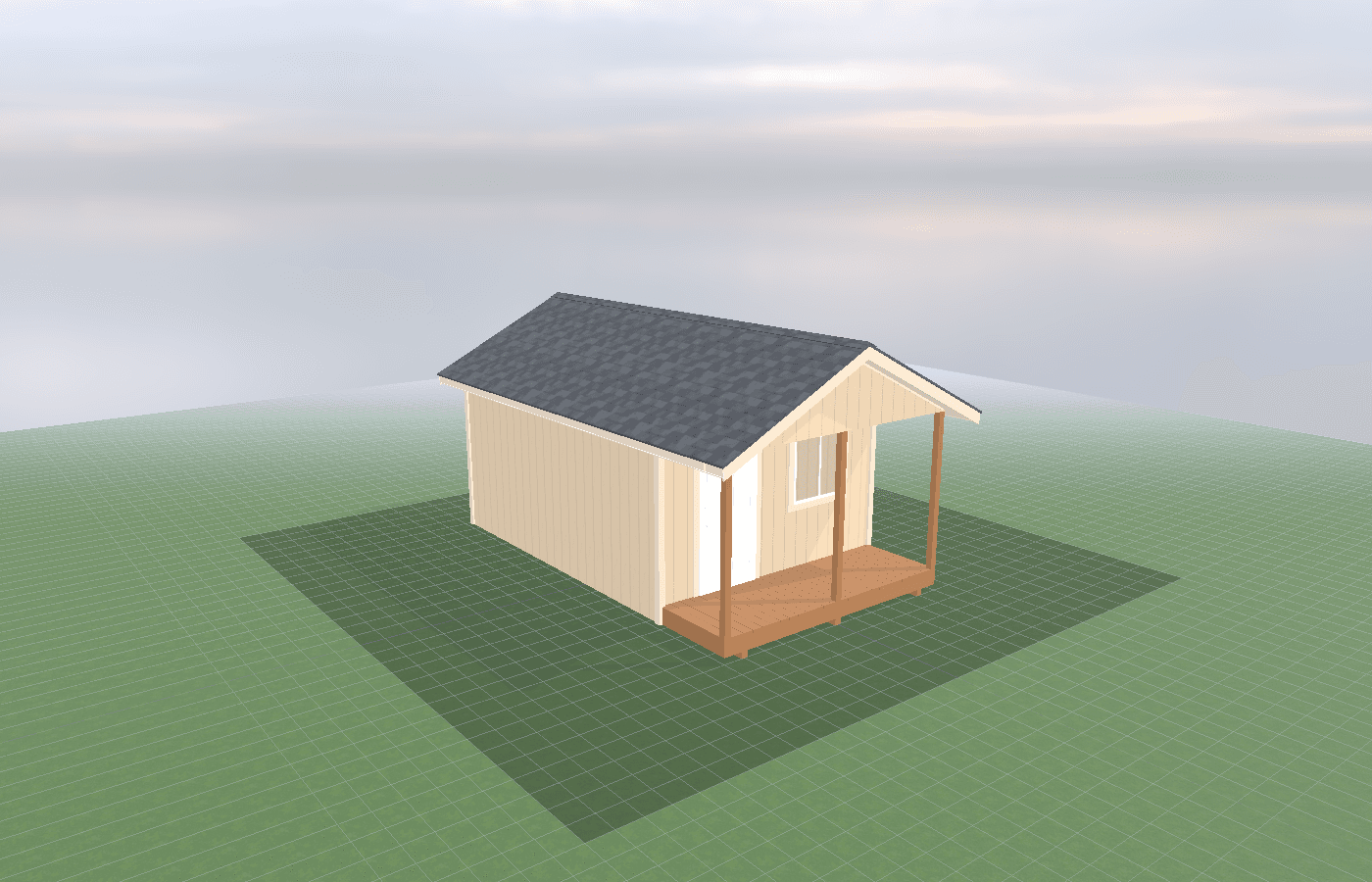
A 10x12 is efficient to heat because the volume is modest and the envelope can be kept tight. It is also the least forgiving if the heater is oversized or poorly placed. A big blast of heat in a small room can short-cycle, create temperature swings, and leave colder corners around windows or the door.
A 10x16 is often the easiest hangout-shed size to heat well. It is still compact enough for a mini-split to work efficiently, but it gives more room for the supply air to mix before it reaches seating or screens. That makes the room feel more even and less drafty.
At 12x16, the room starts behaving like a small conditioned addition. Heater sizing, ceiling insulation, and air circulation matter more because the footprint is wider and the seating zones may be spread farther apart. This is also the size where people start adding more AV gear, more lighting, and more windows, all of which affect both comfort and energy use.
The best heating result comes from matching the heater to both the size and the shell quality. A poorly insulated 10x12 can be harder to heat well than a tighter, smarter 10x16. The shell still matters as much as the appliance.
Systems planning for man caves
Mini-split heat pumps for primary heat
For most finished hangout sheds, a ductless mini-split is the best primary system. DOE notes that minisplits avoid duct losses, which can be substantial in unconditioned spaces, and they provide efficient heating and cooling in one package. In a small outbuilding, that combination is hard to beat. The indoor head should be positioned for throw and circulation, not just where it fits between windows.
Mini-splits also work best when owners stop treating them like oversized on-off heaters. A steady setpoint, a tight envelope, and clear airflow around the head usually beat aggressive thermostat swings. In a small shed, deep setbacks can force the system to recover too hard, which is one reason occasional-use rooms sometimes pair the mini-split with a simple electric backup for quicker warmup.
Electric backup heat and occasional-use heat
If the room is only used occasionally, a quality electric wall heater or panel heater can be workable, especially in a smaller 10x12. But the wiring has to be real and the room still needs insulation, or the operating cost and comfort drop fast. If a mini-split is the main system, an electric backup can make sense for recovery during very cold weather or for fast warmup.
Combustion safety matters in tight sheds
This is where the cheap heater mistakes show up. DOE and Building Science guidance are both clear that unvented combustion appliances create indoor air and backdrafting risks, and ventless gas space heaters should not be installed in conditioned spaces. Portable fuel-burning heaters are a bad match for a compact hangout shed. If you insist on combustion heat, use properly vented sealed-combustion equipment and design around it honestly.
The shell and heating system are one package
No heater performs well in a room with poor insulation, bad air sealing, and noisy wall assemblies. That is why insulation and soundproofing basics for hangout sheds and entertainment shed wiring: audio, projector, and lighting circuits should be planned with the heat system, not after it. Warm air is only useful if the room can hold it and the wiring can support the system safely.
Cost, timing, and build-planning factors
The main cost drivers are the shell quality, the electrical plan, the heater itself, and whether the room needs one system or a primary-plus-backup setup. A mini-split usually costs more up front than a simple electric wall unit, but it also gives cooling, quieter operation, and better efficiency over time.
Timing matters too. If the electrical trench, mini-split line-set route, and wall backing are planned while the shed is under construction, the install is cleaner and cheaper. If the room gets finished first and the heating plan comes later, the contractor ends up working around finished walls, AV gear, and furniture placement.
In North Idaho, winter scheduling also matters. Frozen ground, snow, and late-season site prep can slow trenching and outdoor unit placement. If the shed crosses the common Kootenai County 200-square-foot threshold, permit timing enters the schedule; Bonner County uses a different planning threshold. Even below those common lines, the best approach is to plan the room as if it will actually be used in winter, not just warmed occasionally.
Outdoor unit placement matters more than people expect. It should stay accessible for snow clearing, avoid roof-slide zones, and keep condensate from turning into an ice patch at the main path. Those details are small compared with the price of the equipment, but they have a big effect on whether the room feels dependable after the first hard storm. That practical planning is part of the build, not an afterthought.
If you want the heating strategy priced as part of the full shell and systems plan, request a free estimate before the room is framed. It is much easier to build a comfortable room from the start than to rescue a cold one later.
Popular sizes and layouts for man caves
For winter hangout sheds, 10x12, 10x16, and 12x16 all work, but they do not want identical heating strategies.
A 10x12 is ideal when the use is compact and frequent enough to justify a clean permanent system. A 10x16 is often the sweet spot because it balances roominess with efficient heating and gives the supply air more distance to mix. A 12x16 can feel the most lounge-like, but only if the shell, heater placement, and airflow plan are all resolved up front.
The most comfortable layouts keep the main seating zone out of the direct supply blast, limit the number of big unshaded windows, and protect one uninterrupted insulated wall for AV or shelving. If the room may host guests for long evenings, think about how it feels after two hours, not just how fast it warms up in ten minutes.
A safe, efficient winter hangout shed is not the one with the hottest heater. It is the one with the most honest combination of shell quality, system sizing, and heater type.
That is why on-site construction matters so much in North Idaho. The room can be built around real winter use instead of around a generic box and a wishful heater choice.
Frequently asked questions about man caves
What size man cave works best for heating a hangout shed safely and efficiently in winter?
For many North Idaho buyers, 10x12 and 10x16 are the best starting sizes because they balance usable floor space with realistic placement on the property. We then size up or down based on snow load, storage volume, and how much dedicated work or seating area you need. Compare 10x12 and see 10x16.
What is the most efficient way to heat a hangout shed in North Idaho?
Mini-split heat pumps are most efficient down to about 5°F. Below that, a backup electric or propane heater kicks in. For occasional use, a high-quality electric wall heater works fine. See man cave options.
Frequently asked questions
What size man cave works best for heating a hangout shed safely and efficiently in winter?
For many North Idaho buyers, 10x12 and 10x16 are the best starting sizes because they balance usable floor space with realistic placement on the property. We then size up or down based on snow load, storage volume, and how much dedicated work or seating area you need. Compare 10x12 and see 10x16.
What is the most efficient way to heat a hangout shed in North Idaho?
Mini-split heat pumps are most efficient down to about 5°F. Below that, a backup electric or propane heater kicks in. For occasional use, a high-quality electric wall heater works fine. See man cave options.
Ready to plan your build?
Tell us your site, your dimensions, and the use case. We'll come out and price it.