Quiet HVAC basics for recording spaces
Recording rooms need climate control that almost disappears. In North Idaho, a detached podcast or creator shed still has to manage winter cold, summer heat, smoke season, and electronics load, but it has to do that without fan rush, compressor rumble, or supply air blowing straight across a microphone. On-site construction matters because the HVAC route, indoor-head location, and outdoor-unit placement can be set around the recording layout before the walls are finished.
Quiet HVAC Basics Recording in North Idaho
A recording space asks more from HVAC than a normal backyard room because comfort and noise are tied together. If the room is too hot, the session ends early. If the room is comfortable but the HVAC is audible in every take, the session still suffers. The target is not just heating and cooling. The target is heating and cooling that does not constantly remind you it is there.
North Idaho makes that a real design problem. Detached rooms see cold mornings, hot afternoon sun, smoke events, and dry or damp swings across the year. Podcast and creator rooms also hold lights, computers, cameras, and people, which means the thermal load rarely matches a generic spare room. DOE guidance points clearly toward ductless mini-splits as practical systems for spaces without existing ductwork, and modern variable-speed heat pumps are a strong fit for studio sheds because they can condition smaller zones without forcing ductwork through a compact room.
But quiet performance is not guaranteed by the equipment label alone. It depends on where the indoor unit goes, where the outdoor condenser sits, how the line set is mounted, and whether the room envelope is good enough to let the system run steadily at low output. The most annoying systems are often the ones asked to rescue a weak shell.
This guide belongs next to sound isolation vs sound treatment: what creators need to know and internet to an outbuilding: wiring and reliability planning. A quiet room still needs power, network stability, and an envelope that supports quiet HVAC instead of fighting it. On tighter lots around Coeur d'Alene, on-site construction also makes it easier to place the outdoor unit where it will not become a neighbor issue.
How does shed size affect heating and airflow?
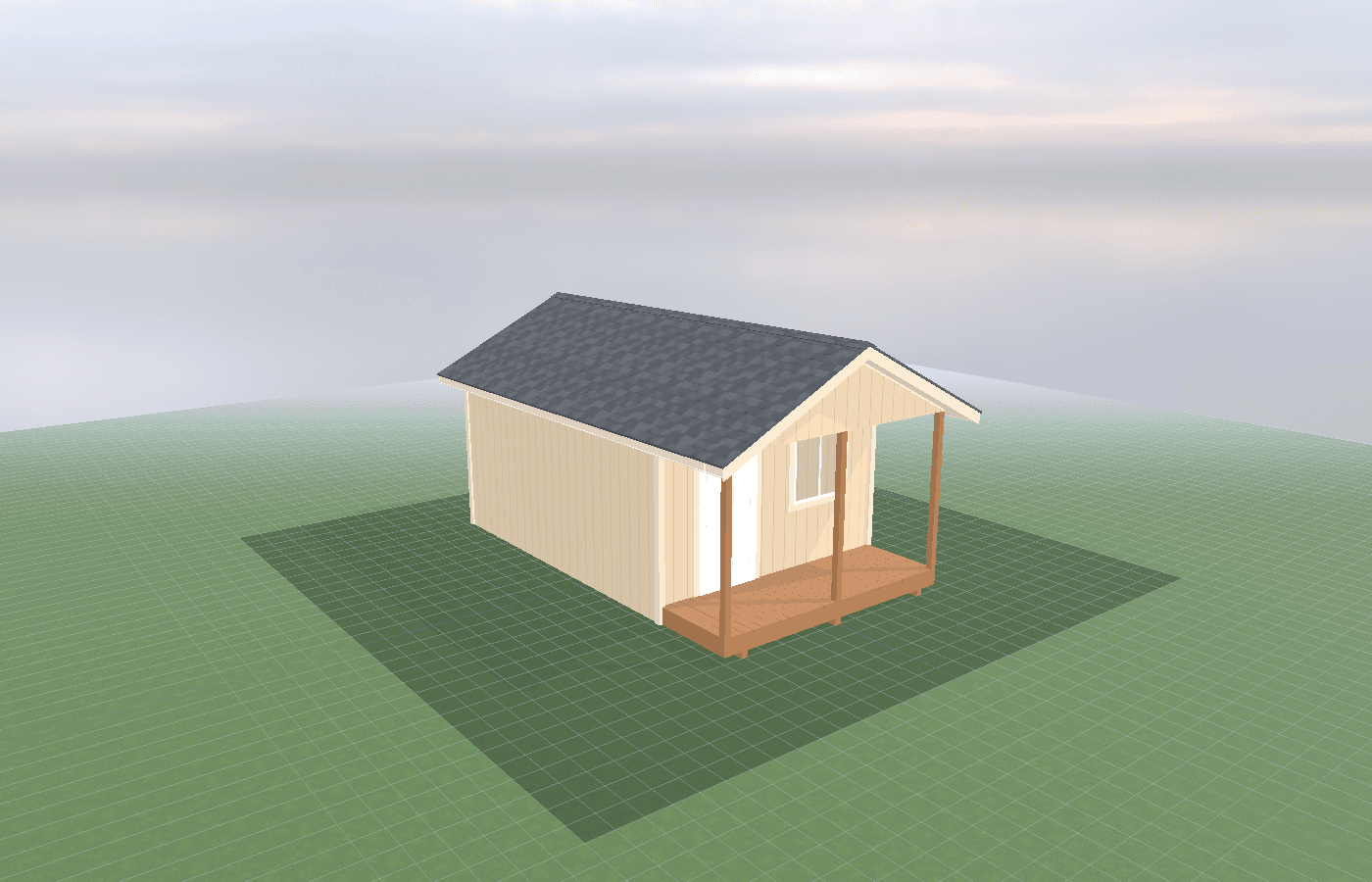
Size changes HVAC behavior because it changes the air path. In an 8x12, the indoor head is close to everything. That can be efficient, but it means the unit must be placed very carefully so the microphone position and seating area are not sitting in direct fan wash. Small rooms are less forgiving if the air has nowhere to mix before it reaches the person speaking.
A 10x12 gives you more flexibility. The indoor head can serve the room from farther away, and the desk or recording position can sit outside the strongest airstream. That extra space also helps if you are using treatment panels, bookshelves, or light stands that slightly interrupt the flow pattern.
A 10x16 is the easiest size for genuinely quiet operation because it gives the conditioned air room to spread out and gives the layout room to separate functions. You can have a desk zone, an interview corner, and a more controlled wall for the indoor unit instead of treating the whole room like one cramped box.
Bigger rooms are not immune to noise problems, though. If the head is mounted straight over the main microphone wall or the condenser is bolted to a structure that transfers vibration, more square footage will not save the take. Quiet HVAC depends on both size and placement.
Systems planning for podcast / creator studio
Mini-splits are usually the right starting point for a creator shed because they offer heating and cooling without ductwork and many variable-speed models can run gently instead of slamming on and off. DOE also notes that correct sizing and installation location are crucial. For recording rooms, that means avoiding the classic mistake of putting the indoor head directly in front of the desk or mic position just because that wall is convenient.
Good systems planning focuses on fan noise, air velocity, and vibration paths. Fan noise is the obvious one. Lower fan speeds are quieter, which is one reason variable-speed equipment is so helpful. DOE's broader heat-pump guidance also notes that staged and inverter-driven systems can run more consistently and with less disruption than simple on-off equipment. Air velocity is just as important. Even a relatively quiet unit can ruin a take if it blows directly across a vocal mic or makes a seated guest feel chilled. The last piece is vibration. NIOSH noise-control guidance is relevant here because it shows how rigid connections transfer vibration into walls and ceilings. Line sets, brackets, and condensers should be supported like noise sources, not just like mechanical attachments.
Quiet rooms also need operational discipline. Many creators pre-condition the room, then reduce the fan speed or briefly pause the system during the quietest takes. That only works if the shell is insulated and sealed well enough to hold comfort for the length of the take. A weak shell forces the HVAC to stay loud because the room cannot coast.
Electrical planning belongs in the same conversation. Idaho DOPL requires permits when electrical, plumbing, or HVAC work is performed, and a creator shed almost always includes new power and often a mini-split. Dedicated circuits, condensate routing, and a clean line-set path are easier when the podcast / creator studio room is planned as a studio from the start rather than retrofitted later.
Cost, timing, and build-planning factors
Quiet HVAC costs are driven less by sticker price and more by coordination. A perfectly capable mini-split becomes an expensive disappointment if it lands on the wrong wall or if the condenser ends up under a bedroom window or a roof valley that dumps snow on it. Conversely, a moderate system in a well-insulated shell often feels better and sounds quieter than a larger system trying to correct a poor envelope.
Timing is crucial because the quiet details want to happen before drywall. You want backing where the indoor head belongs, a reserved path for the line set, a plan for condensate, and an outdoor location that balances service access, snow safety, and neighbor tolerance. Once the room is finished, those same moves become visible compromises or expensive rework.
Costs also rise when the room needs extra measures beyond the basic mini-split. Some owners add separate filtered air cleaners for smoke season, better door seals so the room can be conditioned quietly before recording, or upgraded wall details so the HVAC can run at lower speed. Those are often smart additions, but they should be planned as a system, not as last-minute patches.
County and state requirements still apply. Kootenai County notes that residential storage buildings over 200 square feet require building permits in county jurisdiction, and DOPL handles trade permits and inspections for HVAC and electrical work. If trenching is involved for power, 811 also belongs in the sequence before excavation. Quiet HVAC works best when the room, the trades, and the lot plan are all moving together instead of competing.
If you want that coordination built into the room instead of improvised after the shell is standing, get a free estimate before the design is finalized.
Popular sizes and layouts for podcast / creator studio
The 8x12 layout is best for solo voice recording, editing, or a compact creator setup where one desk and one microphone are doing most of the work. The HVAC head usually wants to be off to a side wall so the main seat stays out of the air path.
A 10x12 is the sweet spot for many podcast and creator rooms. It gives enough depth for cleaner framing and enough width to keep the indoor head and the mic setup from occupying the same lane. It is also easier to add treatment, a guest chair, or a camera angle without boxing the room in.
A 10x16 is the best fit when the room has zones or longer sessions. There is room for an editing desk on one side, a recording or interview area on the other, and airflow that does not feel like it is constantly crossing the talent. This size also gives you more choices for placing the outdoor condenser away from the most sensitive exterior wall.
The best layouts in any of these sizes keep the noisiest equipment outside the main recording axis and let the conditioned air mix before it reaches the mic position. That kind of layout planning is exactly where an on-site shed build beats a one-size-fits-all shell.
Frequently asked questions about podcast / creator studio
What size podcast / creator studio works best for quiet hvac basics for recording spaces?
For many North Idaho buyers, 8x12 and 10x12 are the best starting sizes because they balance usable floor space with realistic placement on the property. We then size up or down based on snow load, storage volume, and how much dedicated work or seating area you need. Compare 8x12 and see 10x12.
How do I keep HVAC noise out of podcast recordings in a shed studio?
Use a ductless mini-split with the compressor outside. Turn it off during recording if needed. A whisper-quiet indoor head rated under 25 dB is ideal. Avoid window AC units - they are too loud. See studio options.
Frequently asked questions
What size podcast / creator studio works best for quiet hvac basics for recording spaces?
For many North Idaho buyers, 8x12 and 10x12 are the best starting sizes because they balance usable floor space with realistic placement on the property. We then size up or down based on snow load, storage volume, and how much dedicated work or seating area you need. Compare 8x12 and see 10x12.
How do I keep HVAC noise out of podcast recordings in a shed studio?
Use a ductless mini-split with the compressor outside. Turn it off during recording if needed. A whisper-quiet indoor head rated under 25 dB is ideal. Avoid window AC units — they are too loud. See studio options.
Ready to plan your build?
Tell us your site, your dimensions, and the use case. We'll come out and price it.