Root cellar fundamentals: temperature and humidity targets
A root cellar only works when temperature and humidity are controlled well enough to protect the crop without freezing it, drying it out, or pushing it into mold. In North Idaho, that usually means designing the shed around a narrow cool range, high but managed humidity, and enough airflow that apples, roots, and winter vegetables can actually store the way the textbooks promise.
Root Cellar Fundamentals in North Idaho
A root cellar is one of the few outbuildings where success is defined by restraint. The room is not supposed to feel comfortable like an office, dry like a garage, or warm like a shop. It is supposed to stay cool, dark, and stable enough that produce keeps living slowly instead of spoiling quickly. That sounds simple until you try to hold those conditions through a North Idaho year with warm afternoons, deep cold snaps, shoulder-season moisture, and different crops that all want something slightly different.
University of Minnesota Extension gives a useful starting framework: most storage crops fall into a few environmental categories, and classic root-cellar vegetables do best in cold, moist conditions around 32 to 40°F. UMN also notes that basements and root cellars still need ventilation and rodent protection because stored produce continues to respire after harvest. Penn State's produce-storage guidance adds another important layer: many vegetables prefer 90 to 98 percent relative humidity, while fruit generally does better around 85 to 95 percent, and garlic, dry onions, and pumpkins prefer significantly drier conditions. In practice, a real root cellar is less about hitting one magic number and more about building a room that can hold stable ranges and separate produce that behaves differently.
That is why this guide matters for a North Idaho build. The room still sits inside a shed shell that has to handle snow loads in the 40 to 60-plus psf range, frost-aware site prep, and county permitting rules if the size or site work crosses the threshold. But inside that shell, the priorities change. Insulation, earth buffering, air movement, and moisture control become the actual job of the structure. If you want the building itself, start with the root cellar shed service page. If you are deciding what to store once it is built, the next steps are produce storage by crop and passive versus conditioned cooling.
What conditions are you actually aiming for?
For most root-cellar use, the practical target is not “as cold as possible.” It is stable cold above freezing. Root vegetables often want roughly 32 to 40°F with very high humidity. Apples and pears want colder storage too, but Oregon State notes that apples and pears generally store best in dark conditions around 30 to 32°F, though they can be kept somewhat warmer, and at about 90 percent relative humidity. Garlic, onions, and winter squash are different and usually need drier air. That is why one undivided room can only be optimal for certain crop groups, not every crop at once.
How does shed size affect heating and airflow?
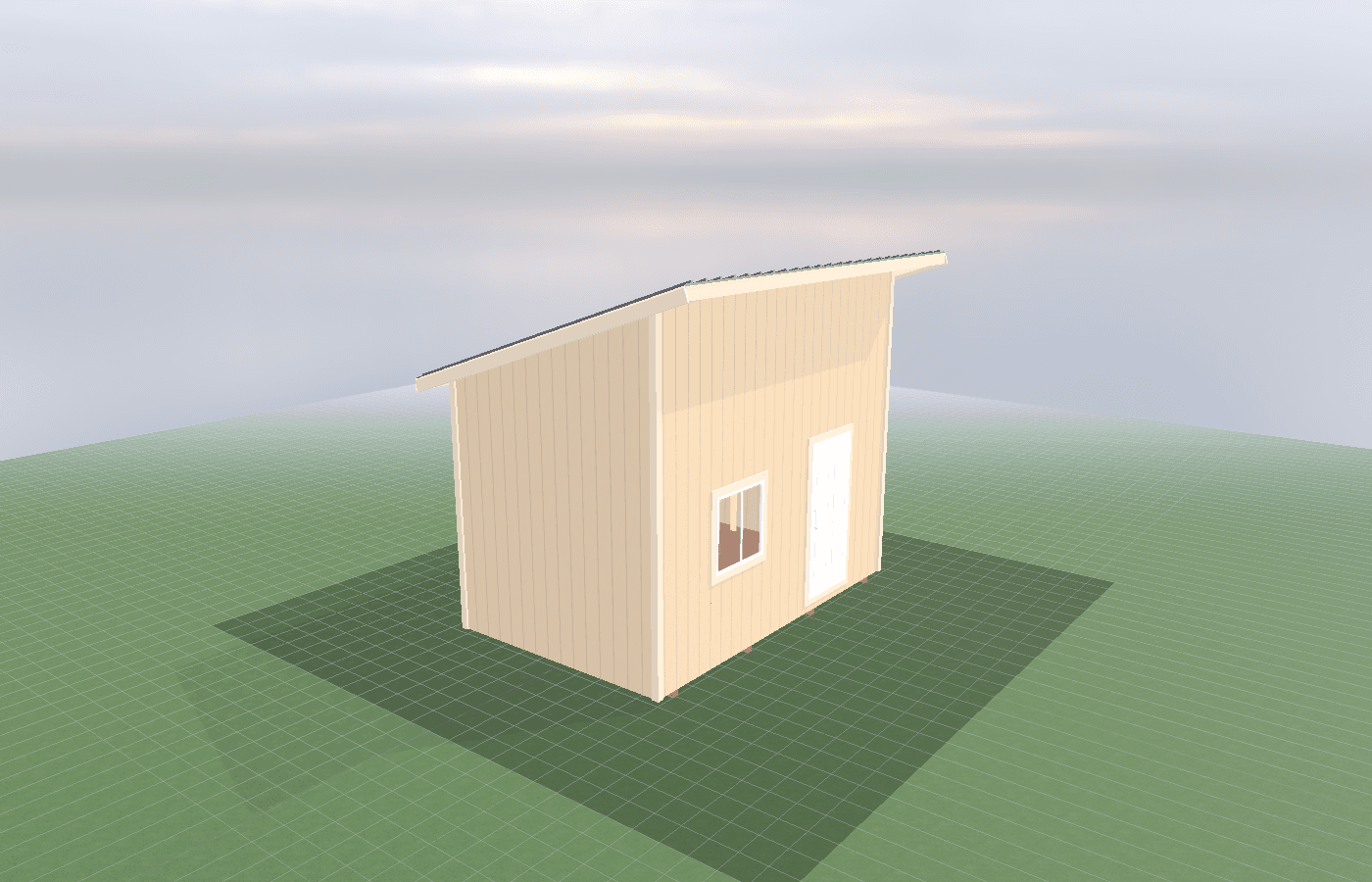
An 8x10 is often the smallest size that feels like a true root cellar room rather than a cool closet. It can support a main produce zone, a short aisle, and a basic passive air path if the storage mix is disciplined. For a household storing roots, some apples, and canned goods, this can work very well.
An 8x12 usually gives more forgiving control. The extra wall length makes it easier to separate bins, leave air space behind shelving, and create some distinction between the coldest zone and the most accessible zone. That matters because a crowded room stores poorly even when the thermometer looks good. Produce breathes, gives off moisture, and creates microclimates around itself. If everything is stacked tightly against one wall, the room may hold the right temperature overall while individual crates still mold or shrivel.
A 10x10 can be useful when you want a squarer layout with a center aisle and symmetrical storage on both sides. The tradeoff is that square rooms need careful airflow planning so the corners do not become dead zones. Long narrow rooms naturally favor intake-low and exhaust-high strategies, while square rooms need more deliberate shelf spacing and vent placement.
Smaller rooms are easier to cool and humidify, but they are also easier to overload. Larger rooms are more forgiving for layout, but they take more discipline to keep from becoming mixed-purpose storage that ruins the produce environment. The right size is not the biggest room you can afford. It is the smallest room that still leaves space for bins, inspection, and air movement.
Systems planning for root cellar sheds
The first system is the shell itself. A root cellar shed needs snow-ready framing, careful site drainage, and a base that does not flood during spring thaw. After that, the next question is whether the room will rely mostly on passive conditions or use a more controlled strategy. Even truly passive root cellars are not system-free. They still need insulation, shading, dark finishes, vent placement, and a way to monitor conditions.
At minimum, the room should have a thermometer and hygrometer. That sounds basic, but it changes how you manage the space. UMN's guidance makes clear that storage life shortens as temperatures drift away from ideal. In other words, “cool enough” is not a reliable management plan. If carrots start sprouting, if apples start softening too soon, or if onions mildew, the room is telling you the conditions are off. Without monitoring, you are guessing.
Ventilation matters even in a cool room because produce is alive after harvest. It respires, releases moisture, and can build stale air around itself. Passive designs often use a low cool-air intake and a high exhaust so denser cool air enters low and warmer air exits high. That is a sensible pattern in North Idaho if the room is partly earth-buffered or well shaded. But the vent path still has to be screened, protected from rodents, and designed so drifting snow or heavy rain does not simply pour into the cellar. Inference from the extension storage sources: airflow should be present but gentle, because enough air exchange is needed to manage respiration and moisture while excessive air movement can dry the crop.
Humidity is the other half of the system. Penn State notes that fruits and vegetables lose water quickly once harvested and that high humidity is critical to reduce shriveling. OSU's fruit-storage guidance suggests practical ways to hold humidity, such as using perforated bags or even an open pan of water, but only within the temperature range that still protects the crop. The larger lesson for shed design is that bare insulation and a vent are not a root cellar system. You need a room that can hold moisture without trapping free water on every surface.
Cost, timing, and build-planning factors
Root-cellar planning gets expensive when people chase temperature after the room is already built. It is far cheaper to orient the room for shade, use insulation strategically, control solar gain, and plan vent paths on paper than it is to add cooling equipment after the first summer teaches the room a lesson.
Kootenai County's Building Division says residential storage buildings over 200 square feet require permits in county jurisdiction, and permits may also be required before grading, excavation, or storm drainage or run-off control. If the project uses berming, digging into a slope, or lowering part of the floor, those site issues matter early. If you decide to add powered cooling, lighting, or other utilities, Idaho DOPL's electrical FAQ says a permit is required when any electrical, plumbing, or HVAC work is performed.
Build timing matters because moisture and temperature testing take seasons. The easiest schedule is often shell and site work during the dry season, then monitoring through shoulder-season cooling before filling the room completely. That first season teaches you where condensation forms, how quickly the room cools, and which shelves run colder or drier. A good root cellar is rarely “set it and forget it” on day one.
For rural properties near Athol, there is another practical factor: access during winter. If the path ices over or the door sits in a drift zone, the room may technically store produce well but still be annoying to use. The best root-cellar shed plans think about the approach, threshold, and staging area with the same care they give to humidity.
Popular sizes and layouts for root cellar sheds
An 8x10 works best for households that want a simple, well-zoned cellar focused on root vegetables, apples, and a few secondary crops. It is compact enough to control and large enough to be useful.
An 8x12 is the strongest all-around size for many North Idaho properties because it gives more separation between crop groups and more room for bins and shelving without sacrificing the cool-room behavior. This size often supports the cleanest passive airflow path.
A 10x10 can be a smart option where the lot, appearance, or circulation pattern favors a square room. It works especially well with a central aisle and shelves that stop short of the corners so air can keep moving.
Popular layouts usually include:
- one colder wall or corner for roots and dense bins
- one better-access section for apples, pears, and short-term produce
- one drier shelf area for crops that should not sit in root-cellar humidity
- a clear service aisle so inspection and rotation are easy
If you are comparing footprints or want a site-specific recommendation, get a free estimate before the layout is fixed.
Frequently asked questions about root cellar fundamentals
What size root cellar shed works best for root cellar fundamentals: temperature and humidity targets?
For many North Idaho buyers, 8x10 and 8x12 are the best starting sizes because they balance usable floor space with realistic placement on the property. We then size up or down based on snow load, storage volume, and how much dedicated work or seating area you need. Compare 8x10 and see 8x12.
What temperature and humidity does a root cellar shed need for vegetable storage?
32-40°F and 85-95% humidity for most root vegetables. Earth-sheltered or bermed designs naturally maintain these conditions. Add a thermometer and hygrometer to monitor levels. See root cellar options.
Frequently asked questions
What size root cellar shed works best for root cellar fundamentals: temperature and humidity targets?
For many North Idaho buyers, 8x10 and 8x12 are the best starting sizes because they balance usable floor space with realistic placement on the property. We then size up or down based on snow load, storage volume, and how much dedicated work or seating area you need. Compare 8x10 and see 8x12.
What temperature and humidity does a root cellar shed need for vegetable storage?
32-40°F and 85-95% humidity for most root vegetables. Earth-sheltered or bermed designs naturally maintain these conditions. Add a thermometer and hygrometer to monitor levels. See root cellar options.
Ready to plan your build?
Tell us your site, your dimensions, and the use case. We'll come out and price it.