On-Site vs Prefab Sheds in North Idaho
Decision
On-site vs prefab
Prefab fit
Easy access
On-site fit
Property-aware
Next move
Note site access
Build method
Decide whether on-site construction or prefab delivery fits the property
Comparison
Key factor
FAQ support
- Check gates, fences, trees, slope, turning radius, and final placement.
- Compare delivered-shed limits against the actual build location.
- Use on-site construction when the shed needs to be planned around the property.
Prefab sheds are built somewhere else and delivered to the property as a finished structure. On-site sheds are built where they will live. That difference affects access, size, placement, customization, and how well the finished shed fits the lot.
The short answer
Prefab can work well when the shed is small, the delivery path is wide and flat, and the final placement is easy to reach. On-site construction is usually better when access is tight, the building needs more customization, the site is sloped, or the shed should look and function like it was planned for that specific property.
Why North Idaho properties often favor on-site builds
Many lots around Coeur d'Alene, Athol, Hayden, Rathdrum, Post Falls, Sandpoint, and surrounding areas have gates, trees, grades, snow storage needs, narrow drives, or backyard placement goals that make one-piece delivery harder than expected.
If access is the question, compare this guide with the NIOS on-site build process and service area pages before you finalize the plan.
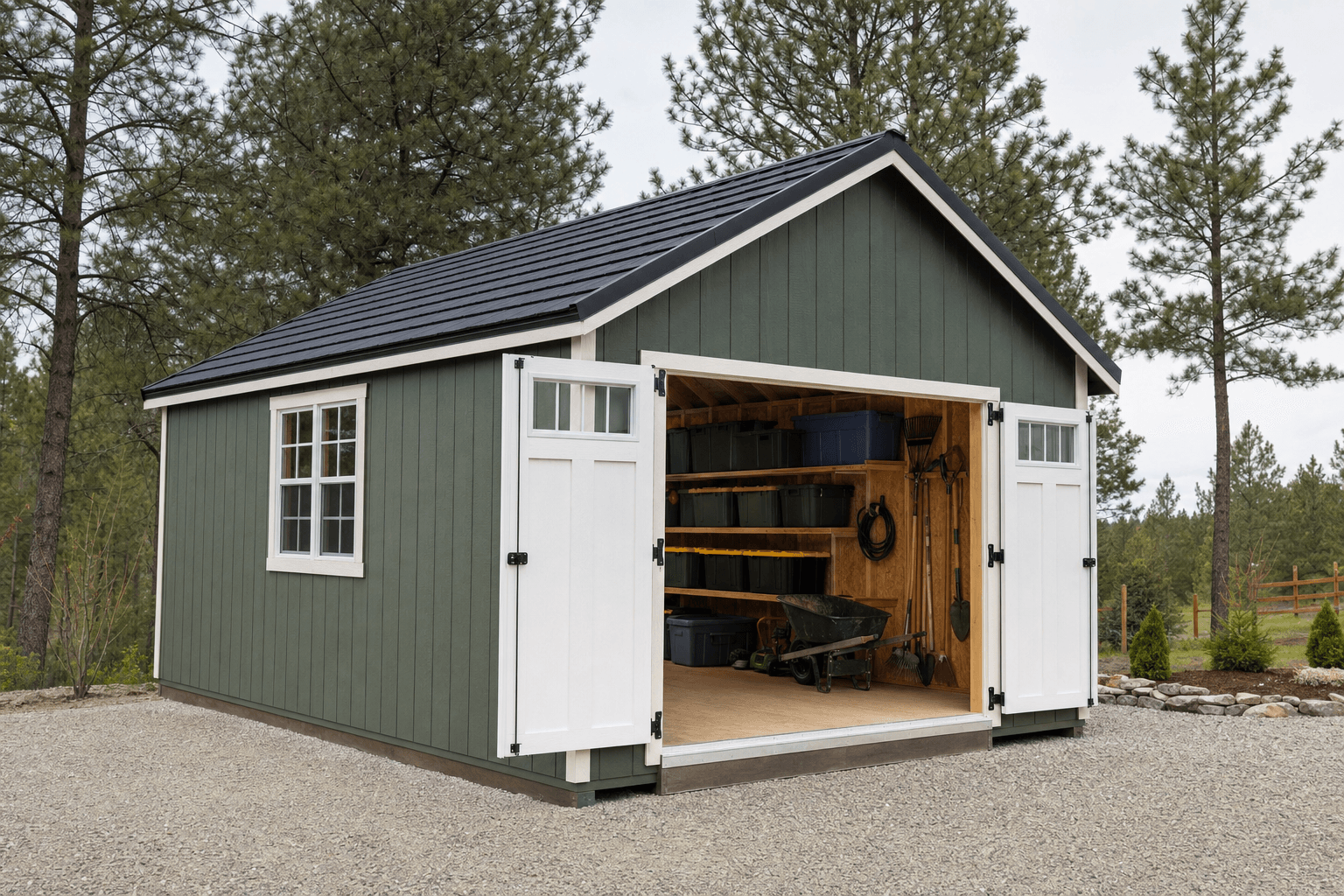
On-site construction is often the better fit when delivery access, slope, trees, fences, or final placement make a prefab drop difficult.
On-site vs prefab sheds: side-by-side
Access needs
- Prefab delivered shed
- Requires a delivery path large enough for the finished shed
- On-site built shed
- Materials and crew can reach places a finished shed often cannot
Site fit
- Prefab delivered shed
- Placement can be limited by truck, trailer, fence, and turning radius
- On-site built shed
- Designed around the actual location, grade, and usable space
Size flexibility
- Prefab delivered shed
- Often limited by transport and delivery constraints
- On-site built shed
- Can support larger or more customized layouts
Customization
- Prefab delivered shed
- Usually tied to pre-set model options
- On-site built shed
- Doors, windows, finishes, and layout can be planned around use
Delivery risk
- Prefab delivered shed
- Higher when access is narrow, steep, muddy, snowy, or landscaped
- On-site built shed
- Lower because the shed is assembled in place
Best fit
- Prefab delivered shed
- Small sheds on easy-access properties
- On-site built shed
- Custom, site-sensitive, or backyard builds
| Feature | Prefab delivered shed | On-site built shed |
|---|---|---|
| Access needs | Requires a delivery path large enough for the finished shed | Materials and crew can reach places a finished shed often cannot |
| Site fit | Placement can be limited by truck, trailer, fence, and turning radius | Designed around the actual location, grade, and usable space |
| Size flexibility | Often limited by transport and delivery constraints | Can support larger or more customized layouts |
| Customization | Usually tied to pre-set model options | Doors, windows, finishes, and layout can be planned around use |
| Delivery risk | Higher when access is narrow, steep, muddy, snowy, or landscaped | Lower because the shed is assembled in place |
| Best fit | Small sheds on easy-access properties | Custom, site-sensitive, or backyard builds |
On-site vs prefab shed FAQ
Is an on-site shed better than a prefab shed?
It depends on the property. On-site is usually better when access, placement, size, or customization matter. Prefab can be fine for smaller sheds on easy delivery sites.
What if a prefab shed cannot be delivered to my backyard?
That is exactly where an on-site build can help. Materials can be brought to the build area and assembled in place, avoiding many finished-shed delivery constraints.
Does on-site construction take longer?
Not necessarily. A well-scoped on-site shed can often be built quickly because the crew arrives with the material and plan ready. Larger or more detailed builds may take longer.
How do I know which option fits my property?
Start in the 3D shed builder and include notes about access, slope, gates, fences, trees, and final placement when you request the estimate.
Design the shed for the place it will actually sit.
Use the builder to choose your shed, then send the estimate with access and placement notes so NIOS can help plan the on-site build.
Next step