DIY vs Professional Shed Building in North Idaho
Decision
DIY vs pro
DIY fit
Small and simple
Pro fit
Site-sensitive
Next move
Price both paths
Build decision
Decide whether DIY or a professional shed build is the better value
Comparison
Region
FAQ support
- Compare total cost instead of material cost alone.
- Account for tools, time, site prep, mistakes, permits, and winter-ready structure.
- Use a real professional estimate as the baseline before deciding.
DIY shed building can be the right move when the building is small, the site is simple, and you already have the tools and carpentry skill to do the work cleanly. The trouble is that many North Idaho shed projects stop being simple once snow load, drainage, access, permits, or workshop-style features enter the plan.
The short answer
If you are building a basic storage shed on an easy lot, DIY may save money when your time is flexible and your skill level is high. If the shed needs to last through North Idaho winters, fit a tricky site, pass permit review, or become a long-term property asset, a professional on-site build is usually the stronger value.
Where DIY costs start to creep
The most common DIY budgeting mistake is counting only lumber, siding, roofing, and hardware. A real DIY budget also includes tools, fasteners, waste, delivery runs, foundation materials, weather delays, mistakes, and the time it takes to solve problems a builder has already solved many times.
North Idaho adds pressure. Snow load matters. Drainage matters. Setbacks and access matter. If you are unsure how those affect your shed, compare this page with our shed pricing guide, permit resources, and on-site build process.
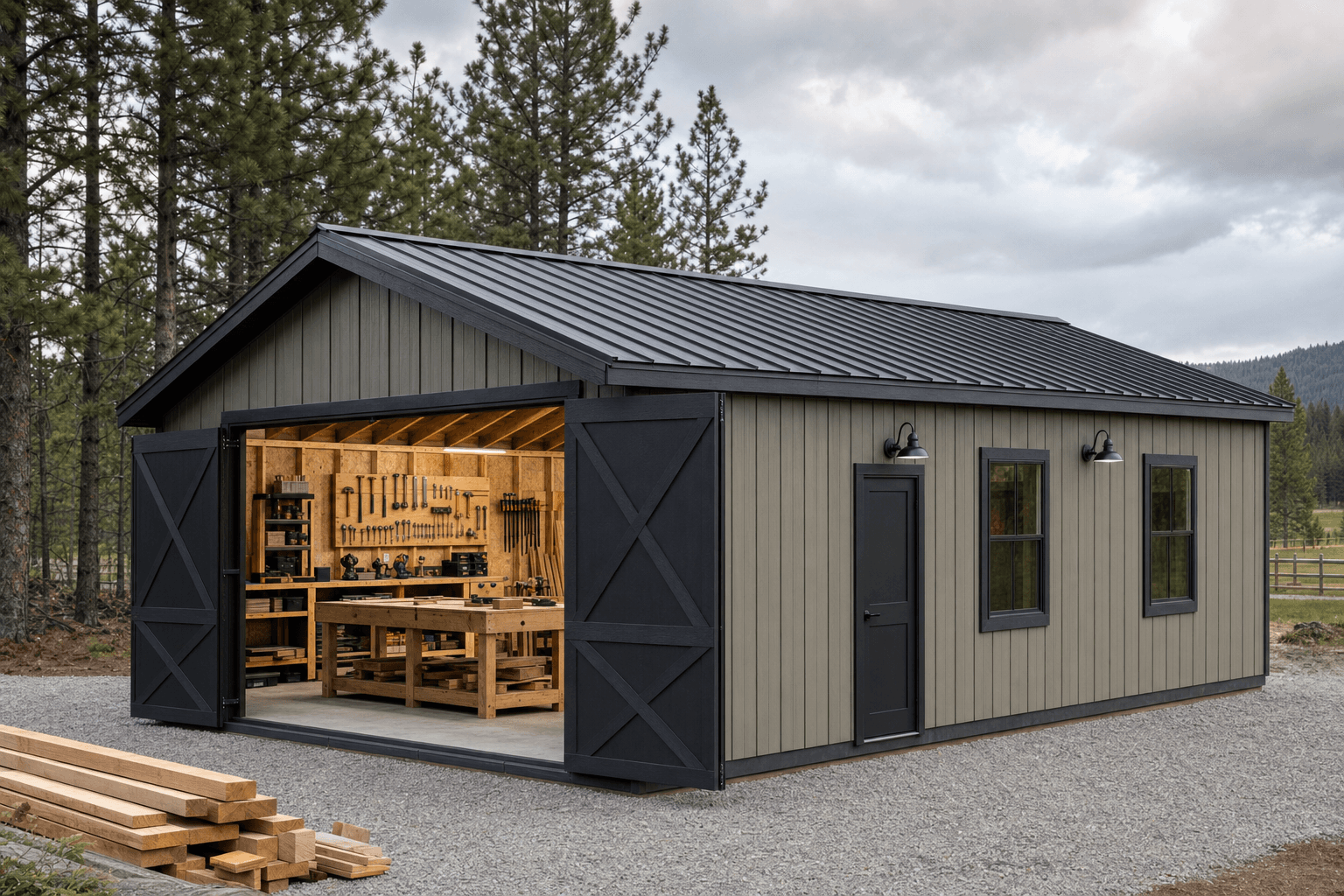
The fair DIY comparison includes tools, time, site prep, mistakes, and whether the finished shed is built for North Idaho weather.
DIY vs professional shed build: side-by-side
Up-front cash
- DIY shed build
- Can look lower if you already own tools and avoid mistakes
- Professional on-site build
- Usually higher at quote stage, but clearer from the start
Time commitment
- DIY shed build
- High; planning, buying, building, cleanup, and fixes stay on you
- Professional on-site build
- Lower for the homeowner; the crew handles the build sequence
Tools and skill
- DIY shed build
- Depends on your carpentry experience and equipment
- Professional on-site build
- Handled by a crew that builds sheds repeatedly
Site prep and layout
- DIY shed build
- Owner must solve level, drainage, access, and placement details
- Professional on-site build
- Scoped around the actual property and build location
Snow-country planning
- DIY shed build
- Owner responsibility
- Professional on-site build
- Built into the framing and planning conversation
Permit and code risk
- DIY shed build
- Depends on owner research and local review requirements
- Professional on-site build
- Lower when the project is scoped with local requirements in mind
Best fit
- DIY shed build
- Small, simple, storage-only sheds on easy sites
- Professional on-site build
- Larger, finished, site-sensitive, or long-term property builds
| Feature | DIY shed build | Professional on-site build |
|---|---|---|
| Up-front cash | Can look lower if you already own tools and avoid mistakes | Usually higher at quote stage, but clearer from the start |
| Time commitment | High; planning, buying, building, cleanup, and fixes stay on you | Lower for the homeowner; the crew handles the build sequence |
| Tools and skill | Depends on your carpentry experience and equipment | Handled by a crew that builds sheds repeatedly |
| Site prep and layout | Owner must solve level, drainage, access, and placement details | Scoped around the actual property and build location |
| Snow-country planning | Owner responsibility | Built into the framing and planning conversation |
| Permit and code risk | Depends on owner research and local review requirements | Lower when the project is scoped with local requirements in mind |
| Best fit | Small, simple, storage-only sheds on easy sites | Larger, finished, site-sensitive, or long-term property builds |
DIY vs professional shed building FAQ
Is DIY always cheaper than hiring a professional shed builder?
No. DIY can start cheaper on paper, but tools, extra material, mistakes, site prep, and rework can erase that savings. The fair comparison is total project cost, not just the first material list.
When does a professional shed build make more sense?
A professional build usually makes more sense when the shed is larger, the site is uneven, access is tight, snow load matters, permits may be involved, or the building will be used as a workshop, office, or long-term property upgrade.
Can I use the 3D builder while I am comparing DIY vs professional?
Yes. The 3D shed builder is the best way to create a real professional estimate you can compare against your DIY material, tool, and time costs.
What should I compare before deciding?
Compare foundation, site prep, roof strength, drainage, access, permits, tools, finish details, timeline, and how costly it would be if the shed needs redesign or repair later.
Price the professional path before you decide.
Design your shed in 3D, send it over, and we will help you compare a finished on-site build against the DIY project you are considering.
Next step