
Shed vs Garage: Which Outbuilding Fits Your Property?
Decision
Shed vs garage
Shed fit
Right-sized space
Garage fit
Vehicle use
Next move
Price a shed first
Structure choice
Decide whether the project needs a shed, garage, or garage-style shed
Comparison
Key factor
FAQ support
- List what must go inside and how often it moves in or out.
- Compare storage/workshop needs against true vehicle-garage requirements.
- Check permits before committing to a larger garage-style footprint.
A shed and a garage can both solve space problems, but they are not the same project. A shed is usually the right path for storage, tools, lawn equipment, hobby space, and many workshop uses. A garage becomes the better path when regular vehicle storage, heavier traffic, utilities, or specific local code requirements are central to the plan.
The short answer
Choose a custom shed when you need useful space without overbuilding. Choose a garage when the structure must function like a vehicle building. If you are in the middle, a garage-style shed with wider doors or a roll-up door may give you the access you need with less complexity than a full garage project.
What changes the decision
The right answer depends on use, footprint, driveway access, snow management, permits, foundation expectations, and how permanent the structure needs to be. Before you price either option, decide what must go inside and how often you need to move it in and out.
If permits may affect the decision, review the North Idaho shed permit resources before committing to a size or structure type.
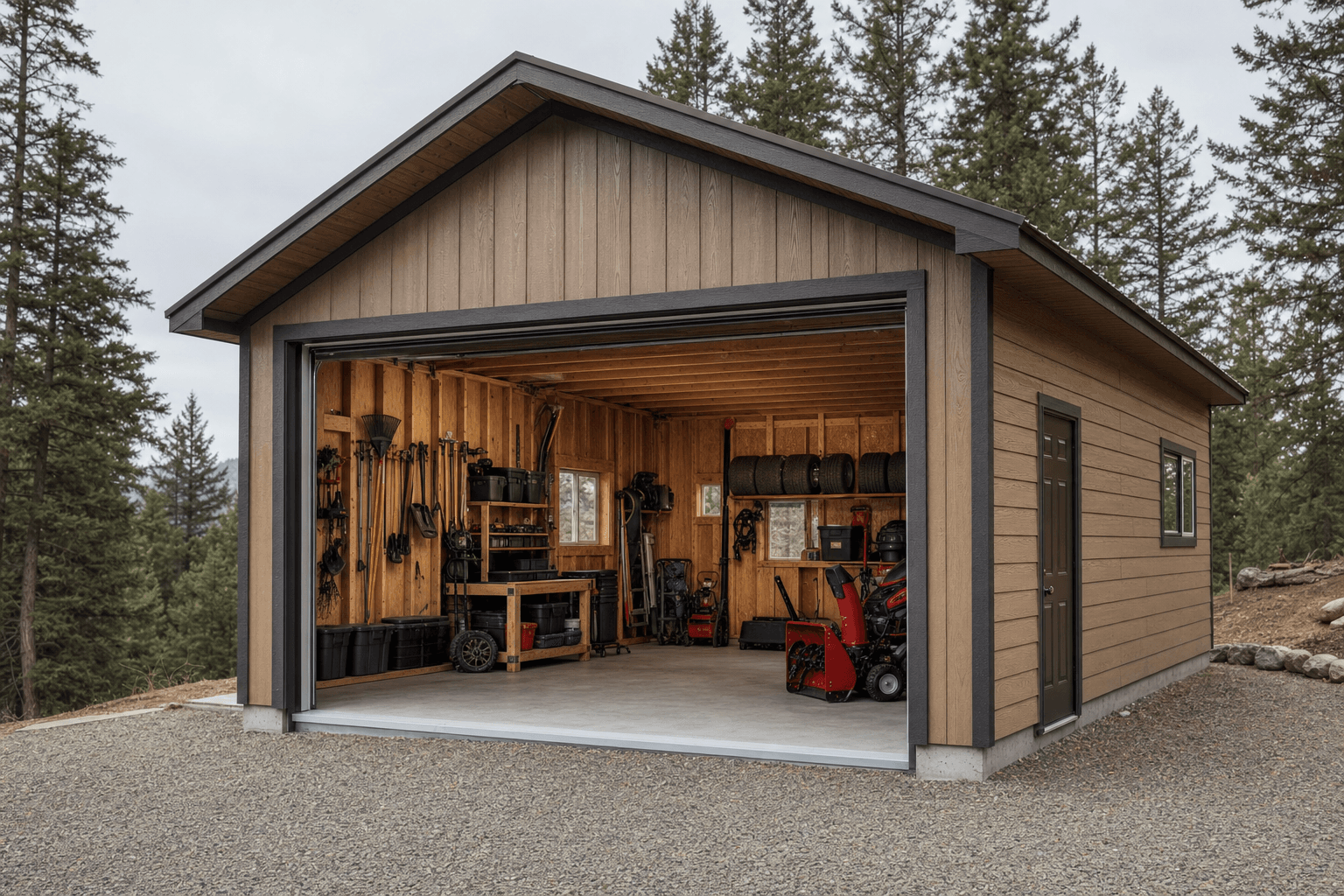
Garage-style shed options can support larger equipment and access needs without turning every project into a full detached garage.
Shed vs garage: side-by-side
Primary use
- Custom shed
- Storage, tools, lawn equipment, hobbies, small workshop space
- Detached garage
- Vehicle parking, heavier equipment, mechanic space, larger access
Typical cost
- Custom shed
- Usually lower and easier to scope
- Detached garage
- Usually higher due to size, foundation, doors, and code complexity
Site impact
- Custom shed
- Can fit backyards, side yards, and tighter property areas
- Detached garage
- Needs more driveway access, footprint, and planning room
Permit complexity
- Custom shed
- Varies by size, use, and jurisdiction
- Detached garage
- Often more involved, especially for vehicle or utility use
Customization
- Custom shed
- Doors, windows, lofts, shelving, ramps, and garage-style access
- Detached garage
- Larger doors, slab/foundation, utilities, and vehicle clearances
Best fit
- Custom shed
- More room without turning the project into a full garage
- Detached garage
- True vehicle storage or a permanent vehicle-focused building
| Feature | Custom shed | Detached garage |
|---|---|---|
| Primary use | Storage, tools, lawn equipment, hobbies, small workshop space | Vehicle parking, heavier equipment, mechanic space, larger access |
| Typical cost | Usually lower and easier to scope | Usually higher due to size, foundation, doors, and code complexity |
| Site impact | Can fit backyards, side yards, and tighter property areas | Needs more driveway access, footprint, and planning room |
| Permit complexity | Varies by size, use, and jurisdiction | Often more involved, especially for vehicle or utility use |
| Customization | Doors, windows, lofts, shelving, ramps, and garage-style access | Larger doors, slab/foundation, utilities, and vehicle clearances |
| Best fit | More room without turning the project into a full garage | True vehicle storage or a permanent vehicle-focused building |
Shed vs garage FAQ
Can a shed replace a garage?
A shed can replace a garage for many storage, tool, equipment, and workshop needs. It usually should not be treated as the same thing as a vehicle garage unless the design, access, foundation, and local requirements support that use.
When is a garage-style shed enough?
A garage-style shed can be enough when you need wider access for equipment, mowers, ATVs, tools, or workshop storage, but you do not need a full vehicle garage.
Will a shed be easier to permit than a garage?
Often, but not always. Permit requirements depend on size, location, foundation, use, and jurisdiction. Check the local permit page or ask NIOS before choosing the final footprint.
How do I compare the price of a shed and a garage?
Use the 3D shed builder to price the shed path first, then compare it against the full garage scope including foundation, driveway access, doors, permits, and utilities.
See whether a shed solves the space problem first.
Build a garage-style shed in 3D, add the access features you need, and compare that plan against the cost and complexity of a full garage.
Next step