
Shed Maintenance FAQ for North Idaho
Topic
Seasonal care
Best use
Long-term care
Key risk
Water issues
Next move
Plan placement
Shed care
Use the maintenance FAQ to protect the shed after build day
Category
Best next step
FAQ support
- Think about snow, drainage, vegetation, and airflow before placement.
- Choose materials and finishes with upkeep in mind.
- Inspect seasonally so small issues do not become expensive repairs.
A shed built for North Idaho still needs care. Snow, moisture, freeze-thaw cycles, vegetation, roof debris, and finish wear can all affect the building over time. Maintenance is much easier when small issues are caught early.
What this maintenance FAQ covers
Use these answers to understand inspections, snow, drainage, cleaning, paint or stain upkeep, roof care, ventilation, mildew, and when to ask for help.
If you are still choosing materials, read the shed materials FAQ before you finalize the design.
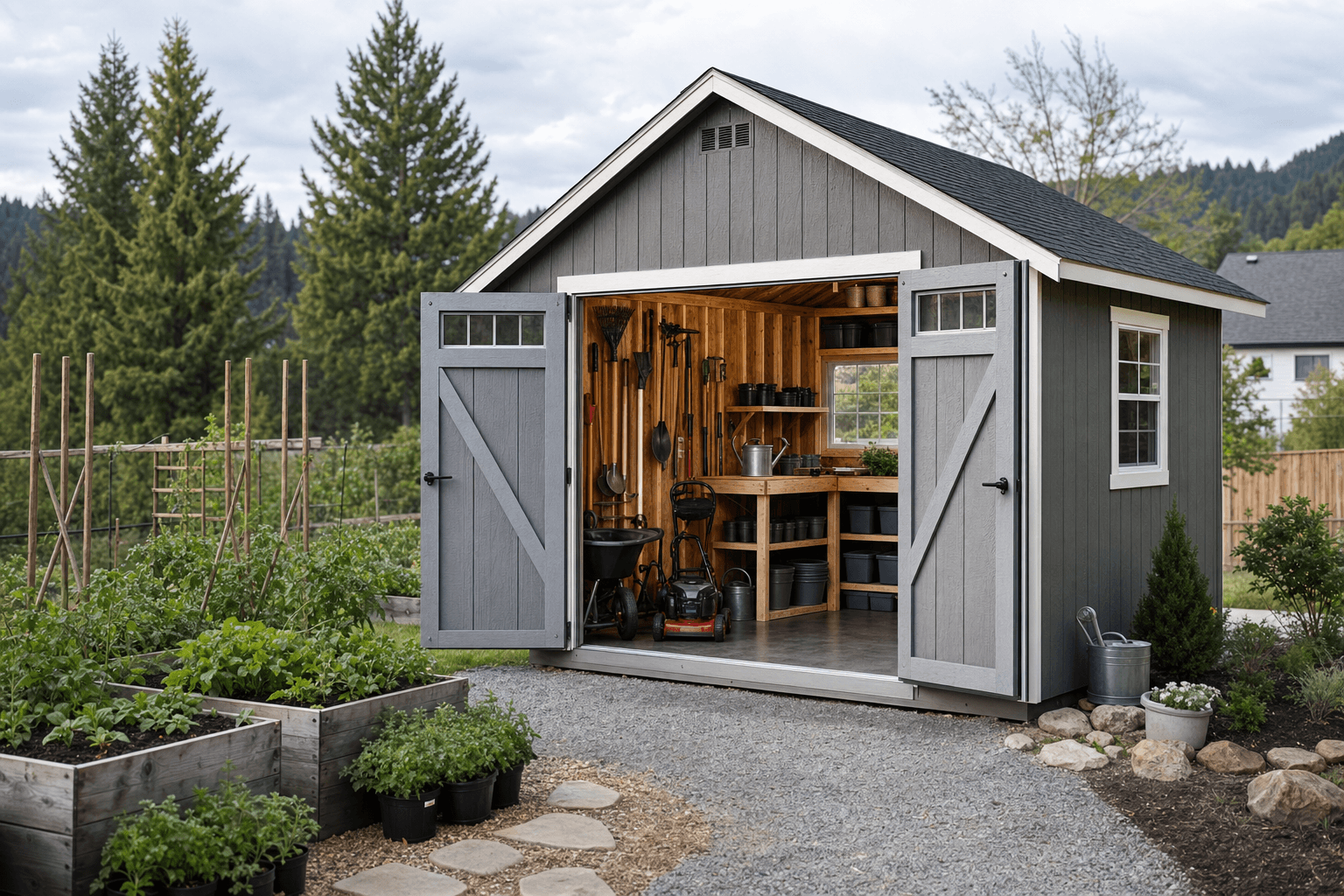
Seasonal shed care is easier when the building is placed with drainage, airflow, roof access, and exterior clearance in mind.
Shed maintenance questions answered
How often should I inspect my shed?
Inspect the shed at least seasonally, especially after winter, heavy storms, or long wet periods. Check roof surfaces, trim, siding, doors, windows, drainage, vegetation, and signs of water or pest entry.
Should I remove snow from the roof?
Use judgment and avoid unsafe roof work. If snow load, ice dams, drifting, or repeated heavy storms create concern, ask for guidance instead of risking injury or damaging the roof.
What is the biggest shed maintenance mistake?
The biggest mistake is ignoring water. Poor drainage, soil contact, blocked airflow, vegetation against siding, roof debris, and failed finish can create problems faster than normal age alone.
How often does paint or stain need maintenance?
The schedule depends on the product, sun exposure, moisture, color, siding material, and weather. Inspect the finish each year and address fading, peeling, cracking, or exposed surfaces before water gets in.
Can I pressure wash a shed?
Be careful. High pressure can force water behind siding, damage finish, or loosen trim. Gentle cleaning is usually safer than aggressive pressure washing.
How do I prevent mildew or moisture issues?
Keep vegetation back, maintain airflow, manage drainage, avoid storing wet items against walls, inspect around doors and windows, and address leaks or condensation concerns early.
What should I check in spring?
In spring, check roof condition, gutters if present, trim, siding, door swing, window seals, base drainage, water pooling, frost movement, and any damage from snow or ice.
What should I check before winter?
Before winter, clear debris, confirm drainage, check roof and trim, make sure doors close correctly, move stored items away from walls if needed, and clear vegetation from the exterior.
When should I ask for help instead of fixing something myself?
Ask for help when you see structural movement, roof damage, recurring leaks, rot, door or window problems that keep returning, or anything tied to safety or warranty questions.
Can good maintenance protect the shed warranty?
Good maintenance can help avoid preventable damage and make warranty conversations clearer. Keep notes or photos if you address weather, drainage, finish, or repair issues over time.
Design a shed that is easier to maintain.
Placement, materials, roof style, doors, and drainage all affect maintenance. Start with a design that fits the site.
Next step