Cold smoking vs hot smoking: space and ventilation implications
Cold smoking and hot smoking may use the same word, but they need very different shed layouts. In North Idaho, the design question is not just flavor. It is whether the room needs an offset smoke path, raw-product handling discipline, stronger ventilation separation, and enough working space to keep smoke, heat, grease, and food safety from colliding inside one small outbuilding.
Cold Smoking vs Hot Smoking in North Idaho
Cold smoking and hot smoking are often talked about as two settings on the same smoker, but from a shed-design standpoint they are two different jobs. Hot smoking is a cooking process. Cold smoking is primarily a flavoring and curing environment that operates at much lower temperatures and demands more caution. If you are planning a dedicated smoke space in North Idaho, that difference changes the size of the room, the placement of the heat source, the ventilation path, the cleaning routine, and even whether one chamber is enough.
Food-safety sources are blunt about why this matters. USDA FSIS says smoked food should be monitored with thermometers and that smoker air temperature for hot smoking should stay in the 225 to 300°F range. The University of Alaska Fairbanks adds an even clearer distinction in its smoking guidance: hot-smoked products reach internal temperatures of 160°F and higher, while cold-smoked products remain below 90°F and can actually promote bacterial growth if the process is not handled carefully. UAF also notes that lightly salted and smoked products are not preserved just because they were smoked; they still require safe handling and cold storage. In other words, cold smoking is not simply gentler hot smoking. It is a different risk profile.
That is why the building conversation matters so much. A room planned around smokehouse airflow, safety, and cleanability may be fine for hot smoking but still be inadequate for steady cold smoking. Likewise, a room designed to manage odor and grease in a dedicated smoke space may still need more separation if the goal is uncooked or lightly preserved product. If you want the actual build, start with the smokehouse shed service page. The purpose of this guide is to help you choose the right smoking strategy before the room is framed.
How does shed size affect heating and airflow?
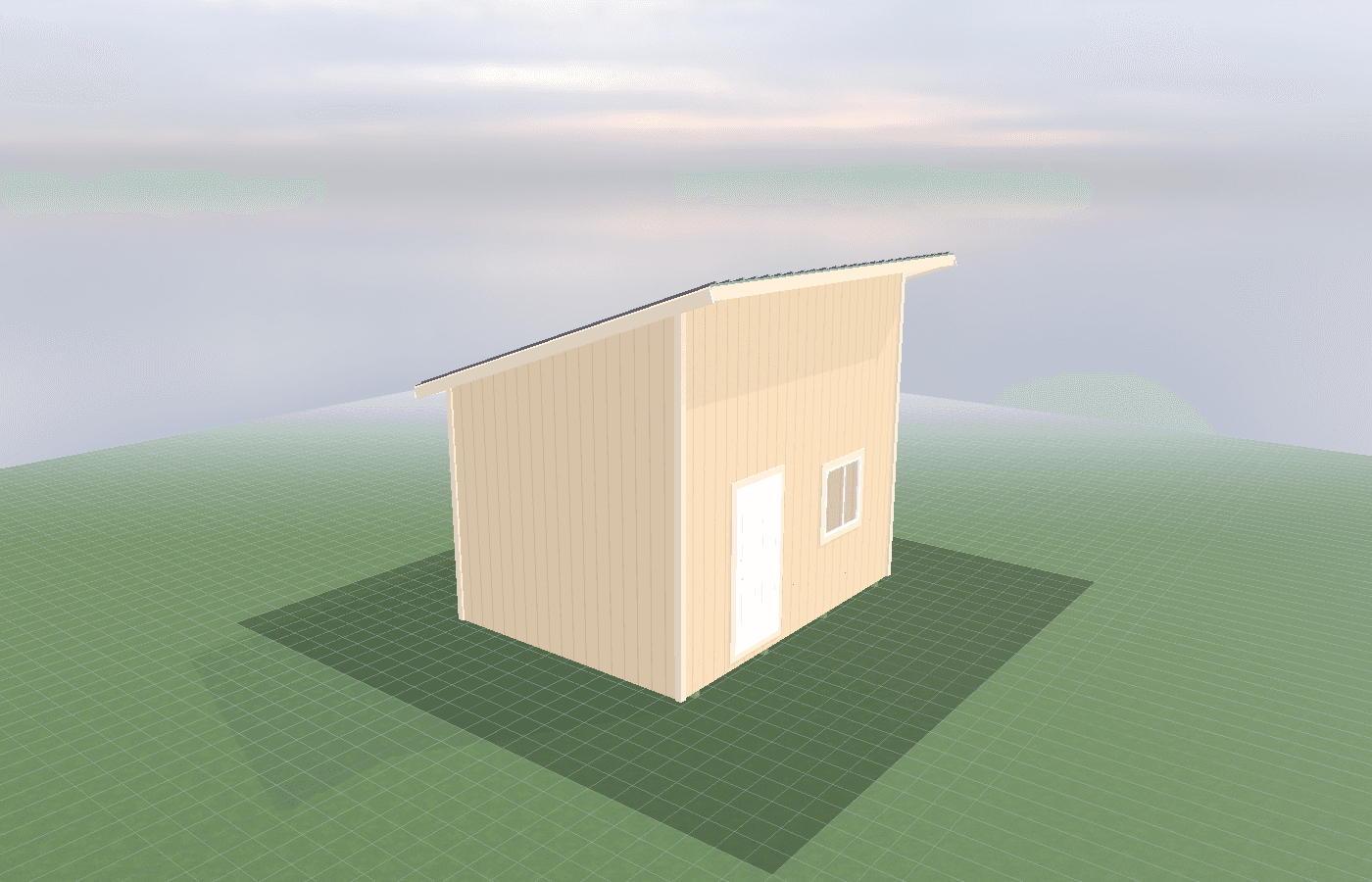
An 8x10 is often enough for a straightforward hot-smoking setup. It can hold a direct smoking chamber, basic prep space, hanging or rack space, and a ventilation path if the layout is disciplined. For many backyard users who mainly hot-smoke meat, fish, or sausage and then refrigerate or freeze the product, this size is practical.
An 8x12 is more forgiving and often the better all-around choice if you want flexibility. The extra length helps separate the hottest zone from the prep and cooling zone. It also gives you more room for washdown, tool storage, and a cleaner path for moving product without crossing directly in front of the heat source.
A 10x10 becomes attractive when you want a more balanced chamber and work area or when the site favors a squarer building. It can work for either method, but cold-smoking plans still need careful separation between the fire source and the product if the design relies on an offset smoke path.
Cold smoking usually benefits more from extra room because the smoke often needs distance to cool before it reaches the food. UAF's guidance for cold-smoked fish says the product temperature must stay below 90°F and that temperature control is critical. That alone pushes the design toward longer channels, offset fireboxes, or at least more deliberate separation than a compact hot-smoking room might need.
Systems planning for smokehouse / curing shed
Hot-smoking rooms are simpler because the smoke and heat are intended to cook the food. The key systems are a controllable heat source, a cleanable chamber, reliable air movement, thermometers, and a work flow that keeps raw product, finished product, and greasy residue from crossing paths more than necessary. FSIS emphasizes thawing completely before smoking and using thermometers to verify temperatures. That translates directly into shed planning: you need a prep surface, a clean hanging or racking zone, and a location for monitoring tools that is not buried in soot.
Cold-smoking rooms are more complex. Because the food remains below full cooking temperatures, the smoke source and food chamber often need to be separated. UAF notes that cold-smoked product stays below 90°F, that temperatures above 95°F start to cook the fish, and that when relative humidity cannot be reduced below 75 percent at air temperatures below 85°F, cold smoking is not possible. That is a major design clue. Cold-smoking sheds need better control over humidity, air path, and chamber temperature than most people assume.
Offset firebox or direct chamber?
For hot smoking, a direct chamber with careful venting may be fine. For cold smoking, an offset firebox and a smoke path that cools before reaching the chamber is often the smarter design. That longer route is part of why cold-smoking sheds tend to run larger or need more outdoor infrastructure.
One room or two zones?
If you only hot-smoke occasionally, one thoughtfully planned room may be enough. If you want both hot smoking and cold smoking, two zones become much more attractive. One zone handles the fire and hotter work. The other stays cleaner and cooler for product holding or cold-smoke use. Inference from FSIS and UAF guidance: when one process fully cooks the product and the other intentionally does not, separating the workflows reduces confusion and makes temperature control more realistic.
Ventilation and cleanability
Both methods need ventilation, but for different reasons. Hot smoking needs to exhaust heat and grease-laden smoke without starving the fire. Cold smoking needs to move smoke predictably while avoiding temperature creep and humidity buildup. Either way, the room needs washable surfaces, easy ash management, and safe clearance around the heat-producing components. Grease and smoke residue are maintenance issues first and fire or contamination issues later if ignored.
Cost, timing, and build-planning factors
Hot-smoking sheds are usually cheaper to build because they tolerate a more compact direct setup. Cold-smoking sheds often cost more because they reward distance, separation, and better control. That does not automatically mean large, but it usually means more deliberate infrastructure.
The local shed realities still apply. Snow-ready framing, a path that works in winter, and frost-aware site prep are part of every North Idaho build. Kootenai County's county-jurisdiction rules are a useful baseline: residential storage buildings over 200 square feet require permits, and grading, excavation, storm drainage, or run-off control may also require permits before work starts. If the smokehouse uses added electrical systems for fans, lighting, controls, or refrigeration support, Idaho DOPL's FAQ says permits are required when electrical, plumbing, or HVAC work is performed.
You should also price the room according to the process you actually want. A low-budget hot-smoking room may work well and be easy to keep clean. Trying to force that same room into reliable cold smoking later can lead to awkward retrofits, duct improvisation, and poor temperature control. It is better to decide up front whether cold smoking is a central use case and compare that design against pricing before committing.
Timing matters too. Cold-smoking setups benefit from testing in shoulder seasons because ambient conditions can help or hurt the process. UAF notes that high humidity can make cold smoking impossible. That is not just a food note. It means the site and season influence whether the room functions the way you expect.
For properties around St. Maries, where cooler fall use, wooded surroundings, and working acreage are common, access and separation deserve extra thought. Smoke should move away from circulation paths and nearby storage, and the room should still be easy to clean when the weather turns cold.
Popular sizes and layouts for smokehouse / curing shed
An 8x10 is a strong hot-smoking footprint for owners who want a clean, compact smoke room with direct heat and straightforward workflow.
An 8x12 is the best all-around option for many North Idaho users because it allows clearer separation between heat, prep, and holding zones. It is also the more forgiving starting point if cold-smoking capability matters.
A 10x10 can be a good compromise when the lot wants a square footprint and the owner prefers a central chamber with side work zones, though the cold-smoking path still needs careful planning.
Popular layout patterns usually look like this:
- compact direct-chamber hot-smoking room in 8x10
- split work-and-smoke room in 8x12
- offset-firebox or dual-zone design when cold smoking is a major use
The right layout depends on whether you are mostly cooking, mostly curing and flavoring, or trying to support both. Decide that first. The room gets much easier to design once the process is honest.
Frequently asked questions about smokehouse / curing shed
What size smokehouse / curing shed works best for cold smoking vs hot smoking: space and ventilation implications?
For many North Idaho buyers, 8x10 and 8x12 are the best starting sizes because they balance usable floor space with realistic placement on the property. We then size up or down based on snow load, storage volume, and how much dedicated work or seating area you need. Compare 8x10 and see 8x12.
What is the difference between cold smoking and hot smoking shed design?
Cold smoking needs an offset firebox with a long smoke channel to cool smoke below 90°F. Hot smoking uses a direct heat source in the same chamber. Cold smoking sheds are typically larger. See smokehouse options.
Frequently asked questions
What size smokehouse / curing shed works best for cold smoking vs hot smoking: space and ventilation implications?
For many North Idaho buyers, 8x10 and 8x12 are the best starting sizes because they balance usable floor space with realistic placement on the property. We then size up or down based on snow load, storage volume, and how much dedicated work or seating area you need. Compare 8x10 and see 8x12.
What is the difference between cold smoking and hot smoking shed design?
Cold smoking needs an offset firebox with a long smoke channel to cool smoke below 90°F. Hot smoking uses a direct heat source in the same chamber. Cold smoking sheds are typically larger. See smokehouse options.
Ready to plan your build?
Tell us your site, your dimensions, and the use case. We'll come out and price it.