Equipment bays vs enclosed storage: picking the right farm-shed layout
Farm storage gets expensive when you pay for enclosed square footage you did not need, and frustrating when you skip enclosure where weather or theft says you should not have. In North Idaho, the best layout is often a hybrid: the right open access for equipment and trailers, plus the right enclosed zone for tools, feed-adjacent supplies, and anything that should stay dry, secure, or cleaner year-round.
Equipment Bays Enclosed Storage in North Idaho
The core farm-storage question is not just how big the building should be. It is what actually needs walls. A lot of North Idaho working properties need both quick-access bay space and true enclosed storage, but owners often start by thinking in one direction only. Either they build a wide-open shell and then wish they had somewhere secure and dry for tools, chemicals, and smaller gear, or they enclose everything and then curse the building every time they try to back in a trailer or park muddy equipment.
A well-planned farm storage building treats those as two different jobs. Equipment bays are about speed, turning radius, seasonal staging, and weather cover for things that can live in a more open environment. Enclosed storage is about dryness, security, rodent resistance, and keeping the small but critical items from disappearing into a muddy equipment pile.
In North Idaho, snow and mud make the tradeoff more obvious. An open bay is great for parking implements, compact tractors, utility trailers, or hay-handling gear under roof without opening a big door every time. But once the item rusts, freezes, gets buried in drifting snow, or shares space with feed and hand tools, the limits show up. Enclosed storage protects more, but it also costs more per square foot and asks more from the door and drive layout.
This is where on-site construction matters. The right answer depends on the lot, the approach path, and the largest thing that actually moves through the building. A layout that works on paper can fail badly if the trailer swing is wrong, the roof dumps into the drive lane, or the enclosed side steals the only clean turning room.
On working acreage around Athol, the daily pattern usually settles the debate. If a tractor, side-by-side, or trailer comes out every morning, an open bay saves real time. If chainsaws, fencing tools, batteries, fasteners, and sprayer parts keep getting buried in buckets and cardboard boxes, enclosed space saves more frustration than another roof-only stall. Most owners do not need a perfect all-open or all-enclosed answer. They need the dirty, fast-turn category and the clean, secure category separated on purpose.
What size farm storage gives you enough usable room?
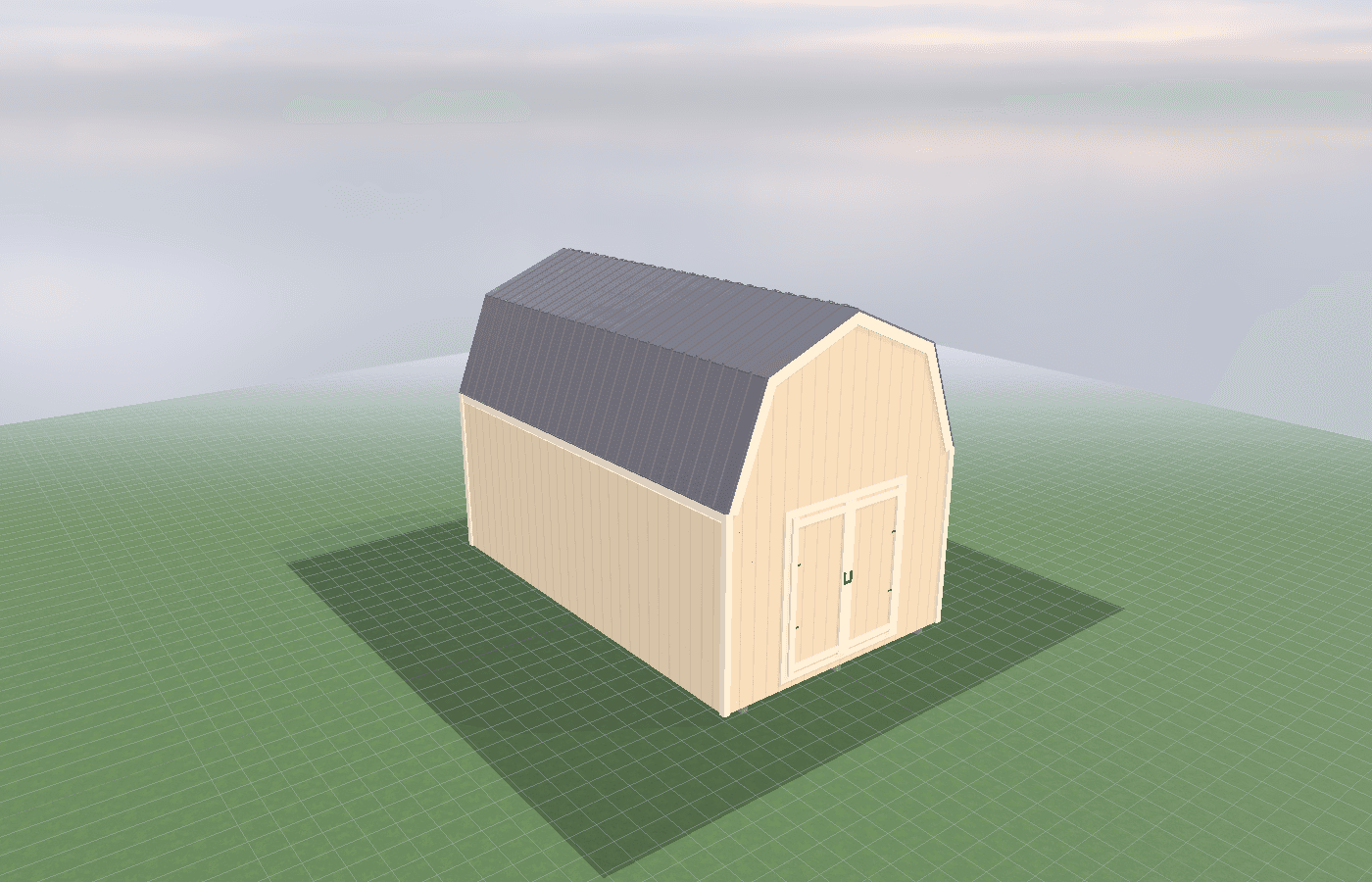
A 12x16 is where real farm-storage decisions usually start. It is big enough for meaningful enclosed space or a modest bay-and-storage combination, but it still forces discipline. If the building has to do everything, this size can feel tight fast.
A 12x20 is often the best first serious hybrid size. It gives enough length to divide open and enclosed functions without either one becoming useless. For many acreage owners, this is the size where the building starts working like a system instead of just a box.
A 12x24 is better when the property needs a longer bay, more interior separation, or more feed-adjacent storage that should stay out of the weather. It buys flexibility without immediately requiring the jump to a much wider footprint.
A 14x24 starts feeling better for equipment movement because the aisle and door geometry become more forgiving. If the building will regularly interact with implements, compact equipment, or bulkier farm materials, that extra width pays for itself in reduced daily annoyance.
The right size is the one that preserves usable circulation after the largest item is in place. If the trailer fits only after everything else is moved out of the way, the shed is too small or the layout is wrong.
Best layouts and features for farm storage
Use open bays for fast-turn equipment and dirty work
Open or semi-open bays are strongest when the stored items tolerate a more open environment. Utility trailers, implements, firewood process gear, spare panels, and seasonal equipment often benefit from covered access more than from total enclosure. A bay also helps when the item is muddy or snow-covered and you do not want it parked inside the cleaner part of the building.
But bays need real drive planning. If backing in is awkward, or if the bay faces the worst winter exposure on the property, the convenience disappears. That is why planning doors and drive access for trailers and implements belongs in the same conversation as this guide.
Use enclosed space for the small expensive stuff
Enclosed storage earns its keep with the items that are easiest to lose, ruin, or have rodents damage. Tools, electrical parts, chains, oils, hardware bins, sprayer parts, tack-adjacent gear, and anything that should stay dry and more secure belong on the enclosed side. If feed, seed, or bagged materials are involved, that becomes even more important, which is why feed storage and pest control: keeping rodents out is the next guide most owners should read.
The biggest mistake is hiding all the useful small stuff behind the same open bay where the dirtiest machine parks. Once that happens, the building becomes slower to use every single day.
Hybrids usually outperform purist layouts
Many North Idaho properties want a hybrid layout even if the owner starts by leaning one direction. One enclosed room plus one covered bay is often more useful than an all-open shell or a fully enclosed rectangle of the same total footprint. The hybrid lets the owner keep the high-value or weather-sensitive category protected while still parking or staging large dirty items under roof.
The best hybrid layouts give each zone a clear job. The enclosed portion is not just overflow for junk. The bay is not just the place things get abandoned. When those jobs stay distinct, the building keeps working better over time.
A useful rule is to put the most frequent dirty movement in the bay and the most frequent small-item retrieval in the enclosed zone closest to the main man door. That keeps muddy tires and clean hardware from competing for the same floor area. It also shortens the daily walk when weather is bad, which matters more than people expect during snow season.
Cost, timing, and build-planning factors
Open bays usually cost less per square foot than enclosed storage, but that does not make them automatically cheaper in real use. If the owner later adds smaller buildings, more rodent-control measures, or repeated tarping and lock-up work because too much was left open, the original savings can disappear quickly.
Enclosed storage costs more up front because it adds wall area, doors, hardware, and more finished interior function. But it often saves money by protecting the categories of items that get expensive to replace or frustrating to organize. The best budget question is not "which is cheaper?" It is "which items justify full enclosure on this property?"
Timing matters because the bay-versus-enclosed decision affects the whole site plan. Snow loads in the 40 to 60+ psf range, the common 24-inch frost-depth conversation, roof runoff, and how trailers turn all need to be handled before the slab, pier, or pad work is fixed. On acreage around Athol, access-lane mistakes tend to stay annoying for years.
County review matters too. Kootenai County routes permits and applications through its Building Division, while Bonner County's planning FAQ states that detached non-habitable accessory structures over 400 square feet generally require Building Location Permit review. Agricultural exemption questions, electrical work, and driveway or encroachment approvals can also come into play depending on the site. That is why checking pricing alone is not enough; the use case and site should be reviewed together.
Popular sizes and layouts for farm storage
A 12x16 works best when the property needs either a compact enclosed room or a very focused mixed-use layout. A 12x20 is the common sweet spot because it supports a meaningful hybrid split. A 12x24 gives more length for real separation between bay and enclosed functions, and a 14x24 often feels best once trailer movement and wider equipment are part of daily use.
The strongest layouts start with the largest piece of equipment and the cleanest category of storage, then work backward. If the largest item dictates the bay depth and turn line, the enclosed side can be scaled to the smaller sensitive items that genuinely need protection. That sequence usually produces a better building than starting with a generic rectangle and hoping the uses sort themselves out later.
If the property has only one shed budget right now, hybrid layouts usually win because they delay the need for a second building. They are not perfect at everything, but they tend to be the best value for real working properties.
Frequently asked questions about farm storage
What size farm storage works best for equipment bays vs enclosed storage: picking the right farm-shed layout?
For many North Idaho buyers, 12x16 and 12x20 are the best starting sizes because they balance usable floor space with realistic placement on the property. We then size up or down based on snow load, storage volume, and how much dedicated work or seating area you need. Compare 12x16 and see 12x20.
What layout maximizes usable space in a farm storage shed?
Start with your largest item and build the layout around it. Wall-mounted storage, overhead racks, and French cleat systems make the most of vertical space. Get a free estimate.
Frequently asked questions
What size farm storage works best for equipment bays vs enclosed storage: picking the right farm-shed layout?
For many North Idaho buyers, 12x16 and 12x20 are the best starting sizes because they balance usable floor space with realistic placement on the property. We then size up or down based on snow load, storage volume, and how much dedicated work or seating area you need. Compare 12x16 and see 12x20.
What layout maximizes usable space in a farm storage shed?
Start with your largest item and build the layout around it. Wall-mounted storage, overhead racks, and French cleat systems make the most of vertical space. Get a free estimate.
Ready to plan your build?
Tell us your site, your dimensions, and the use case. We'll come out and price it.