Greenhouse vs grow shed vs hybrid: which fits your goals?
The right growing structure depends on what you actually want to do with it. In North Idaho, a true greenhouse, a more enclosed grow shed, and a greenhouse-shed hybrid each solve different problems around heat retention, humidity, storage, and workflow. Choosing well means matching the building type to your crop calendar instead of assuming more glass is always better.
Greenhouse Grow Shed Hybrid in North Idaho
A greenhouse, a grow shed, and a greenhouse-shed hybrid can all extend the season, but they do it in very different ways. The all-glazed greenhouse prioritizes light and solar gain. The enclosed grow shed prioritizes control. The hybrid splits the difference by combining a more exposed growing side with a more protected work or storage side. In North Idaho, those differences matter more than the labels because the climate is hard on simplistic assumptions. Sunny winter afternoons can still be followed by very cold nights, shoulder seasons can turn humid and muddy, and snow loads are not hypothetical.
The simplest way to choose is to ask what the structure is supposed to do on the hardest day, not the nicest day. If the main goal is maximizing passive daylight for transplants and seasonal production, a greenhouse may be right. If the goal is controlled starts under lights, cleaner work space, and a room that behaves the same before sunrise as it does at noon, a grow shed may be better. If the goal is to combine protected work space with a real growing zone, the greenhouse-shed hybrid usually makes the most sense.
Official extension guidance points in that same direction. Oklahoma State says a greenhouse is not a storage shed and warns that greenhouses are humid enough to rust metal tools and damage wood-handled tools. That single observation explains a lot. Greenhouses are wonderful growing environments, but they are not automatically good environments for everything else. A hybrid or enclosed grow shed exists because growers often need a place for trays, benches, supplies, potting, or electrical gear that should not live in the same humid zone as the plants.
The choice also intersects with climate management. If cold-night heat retention and covering choices are still an open question, read what glazing choices do for cold nights. If shoulder-season venting and heat spikes are the bigger concern, the companion topic is ventilation and overheating prevention in shoulder seasons.
What size greenhouse-shed hybrid do you need?
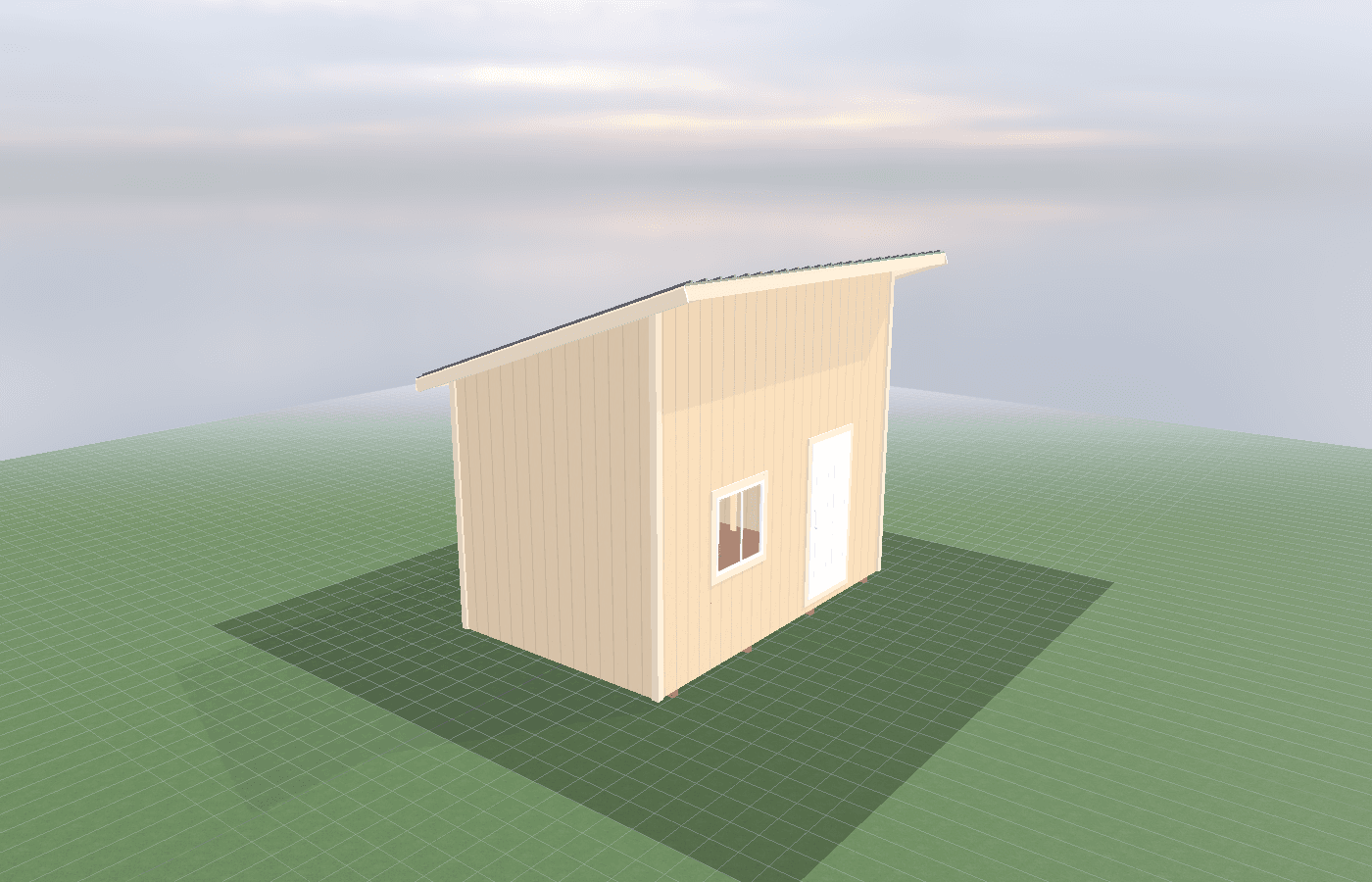
An 8x12 is often the smallest honest footprint for a hybrid because it leaves room for both a growing zone and a protected utility or work zone. It is compact enough to manage and large enough to prove the hybrid concept.
A 10x12 is the common step up when the owner wants more comfortable circulation, more bench run, or a clearer distinction between the glazed side and the enclosed side. For many North Idaho properties, this size is the best balance of performance and cost.
A 10x16 is better when the structure needs to do multiple jobs at once: propagation, potting, storage of trays and amendments, and perhaps a workbench or wash station. In a climate with real winter and shoulder seasons, that extra length often makes the room more usable for more months of the year.
The size question is less about square footage alone and more about how much of the building is doing each job. A pure greenhouse gives more area to growing. A grow shed gives more area to controlled interior work. A hybrid gives up some pure growing area to gain a protected side that actually supports the growing operation.
Best layouts and features for greenhouse-shed hybrid
A true greenhouse works best when maximum light is the priority and humidity is not a problem for everything inside. That usually means plants, benches, irrigation equipment, and only the supplies that tolerate a damp environment. OSU’s warning that greenhouses are poor places for ordinary tool storage is worth taking seriously. If the owner wants dry seed storage, power equipment, wood-handled tools, or a more stable workbench environment, the all-greenhouse answer starts to look weaker.
A grow shed is the opposite approach. It is usually more insulated, more dependent on lights or controlled inputs, and better suited to seed starting, propagation, or specialized growing where environment matters more than raw sunlight. It is also the most forgiving option for work surfaces, storage, and climate control. The tradeoff is that it asks for more utilities and less passive performance.
The hybrid exists because a lot of North Idaho growers want both. They want a bright growing side, but they also want a drier, more protected side for potting, storage, electricity, and the daily work that keeps the growing side functional. That blend is often the most practical answer in a snow country climate because it gives you one zone that can run humid and another that does not have to.
Which building fits which goals?
A greenhouse tends to fit best when:
- you want seasonal or shoulder-season production with maximum daylight
- you can keep most non-plant storage elsewhere
- you accept a humid interior as part of the job
A grow shed tends to fit best when:
- you want tighter control over heat, light, and airflow
- the room needs to support seed starting or specialty growing under lights
- benches, tools, and supplies need a more protected environment
A hybrid tends to fit best when:
- you want both real growing area and protected support space
- cold nights and shoulder seasons matter, but you still want a daylight-driven side
- you need one building to support propagation, potting, and storage without turning the whole room humid
In practice, many North Idaho owners discover that the hybrid solves the most real-world problems because it keeps the wet, bright side from dominating the entire structure.
Cost, timing, and build-planning factors
The cheapest structure is not always the best value. A greenhouse can be economical for seasonal light-driven use, but it may create extra expense later if you still need another dry work or storage space. A grow shed can cost more in utilities and controls, but it often performs better in the months when outside conditions are least cooperative. A hybrid usually costs more than the simplest greenhouse shell, yet it may replace the need for a second building.
North Idaho site realities still apply to all three. The structure still needs framing appropriate for local snow loads, a support system that respects frost-depth discussions, and a site plan that handles run-off and access. Kootenai County’s building page says residential storage buildings over 200 square feet require permits in county jurisdiction and that some site-disturbance work may need review. If the building uses electrical, plumbing, HVAC, or more permanent utility planning, Idaho DOPL’s permitting rules also matter.
Timing matters because these structures are usually most needed before the season feels comfortable. If the goal is earlier starts or shoulder-season use, the building should be functioning before the first trays or transplants are already due. It is much easier to test how the room behaves in cold nights and sunny afternoons before the crop schedule is depending on it.
For properties around Athol, site exposure matters a lot. Sun, drifting snow, prevailing winds, and how close utilities can run all influence whether the greenhouse, the grow shed, or the hybrid is the smarter choice. That is why comparing types against pricing and site realities together usually produces a better answer than comparing shell prices alone.
Popular sizes and layouts for greenhouse-shed hybrid
An 8x12 works best when the owner wants the smallest honest hybrid: one functional glazed side and one modest protected support side.
A 10x12 is the most balanced size for many North Idaho growers because it allows cleaner zoning without making the building cumbersome or expensive to operate.
A 10x16 becomes attractive when the building needs to carry more of the workflow: propagation benches, potting, tool storage that stays dry, and enough growing area to justify the structure in the first place.
The strongest layouts usually give each side one clear job. The glazed side handles growing and solar gain. The enclosed side handles supplies, power, potting, and thermal buffering. The more those jobs are mixed together, the less obvious the advantage of the hybrid becomes.
For many North Idaho owners, the real answer is less ideological than practical. They do not need the brightest possible structure or the most controlled possible structure; they need the building that wastes the least effort between seeding, potting, watering, venting, and storing supplies. That is why the hybrid often wins on mixed-use properties even when a simpler option looks cheaper at first glance.
Frequently asked questions about greenhouse-shed hybrid
What size greenhouse-shed hybrid works best for greenhouse vs grow shed vs hybrid: which fits your goals?
For many North Idaho buyers, 8x12 and 10x12 are the best starting sizes because they balance usable floor space with realistic placement on the property. We then size up or down based on snow load, storage volume, and how much dedicated work or seating area you need. Compare 8x12 and see 10x12.
What is the most common mistake people make when planning a greenhouse-shed hybrid shed?
Underestimating space needs is the most common error. Measure your equipment and add 25-30% for workspace and future growth. In North Idaho, also factor in snow gear and seasonal storage demands. Get a free estimate.
Frequently asked questions
What size greenhouse-shed hybrid works best for greenhouse vs grow shed vs hybrid: which fits your goals?
For many North Idaho buyers, 8x12 and 10x12 are the best starting sizes because they balance usable floor space with realistic placement on the property. We then size up or down based on snow load, storage volume, and how much dedicated work or seating area you need. Compare 8x12 and see 10x12.
What is the most common mistake people make when planning a greenhouse-shed hybrid shed?
Underestimating space needs is the most common error. Measure your equipment and add 25-30% for workspace and future growth. In North Idaho, also factor in snow gear and seasonal storage demands. Get a free estimate.
Ready to plan your build?
Tell us your site, your dimensions, and the use case. We'll come out and price it.