Ventilation and overheating prevention in shoulder seasons
Shoulder seasons are when greenhouse-shed hybrids prove whether they were designed well or just designed optimistically. In North Idaho, a room can be near freezing at sunrise and dangerously hot by mid-afternoon, so good ventilation is less about summer comfort and more about keeping plants, glazing, and workflow stable during the months growers actually use the structure hardest.
Ventilation Overheating in North Idaho
In North Idaho, the shoulder seasons are when growers learn whether their structure understands the climate or only looks good in it. March, April, September, and October can combine bright sun, cold soil, wind, overnight frost, and muddy approaches in the same week. That mix makes overheating and bad air exchange much more common than many first-time owners expect. A 42 F day outside can still create a very hot interior if the structure is glazed, closed up, and catching full sun.
Utah State's high tunnel temperature guidance says it is often necessary to ventilate on sunny late-winter days even when outdoor air temperatures are relatively cold. It also notes that closed tunnels can exceed 120 F on a sunny day in early March if they are not vented properly. Purdue's high tunnel environment guide makes the same point from a management angle: venting is the most common way to reduce relative humidity, high end-wall vents and small cross-vent openings can exchange air without blasting cold air directly on plants, and it is often smart to vent just before nightfall to swap out warm moist air for cooler drier air. Those are tunnel lessons, but they map directly onto a North Idaho greenhouse-shed hybrid.
That is why shoulder-season ventilation deserves its own planning conversation. If you are still deciding what kind of structure fits your goals, start with greenhouse versus grow shed versus hybrid. If your main concern is heat retention once the sun drops, the companion read is what glazing choices do on cold nights. But if the problem you keep picturing is the room cooking itself on a cold bright day, then ventilation strategy is the real design problem.
How does shed size affect heating and airflow?
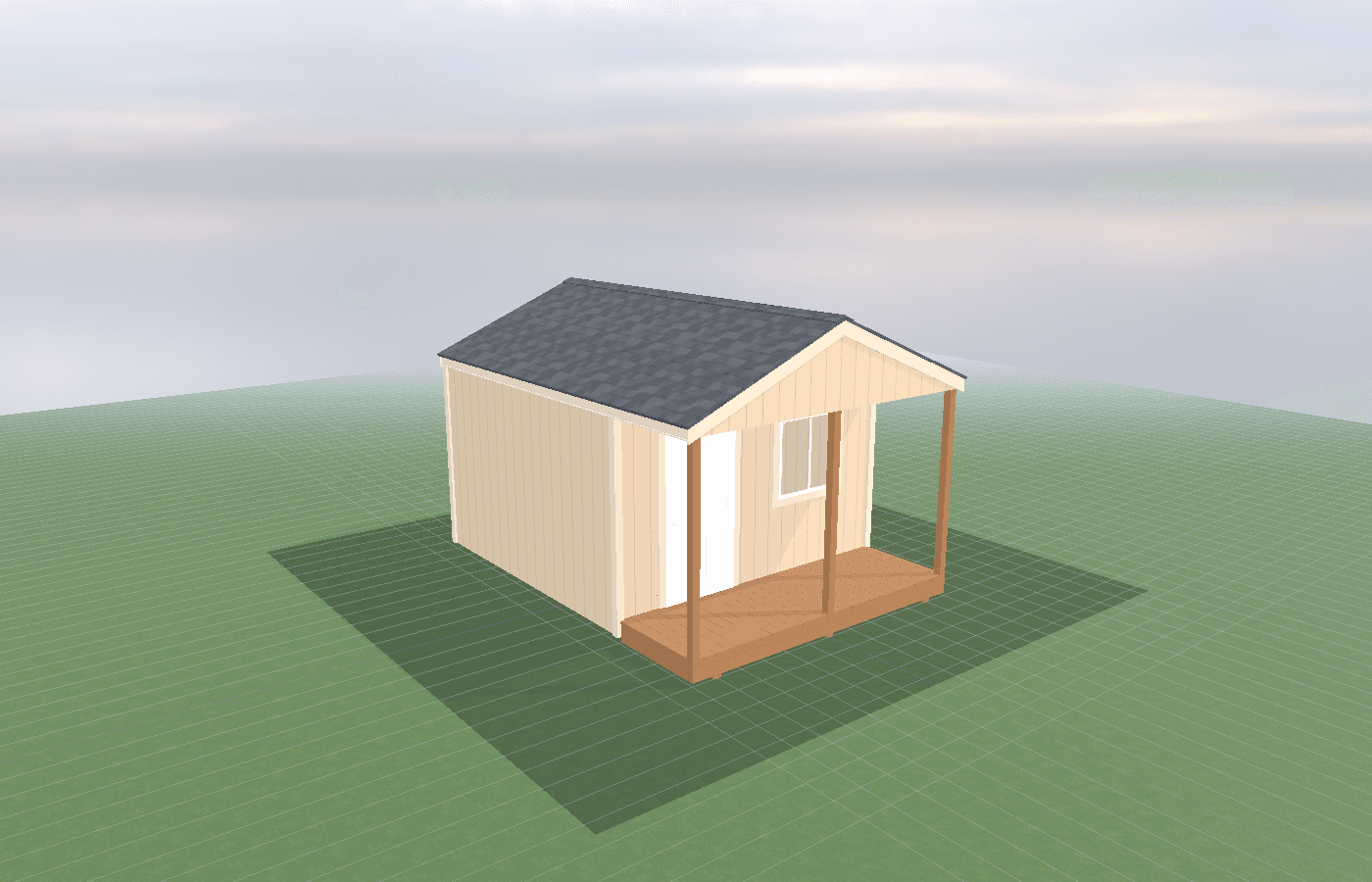
An 8x12 is often the smallest footprint where a greenhouse-shed hybrid can vent honestly. It has enough length to create a glazed side, a more protected side, and a reasonable air path between them. In a smaller room, one open door can act like the only temperature-control tool, which is not a great long-term strategy.
A 10x12 is usually the best all-around shoulder-season size because it gives more room for zoning. Air can move through the structure without crossing directly over every tray or bench, and the owner can separate the most sun-exposed growing side from the calmer work-and-storage side more effectively. That matters because the same room often needs both ventilation and thermal buffering on the same day.
A 10x16 becomes useful when the structure needs more production area, more bench runs, or more true separation between active growing and support space. The tradeoff is that larger rooms need more deliberate vent and fan planning. Bigger is not automatically safer. A longer room can still overheat badly if the hot air has no obvious exit path.
The size question is really about how much time the structure has to respond. Small rooms heat up fast and cool down fast. Larger rooms buffer a little better, but only if the vent design, openings, and internal airflow are helping. If the room relies on one door cracked open and one lucky breeze, the footprint is not the real issue.
Systems planning for greenhouse-shed hybrid
The first ventilation decision is whether the structure is trying to behave like a greenhouse, a controlled work room, or both. Hybrids usually need both. The glazed side wants rapid venting on bright days. The enclosed side wants slower, more stable air exchange so the room does not lose all of its useful warmth every time you cool the growing side down. That means the openings and airflow paths need to be chosen intentionally.
Utah State recommends opening end doors or vents first and then opening side walls if that is not enough. Purdue recommends vents high enough to exchange air without blowing frigid air directly onto low crops, and it specifically notes that horizontal airflow fans help keep air moving and reduce humidity. Those two sources together describe a sensible North Idaho hybrid plan: high exhaust where heat collects, controlled lower intake where cooler air enters, and steady internal circulation so the air does not stratify into hot glass-side pockets and damp cold corners.
A hybrid also needs to be managed around the daily cycle. Purdue notes that venting just before nightfall can reduce relative humidity because cooler outside air becomes drier as it warms inside. That is exactly the kind of shoulder-season move that prevents condensation and disease pressure without forcing the owner to leave the structure wide open all night. In other words, good ventilation is not simply "more open." It is timed, directional air exchange.
Overheating prevention is not separate from glazing
The covering choice and the venting plan belong together. More insulating glazing may hold warmth better overnight, but it can also intensify daytime heat if the air exchange strategy is weak. Simpler film coverings may dump heat faster at night, but they still require good vent control on bright days. The answer is not to choose between glazing and venting. It is to choose a combination that fits the crop calendar and the site.
Monitoring belongs in the system too. Utah State recommends an accurate minimum-maximum thermometer in the structure. That is not overkill. Without real high and low readings, most owners only remember the hour they were standing in the building. The plants experience the rest of the day too.
Cost, timing, and build-planning factors
Shoulder-season ventilation is cheap to plan early and expensive to fake later. High vents, operable openings, fan placement, and bench layout all interact. Once the shell is built, retrofitting a better air path usually means modifying framing, coverings, or interior use patterns that would have been easier to settle on paper.
North Idaho structural realities still apply. The room still has to be framed for local snow loads that commonly land around 40 psf and can run higher depending on exposure and county. The base still has to respect the common 24-inch frost-depth discussion and deal with spring mud and runoff. Kootenai County's building page says residential storage buildings over 200 square feet require permits in county jurisdiction, and it also notes that site-disturbance work such as grading, excavating, and storm drainage or run-off control may require review before work starts. If the hybrid is also getting powered ventilation, lighting, or HVAC equipment, Idaho DOPL says a permit is required when electrical, plumbing, or HVAC work is performed.
Timing matters because owners usually discover ventilation problems when they are busiest. The room should be tested before the transplant rush or before fall shoulder-season use is underway. That lets you learn how quickly temperatures spike after sunrise, how long humidity lingers after watering, and whether the vents are protecting or punishing the crops near them.
Properties around Athol add another practical factor: wind and snow placement. A venting strategy that looks perfect on paper can be miserable if prevailing wind dumps cold air straight onto the benches or if snow and ice make key openings hard to use. Site-specific placement matters as much as the vent hardware.
If you want the airflow plan reviewed before the structure is locked in, get a free estimate. A hybrid that can keep moving air in shoulder seasons is much easier to use than one that only behaves in midsummer.
Popular sizes and layouts for greenhouse-shed hybrid
An 8x12 works well when the goal is a compact hybrid with one meaningful glazed side and one protected side, provided the vent openings are placed honestly and the benches do not block the air path.
A 10x12 is the strongest all-around size for many North Idaho projects because it gives enough room for controlled cross-ventilation, better fan placement, and a more stable split between growing and support space.
A 10x16 makes sense when the owner wants more bench length, more production area, or enough space to keep the hottest zone away from the most delicate crops. It rewards good planning, but it also punishes lazy airflow design more dramatically than the smaller footprints.
The best shoulder-season layouts usually share a few traits:
- high exhaust or end-wall venting where heat collects
- lower intake air that does not blow straight on the crop canopy
- fans or internal air movement that keep pockets from forming
- a protected side of the hybrid that helps buffer the daily swings
Ventilation in North Idaho is rarely about one perfect vent. It is about making the whole room respond gradually instead of in sudden hot or cold shocks.
Frequently asked questions about ventilation overheating
What size greenhouse-shed hybrid works best for ventilation and overheating prevention in shoulder seasons?
For many North Idaho buyers, 8x12 and 10x12 are the best starting sizes because they balance usable floor space with realistic placement on the property. We then size up or down based on snow load, storage volume, and how much dedicated work or seating area you need. Compare 8x12 and see 10x12.
What glazing keeps a greenhouse-shed hybrid warm through cold North Idaho nights?
Double-wall polycarbonate panels offer the best balance of insulation and light transmission. Twin-wall at 8mm thickness provides R-1.6 per panel - far better than single-pane glass. See greenhouse options.
Frequently asked questions
What size greenhouse-shed hybrid works best for ventilation and overheating prevention in shoulder seasons?
For many North Idaho buyers, 8x12 and 10x12 are the best starting sizes because they balance usable floor space with realistic placement on the property. We then size up or down based on snow load, storage volume, and how much dedicated work or seating area you need. Compare 8x12 and see 10x12.
What glazing keeps a greenhouse-shed hybrid warm through cold North Idaho nights?
Double-wall polycarbonate panels offer the best balance of insulation and light transmission. Twin-wall at 8mm thickness provides R-1.6 per panel — far better than single-pane glass. See greenhouse options.
Ready to plan your build?
Tell us your site, your dimensions, and the use case. We'll come out and price it.