How much firewood storage do you need? cords explained
Firewood sizing gets easier once you stop thinking in vague piles and start thinking in burn rate, season length, and rotation. In North Idaho, the right woodshed is not just about how much wood you can cram under a roof. It is about how much you need to season, keep dry, and reach easily in January.
Much Firewood Storage Cords in North Idaho
Firewood storage decisions usually go wrong in one of two directions. Some owners build too small and end up stacking overflow on pallets, under tarps, or against the house by midwinter. Others build oversized storage without thinking through how much wood they truly burn, how they rotate it, or whether the structure will still keep the oldest wood accessible when the snow is deep. A good firewood shed solves those problems by matching capacity to use.
The first thing to clarify is the unit. The U.S. Energy Information Administration defines a cord of wood as 128 cubic feet, usually understood as a stack four feet high by four feet wide by eight feet long. That makes a full cord a useful measuring tool, but not necessarily a useful design tool by itself. What matters on the property is how much of that volume you need under cover at once, how much of it is ready to burn, and how much of it is still seasoning.
EPA's archived Burn Wise firewood storage guidance is also helpful here because it keeps the practical rules simple: keep the wood off the ground, use enough roof overhang to protect from rain and snow, split before stacking to reduce drying time, and season softwood and hardwood long enough to be genuinely usable. In North Idaho, those rules matter because winter loads the structure from above and spring loads it from below with melt and splash.
That means sizing is never just volume math. Owners around Athol and the rest of North Idaho often need to account for at least three categories at once: current burning wood, next-up reserve wood, and wood that is still drying. A shed sized only around the burn pile for this month often becomes an overflow headache by next season.
This guide works best alongside the rest of the woodshed cluster. If you are balancing venting and weather exposure, read airflow vs snow protection: woodshed design tradeoffs. If the concern is rodents or insects around the stack, pair it with firewood pests: how to store wood without inviting rodents. Capacity and storage quality always go together.
Another useful sizing check is to think about the coldest week of the year, not the average week. If the household wants enough dry wood on hand that a storm or illness does not create an emergency stacking scramble, the shed usually needs more honest reserve than people first assume.
What size firewood shed gives you enough usable room?
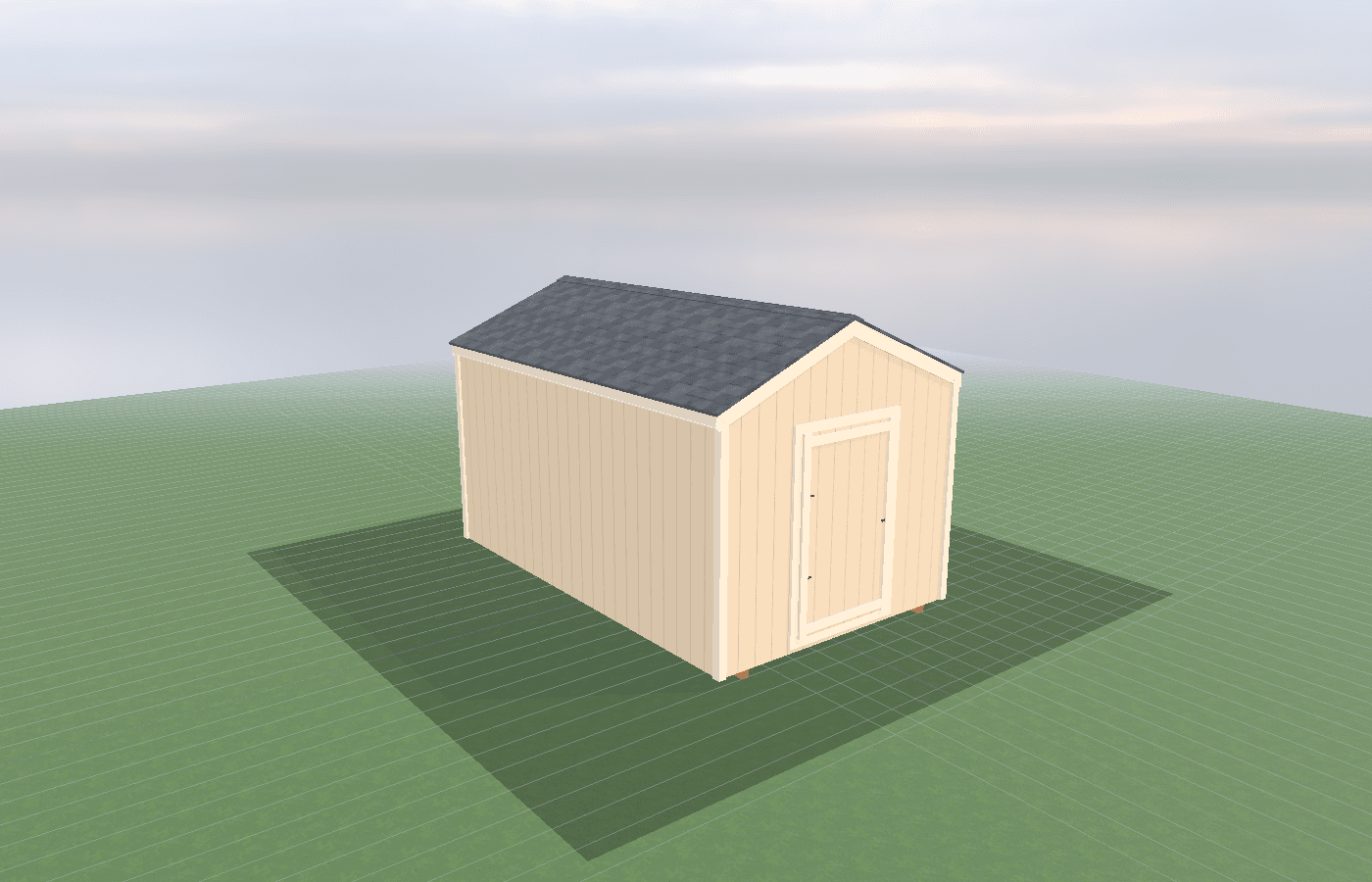
A 6x8 is a realistic starting point for lighter wood users, supplemental burners, backyard fire-pit storage, or households that rotate smaller amounts more often. It is compact, fits many properties easily, and can work well if the owner is disciplined about turnover.
An 8x8 is often the more flexible option because it gives better frontage for stacking and makes it easier to separate drier wood from fresher wood. That extra width can be more useful than it first appears because firewood is awkward to rotate in a very tight bay.
An 8x10 is a strong all-around size when the household uses wood regularly and wants more forgiving access during winter. This size typically gives more room to stage a reserve row, keep the oldest wood more reachable, and avoid the temptation to pile overflow outside the structure.
The right size depends on how much wood you burn, how often you restock, and whether one shed is serving one season of wood or a longer rotation strategy. If the building must hold both ready-to-burn stock and wood that still needs more drying time, sizing up becomes more valuable quickly.
Best layouts and features for firewood sheds
A good woodshed is organized around rotation before it is organized around maximum density. The stack should make it easy to pull the oldest, driest wood first and identify what still needs more time. That usually means open access, clear frontage, and enough roof coverage to keep the top of the stack protected without trapping all airflow.
Raised floors or platforms matter because EPA's storage guidance specifically recommends keeping wood off the ground to reduce moisture and pests. That single decision improves performance more than many decorative upgrades. A stack that wicks ground moisture from below or splashes repeatedly during thaw season will underperform even if the roof looks great.
Overhang is another major design feature. Snow and rain do not fall straight down all season in North Idaho. Wind-driven weather and melt cycles make side protection and roof extension matter. The structure should still breathe, but the roof should do real work.
Width of access matters too. If the woodshed is so tight that restacking becomes a chore, owners stop rotating correctly. That is one reason many buyers compare a 6x8 to an 8x8 early. The extra frontage often changes the daily usability of the building much more than the raw square footage suggests.
Finally, think through how the shed fits with the rest of the property. Some owners want the wood close to the house for short winter carries. Others want it near the splitter or delivery area and are willing to carry wood farther by hand. The best layout is the one that supports both seasoning and real winter use without creating a second messy wood pile somewhere else.
This is where many undersized woodsheds quietly fail. They technically hold wood, but not in a way that preserves a clean first-in, first-out pattern. Once overflow starts living on the side, the inventory number on paper stops matching the inventory that is actually protected.
Cost, timing, and build-planning factors
Firewood shed cost is shaped by size, roof design, floor elevation, and site conditions more than by finish level. This is a performance building. It needs to take snow load, stay usable in thaw season, and support repeated heavy stacking. Those demands are simple, but they are real.
Timing matters because woodshed projects often start when people realize they do not want another winter of tarp management. But the best results usually come from sizing the shed before the next delivery, not after the overflow problem has already returned. Once wood starts landing in three different places around the property, honest sizing gets harder.
Site review matters too. Kootenai County notes that residential storage buildings over 200 square feet typically require building permits in county jurisdiction, and local placement, access, and drainage still matter even on smaller structures. If the shed is going in near plow zones, dripping rooflines, or muddy delivery access, those conditions should shape the design from the start.
If you want the shed sized around your actual burn pattern instead of a guess, get a free estimate before you settle on the footprint. A woodshed that is slightly smaller but rotated honestly often outperforms a larger one that never gets organized properly.
Popular sizes and layouts for firewood sheds
A 6x8 works best for moderate or supplemental wood users who want a compact footprint and a simple rotation plan. It is also a practical first step on tighter lots.
An 8x8 is often the sweet spot for homeowners who want more flexibility in how they separate ready wood from the next row. The extra frontage makes stacking easier and can reduce clutter faster than many people expect.
An 8x10 is a good fit for regular wood users who want more winter-access comfort, more visible inventory, and less chance of overflow. It is often the point where the building starts to feel like a real system instead of just a covered rack.
The best layout is the one that keeps the driest wood reachable, the newest wood identifiable, and the whole stack off wet ground. If those three things stay true, the shed will work better than its square footage alone suggests.
That is why a smaller but well-rotated shed often feels larger in practice. You are using the capacity you built, not losing part of it to disorganized overflow.
Usable storage beats theoretical storage every time in a North Idaho winter. A shed you can rotate confidently is usually the shed that keeps the best firewood available when you need it. That is what good sizing buys.
Frequently asked questions about firewood sheds
What size firewood shed works best for how much firewood storage do you need? cords explained?
For many North Idaho buyers, 6x8 and 8x8 are the best starting sizes because they balance usable floor space with realistic placement on the property. We then size up or down based on snow load, storage volume, and how much dedicated work or seating area you need. Compare 6x8 and see 8x8.
What layout maximizes usable space in a firewood shed shed?
Start with your largest item and build the layout around it. Wall-mounted storage, overhead racks, and French cleat systems make the most of vertical space. Get a free estimate.
It also keeps winter hauling simpler. Every winter. That matters in deep cold.
Frequently asked questions
What size firewood shed works best for how much firewood storage do you need? cords explained?
For many North Idaho buyers, 6x8 and 8x8 are the best starting sizes because they balance usable floor space with realistic placement on the property. We then size up or down based on snow load, storage volume, and how much dedicated work or seating area you need. Compare 6x8 and see 8x8.
What layout maximizes usable space in a firewood shed shed?
Start with your largest item and build the layout around it. Wall-mounted storage, overhead racks, and French cleat systems make the most of vertical space. Get a free estimate.
Ready to plan your build?
Tell us your site, your dimensions, and the use case. We'll come out and price it.