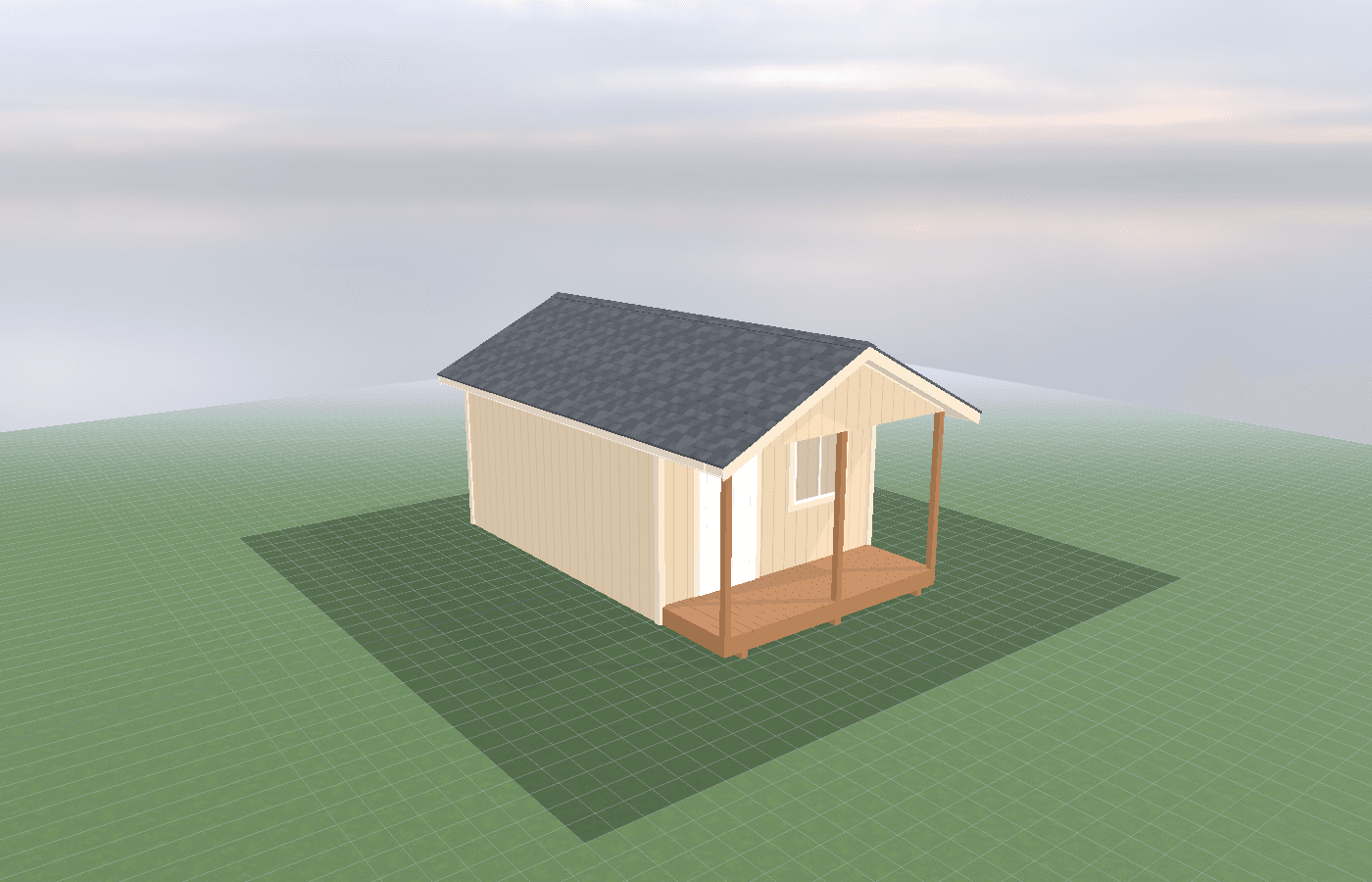
How to choose a hobby shed based on power + noise + dust
A hobby shed should be chosen by how the hobby behaves, not just by how much table space sounds nice. In North Idaho, power needs, noise tolerance, and dust production change the right shed size, wall layout, insulation level, and whether the room can stay pleasant on a neighborhood lot. Because NIOS builds on-site, the shell can be matched to your actual hobby and your property constraints instead of forcing every use into one generic studio box.
Choose Hobby Shed Based Power in North Idaho
The easiest way to choose the wrong hobby shed is to lump every hobby into one category called craft room. A sewing setup, fly-tying station, model-painting bench, leatherworking table, and small woodworking corner do not ask the room to do the same things. Some hobbies are quiet and clean but power-sensitive. Some are dusty but low-noise. Some are almost all seated bench work. Others need standing room, washability, and a better ventilation plan.
That is why the right hobby shed starts with a three-part filter:
- How much fixed power will the hobby really need?
- How much noise will the hobby create or attract?
- How much dust, odor, or cleanup will the process generate?
If you answer those three questions honestly, the room gets much easier to size. It also becomes easier to decide whether the shed belongs close to the house, farther from neighbors, or somewhere in between. This matters around tighter residential lots near Coeur d'Alene, where comfort and neighbor impact both matter.
A good hobby shed also needs to be built for the climate. In North Idaho, even a quiet hobby room still lives under real snow-load, frost-depth, and shoulder-season moisture conditions. On-site construction helps because the shell, windows, outlets, and work walls can be tuned to the actual hobby instead of copied from a prefab office plan. This guide pairs especially well with climate control for hobby sheds: when insulation pays off and space planning: storage wall vs workbench-first designs, because power, comfort, and layout decisions all influence one another.
How does shed size affect power planning?
An 8x10 is often enough for lower-intensity hobbies with modest electrical needs. If the room mainly powers task lights, chargers, a sewing machine, a soldering station, or a small fan, 8x10 can work well. The key is to keep the room organized and avoid turning one compact wall into a tangle of strips, adapters, and temporary cords.
An 8x12 is the stronger choice once the hobby needs more than one working zone. The extra length helps separate a bench from storage, or a clean station from a messier station, and it gives more flexibility for outlets and lighting. This is often the size where the electrical plan starts feeling intentional instead of improvised.
A 10x10 is a useful middle ground when the hobby wants a squarer layout rather than a longer one. A square footprint can work especially well for a centered table, two facing storage walls, or a rotating-use room where the owner changes projects through the year. It also gives better options for balancing light and storage around the perimeter.
Power planning should always be based on the real load, not on the hope that one extension cord will cover it. Idaho DOPL's electrical FAQ says contractors and homeowners performing electrical work must obtain permits, and homeowners are limited to their residence and related outbuildings. OSHA is equally clear that flexible cords are not a substitute for the fixed wiring of a structure. In plain language, if the hobby needs more than a lamp and an occasional charger, wire the shed like a real room.
Systems planning for hobby sheds
The easiest planning method is to sort hobbies into four practical buckets.
- Clean and quiet, low dust: sewing, quilting, fly tying, sketching, scrapbooking, miniature painting. These hobbies prioritize lighting, stable temperature, and storage more than heavy power.
- Clean but power-aware: electronics, laser printer support, heat tools, 3D-print support equipment, charging stations. These need a more deliberate outlet and circuit plan.
- Dusty or odor-prone: sanding, cutting, resin work, small woodworking, leather finishing, some paint processes. These need ventilation, cleanup surfaces, and better separation from stored supplies.
- Mixed-use hobby rooms: owners who alternate between calm seated work and occasional messier projects. These rooms need the most thoughtful zoning because the space has to reset between modes.
Once you know the bucket, use this planning sequence:
- Write down every plug-in item used during a normal session.
- Mark which ones may run at the same time.
- Decide whether the hobby creates dust, odor, or noise that needs a separate zone.
- Choose whether the room should be workbench-first or storage-wall-first.
- Decide whether the room needs year-round comfort or only shoulder-season use.
Noise is often the most overlooked part. A hobby that seems quiet inside the house may not stay quiet in a detached building with bare walls. Small compressors, air scrubbers, speaker systems, rotary tools, and even constant fans can change the feel of the room and the way it sits on the lot. If the hobby has any chance of growing louder or messier, leave yourself more wall separation and a more honest mechanical plan.
Dust is the other decision-maker. Fine dust and residue have a way of reaching everything, especially in compact rooms. If the process creates dust or fine debris, do not design the shed as a delicate display studio. Use surfaces that clean easily, keep power where vacuums and air cleaners make sense, and protect stored materials from the work zone. It also helps to write down what has to stay clean and what can tolerate residue. Thread, paper stock, electronics parts, and painted miniatures do not want to live on the same wall as sanding dust or solvent wipes.
Cost, timing, and build-planning factors
The cheapest hobby shed is rarely the one with the lowest shell price. The real cost difference usually shows up in wiring, insulation, ventilation, and whether the room has to be retrofitted after the owner realizes the hobby outgrew the first guess. It is much less expensive to place outlets, task-lighting locations, and wall reinforcement correctly during the build than after cabinetry and finished walls are already in place.
Timing matters because hobby rooms tend to evolve. A room that starts as sewing and craft storage may later add a heat press, a dedicated electronics bench, or a small dust-producing work area. That is why it helps to plan at least one step ahead. On-site construction is valuable because the shell can be designed for your current hobby while still leaving cleaner options for future upgrades.
North Idaho weather also changes what feels affordable. A lightly finished room that is too cold, too hot, or too damp for the supplies inside will eventually be abandoned or rebuilt. That is why the comfort question belongs in the same conversation as power and layout. If the room needs stable use through winter, the envelope and climate decisions from climate control for hobby sheds: when insulation pays off should be priced early, not tacked on later.
If you want the power plan, neighbor impact, and layout scoped together instead of guessed at one by one, get a free estimate before you buy furniture or equipment for the room.
Popular sizes and layouts for hobby sheds
For many hobby uses, the most practical comparison sizes are 8x10, 8x12, and 10x10.
An 8x10 works best for cleaner, quieter hobbies that rely on one strong wall of storage and a compact bench or table. It is efficient and easy to site, but it rewards discipline.
An 8x12 is the most forgiving all-around option. It gives better separation between storage and work, better outlet flexibility, and a cleaner path for hobbies that need both a seated station and a support zone.
A 10x10 is the flexible square-room choice. It works well for center-table layouts, balanced daylight strategies, or hobby owners who rotate between several smaller activities rather than one long bench process.
The best layout depends on the hobby's behavior. If the hobby is quiet and storage-heavy, protect the storage wall. If it is process-heavy and tool-heavy, protect the workbench. If it is messy, keep the cleanup path simple and do not pretend the room is a gallery. The right room should make the hobby easier to start, easier to pause, and easier to clean up. If the setup process takes twenty minutes every time, the shed is still underplanned even if the square footage looks generous. That test is useful because convenience usually predicts whether the hobby room stays active through winter or quietly turns back into storage.
Frequently asked questions about hobby sheds
What shed size gives enough room for safe power planning in a hobby shed?
For many owners, 8x10 is enough for light-duty circuits and basic wall space, while 8x12 gives more separation between benches, outlets, and equipment. The more fixed tools or electronics you add, the more valuable the extra layout room becomes. Compare 8x10 and see 8x12.
Does a hobby shed need more than a basic extension cord for power?
Yes - for anything beyond a single light, you need a proper subpanel with dedicated circuits. Extension cords are a fire hazard for permanent use and void most insurance. See hobby shed options.
Frequently asked questions
What shed size gives enough room for safe power planning in a hobby shed?
For many owners, 8x10 is enough for light-duty circuits and basic wall space, while 8x12 gives more separation between benches, outlets, and equipment. The more fixed tools or electronics you add, the more valuable the extra layout room becomes. Compare 8x10 and see 8x12.
Does a hobby shed need more than a basic extension cord for power?
Yes — for anything beyond a single light, you need a proper subpanel with dedicated circuits. Extension cords are a fire hazard for permanent use and void most insurance. See hobby shed options.
Ready to plan your build?
Tell us your site, your dimensions, and the use case. We'll come out and price it.