Snow-load roofs and drift zones: what to ask your builder
Snow-load planning for a sled shed is not just a truss number. In North Idaho, roof pitch, drift zones, opening size, and site exposure all affect whether the building stays easy to use after repeated storms.
Snow-Load Roofs and Drift Zones in North Idaho
Roof design is one of the easiest places for a buyer to hear the right words and still miss the real issue. A builder can say the shed is designed for snow load, but that answer is incomplete if nobody has discussed drift zones, roof pitch, site exposure, adjacent buildings, and where the snow will actually land after it sheds. For a snowmobile building, that matters because the roof is supposed to protect winter access, not just survive winter structurally.
A snowmobile-focused sled shop has two winter jobs at once. It has to carry the load overhead, and it has to avoid creating new problems at the door, apron, or trailer lane. If the roof dumps a mountain of snow right where the trailer needs to back or where the man door needs to open, the design may be structurally sound but operationally poor.
This is especially important in mountain-influenced markets like Silver Valley, where storms stack unevenly, wind shifts matter, and site exposure can change drastically over short distances. A shed placed beside a taller structure, cut bank, tree line, or persistent wind channel can collect drift in ways that a flat-site mental model never predicts.
Good roof planning starts with better questions. What ground snow loads are relevant to the site? How does the opening size affect the roof system? Where will snow shed from the eaves? Could nearby features create drift concentrations on one side? And how will the owner keep the main access path usable through repeated cycles of snowfall and melt?
It also helps to ask what assumptions the builder is making about the site that you may not share. Are they picturing a broad open apron when your lot actually has retaining walls and plowed snowbanks? Are they assuming the trailer will always park on the same side that gets the deepest roof dump? Good drift planning often comes from forcing those assumptions into the open before the roof form is finalized.
When does shed size change snow-load design?
A 10x16 usually stays in a comfortable size range for a simple sled-storage roof, but even here, a large overhead opening or a bad site orientation can change the engineering conversation. If the owner wants a broad door on one long wall, the structure above that opening needs to be considered as part of the snow plan, not after it.
At 12x20, the size starts to change the discussion more noticeably. The wider span increases what the roof system has to do, especially once the site is exposed to drifting and the building is expected to carry a substantial winter load without sag, bounce, or long-term movement. This is the comparison point referenced in the workbook FAQ for a reason.
A 12x24 gives more useful room for sled workflow, but it also expands the roof area and makes the consequences of poor orientation bigger. Wider or longer roofs create more opportunity for one side to accumulate or dump snow in inconvenient ways, especially when wind and exposure are working against the design.
The message is not that bigger sheds are bad. It is that wider spans and larger openings compress the margin for casual decisions. At some point, roof pitch, truss design, overhangs, and opening placement need to be treated as one coordinated system instead of separate upgrades.
North Idaho weather and material performance
North Idaho weather does not fail roofs only by total load. It also creates uneven loading, drifting, ice, wet heavy snow, and repeated thaw-refreeze cycles at the edges. That means roof performance is partly structural and partly operational. A roof that can technically carry the snow but creates ice buildup over the opening or constant drift against the sidewall is not a complete success.
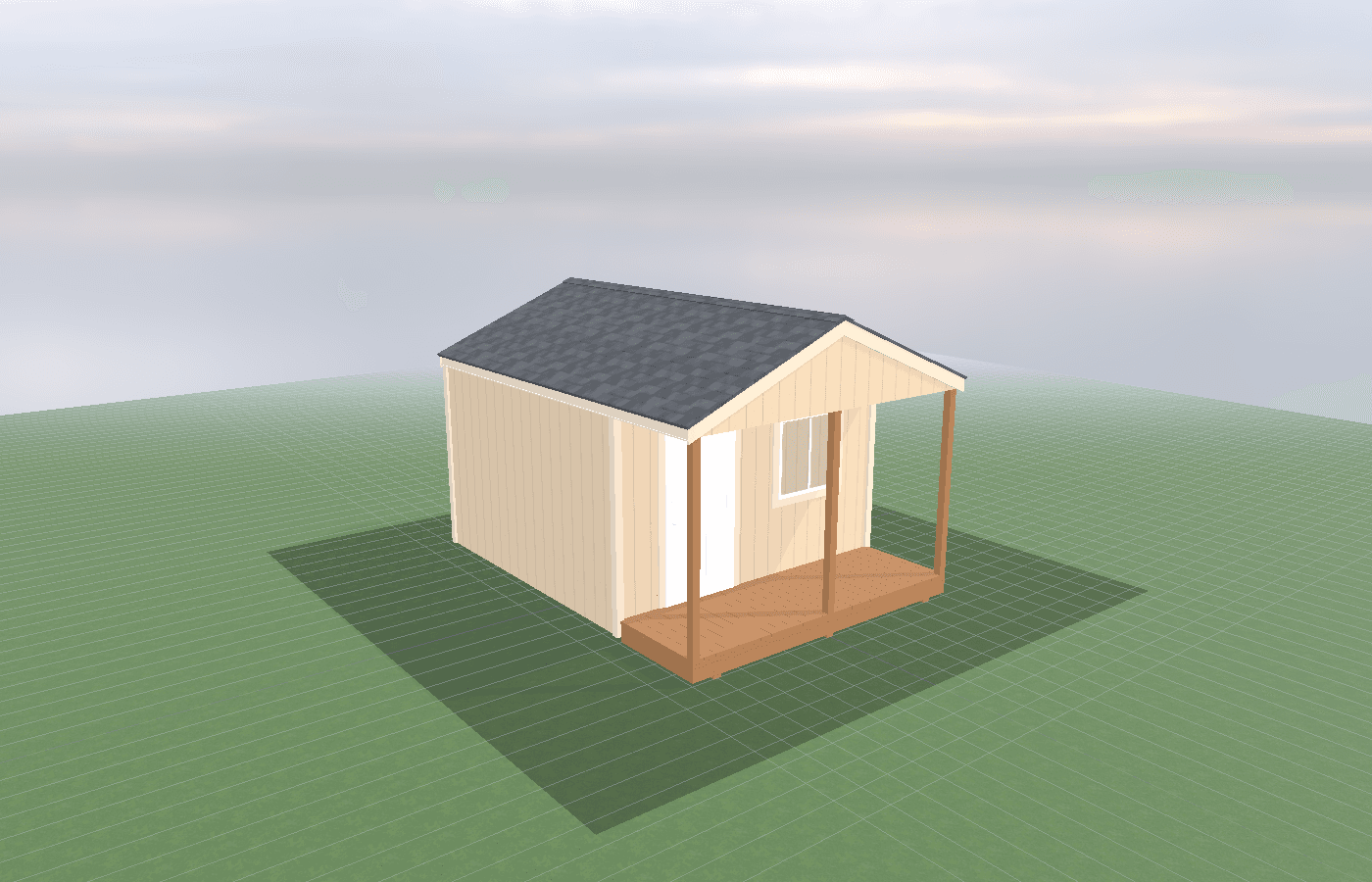
Roof pitch is one of the first practical variables. Steeper gables generally shed snow more readily, but that is only helpful if the shed area below them can tolerate the snow dropping there. On a sled shed, the question becomes whether the snow lands in front of the main door, beside the trailer apron, or on the cleanest circulation path. Barn-style and other roof forms can work well too, but only if the pitch, truss design, and snow-shedding behavior have been matched to the actual site.
Roofing material also matters. Smooth, durable roofing tends to shed more cleanly than rougher systems, but the faster the roof sheds, the more important the landing zone becomes. Gutters are not always realistic or helpful in deep-snow areas if they become ice collectors. Sometimes the better answer is to let the roof shed naturally and keep the drop zone away from the critical path. Snow guards can also be part of the discussion on some buildings, but only if the builder is clear about why they are being used and what they do to the snow-shedding pattern over doors, walkways, and trailer space.
This is where snowmobile shed sizing: door width, turning radius, and trailer considerations and gear drying room vs basic storage: what actually changes cost? connect back to roof planning. A wider door, a more ambitious shop layout, or a wet-gear zone all change where the owner needs reliable access and how much snow-related mess the entry can tolerate.
Shoshone County's Planning & Zoning page is useful here because it explicitly notes that the county has adopted building rules including snow-load and frost-depth requirements. That is the local reminder that roof design in this region is not just preference. It is part of the actual code and approval conversation.
Cost, timing, and build-planning factors
Roof and drift planning show up in the budget through engineering, truss packages, opening sizes, overhang choices, site grading, and snow-management details near the entry. Sometimes the most expensive snow-load mistake is not the truss itself. It is building the right truss over the wrong door placement and then spending years digging out the same problem area. Good questions for the builder usually include where snow is expected to pile, how the opening affects the structure, whether the overhang helps or hurts winter access, and what maintenance the owner should realistically expect after a big storm. Those answers tell you whether the builder is thinking about winter use or only about winter math.
Timing matters because roof orientation, apron grading, and access-path protection want to be resolved before the pad and framing are locked in. North Idaho build timing also has to respect the local realities already established across this project: snow loads that can run from the low 40s into 60-plus psf depending on area and site exposure, plus the common 24-inch frost-depth conversation when the building is more permanent.
County review should not be treated as optional background noise. Kootenai County expects building permits for many storage structures above its threshold, Bonner County requires Building Location Permits for many structures over 400 square feet, and Shoshone County notes that most construction types require permits and compliance with county building and zoning rules. A shed built for mountain snow should be discussed with those realities in mind, not only with a catalog drawing.
If you want a roof plan that keeps both the structure and the access path working through winter, request a free estimate before finalizing the build. The right questions are cheapest before the trusses are ordered.
Popular sizes and layouts for snowmobile shed / sled shop
A 10x16 usually works well with a straightforward gable roof when the opening and access path stay disciplined. A 12x20 often represents the first size where buyers should think more seriously about engineered trusses, door placement, and how the roof sheds near the apron. A 12x24 amplifies the benefits of better layout but also amplifies the downside of poor snow-dump planning.
The best sled-shop layouts usually keep the widest opening on the side with the clearest winter apron, avoid putting the man door directly under the heaviest roof dump line, and respect any site feature that could create drift. Those are not glamorous decisions, but they are the ones owners notice every single time a storm rolls through.
Roof design is doing its job when the owner barely thinks about it in January. The shed stays upright, the entry stays workable, and the snow goes somewhere manageable instead of somewhere critical.
Frequently asked questions about snowmobile shed / sled shop
What roof pitch handles heavy snow-load drift zones around a snowmobile shed?
Once spans get wider and the roof carries more drifting potential, size starts to matter a lot more for truss design, pitch, and door placement. Comparing a 10x16 shed to a 12x20 shed is often the point where structure, overhangs, and site exposure need a closer look. See 10x16 and compare 12x20.
What roof design handles heavy snow near a snowmobile shed in Bonner County?
A steep gable or barn-style roof at 6:12 or greater pitch sheds snow quickly. In high-snowfall areas like Sandpoint, consider engineered trusses rated for 60+ psf ground snow loads. Learn about our builds.
Frequently asked questions
What roof pitch handles heavy snow-load drift zones around a snowmobile shed?
Once spans get wider and the roof carries more drifting potential, size starts to matter a lot more for truss design, pitch, and door placement. Comparing a 10x16 shed to a 12x20 shed is often the point where structure, overhangs, and site exposure need a closer look. See 10x16 and compare 12x20.
What roof design handles heavy snow near a snowmobile shed in Bonner County?
A steep gable or barn-style roof at 6:12 or greater pitch sheds snow quickly. In high-snowfall areas like Sandpoint, consider engineered trusses rated for 60+ psf ground snow loads. Learn about our builds.
Ready to plan your build?
Tell us your site, your dimensions, and the use case. We'll come out and price it.