Temperature control for batteries: what to ask your installer
Battery systems do not need perfect room temperature every day, but they do need a real temperature plan. In North Idaho, the right questions are about cold-weather charging, summer derating, humidity, and whether the room and equipment together can hold performance steady through long winters and warm direct-sun periods.
Temperature Control Batteries in North Idaho
The right temperature question is not Can this battery survive North Idaho? Modern systems usually can. The better question is What happens to charging speed, discharge performance, warranty conditions, and daily usability when the room gets colder or hotter than ideal? That is where good planning separates a dependable utility room from a frustrating one.
Current manufacturer guidance makes that distinction clear. Tesla's current Powerwall 3 specs say the system is indoor and outdoor rated, designed to operate from -4 F to 122 F, and may be derated above 104 F. Enphase's current 2025 temperature brief says IQ Battery products support maximum-power charging between 59 F and 113 F and maximum-power discharging between 32 F and 122 F. Outside those ranges, the battery can still operate, but charge or discharge power may be reduced. Enphase also says location choice affects both performance and warranty considerations and recommends minimizing exposure to sub-optimal temperatures.
That is the heart of the installer conversation. A battery room does not need to imitate a hospital lab. It does need to avoid long periods where the equipment is forced into reduced performance, unnecessary cycling, or avoidable condensation risk. In North Idaho, that means you should think about January cold snaps, July direct sun, shoulder-season moisture, and what happens when the room is unoccupied for a week.
A dedicated solar-battery-shed gives that temperature plan a better chance to work. On-site construction lets the room be oriented for service access, shaded where helpful, insulated where needed, and placed close enough to the rest of the system that conduit runs stay clean. It also makes it easier to create a room that behaves consistently instead of swinging wildly because it shares a wall with lawn equipment, stored gasoline, or a garage door that opens twenty times a day.
That site logic matters on real neighborhood parcels too. Around Post Falls, battery rooms often live in tighter side yards where morning shade, afternoon sun, and service-door swing all affect how stable the room feels. A battery room that looks fine on paper can run hotter than expected if the west wall bakes all afternoon or if the door opens straight into drifting winter weather. Asking the installer about orientation, overhangs, and wall color is not overthinking it. It is how you keep the system closer to its best operating range without paying for unnecessary retrofit work later.
What size solar battery / inverter shed do you need?
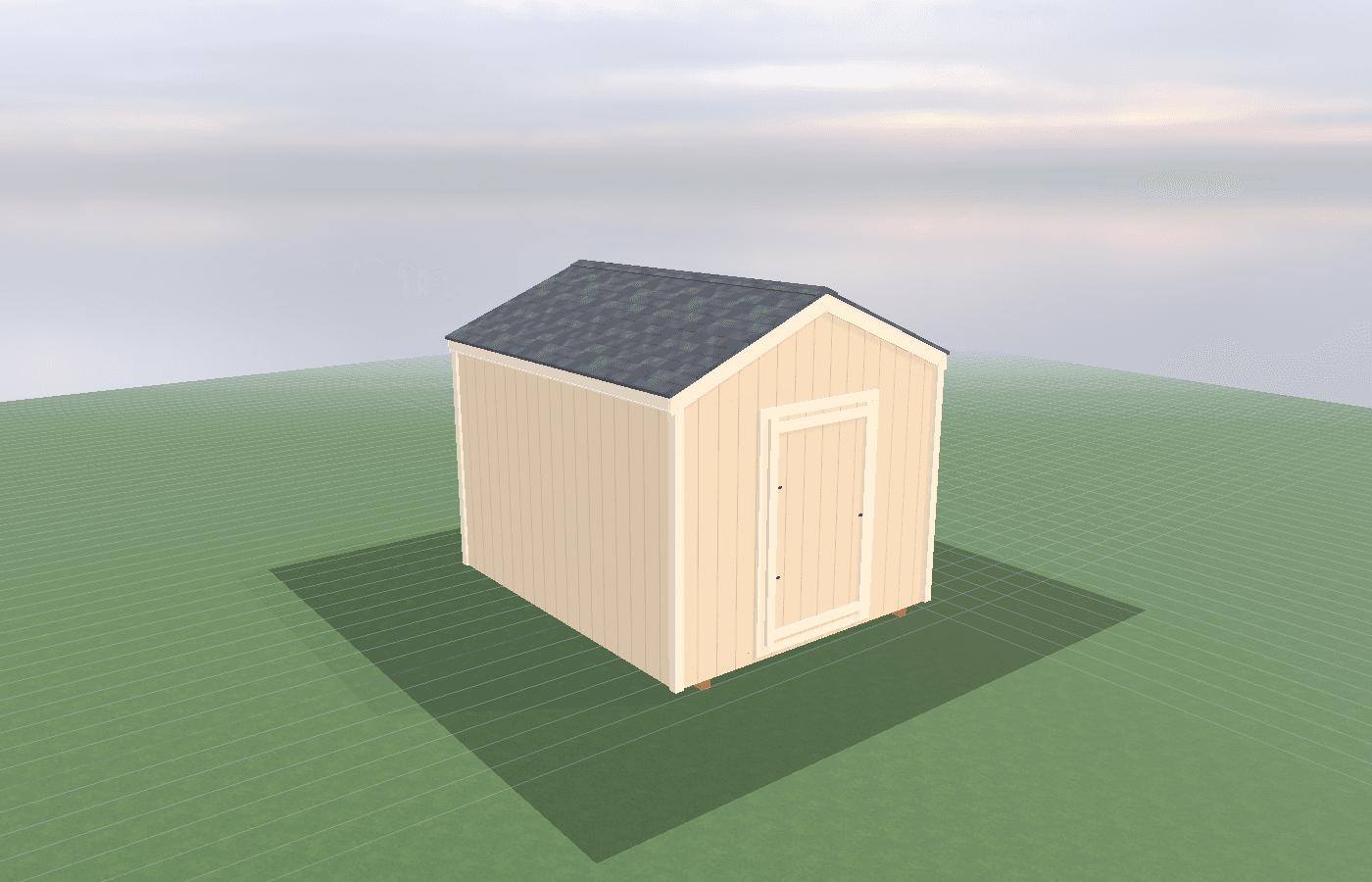
A 6x8 is enough for some compact systems, especially if the layout is disciplined and the climate strategy is modest. In that size, the room works best when the equipment wall is simple, the service aisle stays clear, and the owner is not trying to add unrelated storage.
An 8x8 is usually the stronger all-around option because it gives the room more thermal stability and better service comfort. A slightly larger volume is easier to condition evenly than a cramped room packed wall to wall with equipment. It also leaves room for controls, sensors, or modest air movement without turning the whole space into a tangle of gear.
An 8x10 is the better choice when there may be more than one battery, when expansion is likely, or when the room needs a separate area for service access and controls. More space is not always better, but too little space often makes temperature control harder because the equipment, the wall surfaces, and any small heating or cooling source are all fighting in a cramped envelope.
Size is not just about fit. It is about whether the room can stay stable. A slightly larger, well-insulated room often performs better than a tiny room that bakes in sun, traps condensation, or has no good place for sensors and airflow.
Best layouts and features for solar battery / inverter shed
The best question to ask your installer is what temperature the battery cells actually see, not just what the outdoor weather app says. Enphase's current guidance notes that internal battery temperature can run a bit higher than the external ambient temperature, and that designers should keep some margin in mind. That is a good reminder that room planning is about the installed condition, not the brochure headline.
Ask what ambient range the manufacturer expects, whether the system self-heats or self-cools, and at what point the battery starts reducing charge or discharge power. Ask where sensors are located, whether the room needs active heating or cooling, and how the installer plans to prevent condensation around equipment and conduit penetrations. Ask whether direct sun on the wall matters and whether a roof overhang, wall color, or room orientation changes the recommendation.
Humidity should be part of that conversation too. Cold batteries and cold conduit can collect moisture when a warm front rolls in or when a recently heated room is shut back down. The installer should be able to explain how the room handles bulk moisture, whether passive ventilation is enough, and how they keep drips or damp air away from live electrical components.
Layout helps temperature performance more than many owners realize. Keep a clear service aisle. Do not jam the battery wall behind storage. Give the equipment breathing room. Use a dry, clean floor and an entry that does not dump meltwater across the room every time the door opens. If you need help with the infrastructure side of that work, read solar + battery at home: why a dedicated utility space helps and cable routing and access planning: designing for serviceability.
On-site construction helps here because the room can be built around actual site exposure. North wall, south wall, prevailing weather, snow shedding, and distance to the electrical service all matter. If the battery room is part of a long-term resilience plan, those are worth solving correctly on day one.
Cost, timing, and build-planning factors
Temperature control costs usually come from envelope and system choices more than from exotic equipment. Insulation, air sealing, lighting, a better door, careful conduit penetrations, and maybe a modest heating or cooling strategy all matter. Even when the battery itself is rated for outdoor use, a more stable room can reduce nuisance issues and make the system easier to service year-round.
In North Idaho, timing matters because trenching, pad work, and utility coordination are much easier before frozen ground or spring mud get in the way. Idaho DOPL's current electrical FAQ says electrical permits are required when electrical work is performed, and its permits page reminds permit holders to call 811 before excavation. Local building review and setbacks still matter as well, especially once the project includes a permanent pad, trenching, or a structure close to property lines.
The cheapest time to think about temperature strategy is before the room is built. Afterward, every fix gets harder. Retrofitting a too-small room, adding climate control after conduit is already set, or discovering that direct sun bakes one equipment wall every afternoon all cost more than making the right early choices.
If you want a practical North Idaho answer instead of a generic brochure answer, get a free estimate. Battery rooms reward site-specific planning because small exposure and layout differences can change how the whole space behaves.
Popular sizes and layouts for solar battery / inverter shed
A 6x8 works best when the system is compact and the room's job is straightforward: one equipment wall, one service aisle, and a controlled environment with very little clutter.
An 8x8 is the best all-around answer for many buyers because it gives more room for insulation strategy, equipment access, and a layout that stays readable over time. It also gives the room enough size to buffer short temperature swings better than a cramped box.
An 8x10 becomes the better fit when the owner expects more equipment, future expansion, or more separation between the entry and the equipment zone. This is often the size that feels easiest to maintain through real seasons instead of only looking good on the install day.
The best layout is the one where the battery can live within the manufacturer's comfort zone without the owner guessing every winter storm and summer heat wave. If the room is stable, dry, readable, and easy for installers to service, the temperature plan is probably on the right track.
Frequently asked questions about solar battery / inverter shed
What size solar battery / inverter shed works best for temperature control for batteries: what to ask your installer?
For many North Idaho buyers, 6x8 and 8x8 are the best starting sizes because they balance usable floor space with realistic placement on the property. We then size up or down based on snow load, storage volume, and how much dedicated work or seating area you need. Compare 6x8 and see 8x8.
What climate control does a solar battery shed shed need in North Idaho?
At minimum, insulate to R-19 walls and R-38 ceiling for year-round use. A mini-split heat pump handles heating and cooling efficiently. Add ventilation specific to your use case. Get a free estimate.
Frequently asked questions
What size solar battery / inverter shed works best for temperature control for batteries: what to ask your installer?
For many North Idaho buyers, 6x8 and 8x8 are the best starting sizes because they balance usable floor space with realistic placement on the property. We then size up or down based on snow load, storage volume, and how much dedicated work or seating area you need. Compare 6x8 and see 8x8.
What climate control does a solar battery shed shed need in North Idaho?
At minimum, insulate to R-19 walls and R-38 ceiling for year-round use. A mini-split heat pump handles heating and cooling efficiently. Add ventilation specific to your use case. Get a free estimate.
Ready to plan your build?
Tell us your site, your dimensions, and the use case. We'll come out and price it.