How much does a custom shed cost in North Idaho? (pricing guide)
Custom shed pricing in North Idaho is driven by three things first: what the building needs to do, how much structure the site and weather require, and how finished the interior needs to be on day one. The cheapest shed on paper is rarely the best value if it is undersized, underbuilt for snow, or missing the upgrades that make the space usable.
A Custom Shed Cost Guide in North Idaho
The honest answer to custom shed pricing is that North Idaho buyers are not really buying square footage alone. They are buying a structure sized to a real use case, built for local weather, and adapted to an actual lot. That is why a small storage shed, a finished office, a toy-storage building, and a garage-style workshop can all occupy similar dimensions while landing in very different price bands. That is also why it helps to start with the broader custom sheds service conversation instead of treating price like a disconnected commodity question.
That also explains why on-site construction is often the better value here. A custom build can be framed around snow load, access constraints, door placement, and real site conditions instead of forcing the owner to adapt the property around a generic imported shell. If you have not already read it, on-site built vs prefab: why custom wins in snow country is the best companion to this pricing guide because it explains where that added value comes from.
Another thing buyers sometimes miss is that price and budget are not the same question. A sticker quote tells you the cost of the building package. A real project budget also includes site prep, access improvements, permit or utility coordination where applicable, and any finish upgrades needed to make the shed usable for the planned purpose. That is especially true when the project is more than raw storage.
The goal of this guide is not to give a fake universal price. It is to show what current site ranges on this project look like, what tends to change them, and where buyers usually get the best value for the money.
Which custom shed sizes offer the best value?
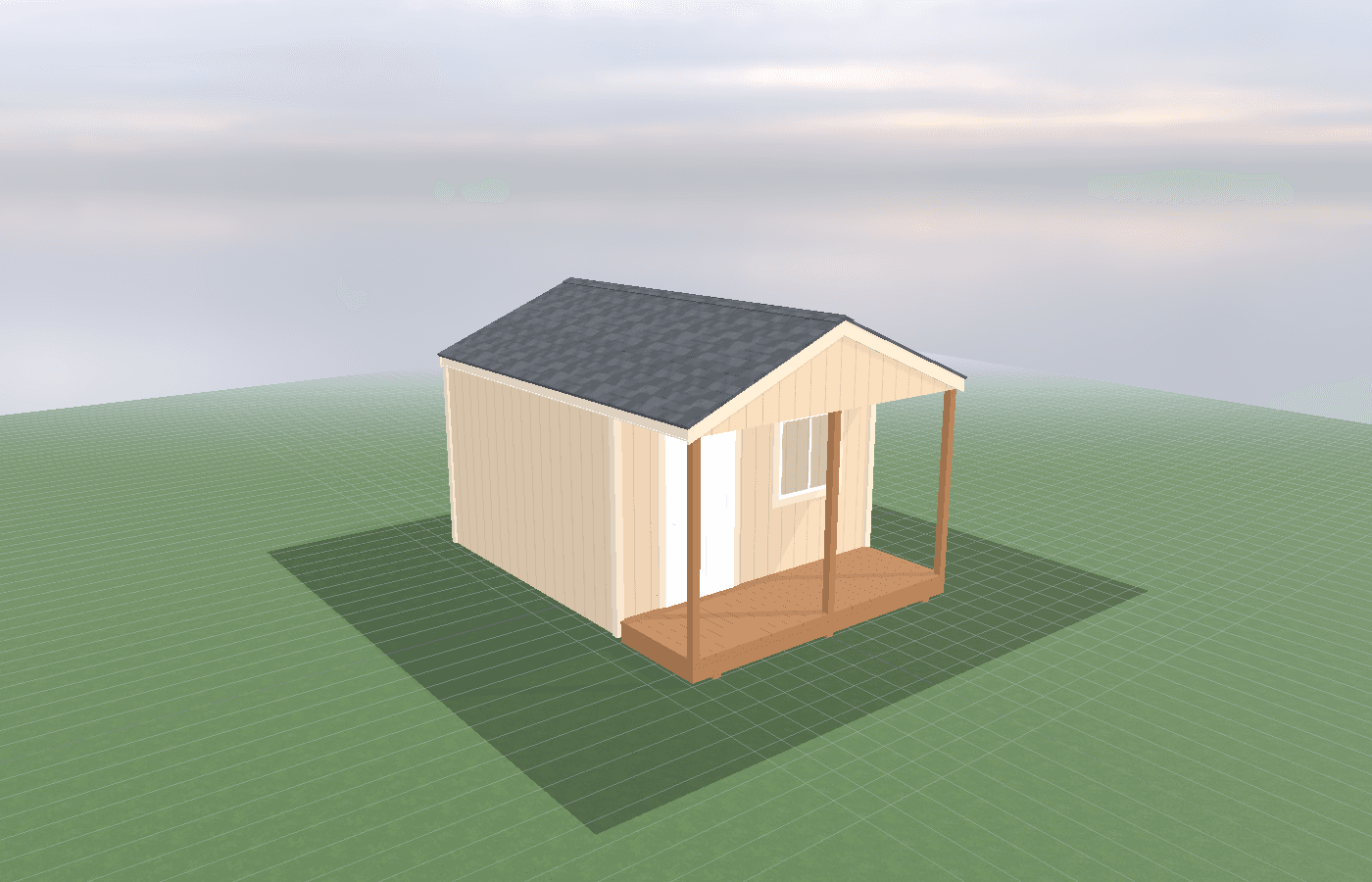
For many North Idaho buyers, the best value is not the cheapest footprint. It is the smallest size that honestly supports the intended use without forcing an early upgrade. That is why 8x10 and 10x12 show up so often as starter footprints while 12x20 and 12x24 become the smarter buy once storage volume, work area, or larger openings enter the picture.
The existing size pages on this site already show useful budget ranges that help anchor the conversation:
| Size | Current site range | Typical value case |
| --- | --- | --- |
| 8x10 | $4,200 to $6,900 | Compact storage, garden, seasonal gear |
| 10x12 | $5,400 to $8,500 | Small office, hobby, upgraded storage |
| 12x20 | $8,700 to $13,600 | Toy storage, workshop, larger multipurpose room |
| 12x24 | $10,100 to $15,600 | Bigger storage plus work zone, garage-style use |
| 16x20 | $11,500 to $18,400 | Wider garage/workshop layouts and larger custom builds |
Those ranges are useful because they show how quickly the conversation shifts once the building moves from "small accessory shed" into "real usable detached space." In many cases, the owner who tries to save money by undersizing the building ends up spending more later through crowding, awkward storage, or the need for a second structure.
An 8x10 is often the right value when the use case is honest, simple, and mostly static. Seasonal storage, yard tools, and basic utility overflow fit well there. If the owner already knows they want a bench, electrical upgrades, insulation, or multi-season use, 8x10 is often too small to be the best long-term buy even if the entry price looks attractive.
A 10x12 is one of the strongest value footprints on the site because it opens the door to true multi-use space without a huge jump in footprint. It is large enough to feel intentional rather than incidental. That is why it works well for office sheds, hobby rooms, and better-organized storage with room to circulate.
Once the use case involves vehicles, large equipment, a serious workshop edge, or a mixed storage-plus-work plan, 12x20 and 12x24 usually become the better value. The price increases, but so does the chance that the building actually solves the long-term need instead of delaying a bigger decision.
Budget drivers and upgrade tradeoffs
Size is the first driver, but it is not the only one. The next major cost driver is structural demand. North Idaho snow load, wide door openings, taller walls, longer spans, and large roof systems all push the framing package upward. That is why two sheds with the same footprint can land in different ranges when one is a simple box and the other is carrying a taller opening or more demanding roof geometry.
Foundation and site conditions come next. A level accessible site with straightforward gravel work is one budget picture. A site that needs grading, retaining, drainage correction, imported base, or a tighter construction path is another. Owners should also account for how they are going to use the space. If the building will need a cleaner apron, vehicle access, or a finished entry path, that belongs in the real budget even if it is not part of the shell quote.
Doors and windows matter more than buyers sometimes expect. Bigger doors change framing and hardware costs, not just appearance. More windows improve light and comfort but also shift the wall budget, placement options, and sometimes the structural conversation. If privacy, insulation, or security matter, that can push the window and door package in a different direction.
Interior finish level is another major fork in the road. A shell for storage is one thing. A fully usable office, studio, or hobby space is another. Insulation, electrical, lighting, heating, vapor control, wall finish, floor finish, and trim all add real value, but they should be chosen on purpose. It is usually smarter to prioritize a well-built shell and the few upgrades tied directly to the use case than to spread the budget thin across decorative items that do not change function.
That is also where good planning saves money. If you know the space will eventually be finished, read how to prepare your property for an on-site shed build before locking the plan. Site prep, access, and utility pathways are much cheaper to solve once than to undo later.
For broader package context, see the current pricing page as a general reference. The real decision still comes down to what the building must do on your parcel, but the pricing page helps frame the conversation.
Cost, timing, and build-planning factors
Budget accuracy improves dramatically when the intended use, lot conditions, and finish level are defined early. Buyers often request a quote before they know whether they want a raw shell, a powered-out workspace, or something that needs climate control. That makes initial price comparison feel simple, but it usually creates apples-to-oranges estimates.
Timing also affects cost. A project quoted before site access, utility routing, setback constraints, or snow-load requirements are clarified may need to be revised later. Those revisions are normal, but they are still work. The smoother path is to decide early whether the shed is truly simple storage or whether it needs to be treated as a more complete detached room.
The sequence matters too. A well-planned project usually goes from use definition to site fit, then to pricing, then to site prep, then to build scheduling. When owners skip the site-fit step, the project can stall on setbacks, access, or utility questions even after the building choice feels settled.
Lead time and seasonality matter in North Idaho as well. Wet fall conditions, frozen ground, and muddy shoulder seasons can all affect site prep and equipment movement. That does not mean you should avoid those seasons entirely. It means the site-readiness part of the budget should be handled honestly. A shed with a good quote but a bad access plan is not actually the lower-cost project.
This is where local context helps. Properties around Post Falls may face different access and jurisdiction questions than more rural or steeper parcels, but the principle stays the same: the best custom shed budget is the one built around the real site, not a generic assumption.
Popular sizes and layouts for custom sheds
The 8x10 layout remains popular because it is a practical gateway size. It gives buyers a real structure without pushing too hard on lot placement or budget. It is best when the use is straightforward and the owner does not expect the building to become a finished room soon.
The 10x12 layout is one of the most flexible values in the lineup. It is large enough to support a desk, storage wall, or hobby bench while still fitting many residential sites comfortably. For buyers who want something beyond pure storage but are not ready for garage-scale spending, this is often the most efficient next step.
The 12x20 layout is where many North Idaho buyers feel the project shift from "shed" to "detached working space." This size supports better circulation, larger storage items, and more realistic mixed-use planning. That is why it is such a common answer for workshop, toy storage, and larger office-style needs.
The 12x24 layout is the choice for owners who want fewer compromises. It gives the building room to handle both the primary use and the supporting clutter that accumulates around it. If the budget can support it and the site can place it, 12x24 often delivers better long-term value than trying to squeeze a demanding use into something smaller.
At the larger end, 16x20 and similar footprints make sense when width matters as much as length. Garage-style doors, side work zones, and larger equipment all benefit from that added lateral space. The value here is not just more square feet. It is better function and less frustration every time the building gets used.
Frequently asked questions about a custom shed cost guide
What size custom shed works best for how much does a custom shed cost in north idaho?
For many North Idaho buyers, 8x10 and 10x12 are the best starting sizes because they balance usable floor space with realistic placement on the property. We then size up or down based on snow load, storage volume, and how much dedicated work or seating area you need. Compare 8x10 and see 10x12.
What affects the total cost of a general shed in North Idaho?
Size, materials, foundation type, and add-ons like electrical, insulation, and custom finishes drive the price. On-site construction also factors in site accessibility and terrain. See our pricing page.
Frequently asked questions
What size custom shed works best for how much does a custom shed cost in north idaho?
For many North Idaho buyers, 8x10 and 10x12 are the best starting sizes because they balance usable floor space with realistic placement on the property. We then size up or down based on snow load, storage volume, and how much dedicated work or seating area you need. Compare 8x10 and see 10x12.
What affects the total cost of a general shed in North Idaho?
Size, materials, foundation type, and add-ons like electrical, insulation, and custom finishes drive the price. On-site construction also factors in site accessibility and terrain. See our pricing page.
Ready to plan your build?
Tell us your site, your dimensions, and the use case. We'll come out and price it.