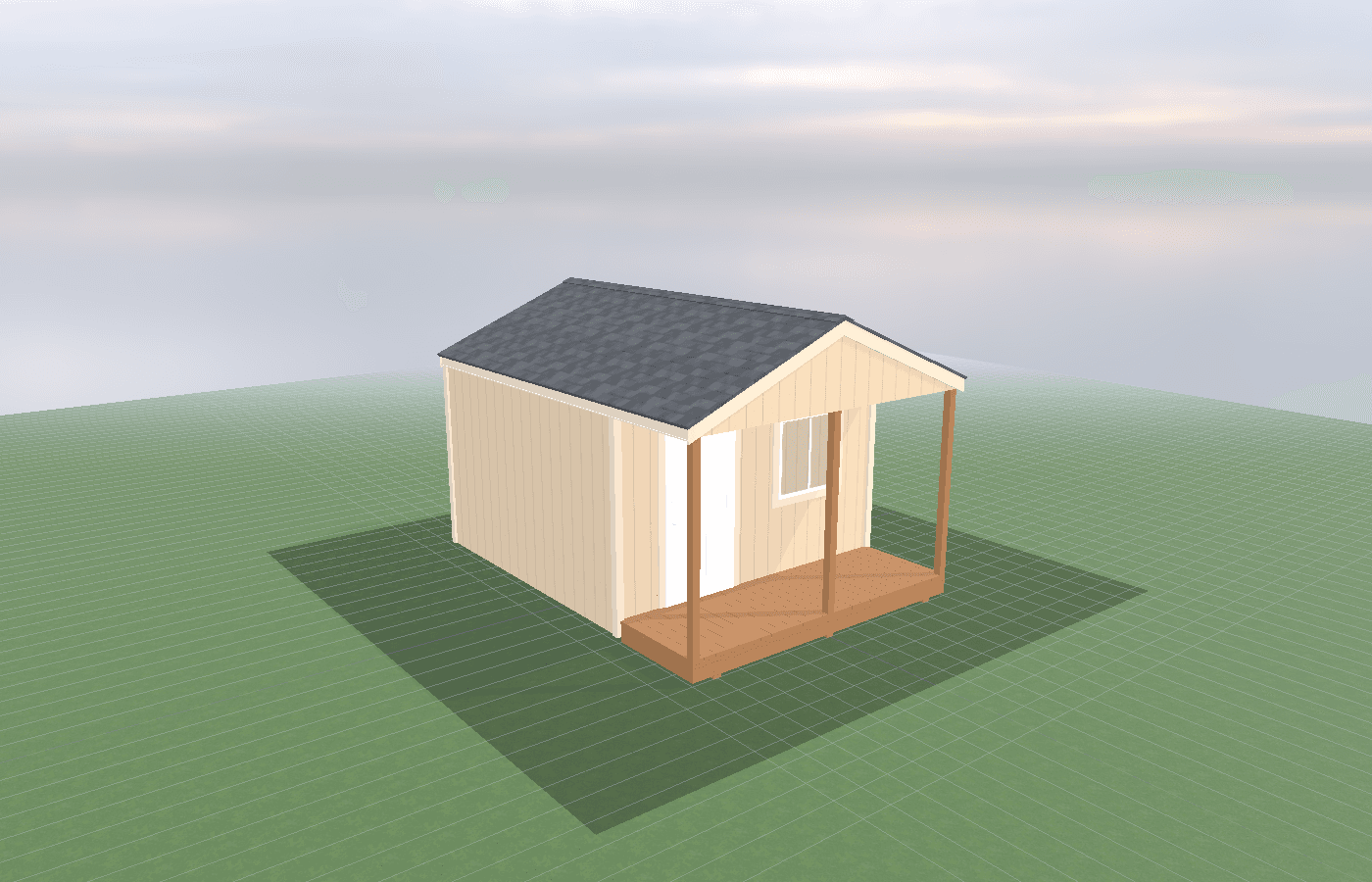
Security for high-value bikes: design and placement tips
A secure bike shed is not just a locked box. In North Idaho, the best security comes from a placement and layout plan that keeps expensive bikes visible to the owner, hard to approach quietly, and easy to store without shortcut habits.
Security for High-Value Bikes in North Idaho
Bike security gets worse when the room is inconvenient. If a shed is too far from the daily path, hidden behind a fence line, or awkward to open in winter, owners start leaving bikes elsewhere, chargers migrate into the house, and the storage system breaks down. A well-planned e-bike charging shed should make the secure routine the easy routine.
That means security starts with placement, not gadgets. The best locations preserve sightlines from the house, keep the entry path short enough for everyday use, and avoid dark corners where someone can work unseen. In North Idaho, winter access matters as much as lock hardware. Snow drifts, icy side yards, and deep mud can push a shed into partial abandonment if the path is not realistic year-round.
The room also needs to respect the special needs of powered bikes. Chargers, batteries, and wet cleanup should not be spread across random shelves simply because the secure corner was never designed to do more than hold bikes. Our guide on e-bike charging at home: space planning, outlets, and cable management covers the charging side of the equation, while temperature and batteries: how cold affects charging/storage explains why winter battery handling changes where that charging zone should live.
Security is especially important in mixed rural-residential markets like Athol, where lots may feel private but still have exposed driveways, detached shop areas, or long side-yard approaches. A bike room that feels tucked away to the owner can also feel tucked away to everyone else. The goal is controlled privacy, not invisible vulnerability.
One useful way to think about placement is to ask whether the shed still feels normal to use at 7 a.m. in January and 9 p.m. in October. If the owner has to cross an icy side yard, open a gate in deep snow, or disappear behind landscaping to put the bike away, the routine will degrade. The most secure sheds stay on an obvious, lit, repeatable path from the driveway or house door to the bike room. Predictable daily use is a security feature because it keeps the room occupied, observed, and less likely to turn into a place the owner avoids.
What size e-bike shed gives you enough usable room?
An 8x10 can be secure and usable if the room is treated as bike-first storage with one disciplined entry lane. It gives enough room for parked bikes, a lockable interior anchor zone, and a compact charging or battery shelf, but it does not tolerate clutter well. Security drops fast when the floor fills up and the owner starts leaning bikes together for lack of organization.
An 8x12 is usually the better starting point because it gives the door swing, anchor points, and parking positions a little more breathing room. That extra length can be the difference between a room where bikes roll in cleanly and one where handlebars, pedals, and chargers constantly interfere with each other.
A 10x12 works best when the room stores more than two high-value bikes, includes a real battery bench, or needs a clearer split between the wet arrival zone and the secure parked-bike side. The added width also makes it easier to keep windows small and intentional without sacrificing interior usability.
The right size is the one that preserves clear circulation after the anchors, bench, and gear wall are installed. If the only way to lock a bike is by moving the others first, the layout is already too compromised.
Budget drivers and upgrade tradeoffs
The most useful security upgrades are usually structural before they are electronic. Door quality, frame stiffness, hinge protection, lock compatibility, and interior anchor placement matter every single day. Cameras and lights are helpful, but they work best when the envelope itself already resists quick access.
Window decisions are a good example. A shed can absolutely have windows, but the location and size should match the goal. High windows, limited direct visibility to bike brands and batteries, and sightlines back to the house generally work better than large showcase openings facing the street. The room should feel monitored and normal, not like a display case for expensive gear.
Interior anchors are another high-value decision. The strongest routine lets bikes be locked inside the shed without forcing the owner to improvise around shelving legs or wall studs that were never meant to serve as hard points. When bikes are easy to secure properly, owners actually do it, even on short turnarounds.
Lighting, exterior approach design, and gravel or concrete access also matter because they influence behavior. If the owner can move bikes in and out quickly, see the latch and lock clearly, and avoid slush puddles at the threshold, the secure routine stays consistent. If you are balancing those upgrades against size or electrical planning, it is usually worth getting the layout resolved before purchase so the money goes toward friction reduction instead of decoration. That is where a planning call or free estimate tends to pay for itself.
Another upgrade tradeoff is how much security should be visible versus hidden. Overt cameras and lighting can deter casual attention, but interior anchor points, battery shelves that are not visible from outside, and a door system that closes cleanly every time usually do more to preserve the routine. The room should feel simple to the owner, not theatrical. Good security is often quiet: a short carry distance, a clean latch, no exposed valuables in the window line, and enough space that bikes can be locked without rearranging the whole room.
Cost, timing, and build-planning factors
Security-oriented sheds often cost more because the room is being asked to do more than weather protection. Door choices, upgraded hardware, better flooring at the threshold, exterior lighting, and electrical coordination all add scope. So does the need to place the building where winter use still feels practical.
Site planning is the piece many buyers underestimate. The shed may be secure on paper but still wrong in practice if the only available location creates poor sightlines, tough snow removal, or a long, dark walk from the house. Build timing matters because grading, pad work, and electrical routing are much easier to solve before the structure lands on site.
It is also worth checking county and city rules early. Placement decisions interact with setbacks, drainage, and access, and those rules can eliminate a "perfect" security location after the fact. That is why the best build-planning work starts with the circulation path: where the bikes come from, where the owner stands to unlock the door, what can be seen from the house, and how the shed behaves when the weather is bad.
In practice, the most successful security builds are boring in the best possible way. The owner uses them daily, the door closes cleanly, the bikes are easy to anchor, and nothing about the routine invites shortcuts.
That kind of repeatability is usually worth more than one extra gadget bolted on after the build is finished.
Popular sizes and layouts for e-bike sheds
An 8x10 works best when one or two bikes need a compact, disciplined security layout. It is strongest when the room has a clear anchor wall, a simple charging shelf, and no extra clutter competing with the floor.
An 8x12 is the most versatile size for many homeowners because it gives better separation between the parked bikes and the door zone. That improves both usability and security, since the room is less likely to devolve into a cramped pileup.
A 10x12 is ideal when the owner wants more than simple storage. It supports better parking geometry, a more believable battery bench, and a calmer routine for families or multi-bike households.
The best secure layout is the one that preserves visibility, quick locking, and consistent daily use. If the shed is easy to reach, easy to light, and easy to secure from the inside out, it will protect high-value bikes much better than a bigger but inconvenient room.
That usually means giving the owner one natural parking motion for each bike, one natural place to anchor it, and one easy way to close the room without juggling other gear. When the storage pattern is consistent, the bikes spend less time sitting exposed during loading and unloading, and the owner is less tempted to leave one unsecured just because the routine feels annoying.
Frequently asked questions about e-bike sheds
What size e-bike shed works best for security for high-value bikes: design and placement tips?
For many North Idaho buyers, 8x10 and 8x12 are the best starting sizes because they balance usable floor space with realistic placement on the property. We then size up or down based on snow load, storage volume, and how much dedicated work or seating area you need. Compare 8x10 and see 8x12.
How do I choose the best placement for a e-bike charging shed on my lot?
Consider setbacks, sun exposure, access paths, and neighbor sightlines. In North Idaho, also account for snow drift patterns and prevailing wind direction. Check county permits.
Frequently asked questions
What size e-bike shed works best for security for high-value bikes: design and placement tips?
For many North Idaho buyers, 8x10 and 8x12 are the best starting sizes because they balance usable floor space with realistic placement on the property. We then size up or down based on snow load, storage volume, and how much dedicated work or seating area you need. Compare 8x10 and see 8x12.
How do I choose the best placement for a e-bike charging shed on my lot?
Consider setbacks, sun exposure, access paths, and neighbor sightlines. In North Idaho, also account for snow drift patterns and prevailing wind direction. Check county permits.
Ready to plan your build?
Tell us your site, your dimensions, and the use case. We'll come out and price it.