High-clearance storage shed sizing for RVs, boats, and trailers
High-clearance storage only works when the shed is sized around the real rig, the actual approach path, and North Idaho snow conditions. Boats, RVs, and trailers need more than a tall door. They need usable turning room, drift management, and enough clear interior volume that loading, winterizing, and maintenance are still easy after the building is up.
High-Clearance Storage Shed in North Idaho
A high-clearance shed is not just a regular storage building with a bigger opening cut into the wall. In North Idaho, once you are storing a travel trailer, sled trailer, wake boat, fishing boat, or taller toy hauler, the building has to work with real snow load, real turning radius, and real winter access. That is why a purpose-built seasonal toy storage shed usually performs better than a generic shell dropped onto a gravel pad.
The first sizing mistake most owners make is focusing only on the advertised overall length of the toy. The building has to fit the trailer tongue, outboard, spare tire, mirrors, ladder, cover, and the human circulation needed to back the unit in and move around it. A second mistake is forgetting that North Idaho storage rarely stays dry and clean year-round. The shed often becomes the place where you unload wet gear, set up a battery tender, do winter prep, and stage seasonal equipment for spring.
That is especially true in mountain-adjacent markets like Silver Valley, where snow, slush, and steep access routes change how a storage building gets used. A shed that feels big enough in July can feel cramped when the floor also has snow melt, tool bins, jack stands, and bulky covers on it. High-clearance storage therefore has to be sized for the full storage workflow, not just for the moment the rig clears the door.
Good planning also ties directly into long-term protection. The building should make off-season care easier, not harder. That is why this topic naturally overlaps with off-season boat and sled storage: protecting your investment and boat winterization checklist: building a shed that makes it easier. If the shed is too short, too narrow, or too low at the wrong point in the roofline, routine winterizing and spring recommissioning become awkward every single year.
What size toy storage shed gives you enough usable room?
For many buyers, 12x20 is the first honest size to consider. It can work well for a compact trailer, sled setup, or narrower boat package when the owner is disciplined about storage zones and does not need a large service aisle. It is a useful starting footprint because it gives more length than small storage sheds without becoming impossible to place on many residential lots.
A 12x24 is often the better answer when the rig is not tiny or when the owner wants more than simple weather protection. Those extra four feet matter. They can absorb the trailer tongue, protect a swim platform, keep the rear wall from feeling jammed, and leave enough room for shelves, chargers, fuel-safe storage planning, and basic seasonal service tasks.
Once the toys get taller, wider, or heavier, the conversation shifts from floor area alone to total usable volume. Door width, door height, wall height, truss depth, and roof pitch all affect whether the building is truly high-clearance or only looks that way from the outside. A unit may physically fit under the ridge line and still be awkward because the useful clearance disappears near the side walls or because the header height forces you to inch in with almost no margin.
That is why 14x24 and 16x24 footprints show up so often in serious RV, boat, and trailer planning. The extra width creates calmer maneuvering, safer shelving placement, and more room to keep the circulation path open. It also makes it more realistic to dedicate one side to gear, batteries, hoses, blocks, and maintenance tools instead of forcing everything to live on the floor around the unit itself.
The right size comes from measuring the whole package, then adding room for how you actually use it. If you plan to store the trailer and immediately walk away, you can tolerate a tighter fit. If the shed also needs to support winterization, charging, detailing, or pre-trip loading, you need honest working room around the unit, not just theoretical clearance.
Best layouts and features for toy storage sheds
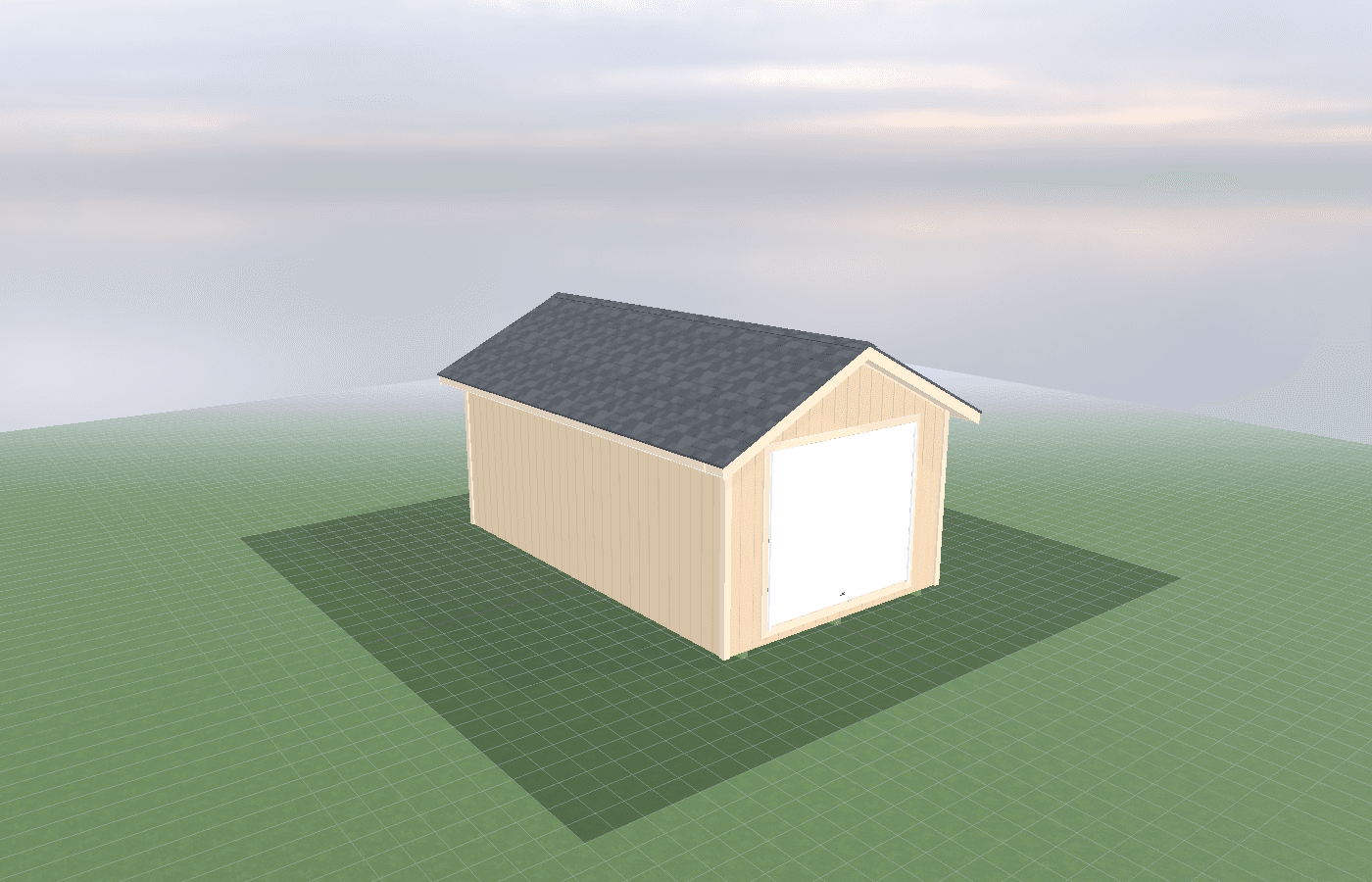
The best layout starts at the door. Door placement affects everything: backing angle, approach path, snow drifting at the threshold, and where the deepest usable storage zones end up. A centered gable-end opening is often the simplest solution for straight in-and-out movement, but it is not automatically the best answer if the driveway comes in at an angle or if snow piles naturally across the front elevation.
Wall height and header strategy matter as much as floor size. High-clearance storage generally benefits from taller side walls, deliberate truss design, and openings sized around the real unit plus a comfort margin. The question is not whether the rig can squeeze in one time. The question is whether you can bring it in repeatedly, in cold weather, with reduced visibility, without turning every parking move into a stress test.
Interior zoning is the next major upgrade. The building works better when the storage plan is intentional: one zone for the unit itself, one zone for seasonal accessories, one zone for chargers and maintenance items, and one zone for wet gear that should not end up pressed against finished walls. Over time, that separation protects the trailer and keeps the shed usable during shoulder season instead of turning it into a pile of covers, cords, and muddy bins.
North Idaho-specific features also change the design. Snow load and drift patterns can influence roof shape, overhang strategy, and door orientation. Sloped lots often need more careful approach grading so the trailer does not drag or bottom out while backing in. Rural properties may need wider turning room outside the shed than suburban owners expect, especially if the rig has to swing in off a narrow lane or between existing buildings.
Power and lighting are also worth planning early. Even a basic storage building becomes much more useful with the right outlets, battery support, and task lighting. If electrical work is included, remember that Idaho treats that as a separate permit track through the state, not as something automatically covered by the building shell alone.
Cost, timing, and build-planning factors
The budget for a high-clearance storage shed is driven by more than square footage. The cost changes when the project needs taller walls, larger door systems, heavier headers, upgraded framing for snow load, or a longer clear span. It also changes when the site requires extensive grading, additional gravel depth, drainage work, retaining measures, or a wider access path for backing a trailer into position.
Door size is one of the most common budget multipliers because it affects multiple parts of the build at once. A taller, wider opening is not just a more expensive door. It can change framing, bracing, shear strategy, weather-sealing details, and how the interior layout functions. The same is true when a buyer wants a more generous roof height to preserve usable clearance well inside the building rather than only at the center peak.
Site timing matters too. In North Idaho, toy storage projects are easiest when the access path, drainage plan, and final pad elevation are settled before wet fall weather or winter freeze complicate the site. Mud season is hard on both trailers and work crews. If the unit will be moved into the shed shortly after completion, the driveway, apron, and turning area need to be finished to a standard that actually supports the trailer, not just the construction process.
Lot constraints can also change what is realistic. Narrow access, property-line setbacks, easements, or slope transitions sometimes make the "obvious" building shape impossible even though the raw square footage seems right on paper. That is one reason on-site design work is valuable. A custom layout can shift door placement, change the long side orientation, or resize the footprint before money gets spent on a building that never really fit the site.
If you want help comparing size and approach options on your property, get a free estimate before locking in the footprint. That usually saves more money than trying to undo an undersized or poorly oriented storage building later.
Popular sizes and layouts for toy storage sheds
The 12x20 layout is the most common starting point because it offers a practical balance between placement flexibility and real storage capability. It fits many properties better than a larger footprint, and when the stored unit is compact enough, it can cover the essentials without wasting lot depth. It works best when the owner is comfortable with a leaner side storage strategy.
The 12x24 layout is often the sweet spot. It gives the tow package more breathing room, supports a better storage wall, and reduces the chance that every loading task has to happen outside the building. For many owners, this is the first size that feels like true seasonal protection rather than just enclosed parking.
A 14x24 layout is where the building begins to feel forgiving. Wider circulation makes it easier to open compartments, work around tires and fenders, and keep maintenance tools separated from the main storage lane. It is a strong option for mixed-use owners who want to store a serious toy while still preserving room for winter prep or gear organization.
A 16x24 layout is the step up for owners who want one side of the building to behave like a real service edge. This is useful when the shed is protecting a larger boat, enclosed trailer, or taller RV-adjacent storage use where covers, racks, chargers, and accessory bins would otherwise choke the circulation path.
The best layout is the one that keeps the vehicle or trailer protected without turning every arrival and departure into a tight maneuver. That means enough length for the whole package, enough width for honest clearance, and enough height where it actually counts. High-clearance storage succeeds when the building feels easy to use in bad weather, not just possible to use on paper.
Frequently asked questions about toy storage sheds
What size toy storage shed works best for high-clearance storage shed sizing for rvs, boats, and trailers?
For many North Idaho buyers, 12x20 and 12x24 are the best starting sizes because they balance usable floor space with realistic placement on the property. We then size up or down based on snow load, storage volume, and how much dedicated work or seating area you need. Compare 12x20 and see 12x24.
What setback rules affect storage shed placement in North Idaho in Kootenai County?
Placement rules are lot-specific. In many Kootenai County situations, setback and easement limits can shrink the usable footprint faster than owners expect, especially once road frontage, septic, and access are mapped. Confirm the parcel before choosing a shed size. See permit details.
Frequently asked questions
What size toy storage shed works best for high-clearance storage shed sizing for rvs, boats, and trailers?
For many North Idaho buyers, 12x20 and 12x24 are the best starting sizes because they balance usable floor space with realistic placement on the property. We then size up or down based on snow load, storage volume, and how much dedicated work or seating area you need. Compare 12x20 and see 12x24.
What setback rules affect storage shed placement in North Idaho in Kootenai County?
Placement rules are lot-specific. In many Kootenai County situations, setback and easement limits can shrink the usable footprint faster than owners expect, especially once road frontage, septic, and access are mapped. Confirm the parcel before choosing a shed size. See permit details.
Ready to plan your build?
Tell us your site, your dimensions, and the use case. We'll come out and price it.