Off-season boat and sled storage: protecting your investment
Off-season storage works best when the shed is sized around the real boat, sled, trailer, and service gear instead of the brochure dimensions. In North Idaho, the most valuable storage sheds protect equipment from snow, condensation, rodents, and awkward winter access at the same time.
Off-Season Boat and Sled Storage in North Idaho
Boats and sleds usually spend more time parked than moving, which is exactly why the storage plan matters so much. Off-season storage is not just about finding a roof tall enough to clear the windshield or the trailer bow. It is about reducing corrosion, keeping covers from trapping moisture, protecting batteries and accessories, and making sure the machine comes out of storage ready for work instead of demanding a surprise repair list.
In North Idaho, that problem gets more serious because the off-season is wet, cold, and long enough to expose every weak point in the building. Snow loads affect roof design. Freeze-thaw cycles affect the slab or pad. Rodents, humidity, and dirty meltwater all pressure the lower part of the room. A strong seasonal toy storage shed deals with those realities directly instead of assuming a simple enclosure will solve them by default.
This guide also pairs naturally with high-clearance storage shed sizing for RVs, boats, and trailers and boat winterization checklist: building a shed that makes it easier. One guide helps you measure the shell correctly. The other helps make the shutdown routine easier. Together they explain why off-season storage works best when the building is sized around access and service, not just parked dimensions.
On-site construction is especially useful in places like the Silver Valley, where snow, grade changes, and narrow backing conditions can turn a simple parking shed into a site-planning project. If the trailer cannot approach cleanly or the door zone drifts shut every storm, the building will be harder to use than owners expect.
What size toy storage shed gives you enough usable room?
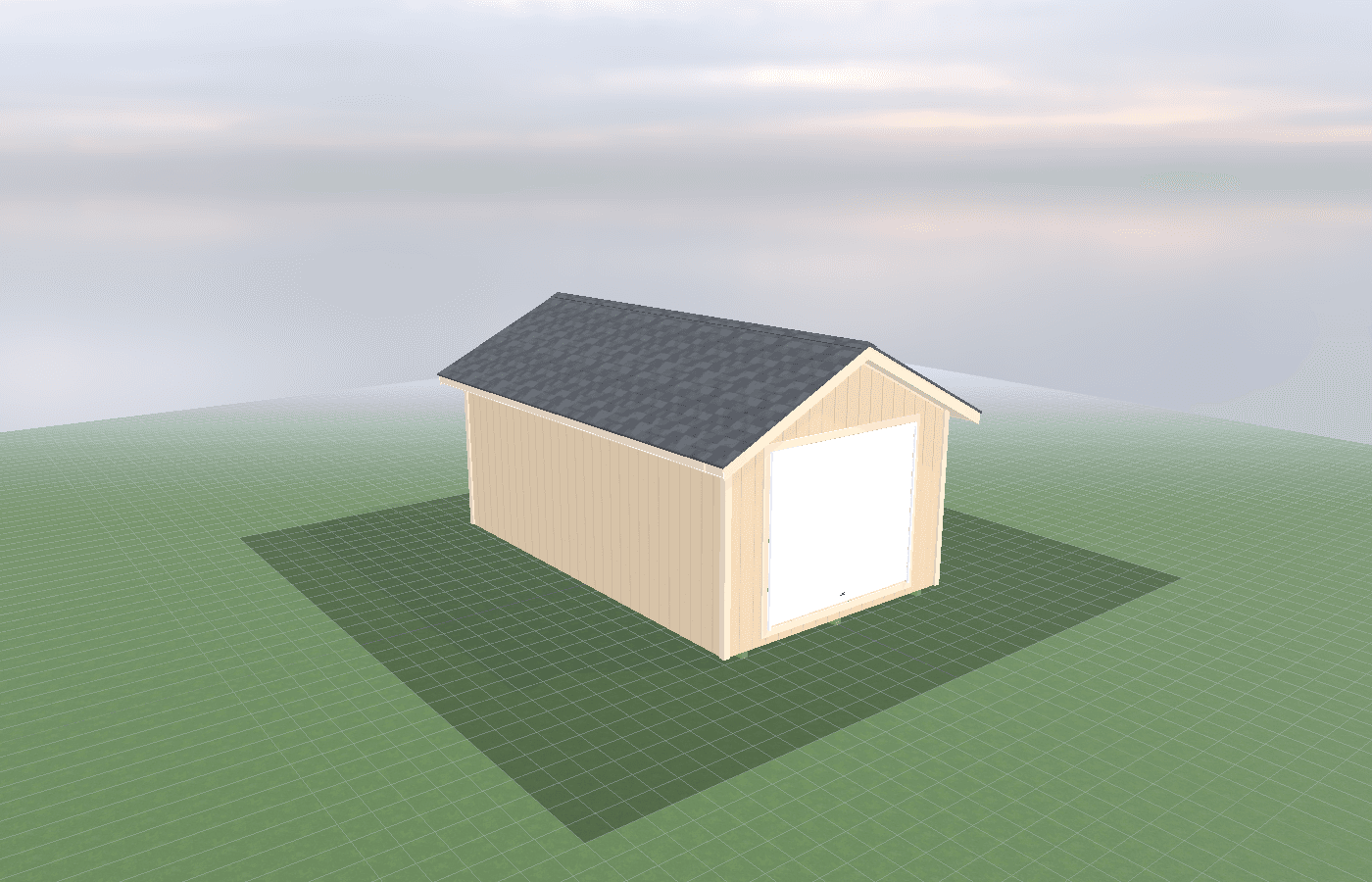
A 12x20 is the practical starting point for many compact boat or sled storage projects. It can work well for smaller rigs when the owner measures actual trailer length, tongue position, handlebar width, and required walk-around clearance instead of relying on marketing dimensions.
A 12x24 is often the more realistic all-around choice because it allows some breathing room at the front or side for chargers, stands, gear bins, covers, and a modest service path. That extra space can be the difference between a building you can walk through and one that becomes wall-to-wall equipment.
Once the mix includes larger boats, multiple sleds, or a trailer that needs more forgiving backing angles, a larger footprint becomes attractive quickly. The gain is not only storage volume. It is better circulation, safer loading, and less temptation to wedge sharp corners and fragile equipment into the same narrow opening.
The best size is the one that makes seasonal changeover easier. If you dread parking the rig because the mirrors, tower, sled skis, or trailer tongue barely clear the walls, the shed is too small even if the door closes.
Owners also underestimate how much room winter gear itself consumes. Helmets, life jackets, boots, chargers, tie-downs, spare fuel cans, and service tools can swallow the only remaining wall space if the shed is sized only for the machine. A good toy-storage footprint leaves room for the full support kit, not just the headline item.
Best layouts and features for toy storage sheds
Clearance and drainage are the first priorities. Door height and width should be measured against the real highest and widest parts of the load, including towers, covers, windshields, racks, and imperfect trailer angles. The floor or pad should support tire traffic without trapping puddles under the machine for weeks at a time.
Good layouts also leave room for the supporting gear that always comes with the machine. Battery maintainers, tie-downs, oils, chargers, safety gear, tow ropes, boots, and covers all need a defined place. If those items are stored by tossing them around the trailer tongue, the room becomes much harder to clean and much easier for rodents or moisture to exploit.
Ventilation and enclosure details matter too. Boats and sleds store better when the shed stays dry and stable rather than sealed so tightly that dampness never leaves. Rodent-resistant detailing at the lower walls and door edges is worth planning early. So is a layout that lets covers breathe instead of pinning wet fabric against the machine all winter.
Access is the other silent feature. A building that technically fits the equipment but leaves no room to open compartments, remove batteries, or service the rig is only half useful. The best storage sheds leave enough side or front clearance that shutdown, inspection, and spring recommissioning can happen inside the building instead of in the driveway.
This is especially important for cover management and battery care. Boats and sleds store better when covers can dry properly, chargers can be connected safely, and the owner can check tie-downs, drain points, and storage compartments without squeezing sideways between the machine and the wall. A good building supports that routine instead of turning every inspection into a contortion exercise.
Cost, timing, and build-planning factors
Bigger openings, taller walls, and longer roof spans usually drive cost faster than owners expect. That is especially true in snow country, where the structure above a high-clearance door has to be designed for real loads rather than treated like a light seasonal shelter. Once the opening gets wider, the framing conversation gets more serious.
Timing matters because the best storage projects start before the first hard freeze. You want enough time to measure the real rig, plan the door swing and approach, and complete any winterization routine before snow and ice make access harder. If the building is still being improvised when the storage season arrives, owners tend to force equipment into spaces that were never planned properly.
Site prep is also part of the value equation. A good approach lane, proper drainage, and a pad that can handle tire loads without rutting are just as important as the enclosed shell. On-site construction helps because the shed can be oriented to the actual backing path and snow movement on the property instead of to a guessed-at parking diagram.
This is especially valuable in steeper or narrower drive approaches common around mountain and mining-country properties. If the shed can only be entered on a perfect backing day, it will not feel like a storage upgrade for long. The building needs to work with the real trailer angle and snow pile locations the property gives you.
There is also a long-term cost argument. Corrosion, battery problems, cover damage, rodent intrusion, and awkward spring startup are all more likely when the storage building is undersized or poorly detailed. If you want help sizing the shell around your actual toys and trailer path, get a free estimate.
Popular sizes and layouts for toy storage sheds
The 12x20 layout is the compact favorite for smaller boats, sleds, and trailer setups that have been measured carefully. It works best when the owner is disciplined about support gear storage and does not need a lot of walk-around room.
The 12x24 layout is the most common step up because it makes the room easier to use without jumping to a dramatically larger shell. It supports more honest clearance and better support storage around the parked equipment.
A larger multi-toy layout makes sense when the shed needs to absorb more than one machine, a broader service aisle, or a more forgiving backing sequence. That kind of setup is especially useful on snow-country properties where winter access is not perfect.
For some owners, the winning layout is not a giant room but a carefully zoned one: machine centered, gear wall to one side, charger and battery area near the man door, and enough front clearance to pull the cover without wrestling the bow rail or sled nose into the wall. That kind of order is what makes off-season storage feel genuinely protective.
In every size, the best storage shed is the one that protects the machine, protects the shutdown routine, and still feels easy to access when weather is not cooperating. That is exactly why on-site layout and clear dimension planning matter so much for seasonal equipment.
For many owners, the best sign they sized the room correctly is how calm spring startup feels. When the cover comes off easily, the battery area is accessible, and the trailer path still makes sense after a winter of snow and grime, the building is doing its job.
Frequently asked questions about toy storage sheds
What size toy storage shed works best for off-season boat and sled storage: protecting your investment?
For many North Idaho buyers, 12x20 and 12x24 are the best starting sizes because they balance usable floor space with realistic placement on the property. We then size up or down based on snow load, storage volume, and how much dedicated work or seating area you need. Compare 12x20 and see 12x24.
What layout maximizes usable space in a seasonal toy storage shed?
Start with your largest item and build the layout around it. Wall-mounted storage, overhead racks, and French cleat systems make the most of vertical space. Get a free estimate.
Frequently asked questions
What size toy storage shed works best for off-season boat and sled storage: protecting your investment?
For many North Idaho buyers, 12x20 and 12x24 are the best starting sizes because they balance usable floor space with realistic placement on the property. We then size up or down based on snow load, storage volume, and how much dedicated work or seating area you need. Compare 12x20 and see 12x24.
What layout maximizes usable space in a seasonal toy storage shed?
Start with your largest item and build the layout around it. Wall-mounted storage, overhead racks, and French cleat systems make the most of vertical space. Get a free estimate.
Ready to plan your build?
Tell us your site, your dimensions, and the use case. We'll come out and price it.