Vinyl Sheds for North Idaho Properties
Topic
Materials
Builder path
Apply the decision
Built on site
Property-aware
Content
Payload editable
Detail planning
Use this materials page to make a shed decision
Section
Route
FAQ support
- Use the page to clarify one decision before opening the shed builder.
- Compare the parent hub if the material, feature, permit, or comparison still feels uncertain.
- Bring site access, setbacks, snow, and intended use into the estimate request.
Vinyl sheds appeal because they seem lower maintenance, but the tradeoff is more complicated in North Idaho. Cold-weather brittleness, limited modification options, and size constraints still matter.
Why Vinyl Attracts Some Shed Buyers
Vinyl gets attention because it promises a more hands-off exterior. Homeowners who do not want to think much about repainting often look at vinyl first, especially for smaller storage sheds where the goal is simple weather protection and visual tidiness without a lot of ongoing finish decisions.
That appeal is real. For certain lower-complexity projects, vinyl can be a practical option. But it is not a universal answer, especially in North Idaho where deep cold, freeze-thaw cycles, and higher expectations for customization change the conversation quickly.
That is why we recommend comparing vinyl against wood, composite, and wood vs metal vs vinyl before assuming the lowest-maintenance idea is automatically the best one.
The Limits of Vinyl in North Idaho
Vinyl usually becomes less attractive when the shed needs to be larger, more customized, or more durable under heavier use. The material can work on smaller, simpler buildings, but it often loses ground once the project calls for custom openings, stronger architectural integration, or a more refined long-term appearance.
North Idaho winters also make brittleness and durability more relevant than they might be in milder climates. Repeated cold exposure, impact, and the general wear that comes from real property use can make vinyl feel less forgiving over time than a homeowner expected from the marketing.
That does not mean every vinyl shed fails. It means vinyl is usually more sensitive to the exact use case. The more demanding the project becomes, the more likely it is that a stronger and more customizable material system will outperform it.
Cold Weather, Appearance, and Modification Tradeoffs
Cold weather is the main local reason to evaluate vinyl carefully. A material that feels acceptable in moderate temperatures can behave differently once it is exposed to deeper winter conditions, occasional impact, and longer-term freeze-thaw stress. That matters more on active properties where the shed is not treated gently every day.
Appearance is another tradeoff. Vinyl can look clean and simple, but it often gives the homeowner fewer options if the shed needs to match the house closely, satisfy an HOA review, or support a more intentional custom finish path. It is harder to tune the building visually when the material system is offering fewer meaningful finish directions.
Modification is the third issue. If the owner later wants to change openings, adjust trim strategy, or turn the building into something more than simple storage, vinyl often becomes less cooperative. That is a major reason more complex custom projects usually lean toward wood-based construction instead.
Where Vinyl Can Still Be a Reasonable Fit
Vinyl can still make sense on smaller, simpler storage-only buildings where the owner values the low-fuss exterior idea and does not expect the shed to evolve much over time. In those cases, the tradeoff can be reasonable.
It can also work when the building is less exposed, the aesthetic expectations are modest, and the project is not asking for much beyond basic enclosed storage. That is a narrower use case than many homeowners imagine at first, but it is still a real one.
The key is choosing vinyl because the project is actually simple enough for it, not because the brochure makes it sound like a universal maintenance solution. If the shed is likely to become more visible, more customized, or more heavily used, pricing, free estimate, and wood are usually better next stops.
How Vinyl Compares With Wood and Composite Options
Compared with wood, vinyl usually gives up customization, structural flexibility, and finish control in exchange for the promise of less exterior maintenance. Compared with composite products, vinyl is usually the more standardized and less adaptable choice.
That is why vinyl often makes sense only at the simpler end of the shed market. Once you move into workshop, office, larger storage, or house-visible custom territory, wood usually becomes the better answer. Composite products may also make more sense in some trim or siding roles when the owner wants engineered durability without taking the full vinyl route.
So the honest conclusion is not that vinyl is bad. It is that vinyl is specific. If you are choosing for a basic storage role, it may still be worth considering. If you are choosing for long-term flexibility or a more demanding North Idaho build, it usually falls behind. Compare wood, composite, and free estimate before deciding.
Frequently Asked Questions About Vinyl Sheds
Are vinyl sheds good for North Idaho?
They can work for some smaller and simpler storage uses, but they are usually less compelling once the building needs more durability, more customization, or better cold-weather resilience.
Is vinyl really maintenance-free?
No. It may reduce repainting needs, but that does not make it maintenance-free or ideal for every climate and use case.
Why do custom projects often avoid vinyl?
Because vinyl usually offers less flexibility for modifications, detailed appearance control, and more demanding long-term use.
When is vinyl still worth considering?
Vinyl is still worth considering when the shed will remain a simple, modest, storage-only building and the owner understands the tradeoffs clearly.
Frequently asked questions
Why do some homeowners still choose vinyl sheds?
Many homeowners choose vinyl because they like the lower-paint-maintenance idea and are planning a simpler storage-only building.
What is the biggest concern with vinyl in North Idaho?
Cold-weather brittleness and the material's more limited long-term flexibility are two of the biggest concerns in North Idaho conditions.
Is vinyl a strong choice for highly customized sheds?
Usually no. Vinyl tends to be less attractive once the project needs significant customization, stronger architectural control, or future modifications.
What should I compare vinyl against before deciding?
Compare vinyl against wood and composite options so you can weigh maintenance, appearance, durability, and flexibility together.
Have a question we didn't cover?
Reach out and we'll answer same-day.
Next step
Turn this decision into a shed plan
Take a closer look
Build it in the shed builder
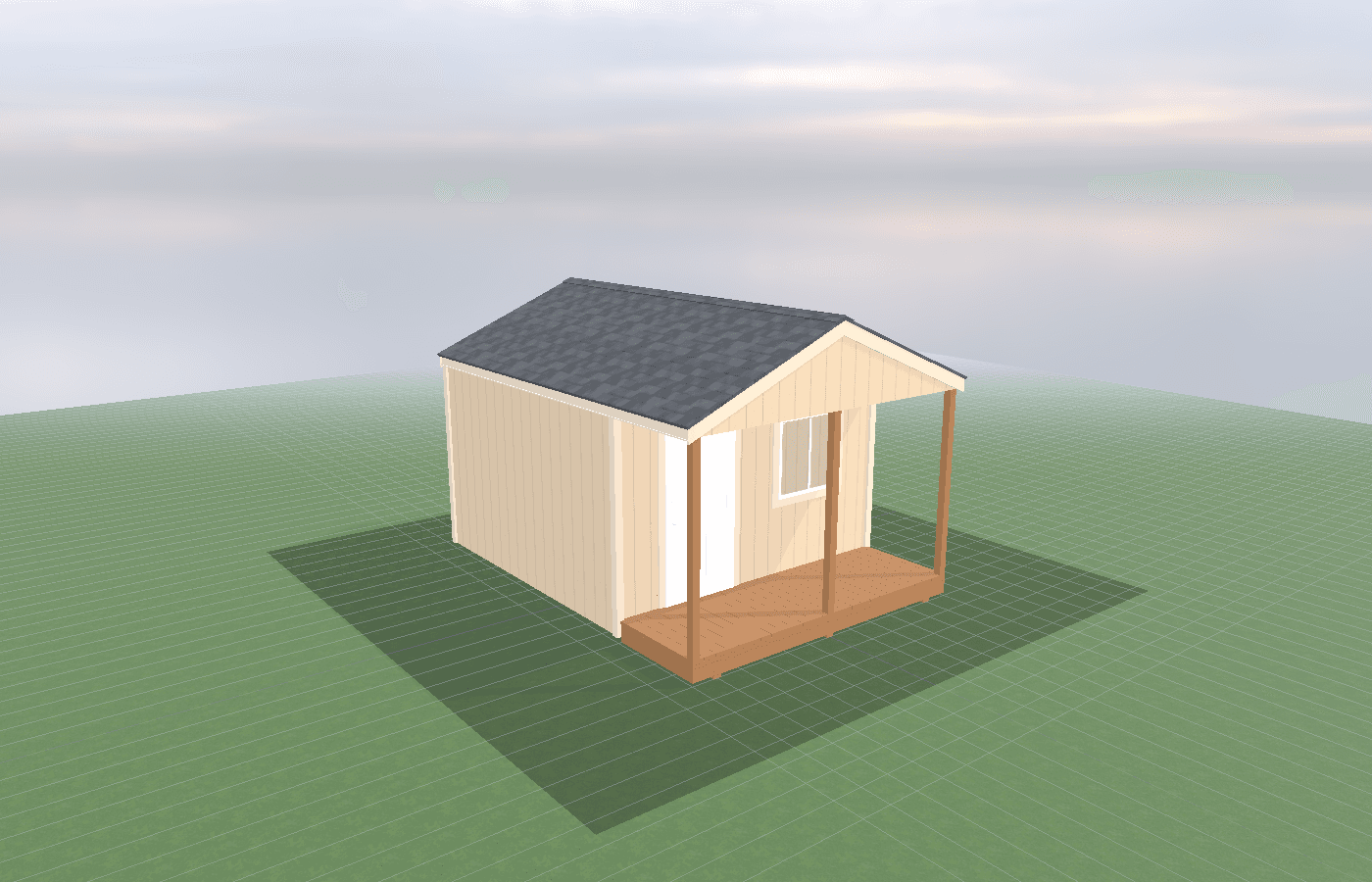
Open the builder pre-loaded with a material-ready setup. Adjust the details around your property, then send it for a free estimate.
Pick a starting shed
Choose the building type that matches the job — storage, workshop, garage, retreat. The builder loads a preset that fits the lot.
Configure to the site
Set the footprint, doors, windows, roof, and finish to match North Idaho snow loads, access, and the way the shed will be used.
Request a free estimate
Send the configured layout to Justice with the property details, and we follow up with a build plan and price.
Compare shed materials
See how the other siding and structure options hold up in North Idaho.
- Composite Shed Materials for North IdahoComposite shed materials engineered for North Idaho weather. Siding and trim that resist rot, insects, and moisture in our mountain environment explained.
- Metal & Steel Sheds in North IdahoMetal and steel shed options for North Idaho properties. Galvanized panels, insulation needs, rust prevention, and snow load ratings for our local climate.
- Wood Shed Construction in North IdahoEverything about wood shed construction in North Idaho. Cedar, pine, and engineered wood options rated for snow, moisture, and durability in our climate.